From Despair to Dominance: Andrea Kimi Antonelli’s Miraculous Turnaround at the Circuit of the Americas

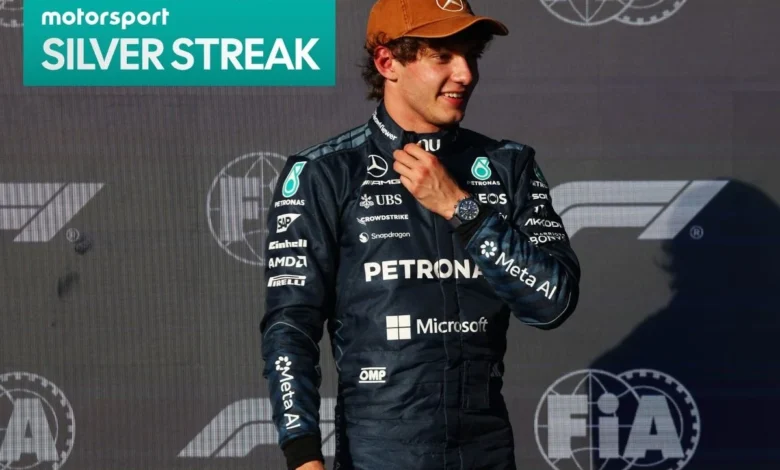
The telemetry emanating from the Mercedes-AMG PETRONAS Formula One Team garage at the conclusion of Friday’s practice sessions at the Circuit of the Americas (COTA) painted a bleak picture of the weekend ahead. With the W17 chassis struggling for mechanical grip and the drivers voicing deep concerns over balance, the Brackley-based squad appeared to be bracing for a lackluster points-less finish. Yet, by the time the checkered flag dropped on Sunday afternoon, 19-year-old prodigy Andrea Kimi Antonelli stood atop the podium, spraying champagne and further extending his lead in the World Championship standings. The transformation from a car described as “off the pace” on Friday to a dominant race winner on Sunday stands as one of the most remarkable technical rebounds in recent Formula One history.
A Friday of Discontent
The initial outlook for the Mercedes camp in Austin was undeniably grim. Following the implementation of a major aerodynamic upgrade package, first debuted at the Malaysian Grand Prix, the team found themselves grappling with a significantly narrowed operating window. During the opening practice sessions at COTA, both drivers struggled to find a rhythm. The car, which had previously demonstrated consistent performance, suddenly appeared temperamental, suffering from excessive tyre degradation and a lack of downforce that left the drivers unable to push near the limit.
By Friday evening, the atmosphere in the garage was reportedly somber. Telemetry data suggested that the W17 was not merely struggling with setup, but was potentially suffering from fundamental aerodynamic instability triggered by the new components. George Russell, never one to mince words, did not hide his frustration, labeling the car "rubbish" following his inability to find a competitive single-lap pace. The sentiment was shared by engineering staff, who found themselves scrambling to reconcile the simulation data from Brackley with the harsh, bumpy reality of the Texan circuit.
The Saturday Pivot: A Shift in Momentum
The turnaround began in the early hours of Saturday morning. Mercedes trackside engineering director Andrew Shovlin confirmed that the team spent the night analyzing vast amounts of data to address the balance issues. The primary challenge was the "razor-thin" setup window—a common affliction for ground-effect cars—which meant that even a minor miscalculation in ride height or wing angle could result in a significant loss of performance.
The team’s persistence paid dividends during qualifying. Antonelli, showing maturity beyond his years, adapted his driving style to suit the unpredictable nature of the chassis. While Russell continued to fight the car’s tendencies, Antonelli managed to squeeze the maximum out of the W17, securing a grid position that gave the team a glimmer of hope. This was not a result of a sudden mechanical fix, but rather a grueling process of optimization, where engineers and drivers worked in tandem to stabilize the car’s behavior through the technical sectors of the circuit.

Race Day: A Tale of Two Garages
When the lights went out on Sunday, the divergence between the two Mercedes entries became immediately apparent. Antonelli, starting from a strong position, managed his race with surgical precision. He navigated the opening laps with care, understanding that the W17’s tyre management was the critical variable for a successful one-stop strategy.
In stark contrast, George Russell’s race was compromised almost instantly. A track limits violation on the opening lap resulted in a time penalty, forcing him to fight from the back of the midfield pack. The penalty, coupled with the inherent difficulty of overtaking at COTA, relegated him to a battle with McLaren’s Oscar Piastri. Despite a valiant effort to find a way past the Australian, Russell was essentially trapped, effectively ending his chances of a podium contention.
For Antonelli, however, the race was a masterclass in tactical discipline. As tyre degradation spikes began to affect the field, the Mercedes pit wall maintained their composure. Despite the temptation to switch to a two-stop strategy as the track temperatures rose, the team held firm. "The strategy decisions weren’t clear-cut," Shovlin admitted during the post-race debrief. "We held our nerve, made the right call to stick with the one-stop, and the pitstops were solid."
Engineering Insights and Technical Challenges
The victory serves as a stark reminder of the complexity of modern Formula One engineering. The W17’s recent evolution has yielded raw pace, but at the cost of operational stability. Andrew Shovlin’s candid admission that the team was "lost" heading into the weekend highlights the volatility of the current technical regulations.
"Since the update, it does feel like the set-up window has become a little harder to hit," Shovlin explained. This sensitivity to track conditions means that a team can oscillate between a race-winning machine and a back-of-the-field car based entirely on environmental factors like ambient temperature, surface grip, and track evolution. The success at COTA was not just a result of driver skill, but a triumph of data-driven decision-making under intense pressure.
The Rise of Andrea Kimi Antonelli
At only 19 years old, Antonelli’s performance in Austin has cemented his status as a championship favorite. His ability to remain calm while the car was clearly struggling on Friday, and his execution on Sunday, speaks to a driver with an elite temperament. By extending his world championship lead, Antonelli has proven that he can handle the weight of expectation, even when the machinery underneath him is far from perfect.
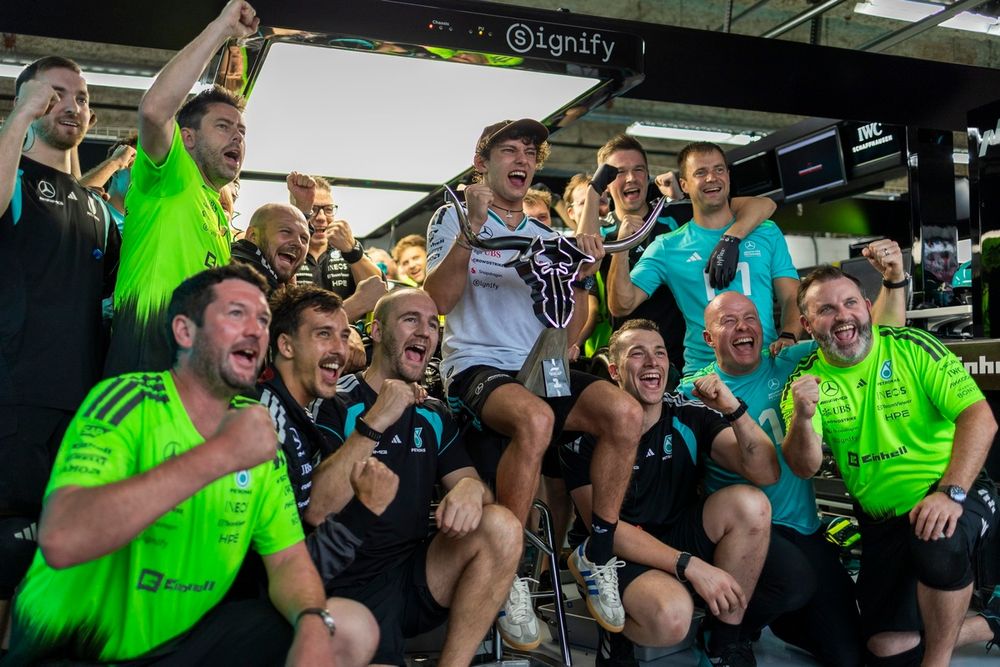
The praise from within the team has been unanimous. Shovlin, in particular, was quick to deflect the credit away from the pit wall and onto the young driver. "Most of all, Kimi should be incredibly pleased with his performances. It was a difficult Friday, but what he produced in qualifying and the race today was exceptional," he noted.
Broader Implications for the Season
The win at COTA carries significant weight as the season enters its final phase. For Mercedes, the result provides a much-needed morale boost and validation that their recent upgrade path is fundamentally correct, even if it requires more refined tuning. The challenge now for the Brackley engineers is to broaden that "set-up window" so that both drivers can extract the same level of performance in future races.
As for the championship, the gap created by Antonelli’s win puts immense pressure on his rivals. The ability to win on a "bad" weekend is the hallmark of a champion, and for the Mercedes teenager, this victory may be viewed in hindsight as the defining moment of his season. The team now heads to the next round with a clearer understanding of the W17’s quirks, aiming to provide both Antonelli and Russell with a more consistent platform.
Ultimately, the weekend at the Circuit of the Americas was a testament to the resilience of a championship-caliber team. From the depths of a failed Friday to the heights of a race win, Mercedes demonstrated that in the high-stakes world of Formula One, the ability to adapt—both as a human and as an organization—is the ultimate currency. With the title race intensifying, the lessons learned in Texas will undoubtedly shape the tactical landscape for the remainder of the year.