American Girl and J.Crew Launch First-Ever Matching Holiday Clothing Collection for Kids and Dolls

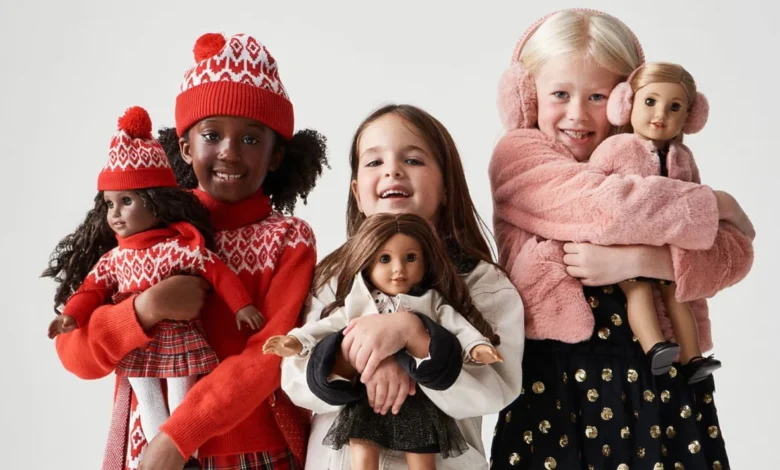
Two iconic American retail brands have officially united for the first time in their respective histories to introduce a comprehensive holiday clothing and accessories line. The collaboration pairs the classic, enduring appeal of American Girl dolls—a staple of childhood since the mid-1980s—with the preppy, timeless aesthetic of J.Crew. Designed specifically to bridge generations, the limited-edition collection features a curated assortment of matching outfits and accessories scaled to fit both children and their standard 18-inch American Girl companions. As the holiday shopping season accelerates, this partnership highlights a broader retail strategy: capitalizing on millennial nostalgia by offering products that appeal simultaneously to today’s children and the adults who grew up collecting the dolls decades ago.
Chronology and Historical Context of the Brands
The origins of this collaboration date back to distinct eras of American retail and toy manufacturing. American Girl was founded in 1986 by Pleasant Rowland under the Pleasant Company banner, initially introducing a revolutionary concept to the toy market: historical fiction characters paired with high-end, historically accurate 18-inch dolls. Each character—ranging from colonial-era Kaya to Civil War-era Addy and Great Depression-era Samantha—came equipped with detailed backstories addressing significant periods in American history. These narratives often touched upon complex social issues, including slavery, child labor, and poverty, establishing the brand not merely as a toy manufacturer, but as an educational and cultural phenomenon.
In 1998, Mattel acquired American Girl, expanding its reach through flagship retail stores, proprietary magazines, and diversified product lines, including the customizable "Truly Me" dolls and the contemporary "Girl of the Year" franchise. Meanwhile, J.Crew emerged as a prominent catalog and retail powerhouse known for defining preppy American style through classic cardigans, chinos, and tailored outerwear since its establishment in 1983.
For decades, both brands operated within their respective domains of fashion and juvenile entertainment. While American Girl previously released various matching apparel lines for children and dolls over the years, partnering with an external mainstream fashion house of J.Crew’s stature marks a novel milestone. The genesis of the J.Crew partnership reflects a calculated response to demographic shifts: the original generation of children who received American Girl dolls in the late 1980s and 1990s have reached adulthood, often with children of their own, creating a ripe market for cross-generational nostalgia marketing.

Details of the Collection and Pricing Structure
The American Girl x J.Crew holiday collection departs from historical costuming in favor of modern, preppy wardrobe staples adapted for both humans and dolls. Rather than featuring the poke bonnets and Victorian pinafores associated with the brand’s earliest historical characters, the new line scales down contemporary J.Crew signatures.
Key items in the collection include shrunken cardigans tailored precisely for 18-inch dolls alongside matching adult- and child-sized iterations, pleated bubble skirts, cotton-shell barn jackets, and polka-dot puff-sleeve tops. Accessories feature prominently in the release, highlighted by embellished heart purses and coordination sets scaled for doll play.
Pricing for the collection varies by item and demographic target, though select pieces are positioned accessibly. Accessories and smaller items start at approximately $22, while more complex garments, such as outerwear and matching sets, scale upward depending on whether the purchase is intended for a child or a doll. Distribution is managed primarily through digital retail channels, with items available directly via J.Crew’s e-commerce platform.
Evolution of American Girl: From Historical Trauma to Contemporary Hobbies
The partnership with J.Crew arrives during a period of significant evolution for the American Girl brand. Over nearly four decades, the thematic focus of the company’s core product lines has shifted away from the heavy historical narratives that defined its late-20th-century origins. While classic characters remain part of the brand’s cultural legacy—underscored by contemporary literary expansions such as Fiona Davis’s recent novel Samantha, The Next Chapter, which follows a grown-up Samantha Parkington—the modern product roadmap emphasizes contemporary lifestyle, hobbies, and personal expression.

This strategic pivot is exemplified by the introduction of the 2027 Girl of the Year, Daisy Davenport. Unlike historical figures who navigated systemic hardships, contemporary characters like Daisy are centered around modern adolescent experiences, focusing on summer camp, creative pursuits, and interpersonal friendship. This thematic softening aligns with broader shifts in the juvenile toy market, where consumers and parents increasingly favor optimistic, sandbox-style narratives over didactic historical storytelling.
Industry Implications and Market Analysis
Retail analysts view the American Girl and J.Crew collaboration as a textbook execution of "kidult" marketing and nostalgic brand licensing. By leveraging adult purchasing power—often referred to colloquially as "adult money"—legacy brands can monetize childhood attachments while recruiting a new generation of young consumers.
The strategy addresses several current retail dynamics:
- Nostalgia Monetization: Consumers aged 25 to 40 possess independent disposable income and exhibit a strong willingness to spend on items tied to their formative years.
- Cross-Brand Synergy: Partnering with an established apparel designer elevates the perceived value of a toy brand, allowing it to transcend the traditional toy aisle and enter the lifestyle and fashion conversation.
- Experiential Retail: Matching apparel encourages interactive play and reinforces family traditions during the holiday season, driving higher average order values through bundled purchases of parallel items for children and dolls.
As collaborative retail projects continue to dominate marketing strategies across consumer goods sectors, the success of the American Girl x J.Crew launch may serve as a benchmark for future cross-industry partnerships between heritage toy manufacturers and contemporary fashion labels. Whether the trend will prompt further expansions into adult-sized apparel or additional designer collaborations remains to be seen, but the initial market reception indicates a robust demand for preppy, coordinated holiday traditions.