A breakthrough study published in the journal Science Advances has unveiled a potential neurobiological "unified theory" for schizophrenia, identifying a specific brain rhythm that may act as a common denominator for the disorder’s disparate clinical presentations. By mapping beta-band brain activity, researchers from a consortium of Montreal-based institutions, including McGill University and the Douglas Research Centre, have demonstrated that a weakened neural signal could explain why patients experience simultaneous impairments in perception, motor coordination, and linguistic coherence.
This discovery marks a significant shift in psychiatric research. Historically, the various manifestations of schizophrenia—ranging from auditory hallucinations and cognitive fragmentation to motor delays—have been treated as distinct clusters of symptoms. By linking these disparate features to a single mechanism, the findings offer a new framework for understanding the pathophysiology of the disorder, potentially moving the field toward more targeted diagnostic and therapeutic interventions.
The Mechanism: Decoding Beta-Band Oscillations
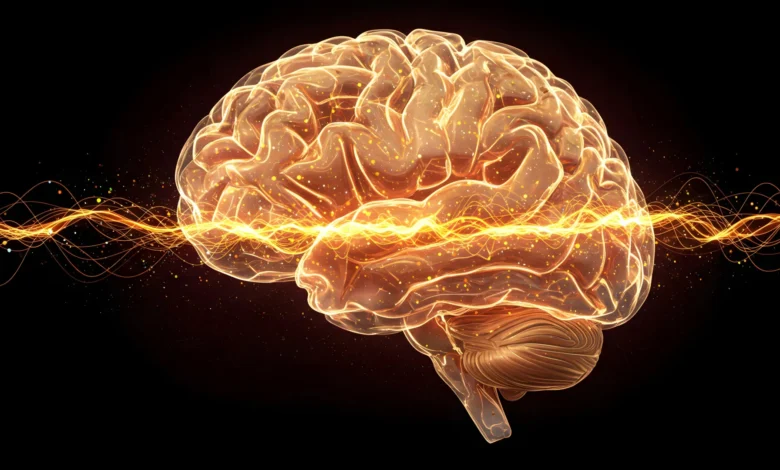
At the heart of the study is the concept of beta-band activity, which refers to rhythmic electrical fluctuations in the brain typically oscillating between 13 and 30 Hertz. These rhythms are essential for "top-down" information processing, acting as the brain’s internal metronome. They allow the human mind to coordinate sensory input, execute motor sequences, and structure complex language. When these oscillations are disrupted, the brain struggles to integrate the fragmented data of the external world into a cohesive, meaningful narrative.
In the study, researchers conducted high-resolution magnetoencephalography (MEG) at the McConnell Brain Imaging Centre at the Montreal Neurological Institute-Hospital (The Neuro). MEG is a non-invasive imaging technique that maps brain activity by recording magnetic fields produced by electrical currents occurring naturally in the brain. Unlike traditional fMRI, which measures blood flow, MEG provides a millisecond-by-millisecond temporal resolution, making it uniquely suited to capture the rapid-fire oscillations of neural circuits.
The research team compared 25 individuals diagnosed with schizophrenia against 25 neurotypical control participants. The experimental protocol required subjects to engage in tasks requiring precise timing judgments of visual and auditory stimuli. Concurrently, the researchers analyzed the linguistic output of the participants to quantify the presence of "thought disorder"—a hallmark of schizophrenia characterized by disorganized, tangential, or incoherent speech.
The data revealed a consistent, replicable pattern: participants with schizophrenia exhibited significantly lower amplitude and slower frequency in their beta-band oscillations compared to the healthy control group. Crucially, the intensity of this signal degradation correlated directly with the severity of the participants’ clinical symptoms. The individuals who showed the most marked reduction in beta-band power were also the most likely to experience severe communication deficits and profound difficulties in synchronizing their perception of the environment.
Chronology and Scientific Context
The path to this discovery is the culmination of years of investigation into neural synchrony. For decades, the psychiatric community has hypothesized that schizophrenia is a "disconnection syndrome," where the failure of brain regions to communicate effectively leads to the emergence of psychosis.
- Early 2000s: Initial theories regarding the "dysconnectivity hypothesis" gained traction, suggesting that white matter abnormalities hindered neural communication.
- 2010–2018: Advancements in neuroimaging allowed researchers to observe real-time neural oscillations, shifting the focus from structural "wiring" to functional "rhythmicity."
- 2020–2023: Research teams at McGill and the University of Montreal began specifically targeting the role of beta-band activity in high-level cognitive integration.
- 2024: The current study provides the most robust evidence to date that these rhythmic disruptions are not merely peripheral symptoms, but central to the disorder’s expression.
This timeline reflects a broader move within global psychiatry toward biomarker-driven diagnostics. As the World Health Organization (WHO) continues to highlight that schizophrenia affects approximately 24 million people worldwide—often leading to significant disability—the search for biological indicators that can be measured objectively has become a priority for global health funding.
Expert Perspectives and Theoretical Implications
The research team, led by senior author Dr. Lena Palaniyappan, professor of psychiatry at McGill and director of the Centre of Excellence in Youth Mental Health at the Douglas Hospital, suggests that the brain’s fundamental failure in schizophrenia is a breakdown in "predictive coding."
"The brain is essentially a prediction machine," Dr. Palaniyappan explained. "It constantly takes in sensory data to update its model of the world. Our findings indicate that when beta-band signals are weak, this updating process fails. The brain cannot efficiently reconcile incoming sights and sounds with its internal expectations, which leads to the profound confusion and fragmented reality we see in our patients."
Hsi (Tiana) Wei, the study’s lead author and a postdoctoral scholar, emphasized the uniformity of the findings across multiple domains. "What struck us was that the same weakened brain signal kept showing up wherever we looked, whether patients were processing a sound, a sight, or completing a movement," Wei stated. This consistency suggests that the disruption is not localized to one brain region, but is perhaps a systemic issue in how the brain organizes its electrical output.
Independent observers in the field have noted that while the sample size of 50 is relatively modest, the precision of the MEG data provides a high degree of confidence in the observed correlation. However, the academic community remains cautious, noting that replicating these results across larger, more diverse cohorts is essential before these findings can be integrated into clinical practice.
Clinical and Public Health Impacts
The implications of this discovery are twofold: improved diagnostic accuracy and the potential for early intervention. Schizophrenia typically manifests in late adolescence or early adulthood. Because symptoms often emerge gradually, the "prodromal phase"—the period before the onset of full-blown psychosis—is frequently missed. If clinicians could use MEG or other advanced imaging to detect subtle reductions in beta-band activity in high-risk adolescents, they might be able to implement therapeutic support years earlier than is currently possible.
Early intervention is the "holy grail" of schizophrenia treatment. Studies have consistently shown that early diagnosis leads to better long-term outcomes, lower rates of hospitalization, and improved social and occupational functioning. If beta-band oscillation monitoring becomes a standard screening tool, it could potentially change the prognosis for thousands of young people each year.
Furthermore, the identification of a specific signal as a target opens the door for innovative pharmacological or neuromodulatory treatments. Researchers are already beginning to discuss whether non-invasive brain stimulation techniques, such as Transcranial Magnetic Stimulation (TMS), could be tuned to "entrain" or reinforce these weakened beta-band rhythms, essentially training the brain to re-establish its natural timing mechanisms.
Limitations and Future Research
Despite the enthusiasm surrounding the study, the authors are careful to define the boundaries of their conclusions. The study is a proof-of-concept, and the current findings require validation through longitudinal studies. Researchers must now track individuals over several years to determine if the decline in beta-band signal intensity precedes the onset of clinical symptoms or if it is a consequence of the disorder’s progression.
Moreover, the complexity of schizophrenia means that this signal is unlikely to be the sole cause. Genetics, environmental stressors, and neurodevelopmental factors all play complex roles in the etiology of the condition. As such, the researchers view the beta-band signal not as a "magic bullet" but as one critical piece of a much larger, multi-faceted diagnostic puzzle.
The next phase of this research will involve larger, independent multi-center trials to confirm these associations. If the link holds, the psychiatry department at McGill and the Douglas Research Centre plan to explore how different classes of antipsychotic medications—and perhaps newer, experimental compounds—interact with these rhythms.
In conclusion, the identification of a common neural thread underlying the diverse symptoms of schizophrenia represents a significant stride in psychiatric science. By shifting the focus from outward behavior to the internal rhythmic architecture of the brain, researchers are moving closer to a future where mental health disorders are understood, diagnosed, and treated with the same scientific precision as cardiac or neurological conditions. The path forward remains challenging, but for the millions living with the unpredictability of schizophrenia, these rhythmic signals may offer the first clear map toward meaningful recovery.