Mount Sinai researchers uncover how APOE4 drives Alzheimer’s and Parkinson’s through vascular and cellular dysfunction


New findings from the Icahn School of Medicine at Mount Sinai have fundamentally shifted the scientific understanding of Alzheimer’s disease and other neurodegenerative conditions. For decades, the presence of the APOE4 gene variant has been identified as the most potent genetic risk factor for late-onset Alzheimer’s. However, the exact biological mechanisms by which this gene wreaks havoc on the human brain have remained elusive. Two groundbreaking studies, published simultaneously in the journals Cell and Cell Stem Cell, now reveal that APOE4 does not merely increase risk; it actively orchestrates the physical deterioration of the brain’s vascular system and disrupts essential cellular waste-disposal processes.
These findings suggest that the cognitive decline associated with Alzheimer’s may be driven by biological processes that were previously misunderstood as passive consequences of the disease. Crucially, the research team, led by Dr. Joel W. Blanchard, suggests that these mechanisms may be therapeutically reversible, providing a new roadmap for drug development.
The Vascular Hypothesis and APOE4
For years, clinicians have observed that Alzheimer’s patients often exhibit significant deterioration of the blood-brain barrier and general vascular health. Historically, this damage was categorized as a late-stage byproduct of the disease—a symptom rather than a cause. The new data from Mount Sinai challenges this paradigm, positioning vascular failure as an early, active participant in neurodegeneration.
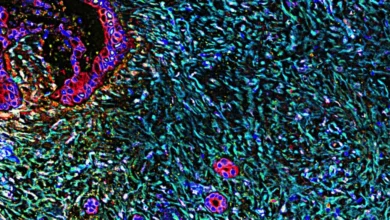
To map this process, the research team created a comprehensive single-cell transcriptomic atlas of the human brain’s vascular system. By integrating existing datasets, they were able to observe how APOE4 influences the behavior of pericytes—cells tasked with maintaining the integrity of small blood vessels and the blood-brain barrier.
The researchers discovered that in the presence of APOE4, pericytes undergo a pathological transformation. They cease their normal supportive functions and instead shift into a myofibroblast-like state, effectively creating scar tissue within the brain’s vascular architecture. This process, known as vascular fibrosis, creates a physical barrier that hampers blood flow and facilitates the accumulation of amyloid-beta proteins around the vessels. This creates a "vicious cycle" where the brain’s circulation is compromised, further exacerbating the conditions that favor protein buildup and neuronal death.
Reversing the Damage
Perhaps the most significant aspect of the Cell study is the demonstration of reversibility. By targeting the TGF-β signaling pathway—a critical communication network involved in cellular remodeling—the team was able to halt the transformation of pericytes into scar-producing cells. In laboratory models, including aged mice carrying the APOE4 gene, this intervention successfully restored vascular integrity and significantly reduced the accumulation of amyloid deposits.
This discovery moves the needle from palliative care to potential disease-modifying therapy. By identifying specific molecular signals that trigger vascular scarring, scientists now have a clear target for pharmacological intervention. If these results can be translated into human clinical trials, they could offer a way to preserve the brain’s circulatory health in individuals at high genetic risk long before the onset of severe cognitive impairment.
The Role of miBrains in Modern Neuroscience
The rapid pace of these discoveries was facilitated by a proprietary technological platform developed at Mount Sinai known as "miBrains." These are three-dimensional human brain organoids derived from induced pluripotent stem cells (iPSCs). Unlike traditional cell cultures, miBrains replicate the complex, multi-cellular architecture of the human brain, including neurons, glia, myelin-producing cells, and a functional network of blood vessels.
The development of miBrains represents a watershed moment for neurodegenerative research. Historically, scientists have struggled to observe the real-time progression of diseases like Alzheimer’s and Parkinson’s because human brain tissue is largely inaccessible for live monitoring. The miBrain system bridges this gap, allowing researchers to observe cellular interactions in a controlled environment that closely mimics the human brain’s physiology.
Cellular Waste Management and Parkinson’s Disease
While the first study focused on vascular health, the second study, published in Cell Stem Cell, investigated the impact of APOE4 on protein homeostasis. The researchers utilized the miBrain platform to observe how APOE4 influences the clearance of abnormal proteins, specifically alpha-synuclein, which is the hallmark of Parkinson’s disease and Lewy body dementia.
The investigation revealed a surprising chain of events: APOE4 disrupts cholesterol metabolism within astrocytes, the star-shaped support cells that regulate the brain’s chemical environment. This excess cholesterol creates a bottleneck in the astrocytes’ lysosomal waste-disposal system. Because the cells can no longer effectively digest and remove alpha-synuclein, the protein accumulates and eventually leaks into neurons, leading to the formation of the toxic protein deposits that characterize neurodegeneration.
This link between cholesterol metabolism, lysosomal function, and protein accumulation provides a unified explanation for why APOE4 carriers are at higher risk for multiple types of dementia. It also suggests that existing treatments targeting lipid metabolism or lysosomal enhancement could be repurposed to treat Alzheimer’s and Parkinson’s patients.
Implications for Personalized Medicine
The ability to cryopreserve miBrains with specific genetic profiles has opened the door to a new era of personalized medicine. Researchers are now developing miBrains derived from individual patients, which allows them to test how a specific patient’s unique genetic makeup influences the efficacy of a given drug.
"By enabling potential therapies to be tested earlier and more efficiently, the miBrain platform could help bridge the gap between laboratory discoveries and treatments for a broad range of disorders," said Dr. Blanchard. This approach reduces the reliance on "one-size-fits-all" clinical trials, which have historically high failure rates in Alzheimer’s research. By screening therapies on a patient’s own tissue in a lab setting, researchers can identify responders versus non-responders before a patient even takes the first dose.
Chronology and Scientific Context
The timeline of these discoveries reflects a decade-long evolution in stem cell technology and genomic mapping. The initial identification of APOE4 as a risk factor occurred in the early 1990s, yet for thirty years, the focus remained largely on the amyloid plaques themselves rather than the systemic cellular environments that create them.
The Mount Sinai team’s work represents a culmination of recent advances in "omics" technology—the ability to sequence and map the activity of thousands of individual cells simultaneously. This technology, combined with the maturation of organoid modeling, allowed the team to pinpoint the exact sequence of events:
- Genetic Trigger: APOE4 is present.
- Cellular Response: Astrocytes accumulate cholesterol; pericytes scar.
- Systemic Failure: Lysosomal clearance fails; vascular flow is restricted.
- Neurodegeneration: Toxic proteins aggregate, leading to cell death and cognitive decline.
Broader Impact and Future Outlook
The implications for the 7 million older adults in the United States currently living with Alzheimer’s disease are profound. If the vascular and waste-clearance pathways identified by Mount Sinai can be targeted effectively, the trajectory of these diseases could be fundamentally altered.
The research has drawn attention from the broader medical community, including major funding bodies like the National Institute on Aging (NIA) and the Michael J. Fox Foundation for Parkinson’s Research. These organizations, which provided significant financial support for the studies, view these platforms as essential infrastructure for the next generation of drug development.
While the transition from laboratory model to bedside application is complex and requires extensive clinical trial validation, the mechanisms identified offer a beacon of hope. By focusing on the "biological plumbing"—the vascular and waste-disposal systems of the brain—rather than just the end-stage symptoms, science is moving closer to a future where neurodegeneration is no longer an inevitable consequence of aging, but a manageable, or even preventable, condition.
As the research team moves forward, the focus will remain on validating these targets in human clinical cohorts and scaling the miBrain platform to include a more diverse range of genetic backgrounds. The ultimate goal remains the rapid identification of therapeutic candidates that can stop the progression of disease in its tracks, preserving the cognitive and physical vitality of the aging population.