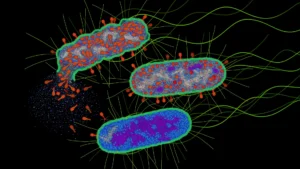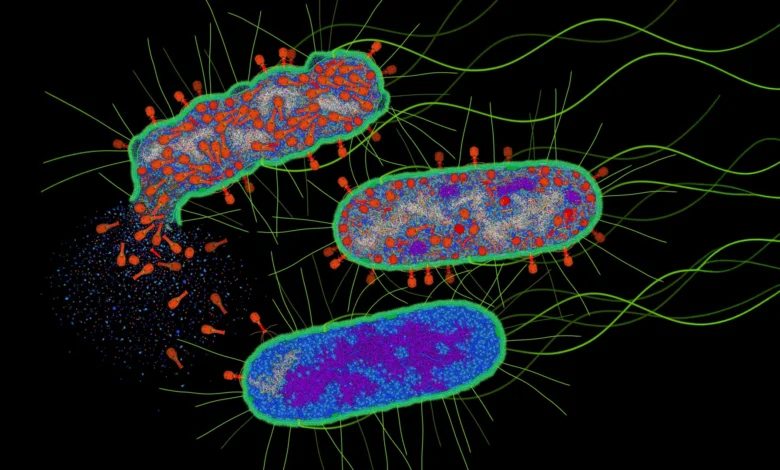
As the global medical community grapples with the escalating threat of antimicrobial resistance (AMR)—a crisis projected to claim 10 million lives annually by 2050 if left unchecked—researchers are increasingly looking toward bacteriophages as a viable alternative to conventional antibiotics. Bacteriophages, or phages, are specialized viruses that infect and dismantle bacteria with surgical precision. Unlike broad-spectrum antibiotics that often wipe out beneficial gut flora alongside pathogens, phages target specific bacterial strains, leaving human cells and the microbiome unharmed. However, the path to clinical integration is fraught with biological complexity, primarily because bacteria are not passive victims. They have evolved sophisticated, layered immune systems over billions of years to neutralize viral invaders.
A landmark study published in the journal Science has now cracked open one of the most enigmatic chapters of this microbial arms race. By identifying how bacteria detect and respond to viral incursions, scientists have gained a crucial foothold in the effort to engineer "stealth" phages capable of bypassing these defenses. This discovery, centered on a bacterial immune mechanism known as CBASS (Cyclic Oligonucleotide-Based Antiphage Signaling System), provides a new roadmap for developing next-generation antimicrobial treatments.
The Evolution of the Microbial Arms Race
The history of the conflict between bacteria and phages is the oldest and largest biological war on Earth. It is estimated that phages are the most abundant biological entities in the biosphere, with an estimated 10^31 particles existing at any given time. For billions of years, bacteria have developed an array of defenses, ranging from simple physical barriers and restriction enzymes—which act like molecular scissors to chop up viral DNA—to complex adaptive systems like CRISPR-Cas.
While CRISPR-Cas is widely recognized for its role in gene editing, it is fundamentally a bacterial immune system. Yet, it is only one piece of a vast puzzle. The CBASS system represents a more "drastic" defensive measure. When a bacterium detects a phage presence, CBASS initiates a programmed cell death sequence. By sacrificing itself, the bacterium prevents the virus from replicating and spreading to neighboring cells, effectively acting as an altruistic firewall for the bacterial colony.
Uncovering the Trigger: The Protease Connection
The research team, led by Dr. Sam Hobbs, an assistant professor of biochemistry at University of Utah Health, focused on how the CBASS system distinguishes between a benign internal protein and a malicious viral intruder. The findings, detailed in the paper "Phage proteases activate CBASS antiphage immunity," demonstrate that the alarm is triggered by the very tools the virus uses to survive.
Many phages utilize enzymes called proteases to break down proteins, facilitating their entry or replication within the host. Dr. Hobbs and his colleagues discovered that specific phages rely on these proteases, and it is this enzymatic activity that inadvertently alerts the host bacterium. The protease acts as a double-edged sword: while it is designed to manipulate the host, it also serves as a molecular "tripwire." When the phage protease cuts a specific sensor molecule within the bacterial cell, the cleavage acts as a definitive signal that the cell is under attack, immediately activating the CBASS pathway.
This mechanism is distinct from other known immune pathways, which often detect viral genetic material directly. Instead, this is a protein-based detection system, a revelation that surprised the research team. Dr. Hobbs described the moment of discovery as a "total eureka moment," noting that the elegance of the system—turning the virus’s own metabolic requirement into an alarm—highlights the evolutionary pressure exerted on both parties.
Chronology and Context of the Discovery
The investigation into CBASS has been an ongoing international effort over the last decade. Since the system was first characterized in 2018, researchers have worked to map its diverse components. The current study represents a significant milestone in this timeline, bridging the gap between identifying the system and understanding its activation logic.
- 2018: The CBASS system is formally identified as a widespread bacterial immune mechanism, sharing structural similarities with the cGAS-STING pathway in humans.
- 2020-2022: Structural biologists and biochemists identify various components of the CBASS operon, noting its prevalence across diverse bacterial species.
- 2023-2024: Dr. Hobbs’ team focuses on the signaling pathway, isolating the viral protease interaction that initiates the "last resort" immune response.
- 2024: Publication of the findings in Science, providing the first mechanistic explanation of how viral protein activity triggers CBASS.
Implications for Human Immunology and Beyond
Perhaps the most striking aspect of this research is the evolutionary bridge it constructs between bacteria and humans. The CBASS system is structurally and functionally related to the cGAS-STING pathway in humans, which detects DNA in the cytoplasm to trigger an innate immune response against viral infections.
This connection suggests that the fundamental logic of innate immunity has been conserved across an immense evolutionary timeline, dating back to a common ancestor shared by bacteria and humans. The fact that this pathway has remained stable for billions of years underscores its critical importance to cellular survival. For researchers, this means that bacteria can serve as highly efficient, rapid-cycle models for studying complex immune processes. Because bacterial life cycles are measured in minutes rather than days, scientists can test hypotheses and observe the evolution of immune interactions at a speed impossible in mammalian models.
Clinical Prospects: Designing Better Phage Therapies
The potential for this discovery to reshape medical treatment is significant. Currently, phage therapy is often limited by the fact that many clinical isolates of bacteria are inherently resistant to known phages due to systems like CBASS. If researchers can "blind" these immune systems or engineer phages that do not trigger the protease-sensitive sensor, they could dramatically increase the efficacy of phage treatments.
The implications extend beyond simple infection control. By understanding how to modulate these pathways, scientists may eventually be able to apply the same logic to human medicine, potentially enhancing the body’s natural antiviral responses or developing novel therapeutics for autoimmune disorders where immune signaling goes awry.
The study was supported by a consortium of prominent scientific institutions, including the Pew Biomedical Scholars program, the Burroughs Wellcome Fund, and the National Institutes of Health. As these funding bodies continue to prioritize research into non-antibiotic antimicrobial agents, the insights provided by the Hobbs lab are expected to influence the design of clinical trials for phage-based interventions.
Conclusion
The battle against antibiotic-resistant bacteria is entering a new phase of biological sophistication. The discovery that bacterial immune systems utilize viral proteases as molecular alarms provides a critical piece of the puzzle that has long hindered the widespread adoption of phage therapy. By deciphering the language of this ancient conflict, scientists are not only learning how to better combat modern pathogens but are also gaining a deeper appreciation for the ancient, conserved mechanisms that have protected life on Earth for billions of years. As the research moves from the laboratory bench toward potential clinical applications, the ability to bypass bacterial defenses could well become the defining advantage in the future of medicine.
Related posts: