Ford Has Filed a Patent for a Spare Tire That Lowers to the Ground Instead of Making a Driver Crawl Under a Truck to Reach It

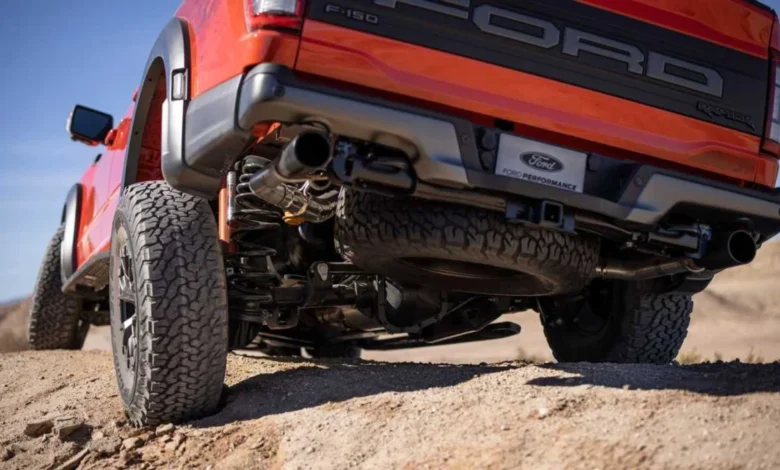
Changing a flat tire on a full-size pickup truck is a notoriously grueling task, often requiring the driver to crawl through mud, snow, or debris to reach an awkwardly placed spare tire secured beneath the chassis. Ford Motor Company is seeking to alleviate this burden with a newly filed patent for a movable spare-tire rack assembly. This innovation, documented in U.S. Patent application serial number 12773055, filed on March 18, 2024, introduces a mechanical folding rack system designed to simplify the retrieval and mounting process for heavy, under-mounted spare wheels.
The Mechanics of the Proposed System
The patent describes an sophisticated, frame-mounted assembly that utilizes a pivoting, extendable arm. Unlike traditional underbody carriers that rely solely on a vertical winch cable—which can jam, rust, or leave the wheel dangling in a difficult-to-access position—the Ford design incorporates a structural folding arm. This mechanism is intended to physically move the spare tire away from the vehicle’s underside, extending it outward and lowering it gently to the ground.
By shifting the tire laterally away from the vehicle’s frame, the system addresses the primary challenges of roadside repair: the lack of clearance and the physical strain of maneuvering a heavy wheel while lying prone on the pavement. The design is specifically engineered for body-on-frame architectures, such as the Ford F-150, Super Duty, and Expedition, which frequently utilize full-size spares that are too bulky to be stored inside the cabin.
Integrated Tools and Ergonomic Assistance
One of the most notable features of the patent filing is the integration of a lug wrench directly into the rack assembly. Historically, vehicle manufacturers have bundled the jack and lug wrench into separate tool kits, which are often stowed in difficult-to-reach storage bins under or behind seats. By embedding the wrench into the spare-tire assembly, Ford aims to ensure that the necessary tools are immediately available at the point of need.
Furthermore, the patent outlines a positioning function that goes beyond simple lowering. The folding arm is designed to assist in the mounting process by holding the spare tire in alignment with the wheel hub. This "helper" function is intended to mitigate the significant physical labor required to lift a heavy truck tire and align it with the lug studs—a task that often requires the driver to brace the tire with their knee or shoulder while struggling to thread the nuts.
Historical Context and Industry Trends
The evolution of the spare tire has been a contentious subject in automotive engineering for decades. In the early 20th century, spare tires were often mounted on the exterior of the vehicle, typically on the running boards or the trunk lid. As aerodynamic requirements and aesthetic preferences shifted in the mid-to-late 20th century, engineers moved the spare tire to a dedicated trunk compartment or beneath the vehicle floor to maximize passenger and cargo space.
In recent years, the automotive industry has trended toward the total elimination of the spare tire. Data from organizations such as the American Automobile Association (AAA) suggests that nearly 30% of new vehicles sold in the United States no longer come equipped with a spare tire, opting instead for tire inflation kits, liquid sealant, or run-flat tire technology. This shift is primarily driven by weight reduction efforts aimed at improving fuel economy and emissions profiles, as well as the need to maximize interior cabin volume.

Despite this trend, the heavy-duty segment remains an outlier. Pickup trucks and large SUVs, which are frequently used for towing, off-roading, and commercial applications, almost universally require full-size spares. A flat tire on a commercial job site or a remote trail cannot be easily resolved with a standard puncture-sealant kit, which is why the development of more efficient mounting solutions remains a priority for manufacturers like Ford.
Chronology of Ford’s Recent Intellectual Property Filings
This latest filing is part of a broader, aggressive push by Ford to secure intellectual property related to utility and vehicle accessibility. The company’s recent patent history reflects a focus on modularity and user experience:
- Early 2023: Ford filed patents regarding advanced overland camping features, including integrated roof-mounted tent systems and interior sleeping configurations for the Bronco.
- Late 2023: The company explored exterior storage solutions, such as a front-facing "frunk" (front trunk) that includes fold-down entertainment features, signaling a desire to turn underutilized space into functional storage.
- March 2024: The filing for the movable spare-tire rack represents a return to core mechanical engineering, prioritizing vehicle serviceability over convenience features.
Analysis of Potential Implications
While the patent has garnered significant attention from industry analysts and automotive enthusiasts, it is essential to distinguish between the filing of a patent and the implementation of a production-ready feature. Ford, like many major OEMs, maintains a robust intellectual property portfolio that serves as both a defensive measure against competitors and a sandbox for experimental engineering.
Should this system reach production, it would likely be introduced as a premium feature on high-end trims of the F-Series or as an available option for fleet buyers who prioritize ease of maintenance. However, the system faces several engineering hurdles. Adding a complex, motorized, or manually operated mechanical arm adds weight to the chassis, which conflicts with current corporate average fuel economy (CAFE) standards. Furthermore, the assembly would need to be tested for durability against extreme environmental factors, such as road salt, heavy mud, and high-impact vibration, which frequently compromise underbody components.
From a liability and safety perspective, the system must also be fail-safe. If the mechanism were to malfunction while driving, it could pose a significant safety risk. Consequently, any production version would likely feature redundant locking mechanisms to ensure the tire remains securely stowed at highway speeds.
Official Stance and Future Outlook
Ford has consistently maintained that its patent filings are standard business practices designed to protect its innovation pipeline. A spokesperson for the company noted that while they are constantly researching ways to improve the ownership experience, not every patent is destined for a showroom floor.
Industry experts suggest that if Ford proceeds with this technology, it would represent a significant shift in how automakers address the "last mile" of vehicle serviceability. As vehicles become increasingly complex with software-defined architectures and high-voltage battery systems, the ability to perform basic mechanical repairs quickly and safely remains a crucial point of differentiation for truck owners.
Ultimately, the spare-tire rack patent underscores a persistent reality in the automotive sector: even as vehicles evolve toward electrification and autonomy, the fundamental challenge of roadside repair remains a primary concern for the consumer. Whether this particular design makes it to the assembly line or remains an archival piece of engineering, it highlights Ford’s continued focus on the utility and ruggedness that define its brand identity in the truck market. For now, drivers will continue to rely on the traditional, albeit exhausting, methods of tire replacement, while the industry watches to see if this innovative rack will ever move from the patent office to the open road.