Alfa Romeo seeks a dramatic brand revival with new supercar concept at Paris Motor Show as sales struggle in North America

The storied Italian automotive marque Alfa Romeo is preparing to unveil a pivotal new concept vehicle at the upcoming Paris Motor Show, an event that carries significant weight for the brand as it navigates a challenging period of declining global sales and a shifting corporate mandate within its parent conglomerate, Stellantis. Scheduled for a high-profile press conference on October 12, the debut represents a strategic attempt by the Milan-based manufacturer to recapture its heritage of high-performance engineering and visceral driving experiences.
A Steep Decline in Market Performance
The urgency behind this new project is underscored by stark financial data. Under the current stewardship of Stellantis, Alfa Romeo has experienced a pronounced downturn in its North American operations. Market analysis indicates that sales figures for the brand have plummeted by more than 50 percent between 2022 and 2025. This downward trend has persisted into the current year, with reports showing a 45 percent decline in volume during the first half of 2026 alone.
These figures reflect broader industry challenges, including high interest rates, a cooling appetite for premium European imports, and a product portfolio that has struggled to keep pace with the rapid electrification and digitalization seen in competing luxury segments. For Alfa Romeo, which prides itself on the "Alfista" community of enthusiasts, the gap between its historical prestige and its current showroom reality has become a focal point for internal reorganization.
The Anatomy of the Upcoming Concept
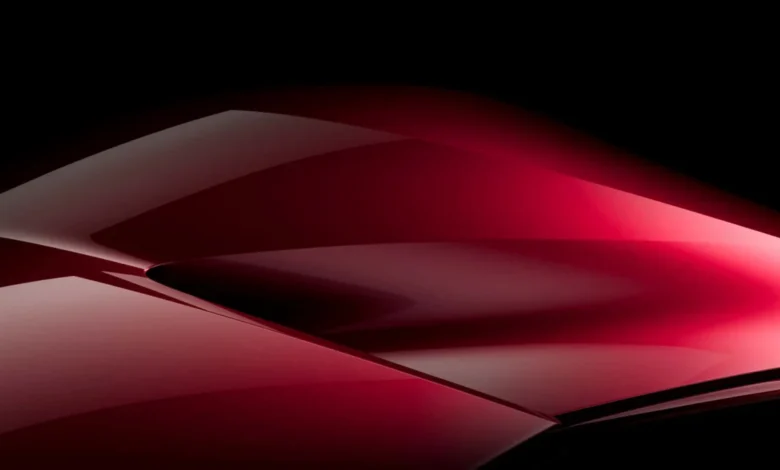
While the manufacturer has maintained strict secrecy regarding the full aesthetic of the new vehicle, it has released an abstract teaser image hinting at a sleek, low-slung silhouette. Observers suggest the design language points toward a rear three-quarter profile consistent with a modern supercar.
Alfa Romeo’s marketing materials describe the vehicle as the car that "every Alfista has been waiting for," explicitly targeting drivers who prioritize mechanical engagement and the "authentic experience" of the road. The brand has distilled the project’s philosophy into three core pillars: Italy, Sportiness, and the color Red. In a formal statement accompanying the teaser, the company noted: "From these three ingredients comes a masterpiece that is unmistakably Italian and unmistakably Alfa Romeo, looking to the future with ambition and boldness."
This language suggests that the concept may serve as a spiritual successor to the limited-production 33 Stradale, which was met with significant critical acclaim upon its release. By leaning into the "specialty model" segment, Alfa Romeo appears to be attempting to bolster its brand equity, even if the low-volume nature of such cars does not immediately solve the broader volume issues facing its mainstream lineup.
The Stellantis Strategic Roadmap
The context for this launch is the broader, often turbulent, restructuring of Stellantis. In May of this year, the multinational automotive group, led by CEO Carlos Tavares, unveiled a revised roadmap that categorized its various brands into distinct tiers. Under this new hierarchy, the group signaled a primary focus on four "core" pillars: Jeep, Ram, Peugeot, and Fiat.
Alfa Romeo, along with brands like Maserati, was repositioned as a regional or historic asset. This shift has led to concerns among analysts regarding the long-term investment pipeline for the Italian firm. While the company is working on a new compact crossover designed to slot into the portfolio alongside the Tonale, the development cycles for core models such as the next-generation Giulia and Stelvio have faced significant delays. Sources within the industry suggest these delays are largely due to a fundamental re-engineering process, as the company works to ensure that these flagship vehicles can accommodate internal combustion engines, contradicting earlier aggressive timelines for full electrification.
Chronology of Recent Developments
- 2022: Alfa Romeo experiences a peak in its recent North American performance, followed by the commencement of a steady decline in sales volume.
- May 2026: Stellantis announces a revised corporate strategy, shifting focus toward four primary core brands and reclassifying Alfa Romeo as a specialized historic brand.
- Mid-2026: Industry data confirms a 45 percent year-over-year sales drop for the brand in the first half of the year, sparking concerns about the viability of the current lineup.
- September 2026: Alfa Romeo begins teasing a new, performance-oriented concept car, aiming to shift public perception.
- October 12, 2026: The official unveiling of the concept at the Paris Motor Show is scheduled.
Implications for the Future
The decision to debut a high-performance concept serves as both a defensive and offensive maneuver. Defensively, it signals to the market and investors that Alfa Romeo remains an active, creative force, capable of producing vehicles that command attention. Offensively, it functions as a testbed for a new design language. Should the concept receive positive feedback, its styling cues are likely to be integrated into the upcoming generation of the Giulia and Stelvio.
However, the brand’s reliance on "specialty" projects raises questions about its long-term mass-market strategy. A performance brand cannot survive on halo cars alone; it requires a robust, competitive, and accessible lineup. With the Tonale serving as the entry-level offering and a new compact crossover on the horizon, the success of the brand will likely hinge on whether it can balance its heritage of sportiness with the practical, technology-driven demands of the modern consumer.
Industry Analysis: Can a Concept Save a Brand?
Market experts suggest that while a concept car can generate significant media buzz, it is rarely a substitute for a comprehensive product refresh. The primary hurdle for Alfa Romeo remains the "reset" of consumer expectations. The brand has struggled with perceptions of reliability and maintenance costs, which have historically hampered its ability to challenge German competitors like BMW or Audi in the luxury segment.
If the upcoming concept focuses solely on aesthetics and performance, it may appeal to enthusiasts but fail to capture the suburban demographic necessary for sustainable sales growth. Conversely, if the vehicle showcases a new, intuitive interface and a more reliable powertrain architecture—even if that architecture is reserved for future models—it could mark a turning point in the brand’s reputation.
Ultimately, the Paris debut will be viewed through the lens of institutional commitment. Investors will be looking for signs that Stellantis is willing to provide the necessary capital to sustain the R&D required for these new models. For the "Alfista" faithful, the event is a moment of hope; for the industry at large, it is a litmus test for the viability of a historic European marque in an era dominated by consolidation and the rapid transition to alternative propulsion.
As the October 12 deadline approaches, all eyes remain on whether this "masterpiece" can provide the catalyst needed to reverse the current trajectory. The challenge is clear: in a market increasingly dominated by electrified utility, Alfa Romeo must prove that it is not just a relic of automotive history, but a brand capable of delivering the performance-driven innovation that defined its past, adapted for a future that is rapidly evolving.