Rivian Unveils Major Hardware Upgrade for Electric Commercial Vans with Larger Battery and All-Wheel-Drive Options

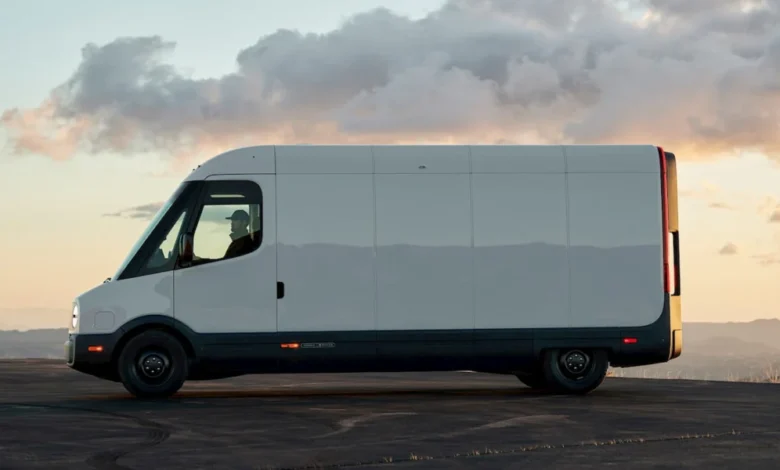
Rivian Automotive has officially rolled out the most substantial hardware overhaul for its commercial electric delivery van lineup since production first began in late 2021. The prominent electric vehicle manufacturer announced in its third-quarter shareholder presentation that customer deliveries of its newly engineered variants—featuring a significantly larger lithium-iron-phosphate (LFP) battery pack and an optional dual-motor all-wheel-drive (AWD) system—began in early October. This long-awaited engineering update marks a pivotal moment for a commercial vehicle platform that has maintained a constrained EPA-rated driving range of approximately 160 miles since its market debut, a limitation that has historically restricted its operational deployment to dense, urban environments.
The Introduction of the 129 kWh LFP Battery and Dual-Motor Configuration
The foundation of this mechanical enhancement is a newly integrated 129 kWh usable LFP (lithium iron phosphate) battery pack, which represents a roughly 29% increase in energy capacity compared to the legacy 100 kWh pack previously utilized across the EDV (Electric Delivery Van) fleet. According to official regulatory filings submitted to the Environmental Protection Agency (EPA) for the 2027 model year EDV 700, this expanded energy reservoir directly translates to a verified 30% increase in overall driving range.
Alongside the energy-dense battery upgrade, Rivian has engineered a brand-new dual-motor all-wheel-drive configuration. While the larger battery maximizes straight-line distance, the dual-motor setup is explicitly tailored to handle adverse weather and challenging road conditions. Together, these technological additions are designed to push the larger EDV 700—the model featuring 652 cubic feet of dedicated cargo space—into new geographical territories, particularly rural and suburban delivery networks that demand robust traction and extended operational radiuses. It is worth noting that the smaller EDV 500 variant will retain its current battery capacity and front-wheel-drive layout for the time being.
Chronological Timeline of the Commercial Van Program
To fully understand the significance of this rollout, it is necessary to examine the chronological progression of Rivian’s commercial van program:

- September 2021: Rivian officially commences production of its Electric Delivery Van, initially built to fulfill a massive initial order of 100,000 electric delivery vehicles for retail giant Amazon.
- Late 2023: The exclusivity window governing the commercial partnership between Rivian and Amazon officially expires, opening the door for Rivian to market and sell its commercial van architecture to outside fleet operators, logistics providers, and municipal entities.
- February 2025: Rivian reports strong momentum as Amazon expands its operational Rivian van fleet by 50% over the preceding year. During this reporting period, corporate communications first hint at internal development surrounding a larger battery pack and all-wheel-drive capabilities.
- September 17, 2026: EPA certification documents are formally issued for the 2027 EDV 700, confirming the existence and specifications of the 129 kWh usable LFP battery pack.
- October 2026: Rivian formally confirms in its Q3 shareholder presentation that physical deliveries of the upgraded dual-motor AWD and long-range FWD variants have officially commenced.
Detailed Range Analysis and Performance Metrics
Evaluating the real-world performance implications of these hardware updates requires analyzing laboratory metrics alongside operational demands. The baseline EDV 700 variant has historically offered a maximum range capability rated up to 160 miles. Applying Rivian’s validated 30% performance increase to the front-wheel-drive configuration yields an estimated driving range of approximately 208 miles on a single charge.
Conversely, the newly introduced dual-motor all-wheel-drive variant exhibits a slightly more conservative efficiency gain due to the added mechanical weight and parasitic losses associated with driving both axles. Based on EPA testing data, which reflects roughly a 23% net gain for the dual-motor architecture over baseline metrics, the AWD van is projected to achieve an operational range between 195 and 200 miles.
This performance threshold is particularly noteworthy because it mirrors the original design parameters promised by Rivian executives when commercial deliveries to Amazon first commenced in 2022, prior to the EPA-rated figures settling near the 160-mile mark. Achieving a reliable 200-mile real-world operating window effectively bridges the gap between urban distribution models and extended-range commercial applications.
Market Dynamics and Fleet Diversification Strategy
Beyond technical specifications, the introduction of this upgraded hardware addresses a critical business imperative for Rivian: the diversification of its enterprise customer base beyond its foundational partnership with Amazon.
Despite the expiration of the exclusivity agreement in late 2023, Amazon has remained the overwhelmingly dominant consumer of Rivian’s commercial van output. However, industry observers have noted nascent signs of broader commercial adoption. Recent sightings of pre-production Rivian commercial vans wrapped in Walmart+ livery on interstate transporters indicate that the manufacturer is actively testing or preparing fleets for alternative corporate partners, though neither corporation has formally publicized a binding acquisition contract.

The competitive landscape for full-size electric commercial vans in North America has simultaneously undergone significant consolidation. General Motors recently wound down production of its BrightDrop electric delivery van line in Ontario, and commercial EV startup Canoo faced severe financial distress and bankruptcy proceedings. Consequently, Ford Motor Company’s E-Transit remains Rivian’s primary competitor in the full-size commercial electric vehicle segment within the United States, positioning Rivian advantageously if it can capture displaced market share.
Broader Industry Impact and Operational Implications
The release of a 200-mile capability paired with all-wheel-drive removes a major operational barrier for commercial fleet managers. Urban delivery cycles typically involve dense, stop-and-go routes where a 160-mile battery threshold is easily managed within predictable geographic boundaries. However, utilities, telecommunication providers, rural postal contractors, and regional freight forwarders operate under entirely different constraints. These enterprises frequently encounter dispersed delivery nodes, extended transit distances between charging infrastructure depots, and severe weather conditions—such as unpaved gravel roads, mud, and heavy winter snow—where a front-wheel-drive vehicle carrying a heavy payload is at a distinct disadvantage.
By addressing these structural limitations, Rivian is effectively positioning its commercial van architecture to compete across a much broader spectrum of the commercial logistics sector. Fleet operators who previously could not guarantee overnight charging infrastructure along extended rural loops can now recalculate the total cost of ownership and operational viability of transitioning their fleets to electric power.
Fact-Based Analysis of Future Outlook
As the automotive industry navigates a complex transition toward electrification, the longevity and adaptability of commercial EV platforms will depend heavily on iterative engineering improvements rather than static designs. Rivian’s ability to successfully integrate an LFP chemistry package that increases energy density by nearly 30% while introducing a dual-motor drivetrain demonstrates a mature approach to product development.
The central challenge facing Rivian moving forward will not be the technical capability of the vehicle, but rather its commercial execution in converting exploratory interest from outside logistics firms into firm, high-volume delivery contracts. While the appearance of alternative livery designs on transport trucks signals aggressive market outreach, establishing diversified revenue streams independent of Amazon remains the definitive milestone for the long-term financial health of Rivian’s commercial division. As fleet managers evaluate the updated specifications against competing internal combustion and electric alternatives, the market will soon determine whether these hardware enhancements successfully unlock the broader commercial delivery sector that Rivian has targeted since its inception.
Related posts: