Isack Hadjar calls for professional boundaries in the Formula 1 paddock after incident with guest at Mexican Grand Prix


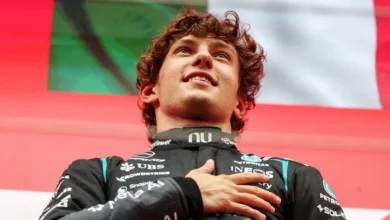
The high-pressure environment of a Formula 1 race weekend serves as the global stage for the pinnacle of motorsport, yet the recent incident involving Red Bull driver Isack Hadjar at the Autódromo Hermanos Rodríguez has cast a spotlight on the increasingly difficult balance between fan engagement and the professional requirements of athletes. During the lead-up to the Mexican Grand Prix, footage circulated on social media platforms showing Hadjar physically pushing away an unidentified paddock guest who had attempted to force a photograph with him. This confrontation resulted in an immediate summons from the FIA stewards, ultimately culminating in a formal warning for the driver.
The incident highlights a growing friction point within the sport: the transition of the Formula 1 paddock from a strictly controlled working environment for teams and drivers into a high-traffic area often saturated with guests, influencers, and corporate invitees. As Hadjar stated in the aftermath, the nature of his professional duties requires focus and accessibility to the team garage, not the performative atmosphere of a reality television production.
Chronology of the Incident and Stewarding Decision
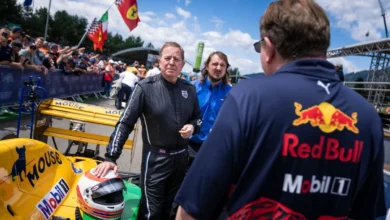
The sequence of events began on the morning of Saturday’s free practice session. As drivers traversed the paddock—a narrow corridor designed for technical staff and media to move between hospitality units and team garages—congestion reached a critical point. Hadjar, moving through this high-density area without a dedicated security detail, was approached by a man who sought to capture a selfie.
When the interaction escalated into an unwanted physical invasion of his personal space, Hadjar responded by shoving the individual aside to clear his path. The action was captured by onlookers and quickly uploaded to digital platforms, leading to an investigation by the FIA. The stewards, led by an independent panel, reviewed the evidence and determined that while the International Sporting Code had been breached, the context necessitated a lenient approach.
The official ruling cited five distinct mitigating factors that led to a formal warning rather than a more severe penalty:
- The driver was reacting to an uninvited and aggressive physical approach by the guest.
- The driver was actively attempting to reach his workspace for the start of Free Practice 1.
- The specific area of the paddock was critically congested at the time of the event.
- The driver lacked adequate security or support staff to facilitate safe movement through the crowd.
- The guest had invaded the driver’s personal space without prior consent.
These factors underscore a systemic issue that has plagued recent race weekends: the sheer volume of personnel permitted into restricted zones often exceeds the capacity for safe and efficient movement.
The Evolution of the Paddock Environment
To understand the frustration expressed by Hadjar, one must look at the evolution of the F1 paddock over the last decade. Historically, the paddock was a restricted space reserved for team members, media, and a limited number of VIPs. However, under the ownership of Liberty Media, the sport has undergone a rapid expansion in its commercial footprint. The "Netflix effect," driven by the success of Drive to Survive, has brought unprecedented global interest to the sport, resulting in larger crowds and a significantly more diluted sense of privacy for the participants.
Max Verstappen, the reigning world champion and Hadjar’s Red Bull stablemate, has been vocal about this shift for some time. Verstappen famously characterized the modern paddock as feeling "like a zoo," noting that the environment has become chaotic and distracting. For drivers, who are often preparing for high-stakes qualifying sessions or critical tactical meetings, this atmosphere creates a mental toll.
Hadjar’s comments following his qualifying session—in which he secured a respectable seventh position—echoed these sentiments. "There’s a limit to it," he explained. "When you’re a kid, I’m going to take a picture. When I don’t want to take a picture because you’re a grown man, don’t invade my space, because I’m going to work; it’s not a reality show."

Data and Infrastructure Challenges
The logistics of the Mexican Grand Prix provide a case study in the difficulties of hosting an F1 event in a legacy circuit environment. The Autódromo Hermanos Rodríguez, while iconic, features a paddock layout that is notoriously narrow. When hundreds of guests are granted access alongside the 10 teams—each employing dozens of engineers, mechanics, and support staff—the space becomes functionally non-compliant with the needs of a high-performance team.
Supporting data regarding paddock density is difficult to quantify as the FIA does not publicize precise guest numbers per session, but anecdotal evidence from team principals suggests that guest passes have increased by nearly 40% since 2019. This influx of non-essential personnel complicates the "fast-track" requirement for drivers to reach their garages, which is a fundamental requirement for the sport’s operational timing.
Furthermore, the lack of security escorts for non-top-tier drivers remains a point of contention. While marquee names like Lewis Hamilton or Max Verstappen are almost always flanked by security personnel, younger drivers or those in junior-tier programs often find themselves navigating the crowd alone. This creates a disparity in the level of protection afforded to participants and increases the likelihood of incidents like the one involving Hadjar.
Implications for the Sport
The incident in Mexico City has triggered a wider conversation regarding the balance between the "fan-first" philosophy of modern Formula 1 and the professional obligations of its drivers. If the sport intends to maintain its rapid growth trajectory, it must address the physical infrastructure of its venues.
Several potential solutions are currently being discussed by the Grand Prix Drivers’ Association (GPDA) and the FIA:
- Stricter Access Controls: Implementing "quiet hours" or restricted zones in the paddock where only accredited team personnel and media are permitted during active session windows.
- Enhanced Security Presence: Increasing the number of paddock marshals specifically tasked with managing the flow of human traffic, rather than just monitoring for security threats.
- Defined Boundaries for Guests: Ensuring that all guests, regardless of their corporate or VIP status, are educated on the protocols of the paddock, specifically the prohibition of unauthorized physical contact with drivers.
The fact that the stewards—who are usually strict regarding any form of physical altercation—found in favor of the driver indicates an official acknowledgment that the current status quo is untenable. The ruling serves as a warning not just to the driver, but to the organizers who manage the paddock environment.
Conclusion: A Call for Professionalism
Isack Hadjar’s defense of his actions is not merely a reaction to a single encounter; it is a assertion of professional identity. The driver’s ability to perform at the limits of human capability requires a degree of mental preparation that is incompatible with the chaotic environment of a modern, overcrowded paddock.
As the 2024 season progresses, the sport finds itself at a crossroads. The popularity of Formula 1 has brought financial prosperity and global recognition, but it has also brought the challenge of maintaining a professional workplace. The consensus among the grid, from veterans like Verstappen to rising talents like Hadjar, is clear: the paddock must regain its status as a workspace, not a spectator attraction. Until such time that safety and professional boundaries are prioritized, incidents of this nature are likely to persist, potentially leading to more significant clashes between the athletes and the public they represent.
For now, the formal warning issued to Hadjar stands as a reminder of the delicate balance required to run the world’s most advanced sporting spectacle. It is a signal that while the show must go on, the individuals responsible for the speed and the spectacle deserve the space to do their jobs without the intrusion of an increasingly unmanaged guest list. The sport’s future, it seems, depends on its ability to respect the line between the fan and the professional.