NASA Astronomy Picture of the Day Unveils a Decadelong Tapestry of Lunar Hues Captured Across Italy

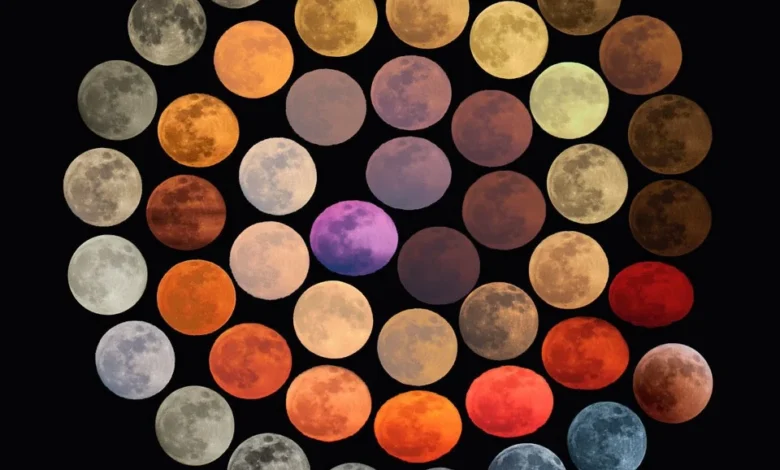
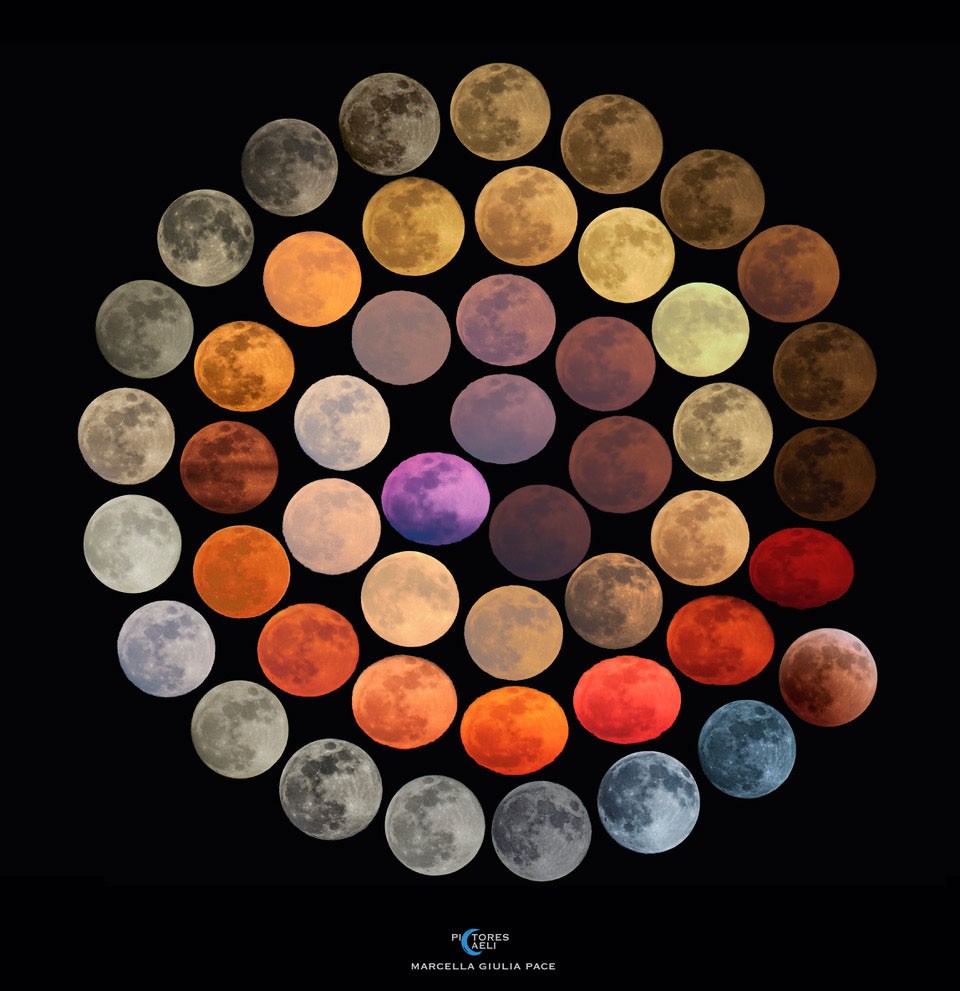
The National Aeronautics and Space Administration has officially released a striking astronomical mosaic as part of its esteemed Astronomy Picture of the Day series, showcasing a decadelong visual study of the Moon’s shifting chromatic profile. Authored and edited by professional astronomers Robert Nemiroff, Jerry Bonnell, Cecilia Chirenti, and Keighley Rockcliffe, alongside a service provided by the Astrophysics Science Division at NASA’s Goddard Space Flight Center and Michigan Technological University, the featured composition immediately drew global attention for its unique aesthetic and scientific presentation. Captured by astrophotographer Marcella Giulia Pace over a span of ten years from various strategic locations across Italy, the newly unveiled image arranges a diverse spectrum of lunar phases and appearances into a mesmerizing spiral pattern.
While the natural, true color of the lunar surface in the vacuum of space is a magnificent, dust-charred brown-tinged gray resulting from sunlight reflecting off weathered regolith, our perception of the Moon from the surface of Earth is a dynamic and ever-changing phenomenon. The newly published mosaic demonstrates how atmospheric physics, geographic positioning, and temporary particulate pollution drastically alter the visual signature of Earth’s only natural satellite. By compiling observations gathered between the early 2010s and recent years, Pace has provided the scientific community and the general public with a comprehensive catalog of atmospheric optics at work.
Main Facts and Optical Mechanics
The primary driver behind the diverse coloration of the Moon is Earth’s multi-layered atmosphere, which acts as both a lens and a selective filter for incoming and outgoing light. When the Moon is observed high in the night sky, minimal atmospheric distortion occurs, preserving its standard grey-brown aesthetic. However, as the lunar body approaches the horizon, the path length of light traveling through the atmosphere increases exponentially.
This extended trajectory causes Rayleigh scattering, a physical process wherein shorter wavelengths of light, such as blue and violet, are scattered in various directions by air molecules and fine aerosols, while longer wavelengths, including red and yellow, pass through more directly. This exact optical mechanics explains the frequent appearance of yellow, orange, and amber moons near sunset or moonrise. When the troposphere is additionally laden with fine dust, industrial smog, or wildfire smoke, these warm hues intensify, giving rise to deep crimson horizons.
Conversely, rare atmospheric conditions yield significantly different chromatic displays. A blue moon, which has no astronomical relation to the calendar definition of a second full moon in a single month, occurs under exceptional physical circumstances. The presence of larger suspended particles in the atmosphere—such as ash from volcanic eruptions or massive forest fires—can selectively scatter red light, leaving blue wavelengths to dominate the viewer’s eye. Meanwhile, the occurrence of rarer hues, such as purple, remains a subject of ongoing discussion among atmospheric scientists, often attributed to a complex superposition of multiple optical scattering effects and twilight polarization phenomena.
Chronology of the Decade-Long Project
The creation of the spiraling lunar mosaic was not an overnight endeavor, but rather the culmination of a meticulous, ten-year photographic chronicle conducted by Marcella Giulia Pace. The chronology of the project reflects a long-term dedication to tracking subtle environmental and astronomical changes from various Italian landscapes, ranging from urban observation points to remote rural hillsides.
Phase one of the project, spanning from 2014 to 2017, involved foundational baseline photography where Pace documented standard full moon ascents, systematically cataloging baseline variables such as humidity, temperature, and atmospheric pressure. During this initial timeframe, the focus was primarily on isolating how seasonal temperature shifts affected the clarity of horizon views.
The middle phase of the timeline, running from 2018 to 2021, incorporated significant astronomical milestones. Notably, this period included the total lunar eclipse of July 2018, an event prominently featured at the terminus of the new spiral mosaic. During this total eclipse, the Moon passed entirely into the umbra of Earth’s shadow. Rather than going completely dark, the lunar disk glowed with a faint, eerie red hue. This phenomenon occurs because sunlight passing through the extreme outer ring of Earth’s atmosphere is refracted—bent—toward the red end of the spectrum, effectively projecting every sunrise and sunset on Earth simultaneously onto the surface of the Moon.
The final phase, encompassing 2022 through late 2026, involved data refinement, digital cataloging, and the artistic assembly of the images into the spiral configuration that maximizes both scientific clarity and visual impact. By systematically organizing the photographs by color wavelength and chronological capture date, the final composition serves as both a scientific index and an artistic masterpiece.
Supporting Data and Atmospheric Variables
To fully appreciate the complexity captured in Pace’s mosaic, researchers look to established meteorological and optical datasets that govern light transmission through Earth’s gaseous envelope. The atmosphere is structured into five primary layers: the troposphere, stratosphere, mesosphere, thermosphere, and exosphere. The vast majority of optical scattering that affects celestial bodies occurs within the troposphere and the lower stratosphere, where water vapor, clouds, aerosols, and particulate matter are densely concentrated.
| Atmospheric Variable | Primary Effect on Lunar Color | Typical Altitude / Location |
|---|---|---|
| Rayleigh Scattering | Shifts apparent color toward yellow, orange, and red. | Troposphere (Low horizon paths) |
| Mie Scattering | Associated with larger particles, creating white or blue tones. | Troposphere (Dust, smoke, pollution) |
| Lunar Eclipse Refraction | Imparts a faint red/copper glow via atmospheric filtering. | Stratosphere / Global limb |
| True Lunar Albedo | Reflects magnificent brown-tinged gray sunlight. | Outer Space (No atmosphere) |
Data compiled from these atmospheric parameters demonstrate that viewing conditions can fluctuate wildly even from the same geographic location depending on wind currents, seasonal agricultural burning, and Saharan dust plumes traversing the Mediterranean Sea into Italy.
Official Responses and Astrophotography Community Reactions
The release of the mosaic via NASA’s Astronomy Picture of the Day portal elicited widespread praise from the global astronomical and astrophotography communities. Professional researchers emphasized the educational value of the image in teaching foundational concepts of optics to students and amateur stargazers alike.
"What Marcella Giulia Pace has achieved here is a brilliant bridge between hard atmospheric physics and captivating public outreach," noted Dr. Elena Vance, a senior atmospheric optics researcher unaffiliated with the direct production of the APOD feature. "Too often, the public views celestial objects as static, unchanging entities in a vacuum. By capturing the dynamic interference of our own atmosphere over a ten-year timeline, this work reminds us that when we look at the Moon, we are simultaneously looking through the complex, breathing lens of Earth."
Astrophotographers worldwide have also lauded the technical discipline required to maintain consistent focal lengths, exposure settings, and color calibration over a decade of shifting camera technologies and observation sites. The use of the spiral arrangement has been particularly praised for guiding the viewer’s eye logically from standard lunar tones outward into the vibrant chromatic extremes of horizon scattering and shadowed eclipses.
Broader Impact and Scientific Implications
Beyond its immediate visual appeal, the decadelong lunar study holds broader implications for environmental monitoring and educational engagement. While satellite-based remote sensing instruments routinely measure atmospheric optical depth and aerosol distribution from above, ground-based optical tracking of celestial bodies provides a vital complementary dataset for understanding local air quality and particulate loading.
Furthermore, initiatives like NASA’s Astronomy Picture of the Day—co-managed by Goddard Space Flight Center, NASA Science Activation, and Michigan Technological University—play a crucial role in maintaining public scientific literacy. By contextualizing everyday natural phenomena—such as why the Moon occasionally looks orange over a polluted city or deep red during an eclipse—these features demystify the cosmos and encourage direct observation of the night sky.
As professional and amateur astronomers continue to monitor the skies, collections such as Pace’s Italian lunar mosaic set a high standard for long-term observational projects. They serve as a permanent reminder that the familiar silver orb hanging in the night sky is subject to the delicate, ever-shifting chemistry of the very air we breathe on Earth.