SpaceX marks 700th Falcon rocket launch with final deployment of O3b mPOWER satellite constellation

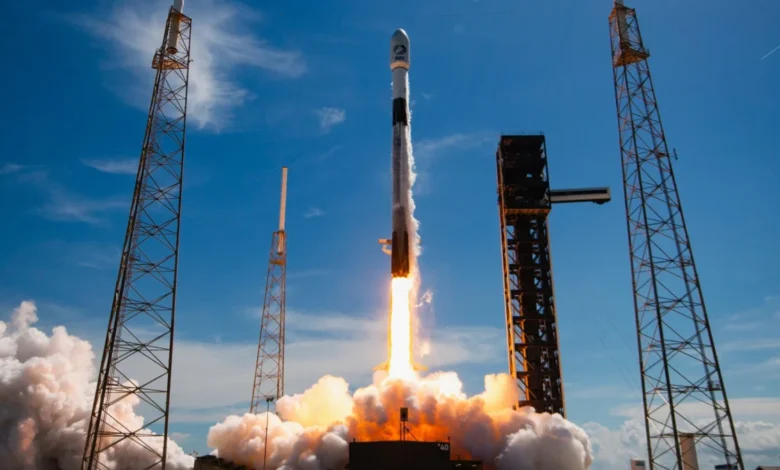
The aerospace industry reached a significant milestone on September 13, 2026, as SpaceX successfully executed the 700th flight of its Falcon rocket family. The mission, which lifted off from the Cape Canaveral Space Force Station in Florida at 2:49 p.m. EDT (1849 GMT), served a dual purpose: celebrating the longevity of the Falcon program while finalizing the high-speed O3b mPOWER satellite network for Luxembourg-based telecommunications giant SES.
A Historic Milestone for the Falcon Program
The launch represented the 700th total flight of the Falcon series, an architecture that has evolved significantly since its inception. The journey began in March 2006 with the debut of the Falcon 1, a small-lift launch vehicle that struggled through early failures before achieving success in 2008. While only five Falcon 1 missions were conducted, the lessons learned paved the way for the Falcon 9, which took its first flight in 2010.
Over the subsequent 16 years, the Falcon 9 has become the world’s most prolific orbital launch vehicle. Its reliability and reusability model have fundamentally altered the economics of space access. The Falcon family’s second member, the heavy-lift Falcon Heavy, has further expanded SpaceX’s capabilities, having completed 13 missions to date. The sheer frequency of these launches has enabled a rapid cadence of satellite deployments, research missions, and human spaceflight endeavors that were previously considered impossible under traditional aerospace cost structures.
Mission Profile: The O3b mPOWER Completion
The primary objective of this mission was to deliver the final three satellites of the O3b mPOWER constellation into medium Earth orbit (MEO). Manufactured by Boeing, these satellites are designed to provide high-throughput, low-latency connectivity to government and commercial clients. Each satellite weighs approximately 3,750 pounds (1,700 kilograms) and is equipped with advanced software-defined payloads, allowing for the dynamic allocation of bandwidth based on real-time global demand.
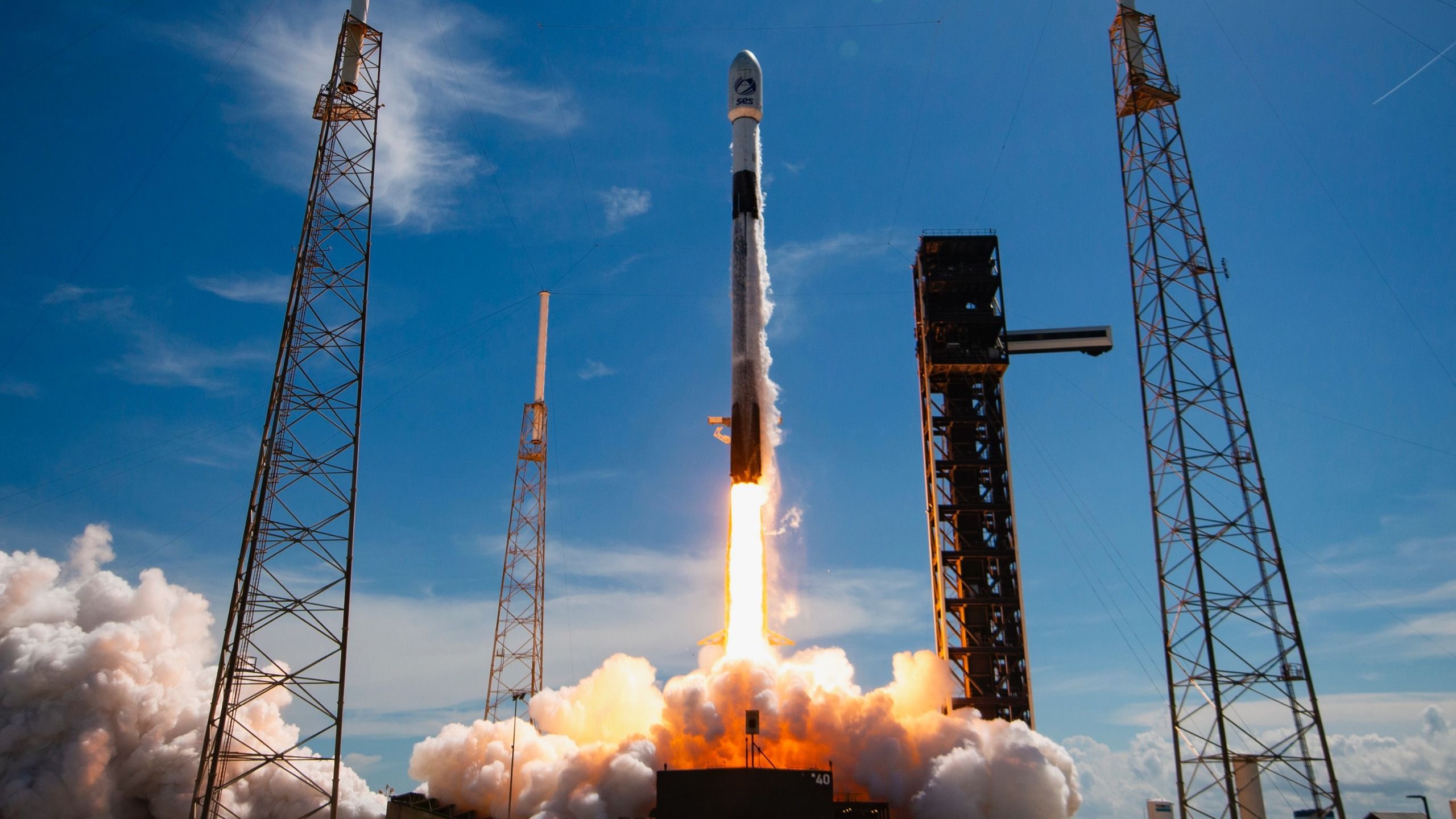
Following a nominal ascent, the Falcon 9’s first stage—booster B1080, flying its 29th mission—successfully returned to Earth. Approximately nine minutes after liftoff, the booster touched down on the SpaceX autonomous spaceport drone ship, "A Shortfall of Gravitas," stationed in the Atlantic Ocean. Meanwhile, the second stage continued the mission, performing the necessary orbital maneuvers to reach an altitude of 5,000 miles (8,000 kilometers). The three satellites were released over a 14-minute interval, beginning roughly 33.5 minutes after the initial launch.
SES and the Evolution of MEO Connectivity
With this deployment, the SES O3b mPOWER constellation is now complete. The constellation, which now consists of 13 satellites in total, represents a shift in satellite communications strategy. Unlike traditional geostationary satellites that operate at much higher altitudes, the MEO positioning of the mPOWER network allows for significantly reduced signal latency, making it competitive with terrestrial fiber-optic networks.
According to technical specifications provided by SES, the system is engineered to deliver guaranteed performance for industries where downtime is financially or operationally catastrophic. This includes maritime operations, aviation, remote government installations, and telecommunications backhaul for underserved regions. By pairing these software-defined satellites with an intelligent ground segment, SES aims to ensure that capacity can be steered toward areas experiencing sudden spikes in demand, such as disaster recovery zones or high-traffic commercial hubs.
Chronology and Operational Context
SpaceX’s operational pace in 2026 has been nothing short of aggressive. This mission marked the 107th orbital launch for the company in the current calendar year. The breakdown of this performance highlights the reliance on the Falcon 9, which has accounted for 105 of those launches, while the Falcon Heavy has managed the remaining two.
The timeline for the O3b mPOWER project itself reflects the broader timeline of modern satellite deployment:
- December 2022: Initial launch of the first O3b mPOWER satellites.
- 2023–2025: Sequential launches to populate the MEO constellation.
- September 13, 2026: Final three satellites deployed, completing the mission objective.
Beyond the Falcon program, SpaceX continues to divert significant resources toward the development of its next-generation launch vehicle, Starship. Having completed two suborbital test flights earlier in 2026, the company is currently preparing for a third test, which industry analysts expect will be the first attempt to place the massive vehicle into an orbital trajectory.
Industry Implications and Future Outlook
The completion of the O3b mPOWER constellation carries profound implications for the global digital divide and enterprise connectivity. As the world becomes increasingly reliant on data-intensive applications, the demand for "anywhere" high-speed internet continues to outpace current infrastructure capabilities.
The success of the SES mission also underscores the maturity of the commercial space launch sector. When the Falcon 1 first launched in 2006, the idea of a private company launching 700 missions was dismissed by many in the aerospace establishment. Today, the reliability of boosters like B1080—which flew its 29th mission—demonstrates that reusability is no longer an experimental concept but the standard for modern logistics.
From a regulatory and competitive standpoint, the deployment highlights the ongoing trend of "constellation-ization." Major players like SpaceX (Starlink), Eutelsat OneWeb, and SES are racing to capture the market for global ubiquitous connectivity. However, the O3b mPOWER system occupies a unique niche by focusing on high-bandwidth, MEO-based performance that bridges the gap between the low-Earth orbit (LEO) constellations and traditional geostationary satellites.
Official Statements and Technical Recognition
While SpaceX provided the launch infrastructure, the partnership with Boeing and SES has been cited as a model for future space-based utility projects. Boeing, which has faced challenges in other sectors of its aerospace business, has positioned the mPOWER platform as a key success story in its satellite manufacturing division.
"The integration of intelligent ground software with high-capacity satellites marks a new era in network resilience," an industry analyst noted following the successful deployment. "By completing this constellation, SES is effectively turning on a global ‘fiber-like’ network in the sky, which will be instrumental for the next decade of digital transformation."
As SpaceX looks toward its 800th, 900th, and 1,000th mission, the company’s trajectory suggests a move toward even higher launch cadences. With Starship looming on the horizon, the ability to lift larger, more complex payloads—or larger quantities of satellites per launch—will likely redefine the constraints of orbital operations once again. For now, however, the successful completion of the O3b mPOWER constellation stands as a testament to the reliability of the Falcon 9 and the enduring vision of commercial space infrastructure.