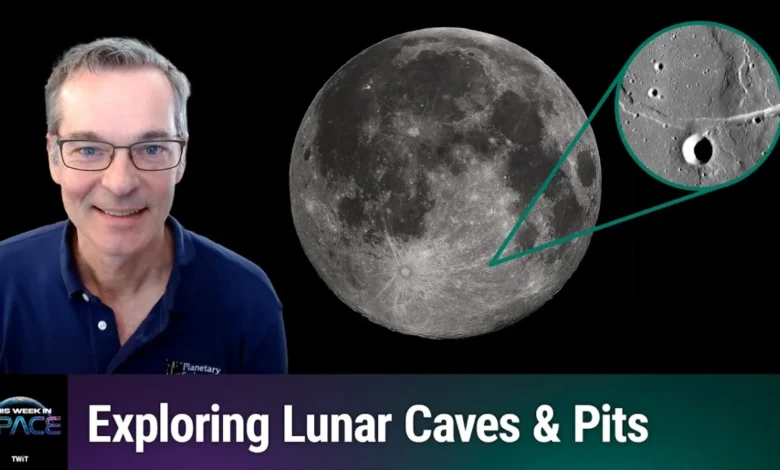
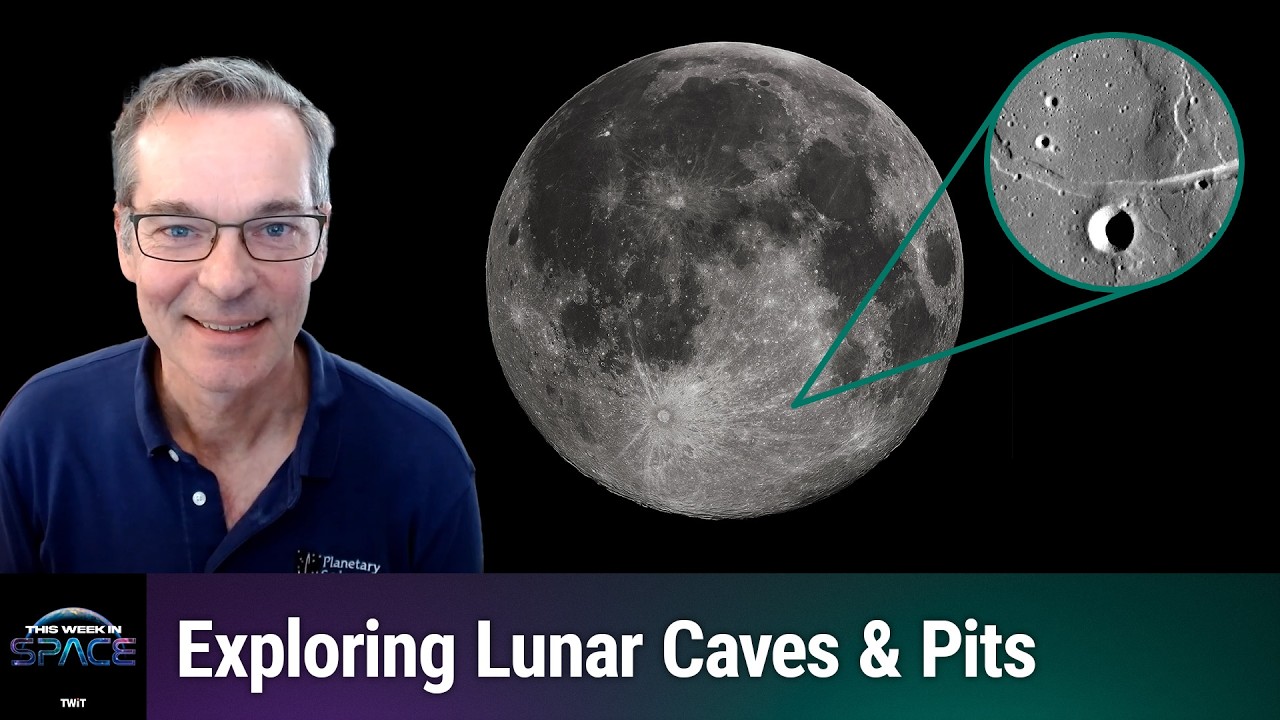
The quest to establish a permanent human presence on the Moon has shifted from the surface to the subsurface, as researchers increasingly look toward the lunar crust to protect future explorers from the harsh realities of the space environment. On the latest installment of the podcast series This Week in Space, hosts Tariq Malik and Mike Wall engaged in a detailed discussion with Than Putzig of the Planetary Science Institute regarding a NASA-backed initiative focused on the Marius Hills region. This area, characterized by a mysterious 50-meter-wide pit, is believed to be a gateway to vast subterranean lava tubes that could serve as natural, ready-made bunkers for lunar colonists.
The Geological Promise of Lava Tubes
Lunar lava tubes are remnants of the Moon’s volcanic past, formed billions of years ago when basaltic lava flowed across the surface. As the outer layer of these lava flows cooled and solidified, the molten material beneath continued to drain away, leaving behind hollow, tunnel-like structures. These geological formations are not merely curiosities; they represent the most viable solution to the myriad survival challenges faced by humans living on the lunar surface.
The lunar environment is exceptionally hostile. Without a significant atmosphere or a protective global magnetic field, the surface is subjected to constant solar radiation, cosmic rays, and a temperature swing that ranges from roughly 127 degrees Celsius (260 degrees Fahrenheit) in the sun to minus 173 degrees Celsius (minus 280 degrees Fahrenheit) in the shade. Furthermore, the constant threat of micrometeoroid impacts makes traditional, thin-walled surface habitats hazardous. A lava tube, shielded by several meters of solid basaltic rock, provides a stable thermal environment and protection against radiation and impacts, effectively creating a natural "basement" for a moon base.
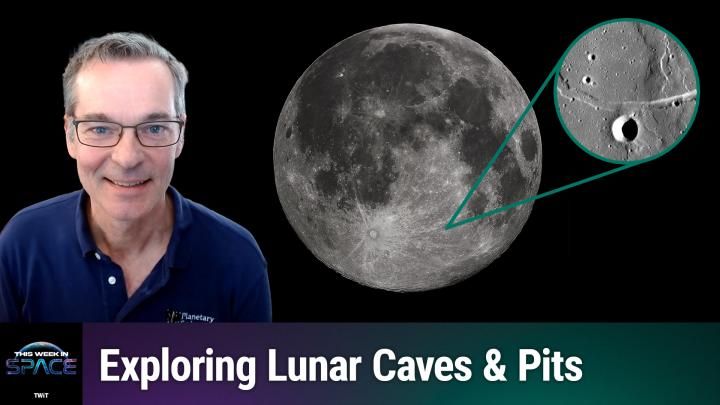
The Marius Hills Pit: A Gateway to the Interior
The Marius Hills region, located in the Oceanus Procellarum, has long been identified by orbital reconnaissance as a site of intense volcanic activity. The pit in question, which appears to be a skylight or a collapse in the roof of a much larger underlying cave system, is the primary target for the proposed robotic mission discussed on the podcast.
Than Putzig emphasized that the mission would utilize advanced geophysical instrumentation mounted on a rover to map the subsurface voids. By using ground-penetrating radar and gravimetric sensors, the team aims to determine the structural integrity, depth, and volume of these lava tubes. Confirming that these tubes are not only accessible but also stable enough to host human infrastructure is a critical prerequisite for any long-term habitation strategy.
Chronology of Lunar Exploration and Habitat Development
The concept of subterranean lunar living is not new, but it has gained significant momentum in the last decade. A brief chronology of the steps leading to this current focus includes:
- 2009: The Japan Aerospace Exploration Agency’s (JAXA) SELENE (Kaguya) mission provided the first high-resolution imagery confirming the existence of lunar skylights, including the one in the Marius Hills.
- 2014: Data from NASA’s Lunar Reconnaissance Orbiter (LRO) allowed scientists to map these features with greater precision, identifying hundreds of potential pit craters across the lunar surface.
- 2017: A team led by Junichi Haruyama of JAXA published findings suggesting that the Marius Hills cave system could be vast, potentially extending for kilometers.
- 2020s: NASA’s Artemis program, focused on returning humans to the Moon, shifted the focus toward sustainable, long-term operations. The inclusion of subsurface exploration in the mission architecture reflects this shift from "flags and footprints" to a permanent research presence.
Technological Challenges and Future Missions
Transitioning from orbital observation to physical exploration requires a new generation of robotic technology. The mission described by Putzig and the podcast hosts centers on the deployment of a specialized rover. Unlike traditional lunar rovers, which operate primarily on flat, illuminated terrain, a rover designed to explore a lava tube must contend with extreme darkness, steep ingress and egress, and potential communication blackouts caused by the thick rock ceilings of the caves.
To overcome these obstacles, scientists are exploring the use of autonomous navigation systems that do not rely on GPS, as well as high-capacity lighting systems and wireless relay nodes. These nodes would be dropped by the rover as it descends into the pit to maintain a link with the surface lander, which in turn communicates with Earth via the Lunar Gateway or orbital relay satellites.
Scientific and Economic Implications
The decision to investigate these caves is driven by more than just the need for shelter. These tubes are essentially geological time capsules. Because they have been sealed off from the surface environment for billions of years, they likely contain pristine samples of the lunar crust that have not been degraded by solar wind or meteoroid bombardment. Accessing these samples could provide unprecedented insight into the early history of the Earth-Moon system and the volcanic evolution of the Moon.
From an economic perspective, the presence of stable, sheltered environments reduces the logistical burden of transporting heavy shielding materials from Earth. If humans can utilize natural caves, the energy and mass required to construct a habitat are significantly reduced, accelerating the timeline for the commercial and scientific development of the Moon.
The Artemis Context
This research is deeply integrated into the broader framework of NASA’s Artemis program. While the initial Artemis missions are focused on the lunar south pole—chosen for its abundance of water ice—the techniques developed for the Marius Hills mission have cross-platform applications. Whether at the poles or in the equatorial maria, the ability to "go underground" will likely become a standard operating procedure for lunar bases.
NASA’s current strategy is to develop a modular, scalable presence. The insights gained from the robotic exploration of the Marius Hills pit will inform the design of future modular habitats that can be connected or retrofitted into these subterranean spaces. By leveraging the natural geology of the Moon, NASA aims to reduce the "infrastructure tax" of space exploration, making it cheaper and safer to maintain a human presence.
Broader Impact and Human Expansion
The pursuit of subterranean lunar living represents a fundamental shift in the philosophy of space exploration. It moves away from the idea of humans as "visitors" who must bring their entire environment with them, toward a model of "in-situ resource utilization" (ISRU). By treating the Moon as a resource-rich environment that can provide shelter and raw materials, humanity is taking the first steps toward true interplanetary self-sufficiency.
As the podcast hosts noted, the race to the moon is not just a competition between nations, but a collaborative effort to solve the engineering problems that have kept humanity confined to Earth for the entirety of its history. Whether it is through the deployment of autonomous rovers to map ancient volcanic tunnels or the development of commercial-grade rockets like the SpaceX Falcon 9—which has become a staple of modern space logistics—the infrastructure for a multi-planetary future is being laid.
In conclusion, the investigation into the Marius Hills Pit is a pivotal step in the evolution of space exploration. It bridges the gap between theoretical lunar science and the practical requirements of human habitation. As we look toward the next several years, the data gathered from these missions will be instrumental in deciding where and how humanity will plant its next, more permanent roots in the cosmos. The dark, hidden voids of the Moon, once thought to be nothing more than curiosities of the lunar landscape, may well prove to be the foundations upon which the first off-world cities are built. Through the intersection of rigorous geophysical research and innovative engineering, the dream of living inside the Moon is transitioning from the realm of science fiction into a tangible, achievable objective for the 21st century.