Behind the Seams: Inside the Creative Warfare and Psychological Storytelling of Hollywood Costume Design

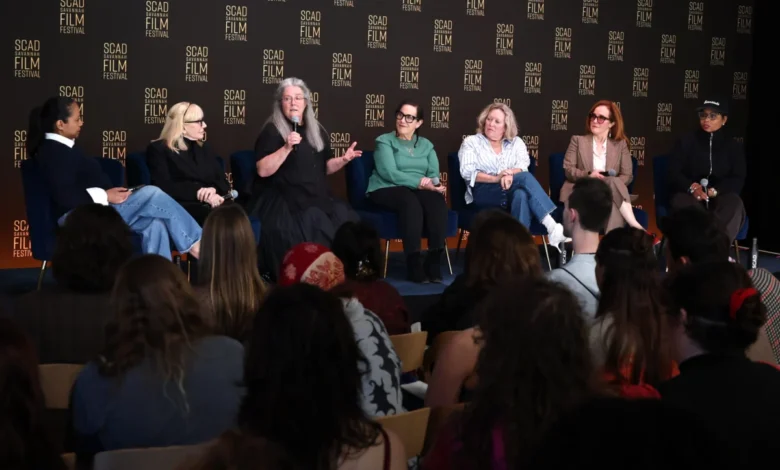
The popular misconception that costume design in contemporary cinema is little more than a glamorous shopping spree was dismantled with surgical precision at the recent Costume Design Roundtable, held during the SCAD Savannah Film Festival. Moderated by Variety’s Senior Artisans Editor Jazz Tangcay, the panel gathered some of the industry’s most revered artisans to discuss the intense psychological depth, historical rigor, and political navigation required to dress modern and historical cinematic characters.
Far from simply selecting off-the-rack luxury labels, contemporary film design involves world-building, sociological research, and psychological profiling. Panelists Molly Rogers (The Devil Wears Prada 2), Ellen Mirojnick (The Odyssey), Arianne Phillips (The Invite), Linda Muir (Werwulf), Amy Roth (I Play Rocky), and Marci Rodgers (Michael) offered a rare, unfiltered look into the machinery of Hollywood wardrobe departments. Their revelations highlighted a stark contrast between Hollywood’s executive culture—which often reduces costumes to product placement and retail curation—and the painstaking artistry that defines the craft.
The Myth of the Retail Fix: Defining Contemporary Design
The roundtable immediately confronted the industry-wide undervaluation of contemporary costume design. For outsiders, outfitting actors in modern clothing seems straightforward, but veterans argue it is among the most demanding disciplines in filmmaking.
Molly Rogers, whose extensive credits include assisting on the original The Devil Wears Prada and stepping into the role of costume designer for its anticipated sequel, delivered a blunt assessment of industry aspirants. "When someone comes up to me and says, ‘I really want to learn and work with you. I love to shop.’ That’s an automatic exit," Rogers stated.
This sentiment was echoed by Ellen Mirojnick, whose illustrious career spans decades of defining cinematic style in films like Wall Street, Basic Instinct, and Fatal Attraction. Reflecting on her early work, Mirojnick noted that contemporary design serves as a vital historical archive. "I loved being able to document what New York was like at that period, because yes, it was for film, but it also documented the history of what we were like, even if it was elevated for a contemporary character," she explained. "Contemporary design is very difficult and very beautiful at the same time to create."
Marci Rodgers shared similar challenges from her early days working on Spike Lee’s She’s Gotta Have It. Moving to New York from Chicago, Rodgers recognized that she needed to immerse herself in the local culture to capture its authentic rhythm. She asked Lee to sit with her during background casting sessions specifically to observe how everyday people entered the room dressed. When developing the character Nola Darling, Rodgers discovered that the character’s favorite artist was Prince. Rather than relying on high-end luxury retailers like Saks Fifth Avenue to signal style, Rodgers scoured thrift stores, curating "tidbits of purple" to subtly hint at the character’s artistic influences without sacrificing her financial reality.
Rodgers applied this same sociological approach to the comedy Barbershop, set in Chicago, where reflecting the specific community and street-level fashion of the era was paramount. Summing up the unpredictability of the discipline, Rodgers recalled a professor’s warning: "Contemporary design would be the hardest thing I’d ever do. Actors will come in with an idea—or no idea—and then, after the table read, everything changes."
Executive Interference and the Rise of Product Placement
As film financing models evolve, costume designers face escalating pressures from producers, studios, and corporate sponsors. Arianne Phillips, whose diverse credits include Nocturnal Animals, The Invite, and I Want Your Sex, illuminated the friction between creative integrity and executive oversight.
Phillips pointed out that studio executives, producers, and directors often inhabit a world of immense wealth where personal shopping is outsourced and consumption is frictionless. This disconnect frequently leads to executive overreach. "This happens with actors a lot, where they’ll say, ‘Oh, I know my character wore those Prada boots,’" Phillips explained. "You have to be, as Marci said, a salesperson for your character. Costume design can be disrespected so easily by people sitting behind desks moving numbers around and not giving you the support you need."
Compounding this creative friction is the growing financial reliance on luxury brand integration. With studios increasingly turning to high-end fashion houses to subsidize production budgets, wardrobe departments are frequently handed mandates from the executive suite. "We’re told by producers, ‘You have to use that product,’" Phillips revealed. She emphasized that modern costume designers must carefully choose which directors they collaborate with—specifically seeking out filmmakers who fiercely protect story integrity against the encroaching tide of commercial product placement.
Epics and Era-Specific Rigor: Weaving History into Fabric
While contemporary design battles retail clichés and executive mandates, historical and epic filmmaking presents a different set of obstacles: exhaustive research, material scarcity, and structural authenticity.
Ellen Mirojnick’s work on Christopher Nolan’s cinematic retelling of The Odyssey required her team to construct over 5,300 distinct costumes. A centerpiece of her design strategy was the visual tracking of Anne Hathaway’s Queen Penelope. The House of Ithaca was anchored by a deliberate color palette of burned red, a tone that permeated Penelope’s wardrobe to maintain narrative continuity.
However, the film’s narrative climax demanded a dramatic visual shift. When Odysseus finally returns home, Penelope sheds her domestic reds for a striking blue dress that functions essentially as tactical armor. Mirojnick and her team engineered a tightly pleated drape, custom-tailored to the precise geometry of Hathaway’s body. Extending high up the neck and paired with a sparse, golden necklace—one of the character’s rare decorative pieces—the gown projected unyielding strength. "It felt as if she was ready for battle, and she was going to hold her own," Mirojnick said. "She had a challenge to put forth, and her gown reinforced her strength."
A similarly forensic approach to historical accuracy drove Linda Muir’s work with director Robert Eggers on The Northman and the upcoming project Werwulf. Muir dedicated extensive research to the historical significance of wool in Viking-era society, where it functioned as a primary indicator of wealth and social standing. Explaining the socio-ecological history behind the textiles, Muir noted, "There are no wolves in the British Isles because the king ordered all of them eradicated so they wouldn’t eat the sheep."
Because the wealthy class aggressively acquired wool, a character’s surplus of wool garments immediately signaled upper-class status to the audience. Yet, achieving this historical fidelity presented logistical nightmares. Muir cited the intense difficulty of sourcing artisans capable of authentically reproducing ancient wool fabrics, specialized hats, handcrafted jewelry, authentic buttons, and period-accurate belts when working within a severely restricted historical material palette.
Psychological Layering in Modern Drama and Sequels
In contemporary dramatic storytelling, costumes often serve as silent narrators, telegraphing emotional states and relationship dynamics long before characters speak.
Discussing her third collaboration with filmmaker Olivia Wilde on The Invite, Arianne Phillips detailed how a minimalist wardrobe strategy can establish deep psychological tension. Using a remarkably restricted number of costume changes, Phillips layered the protagonist’s wardrobe to reveal shifting emotional layers as the narrative unfolded. Wilde’s character, Angela, is portrayed as a stay-at-home artist who has lost her creative spark. To visually manifest this emotional dissolution, Phillips collaborated with production designer Jade Healy to ensure Angela’s clothing allowed her to literally and figuratively "blend into the walls."
Phillips also manipulated color theory to expose underlying relational fractures between characters. Noting that the blue tones assigned to co-star Seth initially felt discordant and unharmonious, Phillips realized that the visual friction was actually a narrative triumph. "Then I realized that was perfect because the relationship is out of sync," she observed.
Meanwhile, Molly Rogers faced one of the most formidable legacy challenges in modern Hollywood: designing The Devil Wears Prada 2. Acknowledging the cultural permanence and perfection of the 2006 original, Rogers admitted to grappling with the anxiety of the cinematic sequel. "The first movie is so beloved, and I meditated on that for a while. It was a perfect storm—the script, the cast, the clothing. I thought, ‘OK, the curse of the sequel.’"
Rogers successfully bridged the two eras by leaning into character continuity, notably resurrecting the iconic cerulean sweater worn by Anne Hathaway’s character, Andy, operating on the logic that a sentimental item of that magnitude would remain in a fashion professional’s closet for decades. The garment’s transition showcased collaborative actor-designer synergy. While Rogers initially envisioned a natural aging process with moth-eaten elbows, Hathaway took matters into her own hands. "Annie had scissors in her hands. She chopped the sleeves off, and I realized it’s now a vest," Rogers recalled. "I was trying to do menswear a little with her, so it read that way—it’s a vest."
Recreating Icons: From Rocky Balboa to Michael Jackson
When stepping into franchises with deep roots in the public consciousness, costume designers must navigate the heavy burden of collective memory. Amy Roth faced this exact challenge with I Play Rocky, noting that because the original 1976 classic operated without a dedicated costume designer, no formal wardrobe archive existed for her to reference.
"Recreating this iconic look—not just from the film, but from my memory and everybody’s collective memory of Rocky—the hat, the leather jacket, the gloves, the bouncing ball, they were all crucial," Roth explained. Among these elements, the leather jacket required painstaking forensic recreation. Roth’s team custom-built and meticulously aged the outerwear to match audience expectations, though she experienced immense relief when she successfully tracked down an original vintage jacket on eBay matching the actor’s exact dimensions.
Roth credited actor Anthony Ippolito with elevating the wardrobe through his total physical embodiment of Sylvester Stallone. "He wanted his body to look exactly like Stallone’s. He posed like Stallone. He just embodied his body. He really wanted to do what we were doing. He would bring pictures of things he wore, and we’d recreate them for him," she said.
Similarly, Marci Rodgers confronted the monumental task of historical recreation while working on the biopic Michael, which required restaging Michael Jackson’s legendary "Thriller" music video. Armed with an 800-page research binder, Rodgers consulted with original designer Deborah Landis to unearth little-known production details. Among the revelations was the fact that Jackson’s famous red Levi’s jeans were originally white garments that Landis had to custom-dye red for the shoot.
Collaborating directly with Levi’s—which sent vintage-spec denim to aid the production—Rodgers utilized Pantone color matching to replicate the precise dual shades of red required for the heavily beaded jacket. Every background element received identical scrutiny, down to the historical accuracy of the zombie ensemble. "I thought, ‘That’s the woman in the pink dress. I’ve got to put the pearls right here,’" Rodgers noted.
Broader Implications for the Craft
As the SCAD roundtable demonstrated, contemporary costume design is far removed from the superficial realm of high-end shopping and brand sponsorship. It operates at the intersection of sociology, historical research, industrial manufacturing, and psychological warfare.
Despite mounting pressures from studio executives, commercial product placement mandates, and the rigid expectations of legacy fanbases, the industry’s leading designers continue to assert that wardrobe is the silent architecture of character. By treating clothing not as mere fabric, but as armor, history, and emotional truth, these artisans ensure that the stories told on screen resonate long after the credits roll.