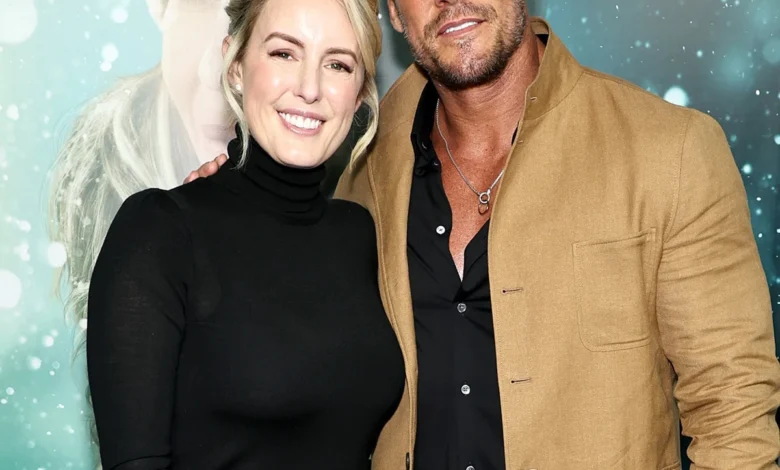
The landscape of celebrity relationships has experienced a turbulent period, marked by a wave of high-profile separations, divorces, and broken engagements. Among the most widely discussed developments is the official separation of actor Alan Ritchson and his wife, Catherine Ritchson, who announced the end of their twenty-year marriage. This significant personal shift comes amid a broader pattern of relationship transitions across the entertainment industry, capturing intense public interest and reflecting the complex realities of maintaining long-term partnerships under the constant glare of media scrutiny.
The announcement regarding Alan and Catherine Ritchson highlights a partnership that began in their teenage years, evolving through decades of shared milestones before culminating in a mutual decision to restructure their relationship. As public figures navigate these transitions, the focus increasingly shifts toward cooperative co-parenting, privacy, and personal evolution. This comprehensive review examines the details surrounding the Ritchson separation, places it within the broader chronology of recent celebrity breakups, and analyzes the cultural implications of public relationship dissolutions in the modern media ecosystem.
The Ritchson Separation: Two Decades Come to a Close
Alan Ritchson, widely recognized for his starring role in the television series Reacher, and Catherine Ritchson announced their decision to end their marriage via a joint statement shared on Instagram. The couple, who first crossed paths as teenagers during a high-school dance class when Alan was 17 and Catherine was 16, built a life together that spanned two decades. Although they experienced a brief romance during their youth, they reconnected years later while Catherine was in college, eventually marrying in May 2006.
Throughout their marriage, the couple welcomed three sons: Calem, 13, Edan, 12, and Amory, 10. In their joint announcement, the pair emphasized that their shared history and deep mutual respect remain intact despite the dissolution of their marriage. They noted that their primary objective moving forward is to foster a healthy, supportive co-parenting environment while allowing each other the space necessary for individual personal growth. Furthermore, the couple appealed to the public and the media for compassion and privacy, underscoring the challenges that family transitions present when conducted in the public eye.
Prior to the announcement, Alan Ritchson frequently shared tributes celebrating their enduring partnership. Notably, in May 2025, he posted a heartfelt retrospective honoring their nineteenth wedding anniversary and Mother’s Day, describing their marriage as the greatest privilege of his life. The sudden shift from these public expressions of devotion to a measured announcement of separation underscores the unpredictable nature of long-term relationships, even those with deep historical roots.
Chronology of Major Celebrity Splits
The Ritchson separation is part of an extensive roster of high-profile relationship endings that have captured public attention. A chronological examination of these announcements reveals a steady stream of structural changes within celebrity partnerships across film, television, music, and sports.
Early in the year, several notable couples confirmed the ends of their marriages or engagements. In January, actress Samira Wiley and screenwriter Lauren Morelli announced they were filing for divorce after nine years of marriage, highlighting a shared commitment to co-parenting their daughter, George Elizabeth. February brought additional announcements, including actress Alexandra Daddario and film producer Andrew Form confirming the end of their three-year marriage, and beauty influencer Mikayla Nogueira sharing news of her divorce from husband Cody Hawken after two years of marriage.
As the calendar moved into the spring, the trend continued with high-profile athletes and reality television personalities. In March, NBA player Luka Doncic announced his separation from Anamaria Goltes following a custody and child support filing in California, while Dallas Cowboys quarterback Dak Prescott and his fiancée, Sarah Jane Ramos, called off their engagement in a mutual decision. April brought news of soccer legend Megan Rapinoe and WNBA star Sue Bird announcing their separation after nearly a decade together, alongside rapper Megan Thee Stallion publicly ending her relationship with NBA player Klay Thompson amidst allegations of infidelity.
The spring and summer months saw further dissolutions, including the separation of reality television stars and musicians. In May, Jason Biggs and Jenny Mollen announced the end of their nearly twenty-year marriage through a representative, emphasizing their ongoing commitment to co-parenting. In June, the former Wicked costars Ariana Grande and Ethan Slater confirmed an amicable split following months of private separation. July brought news of Julia Garner and Mark Foster parting ways after nearly seven years of marriage, alongside Whitney Rose and Justin Rose separating after sixteen years.
August continued the pattern with announcements from high-profile figures such as Kelly Osbourne, who confirmed her split from musician Sid Wilson via social media, and Serayah, who announced the end of her three-year relationship and engagement to Joey Bada$$. Additionally, multiple media outlets reported that Dakota Johnson and singer Role Model had ended their relationship less than a year after sparking dating rumors, further expanding the scope of entertainment-industry breakups.
Supporting Data and Industry Context
The frequency of publicized relationship changes in the entertainment sector highlights the unique pressures faced by public figures. Sociological and psychological studies on high-stress environments indicate that intense public scrutiny, demanding professional schedules, and frequent travel can accelerate relational strain. For couples with long-standing histories, such as Alan and Catherine Ritchson or Samira Wiley and Lauren Morelli, the transition from romantic partners to co-parents often requires navigating complex legal, emotional, and logistical frameworks while managing public expectations.
In many instances, modern celebrities utilize digital platforms—specifically Instagram and TikTok—to communicate directly with their audiences, bypassing traditional media channels. This shift allows individuals to frame their narratives on their own terms, emphasizing themes of mutual respect, personal evolution, and the primacy of family well-being. Joint statements have become the industry standard for managing reputational impact and mitigating speculative reporting.
Official Responses and Public Management
The strategic use of official statements in the wake of celebrity separations serves a dual purpose: it protects the privacy of minor children and attempts to curb circulating rumors. In the case of Alan and Catherine Ritchson, the emphasis was explicitly placed on shielding their three sons from external commentary. Similar sentiments were echoed by other couples, such as Jessie J and Chanan Colman, who noted that proactive communication is often necessary in the digital age to prevent the rapid spread of false narratives across social media platforms.
When legal proceedings are involved, such as formal divorce filings or custody petitions—exemplified by the cases of Luka Doncic, Jack White and Olivia Jean, and Sai de Silva and David Craig—public relations strategies frequently pivot toward maintaining professional decorum. Representatives for public figures consistently reiterate themes of amicability and shared responsibility, even when legal documents indicate complex underlying disputes, such as irreconcilable differences or contested custody arrangements.
Broader Implications and Sociological Impact
The widespread public fascination with celebrity breakups points to a broader cultural phenomenon wherein the public views romantic unions as barometers of modern relationship viability. When long-term marriages, such as those lasting nearly two decades, come to an end, observers often project their own anxieties regarding commitment, longevity, and personal change onto public figures.
Furthermore, the normalization of amicable co-parenting as a primary outcome of relationship dissolution reflects evolving societal norms surrounding family structures. Rather than adhering strictly to traditional, adversarial models of separation, contemporary public figures frequently champion collaborative parenting frameworks. This shift models a pragmatic approach to family continuity, prioritizing the emotional stability of children over the preservation of an unsustainable romantic union.
Ultimately, the steady accumulation of high-profile separations throughout the year demonstrates that fame and longevity do not insulate individuals from the universal challenges of human relationships. As public figures continue to adapt to changing personal circumstances, the public discourse surrounding these events increasingly emphasizes empathy, privacy, and the importance of individual growth in the face of major life transitions.