Science is a relentless pursuit of the unknown, often characterized by monumental breakthroughs that dominate headlines, yet it is equally defined by the incremental progress made in the quiet corners of laboratories and research archives. Each month, the global scientific community uncovers findings that refine our understanding of biological aging, the fundamental nature of the universe, and the historical records of human creativity. From the epigenetic mechanisms dictating the lifespan of domestic dogs to the forensic reconstruction of Vincent van Gogh’s most famous vistas, these diverse studies represent the current state of human inquiry.
The Epigenetic Clock: Why Size Determines Canine Longevity
For decades, biologists have grappled with a biological paradox: while larger species, such as elephants or whales, generally live longer than smaller ones, this trend is inverted within the canine world. Larger dog breeds consistently exhibit shorter lifespans than their smaller counterparts, a phenomenon that has long been observed but remained poorly understood at a molecular level. Recent findings published in the journal Science by researchers at Arizona State University have provided a compelling explanation rooted in epigenetics.

Using data from the Dog Aging Project—a longitudinal study of over 800 canines—the research team mapped patterns of DNA methylation across the genome. DNA methylation serves as a chemical tag that regulates gene expression, effectively functioning as a control switch for cellular processes. The study identified that aging in dogs is closely linked to the erosion of this regulatory control, particularly in regions of the genome containing transposable elements, or "jumping genes."
These elements, specifically the LINE1 class, have the capacity to relocate within the genome, potentially causing mutations, genomic instability, and the onset of age-related pathologies such as cancer. The research revealed that as dogs age, they lose the methylation markers that keep these jumping genes dormant. Crucially, the rate of this loss is accelerated in larger breeds, which exhibit a 35 percent higher rate of LINE1 methylation loss annually compared to smaller breeds. This discovery offers a definitive molecular signature for the size-lifespan trade-off, suggesting that the accelerated aging process in giant breeds is a consequence of diminished control over their own genetic architecture.
Isolating the Void: Months of Antimatter Confinement
The asymmetry between matter and antimatter remains one of the most profound enigmas in modern physics. According to the Standard Model, the Big Bang should have produced equal amounts of matter and antimatter, which would have subsequently annihilated each other, leaving behind a universe filled only with radiation. Instead, the observable universe is composed almost entirely of matter. Understanding this discrepancy requires the ability to isolate and study antimatter particles with extreme precision.
Physicists at Northwestern University have reached a significant milestone in this endeavor, successfully trapping a single positron for several months. By utilizing a sophisticated vacuum trap composed of precisely tuned electric and magnetic fields, the research team, led by Gerald Gabrielse, harvested positrons from sodium-22 nuclei and cooled them to 300 millikelvins—just a fraction of a degree above absolute zero.
At this near-absolute-zero temperature, the positron enters its quantum ground state, allowing researchers to manipulate its energy levels using microwaves. This level of control is essential for measuring the magnetic moment of the particle. If future measurements reveal even the slightest deviation from the properties of a standard electron, it would signify a breakdown of the Standard Model and potentially provide the missing link to explain the dominance of matter in the cosmos. This achievement effectively turns a single particle into a high-precision laboratory, pushing the boundaries of what is possible in quantum metrology.
The Future of Bio-Integrated Aesthetics: PhotoTat Technology
The integration of technology with the human body, often referred to as "epidermal electronics," has evolved from bulky external sensors to sophisticated, skin-integrated designs. A new development from the University of Colorado, Boulder, has introduced "PhotoTat," a series of tattoo inks that remain invisible to the naked eye under normal conditions but become vibrant when exposed to ultraviolet light.
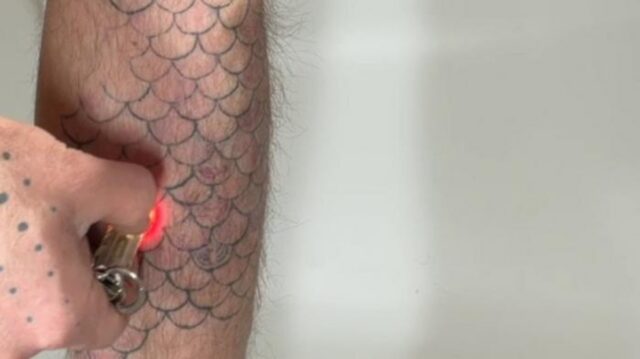
The technology utilizes color-changing dyes encapsulated within microscopic spheres of polymethyl methacrylate (PMMA), a biocompatible material widely used in medical fillers. These inks can be formulated into full-color images that appear only under UV illumination and fade gradually over several hours, depending on light exposure. While the aesthetic applications are clear, the implications for clinical medicine are significant. For instance, cancer patients receiving radiation therapy often require permanent tattoos to serve as guide markers for beam targeting. PhotoTat offers a discreet alternative, rendering these functional markers invisible in daily life while remaining accessible to clinicians during treatment. This research builds upon years of innovation in conductive inks, including previous breakthroughs in printed EEG-monitoring tattoos that function even through hair, signaling a new era of invisible, wearable health diagnostics.
Historical Reinterpretations: The Westminster Abbot and the Florentine Muse
History is rarely a static record; it is a discipline subject to constant revision as new analytical techniques emerge. Two recent studies have fundamentally altered our understanding of historical figures by applying modern forensic and astronomical tools to the past.
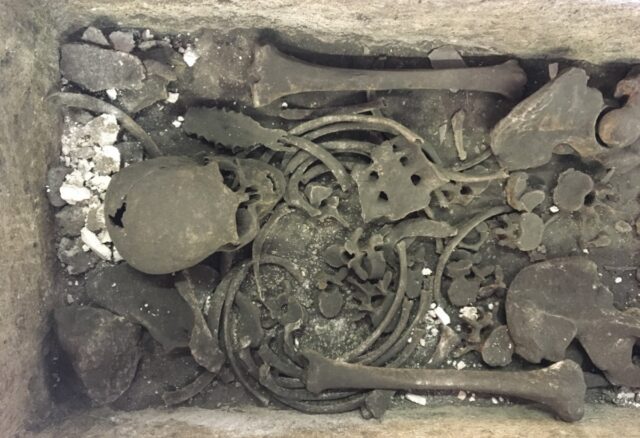
At Westminster Abbey, a skeleton unearthed over 150 years ago within a Roman-style sarcophagus has long been misattributed. While the sarcophagus bore the name of a 4th-century Roman Briton, the presence of an 11th-century cross suggested a much later burial. A recent study published in the Journal of the British Archaeological Association confirms that the remains are not those of a Roman, but rather a high-ranking Benedictine monk. The skeletal evidence, consistent with a man aged 35 to 49, likely points to Aelfwig, the Abbot of Westminster who died in 1020, or his successor, Wulboth. The findings highlight the complex layering of historical sites, where burials from different eras were often repurposed, leading to centuries of archaeological confusion.
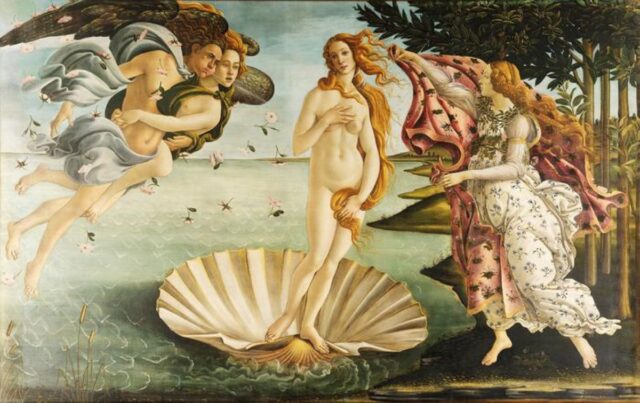
Meanwhile, in the world of art history, researchers from Queen Mary University of London have revisited the death of Simonetta Vespucci, the alleged muse for Sandro Botticelli’s The Birth of Venus. Previously, historians attributed her early death to tuberculosis. However, new evidence suggests a more complex medical history. By analyzing correspondence from the 15th century and identifying physical markers in Botticelli’s portraits—such as ocular swelling and misalignment—researchers posit that Vespucci may have suffered from a pituitary adenoma. This tumor, which would have secretively produced excess growth hormones and prolactin, could have resulted in a fatal medical emergency, such as a pituitary apoplexy, consistent with the symptoms of sudden headache, fever, and hallucinations described in contemporary accounts.
Celestial Sleuthing: Pinpointing the Night of July 22, 1889
The final frontier of forensic analysis is, quite literally, the stars. Vincent van Gogh’s The Starry Night has inspired countless theories regarding the artist’s mental state and his perception of nature. While physicists have long debated whether the painting’s swirling patterns are a mathematically accurate representation of atmospheric turbulence, a new team of astronomers has utilized "forensic astronomy" to determine the exact moment the painting was conceived.
By cross-referencing historical weather data, star charts, and the artist’s own correspondence, researchers from South Korea have argued that the painting does not represent a generic night sky, but a specific orientation of the heavens. Their analysis points to the pre-dawn hours of July 22, 1889. The researchers identified the light patterns as the Hyades star cluster in the constellation Taurus, rather than the previously hypothesized Aries.
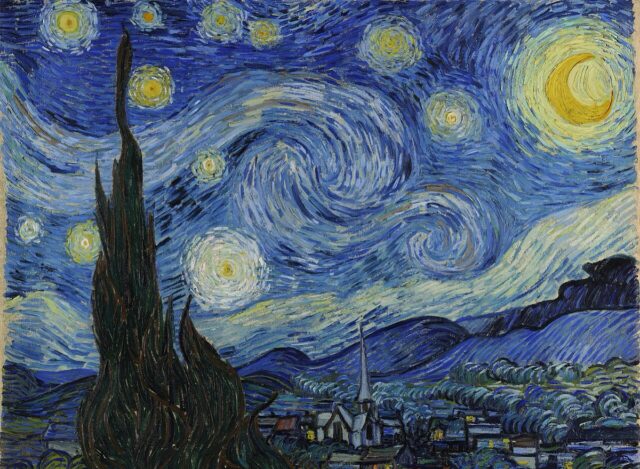
This approach—using the night sky as a clock and calendar—is part of a growing field of forensic astronomy that has previously identified the lunar influence on the sinking of the Titanic and the atmospheric aftereffects of the Krakatoa eruption on Edvard Munch’s The Scream. These studies demonstrate that even the most impressionistic or symbolic works of art can be anchored to the objective reality of the physical world, providing a bridge between the humanities and the hard sciences.
The Broader Impact of Multidisciplinary Research
The common thread linking these diverse stories is the power of interdisciplinary methodology. Whether it is using epigenetic data to understand canine aging, microwave spectroscopy to probe the nature of antimatter, or astronomical simulations to date a masterpiece, these researchers are demonstrating that the most significant questions rarely stay within the boundaries of a single field.
The implications for the future are profound. As we gain the ability to manipulate the epigenome, we may unlock new pathways for life extension in both animals and humans. As our traps for antimatter become more stable, we move closer to resolving the fundamental imbalance that allows our existence. And as we continue to apply forensic rigor to history and art, we not only correct the record but gain a deeper appreciation for the interplay between human experience and the natural world.

These studies serve as a reminder that science is an ongoing narrative. The stories that nearly slip through the cracks—the forgotten skeleton in an abbey, the invisible ink in a tattoo, or the specific arrangement of stars on a canvas—are not merely trivia. They are essential data points in the broader quest to decode the mechanisms of life, the history of our species, and the architecture of the universe itself. As research continues into the coming year, it is certain that these inquiries will continue to intersect, leading to discoveries that, while quiet in their inception, will echo across the scientific landscape for years to come.