Climate Attribution Science Reaches New Maturity, Paving Way for Enhanced Preparedness and Accountability

A groundbreaking report from the U.S. National Academies of Sciences confirms a significant advancement in the scientific community’s ability to definitively link extreme weather events to human-induced climate change. This improved understanding, detailed in a report released Thursday, marks a critical juncture for everything from infrastructure planning and disaster preparedness to potentially holding industries liable for climate-related damages. While the field of climate attribution has matured considerably over the last decade, offering greater confidence in its conclusions, the report also meticulously outlines remaining limitations and proposes crucial steps for further development. The increasing robustness of this science, however, has ignited a fierce political backlash from the fossil fuel industry and its allies in government, who perceive it as a direct threat to their interests.
The fundamental premise underpinning climate attribution science is the established link between anthropogenic greenhouse gas emissions and the warming of Earth’s atmosphere. Industrial activities, particularly the burning of fossil fuels, have released vast quantities of gases like carbon dioxide and methane, which act as a blanket, trapping more of the sun’s energy. This additional energy fuels the climate system, increasing the frequency and intensity of extreme weather phenomena. We are witnessing longer, more severe heat waves and droughts, alongside an increase in excessive precipitation events, leading to more frequent and damaging floods. Historically, such events have occurred naturally, prompting a critical question: how can scientists discern the influence of climate change on any given weather disaster? Answering this question is not merely an academic exercise; it has profound implications for global policy, economic stability, and legal frameworks.
A Decade of Accelerated Progress in Attribution Science
Extreme weather events – from blistering heat waves to torrential downpours – have always been a part of Earth’s climatic history. For much of human civilization, particularly since the end of the last glacial period, the climate has been relatively stable, with extreme events generally falling within a predictable range of variability. However, humanity is now rapidly departing from this familiar stability, entering an era where events once considered rare are becoming increasingly common. The public’s demand to understand if a specific hurricane, flood, or drought is a direct consequence of global warming has spurred the rapid development of attribution science.
At its core, attribution science employs sophisticated climate models to simulate weather events under two distinct scenarios: one reflecting current atmospheric conditions, including all human-induced greenhouse gas emissions, and another representing a hypothetical world without those emissions. By comparing the frequency and intensity of specific atmospheric features or weather events in these two simulations, scientists can quantify the extent to which human activity has altered the probability or characteristics of a particular event. This methodology has undergone extensive peer review and has been successfully applied to a diverse array of weather events globally. Studies have shown clear "fingerprints" of climate change in phenomena such as the devastating Pacific Northwest heatwave of 2021, which was deemed "virtually impossible" without human-caused warming, or the Siberian heat anomaly of 2020, which was similarly linked to global warming. While the methodology is robust for many events, the report acknowledges instances where the data or model limitations prevent a clear picture, such as certain complex flood events.
The practical applications of this evolving science are immense. Current infrastructure, urban planning, and regulatory frameworks are largely based on historical weather patterns. As these patterns shift due to climate change, these foundational elements become outdated and insufficient. For instance, drainage systems designed for historical precipitation levels may be overwhelmed by new extremes, and road materials may fail under unprecedented heat. The ability to precisely attribute changes in these patterns to climate change allows policymakers, engineers, and urban planners to proactively update standards, strengthen infrastructure, and implement more effective disaster preparedness strategies.
Recognizing the escalating importance of this field, the National Academies of Sciences (NAS), a non-governmental organization providing independent, objective advice on science, technology, and medicine to the nation, was tasked with evaluating its progress. This is not the first time; the NAS weighed in on the rapidly developing field in 2016. A decade later, their latest assessment highlights remarkable advancements, noting that "advances in physical understanding—through accumulating observational and modeling evidence supporting long-standing theoretical expectations—together with improved and more sophisticated numerical models, expanded observational datasets, and advanced statistical and machine-learning techniques, have strengthened the foundation for extreme event attribution." This progress, the report concludes, has led to "more robust assessments and an increased ability to examine a broader range of extreme event types."
Methodological Frameworks: Probabilistic and Storyline Approaches

The report details two primary frameworks dominating attribution analysis:
-
Probabilistic Attribution: This approach focuses on quantifying how climate change has altered the odds or probability of a similar event occurring. For example, it might conclude that a particular heatwave is now three times more likely due to climate change than it would have been in a pre-industrial climate. This framework provides a statistical measure of influence and is particularly useful for understanding shifts in the frequency of known extreme events.
-
Storyline Attribution: This method delves into the specific atmospheric conditions and physical processes that lead to a particular extreme event. It examines how climate change might have influenced specific aspects of the event, such as the intensity of rainfall within a tropical cyclone or the frequency of large hailstones. While the overall frequency of rare events like tropical cyclones might be difficult to model directly, storyline attribution can assess how climate change affects contributing factors like sea surface temperatures or atmospheric moisture, making these events more potent.
Both frameworks have significantly benefited from advancements across climate science, including more accurate and higher-resolution climate models, a deeper theoretical understanding of the intricate interactions between atmospheric conditions and weather events, and expanded observational datasets covering longer periods and new geographical regions. The integration of advanced statistical and machine-learning techniques has further refined the analytical capabilities, allowing scientists to extract more precise signals from complex climate data.
Persistent Challenges and Data Gaps
Despite these strides, the report candidly addresses several critical limitations in attribution science. A primary hurdle remains the scarcity of historical data. Reliable, consistent weather monitoring in the pre-satellite era was limited, and vast regions of the world, particularly in the Global South, still lack comprehensive, long-term records. This deficit makes it challenging to establish robust baseline probabilities for certain events, impeding a truly global understanding of climate change’s influence. While continuous data collection is gradually improving this situation, the absence of historical context for many areas remains a significant impediment.
Another major challenge stems from the spatial scale of many extreme weather phenomena. Events like localized thunderstorms, tornadoes, or specific flash floods occur at scales far smaller than the grid cells of even the most advanced global climate models, which typically divide the world into cells 50 to 100 kilometers on a side. This resolution gap makes it exceedingly difficult to accurately simulate and evaluate the impact of different greenhouse gas concentrations on these smaller, yet often highly destructive, weather events.
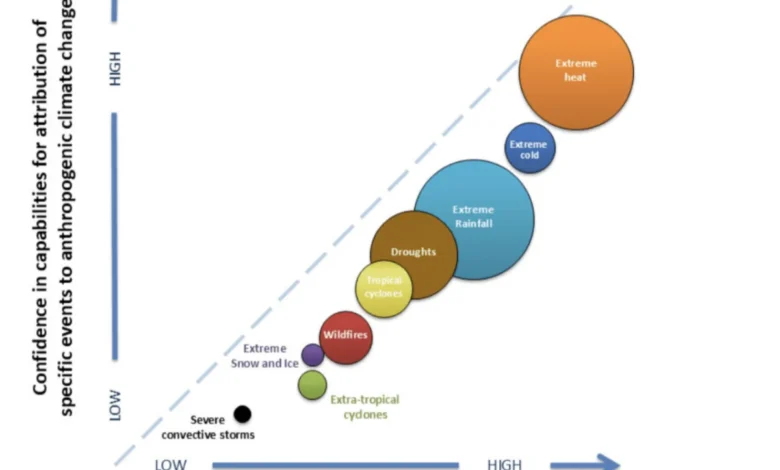
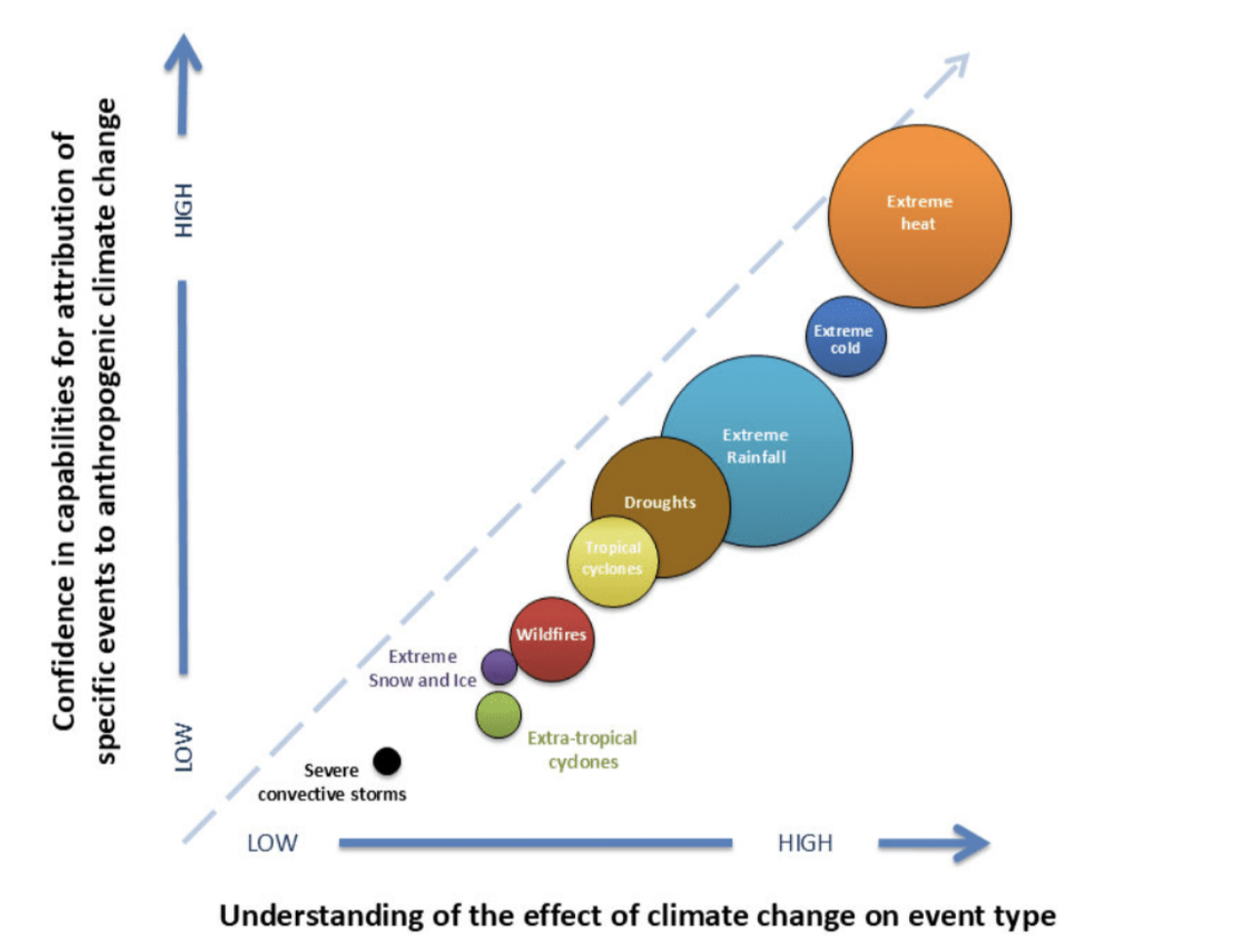
Consequently, the report identifies a "confidence gap" in attribution capabilities. Scientists express high confidence in attributing temperature extremes (e.g., heat waves) and large-scale precipitation events to climate change, as these phenomena operate on scales more readily captured by current models and benefit from more extensive historical data. In contrast, confidence levels are considerably lower for events like wildfires, severe convective storms, and tornadoes, where complex, small-scale dynamics and often sparse historical data make definitive attribution more challenging. The interpretation of "compound events," such as wildfires occurring during extreme dry periods or concurrent heatwaves and droughts, also poses significant methodological difficulties due to the complex interplay of multiple climate drivers.
Furthermore, the influence of natural climate oscillations like El Niño or La Niña adds another layer of complexity. These stochastic events significantly impact regional weather patterns, making it difficult to isolate the anthropogenic climate change signal when an extreme event occurs concurrently with a strong natural cycle. Finding comparable climate model runs that capture both the specific atmospheric conditions and the phase of such natural oscillations remains a statistical challenge. The inherent rarity and extreme nature of the events under study also present statistical hurdles, especially when trying to calculate the historical likelihood of events far outside the observed historical distribution.
Recommendations for Future Advancement
To address these limitations, the NAS report puts forth several clear recommendations:
- Enhanced Global Data Collection: Prioritize the establishment of longer and higher-quality weather records, particularly in underserved regions of the Global South, to build a more comprehensive global picture of event probabilities. This includes exploring the use of non-instrumental records (e.g., geological evidence of past storms) to extend historical baselines.
- Higher-Resolution Climate Models: Invest in developing and running climate models with significantly finer spatial resolutions (e.g., 1-kilometer grid cells). While computationally intensive, such models are crucial for accurately simulating small-scale extreme events like thunderstorms and tornadoes.
- Broader Influence Factors: Expand attribution analyses to include human influences beyond greenhouse gases, such as aerosols, irrigation practices, and land-use changes, which can locally or regionally alter weather patterns.
- Formalization of Attribution Methods: Encourage researchers to periodically revisit and publish their attribution methods in peer-reviewed literature, even if the applications themselves are informally disseminated. This ensures ongoing scientific scrutiny and methodological refinement.
- Comparative Methodological Studies: Promote studies that analyze single extreme events using both probabilistic and storyline attribution methods. This comparative approach will help better understand the relative strengths, weaknesses, and complementary nature of different techniques.
The Emergence of Extreme Event Impact Attribution (EEIA)
Beyond attributing the weather event itself, a rapidly developing subfield is Extreme Event Impact Attribution (EEIA). This area moves beyond merely quantifying the influence of climate change on an event’s severity to assessing how that altered severity translates into real-world damages and societal impacts. It challenges the simplistic assumption that impacts are linearly proportional to event extremity (e.g., flood damage directly proportional to rainfall). Instead, EEIA acknowledges that impacts are highly non-linear and context-dependent, influenced by factors like existing infrastructure, vulnerability, and prior conditions (e.g., soil saturation before a flood).
Researchers in EEIA are developing "impact-response functions," which map the complex, often non-linear, relationship between an event’s physical characteristics and its resulting impacts (e.g., agricultural yield loss as a function of drought intensity). Another approach is "process-based impact modeling," which involves building comprehensive models of affected systems (e.g., a river basin model) to simulate responses to various climate change-influenced scenarios.
However, EEIA faces similar data challenges to core attribution science. Its maturity varies significantly by hazard type, impact category, and geographic region. Robust impact assessments are currently most feasible in areas with excellent historical records of both weather events and their associated damages, such as North America and Europe. For instance, while epidemiologists can provide detailed mortality estimates for European heat waves, comparable comprehensive data is often unavailable for similar events in regions like Papua New Guinea, highlighting stark global inequities in data availability and analytical capacity.
The report recommends that EEIA researchers maintain utmost transparency regarding uncertainties in their analyses. It also urges the development of practical tools that translate complex impact attribution findings into actionable intelligence for disaster preparedness and risk reduction. Knowing that a new extreme is possible is valuable, but understanding which aspects of that extreme pose the highest risks (e.g., specific water levels, wind speeds, or heat thresholds) is far more crucial for effective planning.

Normal Science, Extraordinary Political Fallout
Ultimately, the most significant takeaway from the NAS report is that climate attribution has firmly entered the realm of "normal science." It represents a mature field where researchers systematically explore complex scientific questions, develop robust methodologies, and apply them to new challenges. While areas for further development exist, this evolution is typical of any scientific discipline.
Against this backdrop, the intense political controversy surrounding the report seems incongruous to many scientists. The report’s release has been anticipated with apprehension by the fossil fuel industry, which views the increasing confidence in attribution science as a direct threat. The industry is currently facing a growing number of lawsuits, ranging from allegations of misleading the public about climate change risks to being held financially responsible for damages caused by extreme weather events. By validating attribution as a credible and increasingly confident scientific field, the NAS report significantly strengthens the hand of plaintiffs in these legal battles, raising the prospect that courts will readily admit attribution science as admissible evidence.
This situation is exacerbated by an ongoing political struggle involving the National Academies themselves. State officials had previously pressured a U.S. court agency to remove a chapter on climate change from an NAS advisory document on the use of science by judges. The Academies steadfastly refused, leading to threats against their federal funding by some Republicans in Congress and state governments. The timing and content of this new report on attribution science only intensify these existing tensions.
Despite these political pressures and threats, the report has now been released, underscoring the scientific community’s commitment to independent inquiry. While it may take years for the full legal and policy implications to unfold in courtrooms and legislative chambers, it is virtually certain that the science detailed in this report will continue to face scrutiny and attacks from those who stand to lose from its widespread acceptance. Nevertheless, the trajectory of climate attribution science is clear: it is a rapidly advancing field that is increasingly providing the clarity needed to navigate a changing planet and address the pressing questions of responsibility and adaptation.