Higher education across the United States is undergoing a profound period of transformation, driven by fiscal pressures, crumbling physical infrastructure, and sweeping federal policy shifts. Recent developments highlight the complex financial and regulatory challenges facing academic institutions. From private research universities bracing for impending budget deficits to public systems grappling with multi-billion-dollar deferred maintenance crises, the operational landscape of American higher education is shifting rapidly. Simultaneously, sweeping changes to federal accreditation standards promise to alter the relationship between the federal government, accrediting agencies, and colleges nationwide.
Syracuse University Initiates Administrative and Executive Review Amid Budget Pressures
Syracuse University, a prominent private research institution in New York, has announced plans to conduct a comprehensive review of its administrative and executive staff roles. The initiative comes ahead of a projected budget deficit, prompting university leadership to scrutinize operational efficiencies across non-academic departments. While the precise details of the review remain under final development, the process has already drawn parallels to previous restructuring efforts undertaken by the institution.
Chancellor and other top administrators have likened the upcoming staff evaluation to the rigorous academic portfolio review completed earlier this year. That earlier academic audit resulted in a controversial and sweeping decision: 93 academic programs were slated for termination due to low enrollment, shifting student demand, or redundancy. University officials argue that proactive measures are necessary to ensure the long-term financial health and operational sustainability of the campus.
The impending administrative review reflects a broader trend among private higher education institutions nationwide. Facing demographic shifts, rising labor costs, and post-pandemic inflation, many universities are moving away from reactive budgeting toward continuous structural evaluation. Higher education analysts note that while academic program cuts are common, comprehensive evaluations of upper-level administrative and executive staffing levels remain politically and culturally sensitive within academic communities.
Louisiana Public Colleges Confront a $4 Billion Deferred Maintenance Backlog
While private institutions like Syracuse are trimming administrative bloat to manage operational deficits, public systems are grappling with staggering physical infrastructure liabilities. A recent report delivered to the Louisiana Board of Regents by Gordian, a leading building intelligence and facility data firm, revealed that the state’s public colleges and universities face a cumulative deferred maintenance backlog totaling $4 billion.
The scale of the crisis poses a severe threat to the operational capacity of Louisiana’s higher education network. According to the Gordian report, simply eliminating the existing backlog of deferred repairs—such as outdated HVAC systems, leaking roofs, aging electrical grids, and obsolete safety infrastructure—will not be enough. To maintain current facilities and address forthcoming maintenance needs over the next decade, the state’s public institutions will require an annual capital spending investment of $777 million.
State lawmakers and higher education advocates have expressed deep concern over the findings. Decades of deferred maintenance have left many campus buildings vulnerable to extreme weather events, which are increasingly common in the Gulf Coast region. Furthermore, deteriorating facilities can negatively impact student recruitment and retention, as modern students and faculty increasingly expect state-of-the-art learning environments, advanced laboratories, and reliable residential housing.
The funding gap highlights a persistent structural challenge in American public higher education: state appropriations for capital projects have failed to keep pace with inflation and the aging of physical assets. As Louisiana’s board of regents digests the report, university leaders face the daunting task of lobbying state legislatures for unprecedented capital outlays while competing against other critical public infrastructure needs, such as roads, bridges, and healthcare facilities.
Department of Education Overhauls Accreditation Standards
At the federal level, the regulatory environment for higher education is undergoing its most significant shift in years. The U.S. Department of Education released the final version of its updated accreditation rule, setting the stage for a comprehensive overhaul of the traditional accreditation process. Under the new regulations, which are scheduled to take effect in July, the relationship between the federal government, colleges, and independent accrediting agencies will be fundamentally redefined.
The updated rules introduce contentious new requirements and restrictions. Most notably, accrediting agencies will now be legally mandated to evaluate colleges and universities on their intellectual diversity policies. Furthermore, the regulations explicitly bar accrediting bodies from enforcing what the administration defines as "illegal diversity, equity, and inclusion (DEI) requirements."
The policy shift has sparked intense debate across the academic community. Proponents of the rule argue that traditional accreditors have operated with insufficient oversight and have overstepped their boundaries by imposing ideological mandates on campuses.
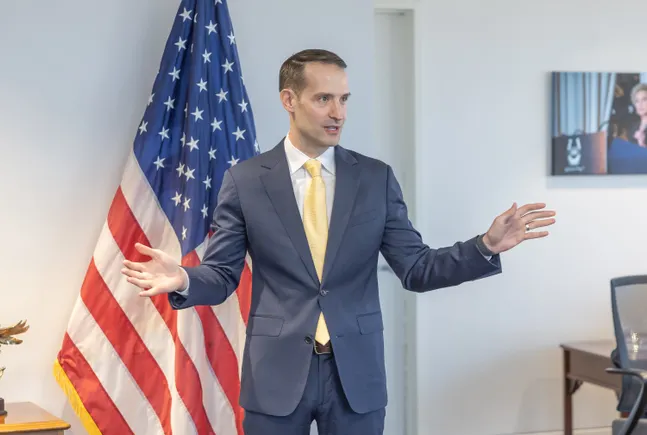
Defending the administration’s position, Under Secretary of Education Nicholas Kent issued a sharp critique of the legacy accreditation system. In a statement accompanying the release of the final rule, Kent stated, "For too long, accreditors have effectively served as a cartel to protect their interests, rather than the educational value that institutions of higher education are expected to deliver for students."
Opponents and higher education legal scholars, however, have raised serious concerns regarding federal overreach and potential infringement on institutional autonomy. Critics argue that tying federal accreditation to specific political definitions of intellectual diversity and restricting equity initiatives will politicize the quality-assurance process. They contend that regional and national accreditors, who have historically operated as independent arbiters of academic quality, may find themselves caught in complex legal battles between federal mandates and state-level governance structures.
Broader Implications and Future Outlook
The convergence of administrative restructuring at institutions like Syracuse University, infrastructure liabilities in Louisiana, and federal regulatory changes at the Department of Education illustrates the multifaceted pressures currently facing the higher education sector.
Financially, institutions are being forced to do more with less, utilizing data-driven reviews to eliminate redundancies and optimize personnel and academic offerings. Physically, the multi-billion-dollar maintenance backlogs documented across public systems underscore an urgent need for innovative public-private partnerships, targeted capital campaigns, and sustained state investment. Regionally and nationally, colleges must navigate a rapidly evolving regulatory framework that demands compliance with new federal standards regarding campus speech, diversity policies, and institutional governance.
As these developments unfold in the coming months, university administrators, faculty senates, state legislators, and federal policymakers will continue to grapple with the delicate balance between financial sustainability, academic freedom, and institutional accountability. The decisions made today will shape the operational and educational identity of American colleges and universities for generations to come.
Related posts: