The Shadow of 1873: How Modern Political Volatility Threatens the Fabric of American Democracy

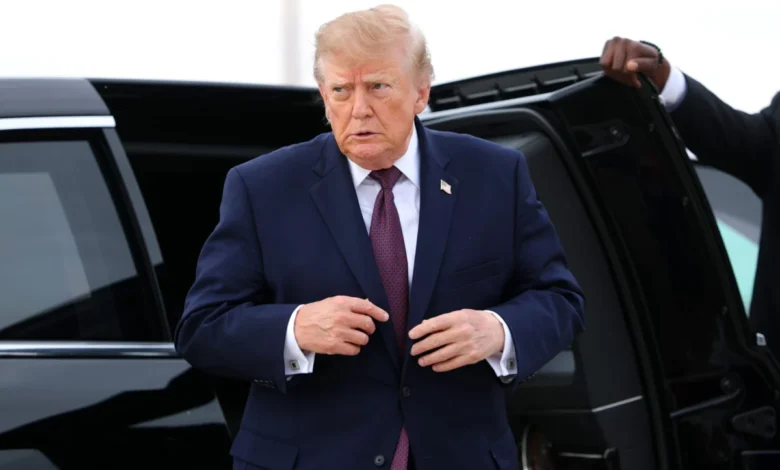
The intersection of executive authority and election integrity has become a focal point of intense scrutiny as the United States approaches the 2026 midterm elections. Recent executive actions taken by the Trump administration, characterized by an emphasis on voter roll purges and heightened investigations into election administration, have reignited debates regarding the role of the federal government in state-level electoral processes. As the Department of Justice increases its oversight of poll worker conduct and the verification of ballots, critics argue that these measures risk legitimizing political recalcitrance, potentially destabilizing public confidence in the democratic transfer of power.
This period of heightened tension invites a critical examination of historical precedents, specifically the Reconstruction era, where disputed electoral outcomes served as the catalyst for systemic violence and the dismantling of civil rights protections. The modern political landscape, marked by deep polarization and the frequent casting of doubt upon the legitimacy of electoral processes, raises urgent questions about the potential for social unrest, market volatility, and the erosion of institutional stability.
The Historical Precedent: From Colfax to Compromise
The instability of the 1870s provides a sobering case study for contemporary observers. In 1872, the gubernatorial election in Louisiana between Republican William Pitt Kellogg and Democrat John McEnery resulted in two competing sets of returns. The ensuing power struggle created a vacuum of authority that culminated in the Colfax Massacre on Easter Sunday, 1873. A white militia, seeking to reinstate a pro-Confederate political order, besieged the Grant Parish courthouse, resulting in the deaths of over 100 Black citizens.
This event was not an isolated incident but a symptom of a broader breakdown in the rule of law. The federal response, led by President Ulysses S. Grant, involved the deployment of the National Guard to enforce federal authority, yet the political victory remained pyrrhic. The subsequent years were defined by a persistent legislative stalemate in Louisiana, leading to the eventual impeachment of Governor Kellogg and the collapse of Republican governance in the state.
The resolution of the 1876 presidential election—the Compromise of 1877—formally ended Reconstruction. By ceding the executive office to Rutherford B. Hayes, the Republican Party effectively abandoned its commitment to protecting the rights of Black Americans in the South. This political trade-off paved the way for the implementation of Jim Crow laws, a rigid system of racial apartheid that governed the American South for nearly a century. The Separate Car Act of 1890, which sparked the landmark Plessy v. Ferguson Supreme Court case, codified the doctrine of "separate but equal," a legal framework that institutionalized racial inequality in public facilities and, most notably, the education system.
The Modern Electoral Landscape and Federal Intervention
The current climate surrounding the 2026 midterms mirrors certain aspects of the late 19th-century crisis, particularly regarding the challenges to state-level electoral outcomes. President Trump’s recent executive orders, which emphasize stricter oversight of voter registration and the aggressive purging of voter rolls in "blue" states, have drawn significant pushback from civil rights organizations and non-partisan electoral watchdog groups.
Data from the Brennan Center for Justice and similar organizations suggests that the number of restrictive voting laws introduced at the state level has risen sharply since 2020. Proponents of these measures argue that they are necessary to bolster public confidence and prevent voter fraud. However, opponents contend that these initiatives are "pre-emptive" measures designed to suppress voter turnout in demographics historically supportive of the Democratic Party.
The Department of Justice’s current strategy, which involves the proactive investigation of poll workers and the scrutiny of ballot tabulation processes, has prompted reactions from election officials across the country. In several jurisdictions, local clerks and secretaries of state have expressed concern that federal intervention may confuse voters and delay the certification of results, thereby providing fodder for political actors to claim that the process is "rigged" or unreliable.
Implications for the Public Education System
The most significant long-term consequence of this political turbulence may manifest in the nation’s schools. Educational equity experts note that the politicization of the electoral process often bleeds into the governance of public education, as school boards and state legislatures become battlegrounds for broader ideological struggles.
If the 2026 midterms result in a significant shift in power, or if the outcomes are subjected to prolonged, localized litigation, the impact on school funding and curricula is expected to be profound. Educational analysts predict that we are entering an era of "unregulated privatization," where school voucher programs and universal scholarship accounts may divert substantial public funding away from traditional district schools.
Furthermore, the "politicization of the classroom" has reached an unprecedented level. From the regulation of library collections and reading lists to the pedagogical approach to history, mathematics, and social studies, the influence of state-level political actors is becoming increasingly direct. For instance, recent legislative trends in states like Florida and Texas have mandated specific frameworks for teaching American history, which some critics describe as an attempt to sanitize the past and minimize the historical reality of systemic inequality.
Economic and Institutional Risks
Economists and political scientists have also raised concerns regarding the intersection of political instability and financial market performance. In an era of globalization, the United States relies heavily on the perception of institutional stability to maintain the dollar’s status as the world’s reserve currency. Should the U.S. witness a repeat of the disputed 1870s, where legitimate transitions of power are sidelined by partisan intransigence, the potential for market volatility is high.
Institutional investors have begun to include "geopolitical stability within the U.S." as a factor in their risk assessments. The prospect of a constitutional crisis or the widespread refusal to accept election results poses a direct threat to the predictability required for sustainable long-term investment.
Path Toward Institutional Resilience
Experts argue that preventing a return to the chaotic division of the 19th century requires a renewed commitment to three core principles:
- Acceptance of Results: The fundamental prerequisite for democracy is the peaceful transfer of power. Regardless of the electoral outcome, the willingness of candidates and their supporters to concede and abide by the results is essential.
- Protection of Voting Rights: Efforts to limit access to the ballot box, whether through restrictive ID laws or the mass purging of voter rolls, undermine the democratic mandate. Ensuring that every eligible voter can participate is the primary safeguard against extremism.
- Judicial Independence: The role of the courts as a neutral arbiter is critical. When the judiciary is perceived as a partisan weapon, the system loses its ability to resolve disputes peacefully.
As Dr. Jonathan E. Collins of Teachers College, Columbia University, has observed, the lessons of the past are not merely academic. The transition from the collapse of Reconstruction to the era of Jim Crow serves as a warning of what occurs when a nation fails to prioritize the equality of its citizens. The 2026 midterms represent more than just a legislative shift; they represent a test of the American commitment to the democratic ideals of the 21st century.
The potential for a "repeat of the 1870s" is not inevitable, but it is a distinct possibility if the mechanisms of political division are allowed to erode the foundational norms of the republic. As the country moves toward the midterm cycle, the discourse surrounding the integrity of the vote, the rights of the electorate, and the independence of the institutions remains the defining challenge of the current political era. The preservation of the union, once described as a work in progress, depends on the collective refusal to allow partisan interests to supersede the stability of the democratic process.