President Trump Issues Proclamation Asserting American Leadership and Settlement Rights in Space

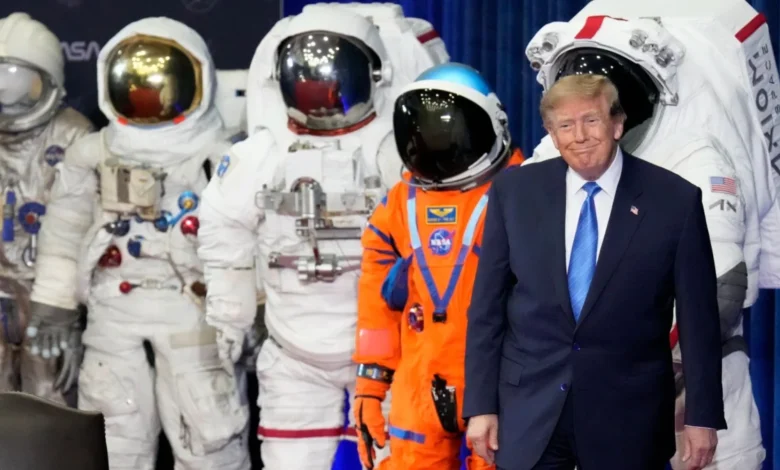
President Donald Trump issued a formal declaration on November 3, 2026, codifying the United States’ intent to lead the exploration, utilization, and permanent settlement of the solar system. Titled The American Declaration of Freedom in Space, the document serves as a high-level policy assertion, framing the cosmos as a domain where American values of individual liberty, faith, and free enterprise will serve as the foundation for an emerging interplanetary civilization. While the proclamation does not authorize new appropriations or launch specific new federal programs, it reinforces the administration’s existing commitment to the Artemis program and establishes a ideological framework for long-term space governance.
The declaration arrives at a pivotal juncture in the global space race, as the United States, China, and a burgeoning coalition of private commercial entities accelerate their lunar and deep-space ambitions. By asserting the right of American citizens to develop and settle extraterrestrial bodies under U.S. legal frameworks, the White House is signaling a shift toward a more aggressive, resource-oriented approach to space exploration that contrasts with the more collaborative, science-first mandates of the early 21st century.
The Artemis Timeline: Progress and Future Milestones
The administration’s latest policy move is tethered to the operational successes of the Artemis program, NASA’s flagship initiative for human lunar exploration. The program has seen a rapid cadence of milestones in recent years, serving as the technical justification for the President’s recent rhetoric regarding American space superiority.
The current chronology of the Artemis program reflects a transition from high-stakes testing to mission-readiness:
- April 2026: Artemis II successfully concluded a 10-day crewed journey around the Moon. The mission set a record for the greatest distance any human has traveled from Earth, successfully testing life-support and navigation systems required for deep-space transit.
- Summer 2027: The Artemis III mission is slated for launch. This mission represents a critical operational hurdle, focusing on rendezvous and docking maneuvers between the Orion spacecraft and commercial lunar landers in low Earth orbit.
- 2028: The Artemis IV mission is currently targeted as the program’s first human lunar landing. This mission will determine if the United States can successfully place boots on the lunar surface for the first time since the final Apollo mission in 1972.
- 2030: A December 2025 executive order established the goal of deploying the foundational elements of a permanent lunar outpost by the end of the decade. This base is intended to serve as a research hub and a staging ground for future crewed missions to Mars.
Philosophical Foundations and the Frontier Spirit
In his address at the Johnson Space Center in Houston, President Trump invoked the "frontier spirit," drawing a direct line between the pioneering efforts of the 19th-century American West and the current trajectory of space exploration. By positioning the U.S. as the primary architect of humanity’s future in space, the administration is prioritizing the role of the commercial sector.
"Our Nation will lead the way in the exploration, development, use, and settlement of these new frontiers," the declaration states. This emphasis on "development" and "use" is widely interpreted by policy analysts as an endorsement of the burgeoning space mining industry. Companies are currently developing technologies to harvest lunar regolith for water ice and helium-3, and the administration’s proclamation provides a legal basis for private entities to claim ownership of extracted resources—a point of contention in international space law.
International Legal Context and the Outer Space Treaty
The sweeping nature of the declaration has invited scrutiny regarding its compatibility with the 1967 Outer Space Treaty (OST), the foundational document of international space law to which the United States is a signatory. Article II of the OST explicitly prohibits nations from claiming "national appropriation" of celestial bodies by claim of sovereignty, by means of use or occupation, or by any other means.
Legal scholars suggest that the administration’s proclamation attempts to thread a needle between supporting private property rights and maintaining compliance with the treaty. By focusing on the rights of individual citizens and companies to operate under U.S. law—rather than claiming the land itself as sovereign U.S. territory—the White House is attempting to create a legal precedent for extraterrestrial commerce. Whether this interpretation holds up under international arbitration remains a subject of ongoing debate among global space agencies and diplomatic bodies.
Industry and Political Reactions
The lack of new funding or specific policy directives in the declaration has led to a mixed reception within the aerospace community. Industry insiders at major aerospace contractors have expressed support for the symbolic reinforcement of the Artemis program, noting that high-level presidential backing is essential for maintaining the long-term, multi-year funding cycles required for spaceflight.
Conversely, some critics in the scientific community argue that the focus on "superiority" and "dominance" may complicate diplomatic efforts to build a sustainable, multilateral lunar presence. With the China National Space Administration (CNSA) also planning independent lunar landings and base construction by the early 2030s, the rhetoric of "American space superiority" is viewed by some as an escalatory move that could trigger a "flags and footprints" competition reminiscent of the Cold War, rather than a collaborative scientific effort.
Economic and Strategic Implications
Beyond the prestige of space exploration, the declaration highlights the economic potential of the "cislunar economy." The administration’s vision relies heavily on the success of private-sector partners like SpaceX, Blue Origin, and other commercial entities that have become integral to NASA’s supply chain.
By fostering an environment where these companies can operate with the expectation of U.S. government protection and legal clarity, the White House hopes to catalyze an industry that could be worth trillions of dollars in the coming decades. Potential applications range from orbital manufacturing and satellite maintenance to the production of clean energy derived from lunar resources.
However, the lack of new federal mandates suggests that the administration intends for the market—rather than direct government intervention—to drive this expansion. This "hands-off" approach to industrial development, combined with the "hands-on" approach to political oversight, creates a unique paradigm for the 21st-century space program.
Looking Toward the Martian Horizon
While the Moon remains the immediate focus, the long-term goal defined in the declaration is the human exploration of Mars. NASA has long held Mars as the ultimate destination for human exploration, but the path to the Red Planet is fraught with logistical and biological challenges, including radiation exposure, the psychological toll of long-duration missions, and the necessity of life-support systems that can function autonomously for years.
The proclamation’s commitment to an "interplanetary civilization" provides a clear mandate for NASA to continue its research into deep-space habitats and propulsion technologies. Whether these goals can be met within the currently projected timelines depends less on the rhetoric of the declaration and more on the sustained technical success of the Artemis missions over the next four years.
As the United States prepares for the launch of the Artemis III mission in 2027, the world is watching to see how these ambitious words are translated into hardware, fuel, and human endurance. The American Declaration of Freedom in Space may be viewed in the coming years either as a visionary foundation for a new era of human history or as a symbolic statement that preceded a significant shift in how humanity manages the final frontier. For now, the administration has set the stage for a future where the laws of the United States—and the values they protect—are intended to be the governing principles of the extraterrestrial world.
Related posts: