Volvo Electric Construction Equipment Deployed for First Time in National Wildlife Refuge System to Build Accessible Virginia Trail

The integration of heavy machinery into pristine natural habitats has historically presented a fundamental paradox for conservationists: the very infrastructure projects designed to make wilderness areas accessible to the public often inflict significant ecological disruption upon the native flora and fauna they seek to showcase. Traditional construction equipment, powered by internal combustion diesel engines, introduces persistent noise pollution, heavy vibrations, and toxic exhaust emissions into fragile ecosystems. These environmental stressors can alter wildlife migration patterns, disrupt breeding behaviors, and degrade air and soil quality in otherwise protected sanctuaries.
To address this persistent environmental challenge, the United States Fish and Wildlife Service has initiated a pioneering conservation infrastructure project at the Occoquan Bay National Wildlife Refuge in Virginia. For the first time within the National Wildlife Refuge System, zero-emission, battery-powered heavy machinery is being utilized to construct public amenities. By deploying advanced electric equipment manufactured by Volvo Construction Equipment (Volvo CE)—specifically the ECR25 Electric compact excavator and the L25 Electric compact wheel loader—federal conservationists are attempting to harmonize infrastructure development with rigorous environmental stewardship.
The project centers on the construction of a new, Americans with Disabilities Act (ADA) accessible trail designed to open up previously restricted wetland and woodland areas to visitors with mobility impairments. This initiative marks a significant milestone in the evolution of sustainable public land management, demonstrating how technological advancements in heavy industry can directly support ecological preservation.
Project Scope and Ecological Setting at Occoquan Bay
Situated in Prince William County, Virginia, the Occoquan Bay National Wildlife Refuge encompasses a rich mosaic of tidal marshes, diverse wetlands, transition zones, and mature hardwood forests. This unique ecological convergence creates a thriving habitat for a wide array of wildlife, including resident and migratory bird species, red foxes, river otters, painted turtles, and the iconic ospreys that patrol the local waterways. Because the refuge serves as a critical sanctuary for biodiversity in a rapidly urbanizing region, any physical intervention on the land requires meticulous planning to minimize environmental disturbance.

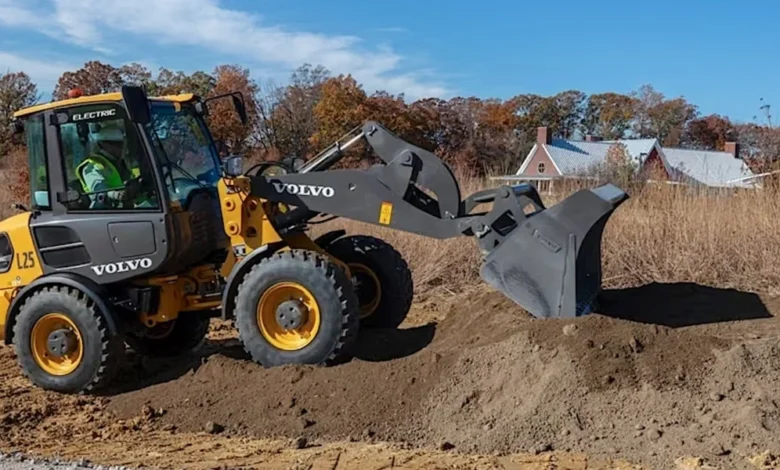
The primary objective of the current infrastructure initiative is twofold: enhancing human access and improving hydrological management within the refuge. The L25 Electric compact wheel loader has been tasked with grading, laying, and compacting the foundational layers for a new half-mile-long trail. This pathway loops around a scenic freshwater pond, engineered specifically to meet stringent ADA compliance standards. By utilizing a whisper-quiet electric drivetrain, the wheel loader can operate in close proximity to sensitive wildlife habitats without generating the deafening acoustic shockwaves typically associated with diesel-powered machinery.
Simultaneously, the ECR25 Electric compact excavator is deployed for precision earthmoving tasks. The excavator is cutting and shaping critical drainage trenches designed to regulate water levels and improve overall hydrological health around the pond ecosystem. Furthermore, the compact machine is playing an instrumental role in the installation of a new wooden viewing platform. This structure extends outward over the water, offering visitors an immersive, unobstructed vantage point for wildlife observation while keeping human foot traffic strictly confined to a designated, low-impact zone.
The Technology: Zero-Emission Machinery in Action
The machinery driving the Occoquan Bay project represents a generational shift in construction engineering. Volvo CE has been at the forefront of the electrification of compact utility equipment, recognizing that urban environments, indoor job sites, and ecologically sensitive zones share a common requirement for silent, emission-free operation.
The Volvo ECR25 Electric is a battery-powered compact excavator designed to deliver the exact performance capabilities of its diesel-equivalent counterpart, but without the associated carbon footprint. Powered by lithium-ion battery packs, the machine provides sufficient operational capacity for standard work shifts, depending on the intensity of the application. Its hydraulic system is optimized for high precision, allowing operators to execute delicate grading and trenching maneuvers in confined spaces.
Complementing the excavator is the Volvo L25 Electric compact wheel loader. Featuring an electric motor dedicated to propulsion and a second motor dedicated to the hydraulics, the L25 eliminates idle losses entirely. When the operator is not actively engaging the controls, the electric motors draw zero power and generate zero noise. Beyond the elimination of tailpipe emissions, these electric assets offer secondary environmental benefits: they require zero engine oil, significantly reducing the risk of hazardous fluid leaks into local waterways, and their drastically reduced vibration levels protect fragile soil structures from compaction damage.

Powering the Job Site with Off-Grid Solar Infrastructure
A critical component of deploying electric machinery in remote or protected natural areas is establishing a reliable, sustainable power supply. Recharging heavy battery-powered equipment typically demands access to a robust electrical grid—a utility that is rarely available deep within the interior of a national wildlife refuge.
To overcome this logistical hurdle and maintain the project’s net-zero operational profile, the U.S. Fish and Wildlife Service integrated a portable EV ARC (Electric Vehicle Autonomous Renewable Charger) solar-powered charging system supplied by Beam Global. The EV ARC unit is an entirely self-contained, off-grid charging infrastructure solution. Equipped with integrated photovoltaic solar panels that track the sun throughout the day, the system harnesses solar energy and stores it in an onboard energy storage battery bank.
This mobile solar charging station can be towed directly to the job site, providing a continuous, renewable source of electricity to recharge both the Volvo excavator and wheel loader overnight or during breaks. By pairing electric construction equipment with mobile solar generation, the project achieves a closed-loop sustainability model. The machinery building the pathways for human enjoyment of nature is itself powered directly by the natural elements of that very environment.
Industry Perspectives and Strategic Partnerships
The collaboration between federal land managers and private sector original equipment manufacturers (OEMs) signals a broader trend toward green procurement within government agencies. As municipal, state, and federal entities face increasingly stringent climate targets and sustainability mandates, the adoption of electrified commercial fleets is accelerating from experimental pilot programs to standard operational procedure.

Dr. Ray Gallant, Vice President of Product Management and Productivity at Volvo CE, emphasized the broader significance of the Occoquan Bay initiative during the project’s launch. "We are excited to partner with the U.S. Fish and Wildlife Service on this project to demonstrate Volvo’s commitment to lowering emissions and working to build the future we all want and need," Dr. Gallant stated. He further noted that the deployment of these electric assets serves as a tangible blueprint for the construction industry at large, proving that zero-emission equipment is fully capable of executing heavy-duty civil works in sensitive environments without sacrificing productivity.
Environmental advocates and federal officials have similarly praised the initiative for setting a new benchmark in sustainable infrastructure development. By prioritizing low-impact technologies, the U.S. Fish and Wildlife Service is establishing a precedent for future capital improvement projects across the entire National Wildlife Refuge System, which encompasses more than 560 refuges and thousands of miles of public trails nationwide.
Broader Implications and Future Outlook for Green Construction
The successful execution of the trail-building project at Occoquan Bay carries profound implications for the future of civil engineering, landscape architecture, and conservation management. For decades, the construction industry has remained one of the most difficult sectors to decarbonize due to the high energy demands of heavy machinery, the remote locations of many job sites, and the sheer durability required of the equipment.
However, the rapid maturation of commercial-grade battery technology and electric drivetrain engineering is dismantling these traditional barriers. Compact equipment—such as the mini-excavators and wheel loaders utilized in Virginia—represents the vanguard of this transition. Because compact machines generally operate within localized footprints and execute intermittent work cycles, they are ideally suited for immediate electrification.
The economic and operational feedback from field tests like the one at Occoquan Bay provides invaluable data for equipment manufacturers. As contractors and public agencies gain firsthand experience with electric fleets, adoption rates are projected to rise significantly over the next decade. Key advantages such as lower lifetime maintenance costs—owing to fewer moving parts, the absence of internal combustion engines, and reduced brake wear—are beginning to offset the higher upfront capital expenditure of electric machinery.

Furthermore, the integration of mobile renewable charging systems like Beam Global’s EV ARC eliminates the infrastructure bottleneck that has historically hindered rural and remote construction projects. Contractors can now bring their own localized microgrids to job sites that lack grid connectivity, opening up new possibilities for sustainable development in national parks, remote forestry operations, and ecologically vulnerable coastal zones.
As the Occoquan Bay trail nears completion, its ultimate legacy will extend far beyond the physical half-mile pathway and the newly installed wildlife viewing platform. It stands as a proof-of-concept for a new paradigm in human interaction with the natural world—one where the development of public amenities and the protection of fragile ecosystems are no longer mutually exclusive, but rather mutually reinforcing goals achieved through technological innovation.