Political threats to professor job protections worry rural colleges where recruiting is already hard

At East Central University in Ada, Oklahoma, the impact of a shifting political landscape is manifesting in empty faculty offices and stalled recruitment efforts. Two of four critical professor positions—specifically in the history and criminal justice departments—remain vacant as the university struggles to attract qualified candidates who are increasingly wary of the state’s changing employment environment. In the computer science department, the search concluded only after the preferred candidate rejected an offer, forcing the university to pivot to a second-choice hire. This narrative of attrition and hesitation has become a defining challenge for Oklahoma’s regional public universities, where the loss of traditional job protections for faculty is creating a significant barrier to academic talent acquisition.
The Legislative and Executive Crackdown on Tenure
The current turmoil is rooted in a broader ideological conflict regarding the role of higher education in Oklahoma. In February 2026, Governor Kevin Stitt, currently in the latter half of his second term, issued a series of executive orders aimed at overhauling the state’s higher education system. Among these directives was a strict prohibition on the granting of tenure to new faculty hires at regional universities and community colleges. While the state’s two flagship research institutions—the University of Oklahoma and Oklahoma State University—were exempted from this mandate, the Regional University System of Oklahoma (RUSO) schools were not.
Tenure, a cornerstone of American academic life, serves as a mechanism to protect intellectual independence, allowing professors to conduct research and teach subjects that may be controversial or unpopular without fear of arbitrary retaliation. By removing this protection for new hires, the Governor’s office argues that it is fostering greater accountability and ensuring that faculty productivity aligns with the state’s economic and workforce development goals.
The move mirrors national trends seen in other states, including Arkansas, Kentucky, and Texas, where Republican-led legislatures have introduced similar measures. However, Oklahoma’s approach is notably wide-ranging, directly impacting the six institutions that serve as the primary drivers of education and economic mobility for the state’s rural populations.
Chronology of the Policy Shift
The pressure on Oklahoma’s higher education system did not emerge in a vacuum. It follows a wave of national sentiment, largely championed by conservative activists and some political leaders, targeting what they characterize as the “woke agenda” in public institutions.
- Early 2026: Governor Stitt signals a shift in higher education oversight, calling for greater return-on-investment analyses and questioning the efficacy of traditional tenure.
- February 2026: The Governor issues executive orders banning new tenure appointments at RUSO institutions, mandating that faculty employment be strictly tied to renewable, performance-based contracts.
- March 2026: Oklahoma State Senate Bill 1782 is introduced, which would have codified the tenure ban statewide. While it clears the Senate Education Committee, the bill stalls, leaving the executive order as the primary vehicle for policy change.
- July 24, 2026: Internal data from the RUSO Board of Regents reveals that 44 new faculty members have been hired under the new, non-tenure-track mandates, marking a significant departure from previous recruitment norms.
- August 2026: University presidents and board members begin publicly expressing concerns regarding the long-term viability of recruiting top-tier talent to rural campuses under these conditions.
Supporting Data and Institutional Context
The financial and operational disparities between Oklahoma’s regional schools and its flagship universities are stark. According to 2025-26 data, the average cost of attendance for an in-state resident at a RUSO institution was $17,557, compared to $27,293 at the state’s flagship research universities. Many regional students further reduce their costs by living off-campus, making these schools vital for low-to-middle-income families.

Despite this, the regional system is facing an existential recruitment crisis. Currently, of the 1,287 full-time faculty across the six RUSO universities, 51 percent are tenured, with an additional 269 on the tenure track. While the Board of Regents has committed to honoring existing tenure-track agreements to mitigate legal risks, the transition to a purely contract-based system for new hires has created a "recruitment gap."
Deepa Das Acevedo, an assistant professor of law at Emory University and author of The War on Tenure, notes that such policies send a chilling signal to the academic labor market. "When state leaders actively work to keep faculty insecure, it signals that they do not value the institution," Acevedo stated. Her research, which spans two decades of data, suggests that tenure does not, in fact, prevent the termination of underperforming faculty; rather, it provides a stable environment for those who have undergone years of rigorous, expensive training.
Official Responses and Internal Tensions
University leadership in rural Oklahoma finds itself in a precarious position, tasked with balancing the directives of the state government with the necessity of maintaining academic quality. ECU President Wendell Godwin has been vocal about the misunderstanding of tenure, noting that his university already possesses robust, transparent processes for removing ineffective faculty.
"The governor has expressed disagreement with the concept of academic freedom and has suggested that senior professors are not contributing," Godwin remarked. "However, we have internal mechanisms to manage performance, regardless of tenure status."
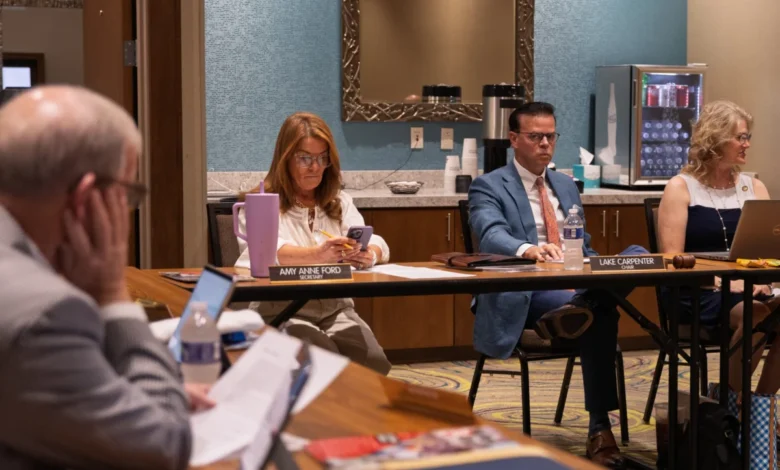
The sentiment is echoed by Regent Amy Anne Ford, who has served as the board’s point person on the Governor’s mandate. Ford admitted that the ban introduces a significant barrier to recruiting candidates who would otherwise consider positions in smaller towns like Ada or Alva. "You are effectively telling the best of the best that they are not welcome under the traditional standards of the profession," she said.
Conversely, Lake Carpenter, chairman of the RUSO Board of Regents, has taken a more cautious, pragmatic approach. While acknowledging the difficulty, Carpenter maintains that the institutions must comply with state directives and suggests that regional schools can adapt by finding new, creative ways to incentivize talent, citing the success of specialized programs like pharmacy and optometry as proof of the system’s resilience.
Broader Implications: The "Haves and Have-Nots"
The potential long-term consequence of these policies is the creation of a stratified higher education system within Oklahoma. As top-tier research universities remain insulated from the tenure ban, they continue to offer the traditional protections that appeal to elite academics. Meanwhile, regional universities, which are already under-resourced, face the risk of becoming “second-class” institutions.

Cecilia Orphan, an associate professor at the University of Denver and co-director of the Alliance for Research on Regional Colleges, suggests that this trend is part of a systemic disregard for the institutions that serve the majority of the state’s rural population. "This policy is essentially a way of saying that these regional universities are not ‘real’ universities, and that the students they serve are not worthy of a traditional, robust academic experience," Orphan said.
The economic fallout could be substantial. Nearly 90 percent of RUSO graduates remain in Oklahoma, directly contributing to the state’s workforce and local economies. If the quality of instruction declines due to a failure to attract and retain expert faculty, the ripple effects will be felt across the state’s rural communities for decades.
Looking Toward the Future
As the tenure ban remains in effect, there is a glimmer of hope among faculty and local legislators that the policy may be temporary. With Governor Stitt’s second term ending in January 2027, there is active organization among state lawmakers to ensure that the executive order is not continued by his successor.
State Representative Ronny Johns, who represents the Ada district, has been one of the most vocal advocates for reconsidering the policy. "We constantly talk about wanting our children and grandchildren to stay in Oklahoma, to live and work here," Johns said. "We have an obligation to support the schools that make that possible, rather than placing hurdles in their way."
For now, professors at institutions like East Central University continue to work under the shadow of the executive order, hoping for a return to traditional academic standards. As the university enters the next academic cycle, the focus remains on navigating the immediate recruitment hurdles while lobbying for a policy environment that prioritizes the stability and long-term success of the regional system. The case of Oklahoma serves as a bellwether for the future of rural higher education in America, where the tension between political ideology and institutional stability continues to reach a boiling point.