Japanese Researchers Develop Innovative Cancer Treatment Using Carbon Monoxide as an Internal Drug Manufacturing Agent

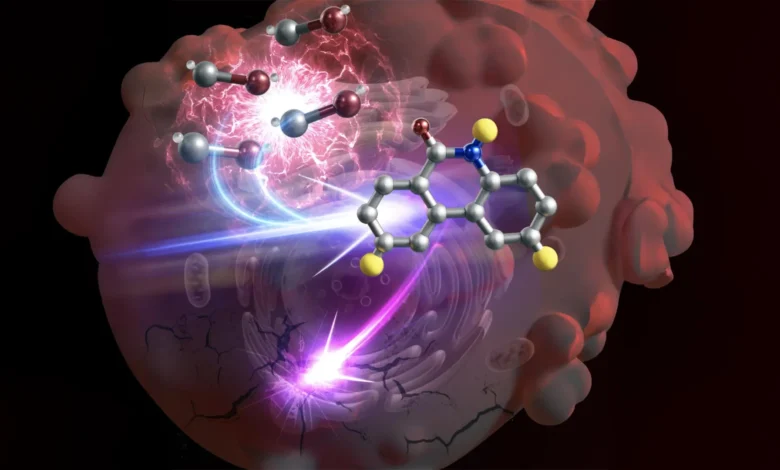
In a breakthrough for the field of therapeutic in vivo synthetic chemistry, a team of scientists at the RIKEN Pioneering Research Institute (PRI) in Japan has successfully demonstrated a method to weaponize a common byproduct of cancer cells against the tumors themselves. By utilizing carbon monoxide—a molecule typically associated with toxic fumes—as a chemical precursor, researchers have developed a system that manufactures potent anticancer compounds directly within the malignant tissue. This methodology, published in the journal Nature Communications, marks a significant departure from traditional systemic chemotherapy, potentially heralding a new era of precision oncology that relies on the internal biological environment of a tumor to trigger its own destruction.
The research, spearheaded by Katsunori Tanaka, addresses one of the most enduring challenges in clinical oncology: the therapeutic index. Traditional chemotherapy drugs often circulate throughout the entire body, leading to systemic toxicity that damages healthy, rapidly dividing cells in the bone marrow, digestive tract, and hair follicles. By shifting the synthesis of the drug to the intracellular level of the tumor, the RIKEN team seeks to bypass these systemic side effects, ensuring that the "toxic payload" is manufactured only where it is intended to act.
The Scientific Framework: Exploiting Tumor Metabolism
The metabolic profile of cancer cells is notoriously distinct from that of healthy, differentiated cells. Tumors frequently exist in hypoxic or metabolically stressed environments, leading to the overproduction of specific gases and metabolites. Carbon monoxide (CO), while dangerous in high concentrations in the atmosphere, is produced endogenously by cells through the enzymatic breakdown of heme by heme oxygenase-1 (HO-1). Studies have consistently shown that many cancer cells upregulate HO-1 as a protective mechanism against oxidative stress, resulting in higher localized concentrations of carbon monoxide within the tumor microenvironment compared to healthy tissues.
The RIKEN researchers hypothesized that this elevated CO concentration could function as a "chemical feedstock" for synthetic reactions. The core of their strategy involves the introduction of a palladacycle catalyst. Palladacycles are organometallic compounds capable of facilitating cross-coupling reactions—specifically, the carbonylation of aryl halides to form phenanthridinone derivatives. Phenanthridinones are a well-documented class of bioactive molecules with proven cytotoxic properties against cancer cells.
Overcoming the "Catalyst Deactivation" Barrier
The path to this discovery was not without technical hurdles. A primary obstacle in applying metal catalysis within a biological system is the presence of sulfur-containing molecules, such as glutathione. Glutathione is ubiquitous in the cytoplasm of human cells and is essential for neutralizing reactive oxygen species. However, it also acts as a potent inhibitor of transition-metal catalysts, binding to the palladium center and rendering it inert long before it can catalyze the desired reaction.
To solve this, the research team utilized an innovative "caging" technique. They encapsulated the palladacycle within albumin, the most abundant protein in human blood plasma. Albumin possesses a natural affinity for various hydrophobic molecules and is frequently used in drug delivery (as seen in the clinical application of nab-paclitaxel). In this configuration, the albumin acts as a protective shell, shielding the palladium catalyst from the deactivating effects of glutathione as it navigates the bloodstream and enters the cell. Once inside the tumor cell, the specific microenvironment allows the catalyst to remain functional, enabling it to encounter the excess CO and initiate the synthesis of the toxic phenanthridinone derivative.
Chronology of Experimental Verification
The development of this system followed a rigorous validation timeline:
- Catalyst Optimization (Pre-2023): The team evaluated various palladacycle candidates to determine which could effectively produce phenanthridinone while maintaining structural stability under physiological conditions.
- In Vitro Efficacy Testing (2023): The researchers exposed human liver, cervical, breast, and lung cancer cell lines to the albumin-palladacycle complex. Over a 48-hour incubation period, researchers monitored for the formation of the target compound.
- Selectivity Analysis: Concurrent testing on non-cancerous fibroblast lines demonstrated that the reaction did not proceed in healthy cells, confirming the necessity of the elevated CO levels found exclusively in the cancerous samples.
- Refinement for Cytotoxicity (Late 2023–Early 2024): The researchers modified the system to allow the newly formed phenanthridinone to dissociate from the albumin carrier, ensuring that the drug could exert its cytotoxic effect on the cell’s internal machinery.
Safety and the Role of Hemoglobin
A primary safety concern regarding this technology is the presence of carbon monoxide in the bloodstream. If the catalyst were to react with blood-borne CO, the resulting drug could cause systemic toxicity, defeating the purpose of the treatment.
However, the RIKEN team’s experiments provided empirical evidence that the reaction is highly selective. They discovered that carbon monoxide in the blood is almost exclusively sequestered by hemoglobin. In this bound state, the CO molecule is unavailable to participate in the chemical reaction with the palladacycle. Consequently, the catalyst remains "dormant" while in the circulatory system, only becoming active upon cellular uptake in environments where CO is available in an unbound or labile form. This inherent safety mechanism is a cornerstone of the study’s potential clinical utility.
Implications for Future Cancer Therapeutics
The implications of this research extend far beyond the specific application of CO-driven synthesis. This study provides a proof-of-concept for a new paradigm in "therapeutic in vivo synthetic chemistry." If researchers can identify other tumor-specific metabolites—such as specific pH levels, enzyme concentrations, or redox gradients—they could potentially design similar catalysts that utilize those local conditions to trigger drug synthesis.
"This work represents an important advance in therapeutic in vivo synthetic chemistry," stated Katsunori Tanaka in his summary of the findings. "In our therapeutic strategy, molecules naturally present or generated within the body—including disease-associated metabolites—are used as endogenous chemical feedstocks to synthesize therapeutic molecules directly at the site of disease."
Challenges and the Path to Clinical Adoption
While the laboratory results are compelling, the jump from in vitro studies to clinical application remains significant. The next phase of the research, which involves animal models, will be critical. Researchers must address several logistical and biological factors:
- Pharmacokinetics: Determining how the albumin-palladacycle complex is metabolized by the liver and excreted by the kidneys.
- Catalyst Accumulation: Ensuring that the palladium catalyst itself does not accumulate in organs to toxic levels over multiple doses.
- Delivery Efficiency: Developing strategies to ensure a high enough concentration of the catalyst reaches the tumor site to achieve a therapeutic effect.
- Immunogenicity: Evaluating whether the introduction of the albumin-palladacycle complex triggers an immune response after repeated administration.
The scientific community has noted that while the use of metal catalysts in the human body is still in its infancy, the ability to control chemical synthesis within a biological target offers a level of specificity that traditional pharmacology struggles to achieve. If the team can successfully demonstrate the safety and efficacy of this approach in animal models, it could lead to a class of "on-demand" cancer drugs that are only activated by the very biological markers that define the cancer’s presence.
As oncology continues to move toward personalized, precision-based medicine, the work of the RIKEN team highlights the potential of synthetic chemistry to bridge the gap between abstract laboratory concepts and practical, patient-centered solutions. By reframing cancer’s own metabolic processes as a mechanism for its destruction, this research offers a sophisticated, albeit early-stage, blueprint for the future of cancer treatment.
Related posts: