Paul Howard, Guardian of The Three Stooges Legacy and Son of Comedy Legend Moe Howard, Passes Away at 91

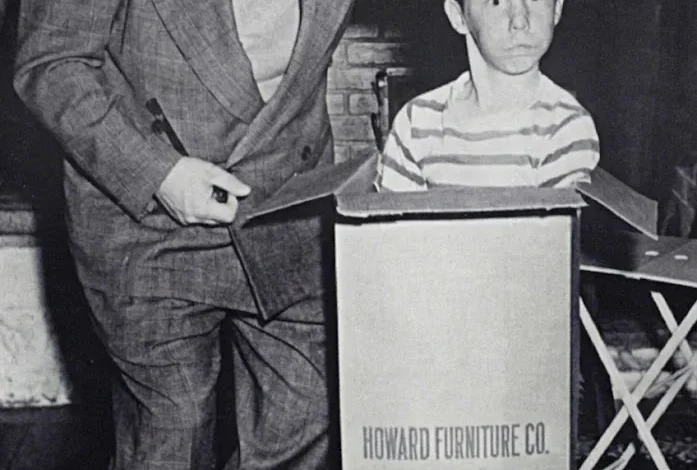
Paul Howard, the devoted son of Moe Howard—the iconic, bowl-cut leader of legendary slapstick comedy troupe The Three Stooges—passed away earlier this week in Manhattan at the age of 91. Throughout his long and full life, Paul Howard served as an indefatigable ambassador and guardian of his father’s immense comedic legacy, preserving the history of one of the most enduring acts in American entertainment. He is survived by his wife, Joanne, and his daughter, Jennifer.
His death marks the passing of a direct, living link to the golden era of Hollywood short-subject comedies, a time when physical comedy, timing, and uninhibited theatricality captured the hearts of millions. For decades, Paul Howard engaged directly with generations of devoted Stooges fans. He frequented fan conventions, retrospectives, and commemorative events, generously sharing personal stories, intimate family memories, and rare insights into the man behind the legendary central figure of The Three Stooges.
A Cinematic Tribute: The Hey Moe, Hey Dad! Docuseries
One of Paul Howard’s most significant contributions to the preservation of his family’s history came later in life when he stepped in front of the camera as a host. In 2015, he anchored the acclaimed nine-part docuseries Hey Moe, Hey Dad!, produced and distributed by C3 Entertainment, Inc. The series offered a comprehensive, affectionate, and deeply researched retrospective chronicling the history, struggles, and triumphs of The Three Stooges.
The project relied on a rich tapestry of archival footage, rare family photographs, and intimate accounts passed down through generations. Crucially, the series featured extensive interviews with surviving family members of the core comedic ensemble, including the kin of Moe Howard, Larry Fine, Curly Howard, Shemp Howard, and Curly Joe DeRita.
To bridge the gap between classic Hollywood and contemporary pop culture, Hey Moe, Hey Dad! also enlisted prominent celebrity fans, historians, and comedians to contextualize the trio’s cultural impact. Among those interviewed were EGOT-winning actress and comedian Whoopi Goldberg, celebrated voice actor Billy West, and esteemed film critic and historian Leonard Maltin. Through this series, Paul Howard ensured that the artistry and backstage realities of the Stooges were documented for posterity by the people who knew them best.
The Birth of a Son: A Hollywood Story Straight Out of Vaudeville
The circumstances surrounding Paul Howard’s birth on July 8, 1935, were as dramatic, chaotic, and serendipitous as any gag executed on the silver screen. His niece, Tessa Maurer, preserved and shared an evocative excerpt from the book Growing Up Stooge, authored by Paul’s sister, Joan Howard Maurer. The passage paints a vivid picture of Moe Howard’s immense anticipation and the frantic chaos of vaudeville-era life.
Moe Howard had long yearned for a son—a companion with whom he could share traditional paternal pastimes like fishing and playing baseball. In late 1934, when his wife, Helen, informed him that she was expecting, Moe’s characteristic wit immediately surfaced. According to family lore, he quipped, “Honey, if it’s a boy, they’ll have to drag me out of the gutter, I’ll be so drunk.”
Helen Howard expertly timed the later stages of her pregnancy around a vaudeville touring schedule in the Eastern United States, enabling her to give birth at Doctor’s Hospital in New York City. On July 8, 1935—eight years after the birth of their daughter Joan—Moe’s long-held dream materialized with the arrival of Paul.
However, the birth itself was a nervous affair for the comedic star. On the exact day Paul was born, Moe was performing live on stage alongside fellow Stooges Larry Fine and Curly Howard at the Metropolitan Theatre in Boston. Helen sent a telegram to the theater, which read in part: "IT’S A GORGEOUS 8 POUND BOY BORN NINE FORTY-FIVE AM. KEEP OUT OF THE GUTTER… LOVE = HELEN."
Despite his comedic persona of eye-poking and hair-pulling belligerence, Moe Howard was known off-stage as a deeply devoted family man who did not consume alcohol. Upon receiving the news, he was, as his daughter described, "drunk with glee." Symbolically, Paul was born merely two blocks away from the Yorkville section of Manhattan where he would maintain his residence late into his life.
The Real-Life Stooge Comedy: A Car Crash and a Premature Birth
The biographical accounts of Paul Howard’s entry into the world took a remarkably cinematic turn just days after his birth, blending genuine peril with classic slapstick absurdity.
Moe Howard was rushing through a heavy Manhattan rainstorm in a rented car to pick up Helen and the newborn Paul from the hospital. Traveling alongside him were his sister-in-law, Aunt Clarice—who was seven months pregnant at the time—and Uncle Harry Seiden.
As Moe navigated the slick city streets, the vehicle suddenly hydroplaned, skidded violently out of control, and slammed directly into a towering concrete lamppost. The impact sheared the post from its foundation. With a thunderous crash, the heavy concrete pole fell squarely across the hood of the car, completely shattering the windshield and showering the front seat with shards of glass.
Moe sustained multiple cuts to his face and a darkening black eye from the collision. Fortunately, Uncle Harry and Aunt Clarice, seated in the safety of the back seat, escaped major physical trauma.
Yet, as the smoke cleared and Moe assessed the wrecked automobile, an unexpected medical emergency transformed the chaotic scene into something resembling a scripted motion picture sketch. The sudden shock and adrenaline surge of the accident caused Aunt Clarice’s water to break prematurely.
Witnessing the surreal convergence of a car wreck, facial injuries, and an impromptu obstetric emergency, Moe Howard reportedly burst into hysterical laughter. Amidst the tension, he offered a line that could have been pulled straight from a Columbia Pictures short: “This only happens in a Stooge comedy.”
Emergency responders rushed Moe to the hospital emergency room for treatment of his lacerations and facial trauma, while Aunt Clarice was immediately wheeled into the delivery room. Shortly thereafter, she gave birth to her daughter, Carole, two months prematurely.
When Helen Howard saw her husband arrive at the hospital room to collect his family, she was stunned to find him sporting fresh cuts and a swelling black eye. Demonstrating the quick-witted humor that defined his career, Moe offered a reassuring defense: “This didn’t happen on stage stooging around.”
The Cultural Footprint and Legacy of The Three Stooges
To understand Paul Howard’s lifelong dedication, one must examine the monumental cultural footprint of The Three Stooges. Originating in the late 1920s as part of Ted Healy’s vaudeville act, the ensemble—primarily featuring Moe Howard, Larry Fine, and Curly Howard—transitioned into film in the early 1930s under contract with Metro-Goldwyn-Mayer before finding their permanent home at Columbia Pictures.
Between 1934 and 1959, the trio filmed 190 short subjects for Columbia, defining a specific genre of anarchic, physical comedy. Despite initial critical dismissal, the shorts became a staple of American television syndication beginning in 1958, introducing their timeless brand of visual humor to generations of baby boomers and subsequent digital-age audiences.
As the son of the undisputed leader and creative anchor of the group—the man behind the trademark bowl haircut, who directed much of the physical choreography—Paul Howard held a unique vantage point. He grew up observing the toll that decades of physical comedy took on the performers, as well as the deep off-screen camaraderie that sustained them through professional shifts, studio battles, and personal tragedies.
Preservation and the Next Generation of Fans
In his later years, Paul Howard’s mission transitioned into historical stewardship. The proliferation of nostalgia conventions, home video releases, and digital streaming platforms in the late 20th and early 21st centuries created a renewed appetite for behind-the-scenes accounts of classic Hollywood.
Paul embraced this renaissance. At conventions hosted by organizations like the Three Stooges Fan Club, he was a welcoming and approachable figure. Fans eager to learn about the domestic life of Moe Howard—away from the cinematic chaos of slaps, pies, and eye-gouges—found a warm and articulate storyteller in Paul. He frequently emphasized that his father was a gentle, family-oriented man who drew a sharp line between his aggressive theatrical persona and his responsibilities as a husband and father.
The release of Hey Moe, Hey Dad! in 2015 cemented this educational mission. By utilizing first-hand accounts and avoiding sensationalism, the series offered cultural historians an invaluable resource regarding the inner workings of early studio short-subject production.
Final Reflections
The passing of Paul Howard closes a direct chapter on the familial legacy of one of comedy’s most influential institutions. While the physical antics of Moe, Larry, Curly, Shemp, and the rest of the troupe continue to entertain global audiences through perpetual television syndication and digital platforms, the human stories behind the comedy rely heavily on the archival efforts of descendants like Paul.
By dedicating much of his life to preserving his father’s memory, writing forewords, participating in documentaries, and meeting fans face-to-face, Paul Howard ensured that the humanity of the men behind the slapstick was never forgotten. He leaves behind a legacy of stewardship that matches the enduring laughter generated by his father’s legendary troupe.
Memorial arrangements and private family services are expected to be held in New York City. Donations and tributes in his memory have been encouraged by family members to support cinematic preservation and arts education initiatives.