New NIH research links common forever chemicals to increased risk of aggressive breast cancer

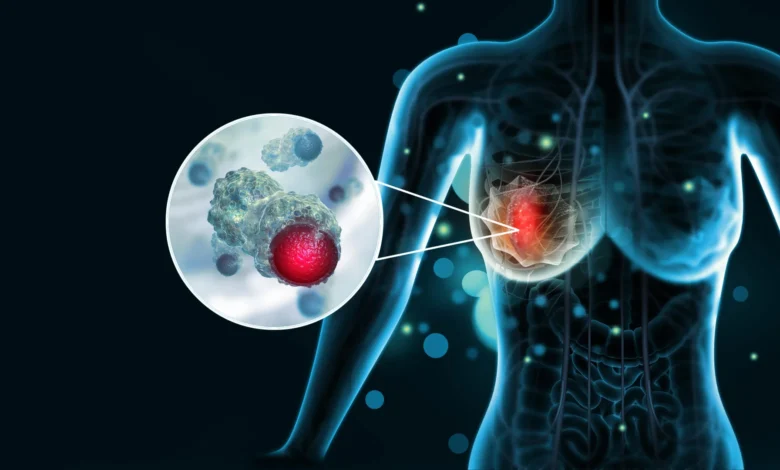
A groundbreaking study led by the National Institutes of Health (NIH) has identified a significant correlation between elevated blood concentrations of two pervasive per- and polyfluoroalkyl substances (PFAS)—perfluorooctanoic acid (PFOA) and perfluorooctanesulfonic acid (PFOS)—and an increased risk of developing estrogen receptor-negative (ER-negative) breast cancer. Published in the Journal of Clinical Oncology, this research marks a critical development in environmental health, offering new insights into the potential origins of one of the most aggressive and difficult-to-treat forms of the disease.
While the study does not suggest that these chemicals are the sole cause of breast cancer, the findings indicate that women with the highest levels of PFOA and PFOS in their blood samples faced a substantially higher risk of developing ER-negative tumors compared to those with the lowest concentrations. The data, derived from the long-term Sister Study, underscores the enduring legacy of these synthetic substances, which have been used for decades in consumer products ranging from non-stick cookware and water-repellent clothing to food packaging and firefighting foams.
Understanding the Mechanism of ER-Negative Breast Cancer
To appreciate the severity of these findings, one must understand the distinct nature of ER-negative breast cancer. In many breast cancer cases, tumor cells possess receptors that allow them to utilize estrogen for growth. Patients with these types of cancer can often be treated with hormonal therapies that effectively "starve" the tumor of the fuel it needs to proliferate.
In contrast, ER-negative breast cancer does not rely on estrogen for growth. Because these cancers do not respond to traditional hormone-blocking therapies, they are characterized by more aggressive growth patterns and, historically, poorer clinical outcomes. Until now, the medical community has had limited information regarding the environmental or genetic drivers of this specific cancer subtype. The NIH study provides a vital clue, suggesting that persistent organic pollutants may play a role in tumor development through pathways that bypass hormonal signaling entirely.
Chronology of the Sister Study and Methodology
The research drew upon the massive, multi-year Sister Study, a longitudinal cohort managed by the National Institute of Environmental Health Sciences (NIEHS). Between 2003 and 2009, the study enrolled 50,884 women across the United States and Puerto Rico. The inclusion criteria required that all participants be between the ages of 35 and 74 and have a sister who had previously been diagnosed with breast cancer, thereby creating a cohort that was already at a higher-than-average genetic risk.
For this specific analysis, researchers performed a retrospective case-control study. They identified 1,609 women who had developed breast cancer after enrolling in the study and matched them against a control group of 2,269 women who remained cancer-free. By analyzing blood samples collected at the start of the study—years before a cancer diagnosis occurred—the research team was able to establish a temporal link between PFAS exposure and subsequent health outcomes.
The team measured the concentrations of 17 different types of PFAS in the blood, identifying that the associations were most profound regarding PFOA and PFOS. Specifically, the data showed:
- PFOA: Women in the highest exposure quartile exhibited a 67% higher incidence of ER-negative breast cancer.
- PFOS: The association was even more pronounced, with the highest exposure quartile showing a 93% increased rate—nearly double that of the lowest quartile.
Official Responses and Government Oversight
The implications of the study have prompted a swift response from federal leadership. HHS Secretary Robert F. Kennedy, Jr. emphasized the government’s commitment to addressing the public health challenges posed by chemical contamination. "Women deserve clear answers about how chemicals in their environment may affect their health," Kennedy stated. "This NIH study links two forever chemicals to a higher risk of ER-negative breast cancer and demands further investigation. Under President Trump’s leadership, we will pursue the evidence, confront environmental health risks, and give women the information they need to protect their health."
The scientific community, led by NIH Stadtman Investigator Alexandra White, Ph.D., views this data as a call to action for regulatory and public health policy. Dr. White noted that the findings were bolstered by a meta-analysis of prior research, which served to cross-validate the observed links between legacy PFAS and the specific tumor phenotype. By focusing on chemicals that have been largely phased out of manufacturing but remain in the global ecosystem, the researchers have highlighted the "long tail" of toxic exposure that continues to affect modern populations.
The Problem of Persistence and "Forever" Chemicals
The term "forever chemicals" is not merely a colloquialism; it describes the chemical stability of the carbon-fluorine bond, which is among the strongest in organic chemistry. This stability ensures that PFAS do not degrade under natural environmental conditions. Instead, they migrate through soil, groundwater, and air, eventually entering the human food chain.
Once ingested, these substances bind to human proteins and can remain in the bloodstream for years, with a half-life measured in multiple years for many compounds. The study’s lead author, Che-Jung Chang, Ph.D., notes that while the persistence of these chemicals is a daunting challenge, the risk is theoretically modifiable. "Although PFAS are persistent in the environment and in our bodies, exposure to them is still potentially modifiable, meaning people can take steps to reduce their exposure," Chang explained.
Potential avenues for reducing exposure include better filtration of municipal water systems, stricter regulation of consumer packaging, and the continued phase-out of PFAS-laden industrial processes. However, because these chemicals have been used for over 50 years, the current population carries a "body burden" that may take decades to decline.
Future Research and Scientific Implications
The NIH study leaves several questions unanswered, which the research team intends to address in future phases of their work. A primary area of concern is the impact of "replacement" PFAS. As PFOA and PFOS were phased out due to toxicity concerns, manufacturers turned to newer generations of PFAS compounds. Scientists currently lack sufficient data to determine if these replacements share the same carcinogenic potential as their predecessors.
Furthermore, the mechanisms through which these chemicals encourage cancer development remain speculative. The researchers hypothesized that the chemicals might interfere with gene expression or alter the host’s immune system, potentially making the body less effective at identifying and neutralizing early-stage malignant cells. Future studies will likely involve mechanistic laboratory testing to determine how these chemicals interact with human tissue at a cellular level.
Broader Impact on Public Health Policy
The publication of this study in the Journal of Clinical Oncology serves as a benchmark for environmental epidemiology. It highlights a shift in how the scientific community views the role of environmental pollutants in cancer etiology. Rather than searching for single, "smoking gun" carcinogens, researchers are increasingly examining the synergistic effects of chronic, low-level exposures to industrial chemicals.
For the general public, the study underscores the importance of environmental monitoring. As the scientific community continues to map the health risks associated with PFAS, the demand for more robust legislative action—such as the Environmental Protection Agency’s (EPA) efforts to set national drinking water standards—is likely to intensify.
In conclusion, while the NIH findings provide a significant step forward in understanding the environmental risks associated with aggressive breast cancer, they also serve as a reminder of the complexity of public health in an industrialized world. As investigators continue to unravel the relationship between these "forever chemicals" and human health, the data provides a necessary foundation for policymakers to pursue stricter oversight and for individuals to become more informed about the potential environmental factors influencing their long-term health outcomes. The ongoing research funded by the NIEHS remains a vital component of the broader effort to protect public health against the invisible, persistent threats of modern chemical usage.
Related posts: