The debate regarding Lewis Hamilton’s tenure at Ferrari has intensified as the 2026 Formula 1 season enters its final three rounds. Following a highly publicized transition from Mercedes—a team where he secured six of his record-equaling seven world championships—Hamilton’s integration into the Maranello outfit has become a focal point of intense scrutiny. While the British driver achieved a landmark maiden victory at the Barcelona Catalunya Grand Prix, persistent questions regarding his ability to steer the team’s development and manage internal competition have prompted critical assessments from industry figures.
The Evolution of the Ferrari Driver Dynamic
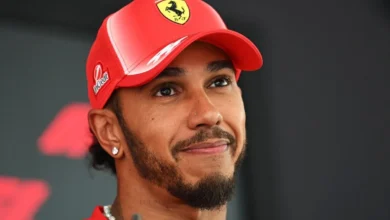
Lewis Hamilton’s arrival at Ferrari in 2025 was billed as a transformative moment for both the driver and the iconic Italian marque. After twelve years of unprecedented success with Mercedes, the transition was expected to mirror the legendary move made by Michael Schumacher in the late 1990s. However, the 2026 season has proven to be a complex chapter for the 41-year-old.
Statistically, Hamilton sits in fourth position in the Drivers’ Championship with only three races remaining. While his performance in Barcelona demonstrated that he retains the race-craft required to win, his season has been characterized by intermittent form and, more recently, palpable friction with his teammate, Charles Leclerc. The on-track clashes between the two have raised concerns within the paddock regarding the team’s ability to manage its internal hierarchy.
The current atmosphere at Ferrari stands in stark contrast to the Schumacher era, where the team was famously built around the German’s specific technical feedback and leadership style. This historical context has fueled the current discourse: Does Ferrari require a driver who acts as a de facto team leader, or is a traditional pilot sufficient to navigate the current era of ground-effect regulations?
Guenther Steiner and the Argument for Relentlessness
The skepticism regarding Hamilton’s leadership role at Ferrari was articulated by former Haas team principal Guenther Steiner during a recent appearance on The Red Flags Podcast. Steiner, known for his pragmatic and direct assessment of team dynamics, questioned whether Hamilton possesses the specific "leadership" attributes required to turn around a team that has faced prolonged technical struggles.
"But is he the guy who can make the team win?" Steiner asked. "When strong drivers took over, they made it a success, but Fernando Alonso tried. Did he succeed? No. Do you think Lewis is the right guy to make this happen?"
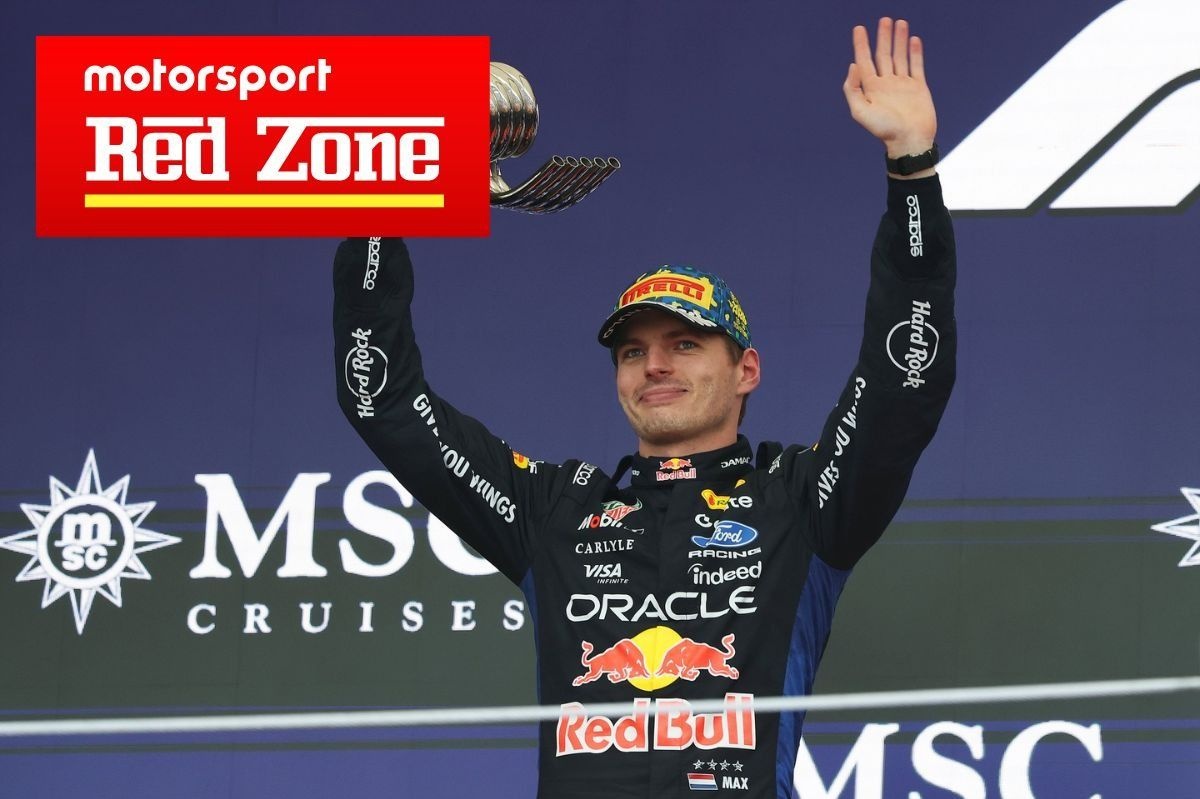
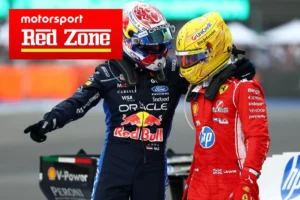
Steiner’s analysis shifted toward Max Verstappen, the reigning benchmark in the sport. When prompted on whether the Dutchman would be a more suitable fit for the culture at Ferrari, Steiner offered a succinct assessment: "You know how Max is. He wouldn’t stop. He’s relentless. That could be the solution."
This characterization of Verstappen—as a driver who exerts a gravitational pull on a team’s technical direction—contrasts with the current narrative surrounding Hamilton, who is often described as a driver who thrives within a pre-established, high-functioning system rather than one who builds it from the ground up.
Ralf Schumacher’s Critique on Leadership Styles
The conversation surrounding Hamilton’s leadership is not limited to Steiner. Ralf Schumacher, a six-time Grand Prix winner, has provided a similarly critical perspective on the Sky Sports Germany podcast, Backstage Boxengasse. Schumacher’s argument centers on the historical structure of Hamilton’s career.
"Hamilton never learned how to lead a team, not under Toto Wolff and not under Ron Dennis," Schumacher stated. "That was never his job anyway. He just had to get in the car and drive as fast as possible. You can see that, and it’s made him quite egotistical as well."
This critique touches upon a broader F1 truth: the role of the modern driver has evolved. In the era of data-driven development, the feedback provided by a driver is the primary compass for engineers. Schumacher’s assertion suggests that Hamilton’s long-standing reliance on the exceptional technical infrastructure provided by Mercedes may have left him ill-equipped for the "ground-up" rebuilding process currently required at Ferrari.
Counter-Perspectives and Team Stability
Despite the external criticism, there is a vocal contingent within the sport that argues the blame for Ferrari’s inconsistent form lies with the organizational structure rather than the driver. Brian Muller, co-host of The Red Flags Podcast, countered Steiner’s skepticism by highlighting the practical realities of the driver market.
"Well, they’re not getting Max anytime soon," Muller noted. "So, what they have is Lewis, and if they’re not ready to drop things when you have a seven-time world champion who’s ready to make Ferrari great again, and you’re not ready to jump on that when it’s time, then you’ve got bigger problems."
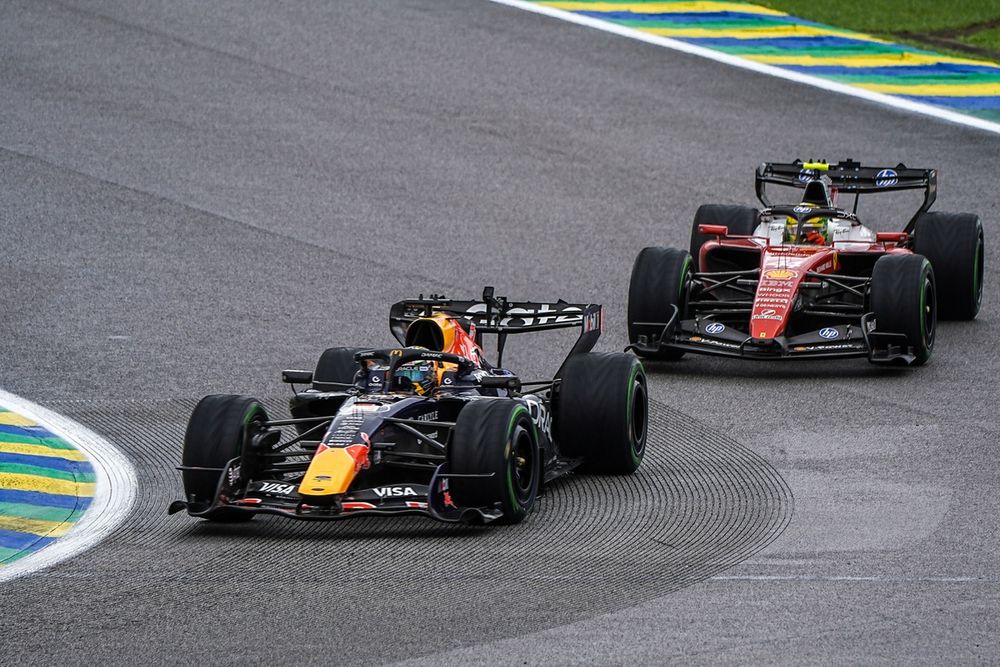
From this viewpoint, Hamilton is a generational asset. The failure of the team to coalesce around him, or to manage the competitive tension between him and Leclerc, reflects a management challenge rather than a failure of the driver. Hamilton’s extensive experience with championship-winning teams is an asset that, if properly harnessed, could provide the organizational discipline that Ferrari has arguably lacked for over a decade.
Implications for the 2027 Season
The implications of this debate extend far beyond the final three races of 2026. As Ferrari looks toward the 2027 technical regulations, the team faces a critical juncture. The internal friction between Hamilton and Leclerc is not merely a racing issue; it is a resource management issue. When two drivers fight for track position, the team’s overall ability to collect data and optimize the car’s setup is compromised.
If the team continues to struggle with on-track cohesion, the pressure will inevitably mount on Team Principal Fred Vasseur to implement a clear hierarchy. Historically, Ferrari has thrived when it has designated a clear number one driver—a strategy that arguably conflicts with the current pairing of two world-class talents in Hamilton and Leclerc.
Chronology of the Ferrari-Hamilton Transition
- February 2024: Lewis Hamilton announces his departure from Mercedes to join Ferrari for the 2025 season, marking the end of a 12-year partnership.
- March 2025: Hamilton makes his competitive debut for Ferrari, experiencing a steep learning curve with the new chassis.
- June 2026: Hamilton secures his first race win for the Maranello team at the Barcelona Catalunya Grand Prix, signaling a return to competitive form.
- October 2026: Intra-team tensions rise following a series of wheel-to-wheel incidents between Hamilton and teammate Charles Leclerc, sparking industry-wide debate.
- November 2026: Industry experts, including Guenther Steiner and Ralf Schumacher, publicly question Hamilton’s leadership capabilities within the framework of Ferrari’s long-term objectives.
Data-Driven Analysis of Driver Performance
In comparing the two drivers, the data suggests that while Hamilton remains a formidable force in race trim, his qualifying pace and consistency in the 2026 car have been inconsistent. Ferrari’s technical department is currently managing a car that is hyper-sensitive to track temperatures and surface conditions, factors that have historically favored drivers with a more aggressive, adaptable driving style—the very style often attributed to Max Verstappen.
Furthermore, the "Schumacher model" of team leadership, which Steiner alluded to, is based on a level of political and technical influence that few drivers in history have achieved. For Hamilton to reach that level at Ferrari, he must move beyond the role of an employee and become the centerpiece of the technical development loop. Whether he has the desire or the environment to do so remains the most significant question in the sport today.
Conclusion
The critique of Lewis Hamilton by figures such as Steiner and Schumacher serves as a reminder of the unforgiving nature of the Formula 1 landscape. Ferrari is not merely a team; it is an institution where expectations are perpetually higher than in any other garage on the grid. While Hamilton’s credentials as a seven-time champion are beyond dispute, his tenure at Ferrari is being measured against a legacy of historical dominance.
As the 2026 season concludes, the focus will undoubtedly shift toward the off-season. The primary challenge for the team will be to determine whether their current driver pairing can coexist, or if the "relentless" leadership style demanded by industry critics is a requirement that necessitates a shift in personnel. For now, the Ferrari board and its fans remain caught between the immense prestige of their current driver and the lingering desire for a return to the era of total, singular dominance.