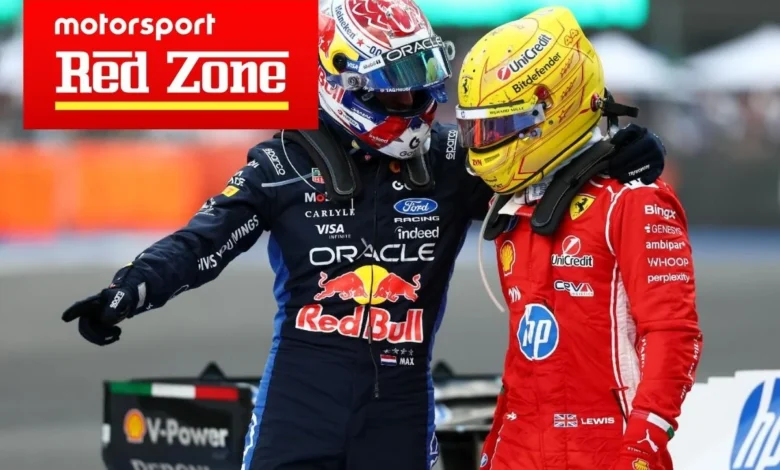
The delicate equilibrium of Formula 1 team management has been thrust into the spotlight following the Mexico City Grand Prix, where a high-stakes duel between Ferrari teammates Charles Leclerc and Lewis Hamilton became a focal point of post-race analysis. Max Verstappen, the reigning world champion, offered a candid critique of the Scuderia’s internal philosophy, suggesting that the competitive friction between his rivals provided him with the necessary window to secure victory at the Autodromo Hermanos Rodriguez.
The incident in question occurred during the opening lap of the race, where an aggressive maneuver between the two Ferrari drivers compromised their momentum and forced a defensive posture that allowed the Red Bull driver to capitalize. Verstappen, speaking to Viaplay during the subsequent Sao Paulo Grand Prix weekend, did not mince words regarding his own approach to team management, advocating for a rigid hierarchy that prioritizes the collective interests of the constructor over the individual ambitions of its drivers.
The Dynamics of Dual Number Ones
At the heart of the current debate is the classic Formula 1 dilemma: the "two number one" driver model. Historically, teams have oscillated between maintaining a clear pecking order—a strategy famously employed by Ferrari during the Michael Schumacher era—and the more egalitarian approach currently favored by team principal Fred Vasseur.
Verstappen’s perspective is rooted in his own experience as a competitive athlete who thrives on the absolute backing of his team. "I’ve said it before, and a lot of people often don’t agree, but if I was a team principal, I’d never get two number one drivers because then you get things like this," the Dutchman stated. His assertion rests on the premise that when two drivers believe they are equally entitled to the top step of the podium, their internal rivalry inevitably bleeds into their on-track performance.
"One won’t yield for the other because they both think they can win, and that’s how I am too," Verstappen continued. He argued that if Ferrari had established a clear hierarchy before the Mexico City lights went out, the team could have navigated the first corner in a formation that maximized their points haul rather than leaving them vulnerable to external threats. For Verstappen, the ideal scenario is the preservation of the team’s championship trajectory, even if it means subordinating one driver’s ego to the other’s position.
Chronology of the Conflict: From Mexico to Interlagos
The friction between Leclerc and Hamilton has not been a singular event but rather a cumulative development throughout the latter half of the season. The Mexico City Grand Prix served as the catalyst for the current scrutiny. Following the opening lap clash, Leclerc ultimately finished fourth after incurring a time penalty, while Hamilton secured second place. This result was a missed opportunity for Ferrari, which had been demonstrating significant pace improvements.
The tension spilled over into the following weekend at the Autodromo José Carlos Pace in Interlagos. The results there were underwhelming for the Maranello-based squad, with Leclerc and Hamilton finishing eighth and ninth, respectively, yielding only six points toward their championship tally.
This string of results has prompted a necessary cooling-off period. Fred Vasseur confirmed that a private meeting was held between the drivers and the team management to address the growing friction. "We did the meeting yesterday evening because I had to fly back to Europe between the two races, but it went well," Vasseur reported to the media. The objective was to reset expectations and reaffirm the team’s internal guidelines, which prohibit drivers from prioritizing individual glory at the expense of the team’s standing.
Ferrari’s Strategic Imperatives
Despite the recent frustrations, Ferrari remains in a relatively strong position within the Constructors’ Championship. The team currently holds second place in the standings, maintaining a 95-point lead over Red Bull with only three rounds of the 2024 season remaining. This buffer provides the team with a degree of security, yet it also underscores the missed opportunities to close the gap on the leaders.
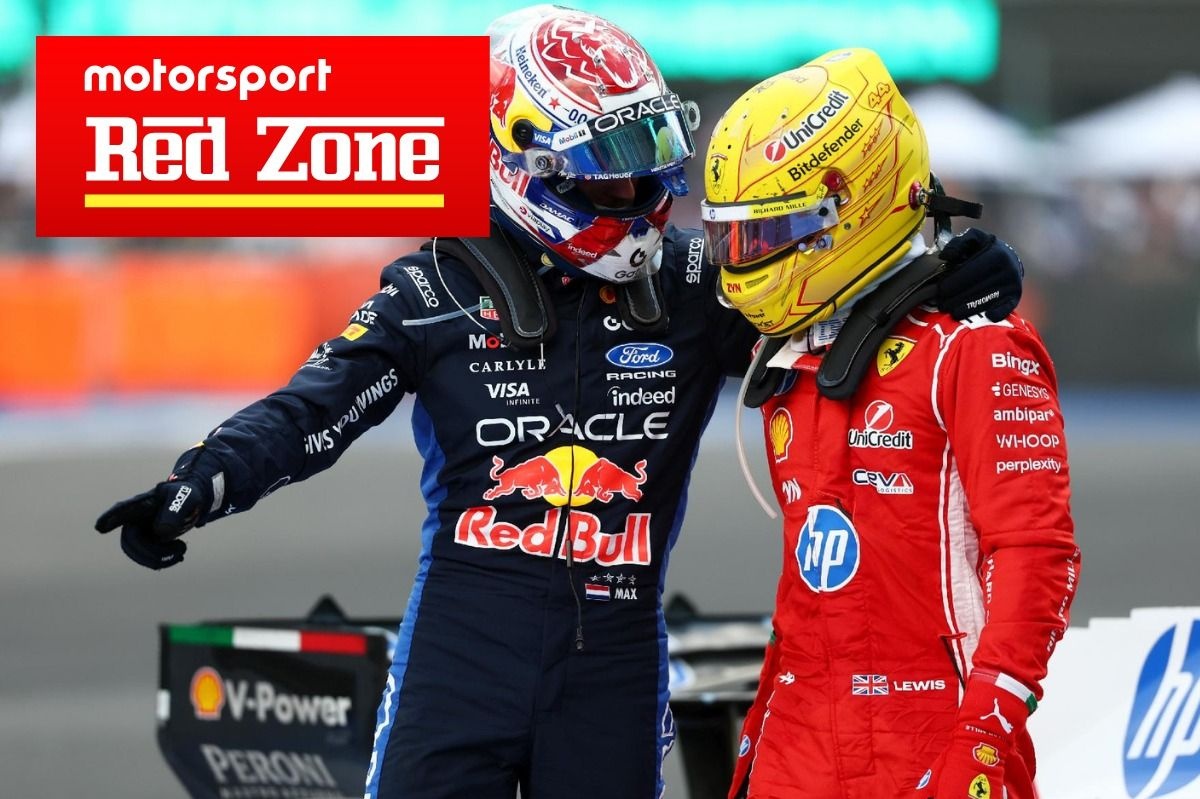
The team’s internal mandate, as outlined by Vasseur, remains focused on a "respect the brand" philosophy. Vasseur’s comments reflect the burden of managing two world-class talents. "They accumulated perhaps a bit of frustration because they are starting each weekend side-by-side and you have a kind of accumulation of fact," he explained.
Vasseur emphasized that while he values the "fighting spirit" of his drivers, there is an absolute requirement for professional conduct. The team’s directive is that the drivers must prioritize the collective effort of the thousands of employees at the factory and the trackside support crew. "They need to respect each other… but mainly and firstly, they need to respect the brand, the team, the people working at home, the people working on track," Vasseur noted.
Implications for the Future of Team Management
The debate sparked by Verstappen highlights a broader trend in Formula 1 where the driver market is increasingly dominated by "superstar" pairings. As teams like Ferrari, McLaren, and Mercedes look to secure the best possible talent, they are forced to manage the psychological realities of having two drivers with championship-winning pedigrees.
Historically, teams that successfully balanced two top-tier drivers—such as McLaren with Ayrton Senna and Alain Prost—often faced catastrophic internal instability. Conversely, teams that enforced a clear number one status, like Ferrari during the 2000-2004 period, enjoyed immense stability but often faced criticism for limiting the sport’s competitive potential.
Verstappen’s critique serves as a reminder that the "perfect" team structure is often dependent on the team’s current position in the championship. For a team chasing the title, the risks of internal friction can be fatal to their chances. As Ferrari enters the final phase of the season, the focus will be on whether Vasseur’s "reset" can hold. If the drivers continue to engage in high-stakes, close-quarters combat, the team risks not only points but also the morale of their staff and the cohesion of their long-term technical project.
Fact-Based Analysis of the Current Landscape
As the sport moves toward the final races, the data suggests that Ferrari’s pace is, at times, competitive with the frontrunners. However, their inability to consistently execute a seamless team strategy has been a recurring theme in the 2024 season.
- Championship Standing: With 95 points separating Ferrari from Red Bull, the focus for the Scuderia is on defending their current position rather than chasing the leaders.
- Driver Parity: The decision to allow both drivers to race freely has been a hallmark of Vasseur’s tenure. While this promotes high-quality racing, it places a heavy burden on race control to manage the limits of acceptable contact.
- Constructors’ Value: The financial implications of finishing second versus third in the Constructors’ Championship are substantial, impacting future development budgets and team revenue.
The coming races will be a litmus test for the Ferrari leadership. The team must demonstrate that they can balance the competitive fire of two of the grid’s most talented drivers with the disciplined, strategic execution required to win championships.
Conclusion
The comments from Max Verstappen provide a rare glimpse into the mindset of a driver who views team dynamics through the lens of pure efficiency. While his opinion may not align with the philosophy of every team principal, it highlights a reality that Ferrari is currently confronting: that having two number one drivers is a luxury that requires a significant investment in management and communication.
As the season draws to a close, the eyes of the Formula 1 world will remain fixed on the Ferrari garage. The "squashed" tensions, as Vasseur described them, will be tested under the pressure of the final laps. Whether the team continues to allow total freedom on the track or moves toward a more structured, team-first approach will be a defining factor in their performance as they look to build toward the 2025 season. For now, the message remains clear: individual brilliance is secondary to the reputation and the long-term success of the Prancing Horse.