
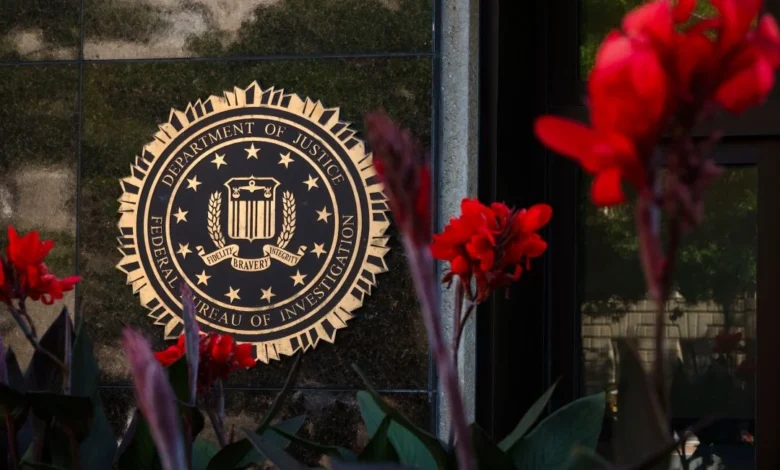
The Federal Bureau of Investigation has launched an urgent cybersecurity investigation into an apparent cyberattack targeting the National Crime Information Center, one of the most critical and sensitive law enforcement databases in the United States. According to initial reports broken by major news organizations including CNN and the Associated Press, the breach poses profound security questions for federal, state, and local agencies that rely on the system daily for operational intelligence, warrant tracking, and background investigations.
The National Crime Information Center (NCIC), managed by the FBI in coordination with criminal justice agencies across the nation, serves as the central electronic clearinghouse for crime-related data. Operating continuously, the network processes millions of transactions each day, supplying police officers, detectives, federal agents, and border security personnel with real-time data regarding wanted persons, missing individuals, protection orders, stolen vehicles, and firearms. Because law enforcement officials routinely access this repository during routine traffic stops, high-risk tactical operations, and background screening processes, the absolute integrity and confidentiality of the NCIC database are foundational to public safety and national security.
The exact scope, vector, and origin of the breach remain under active investigation as technical specialists, digital forensics teams, and counterintelligence agents work to assess what data may have been accessed, copied, or altered. While unauthorized data exfiltration is a primary concern in any major government cyber incident, security experts warn that this breach carries a uniquely dangerous dimension. Former law enforcement and intelligence officials have expressed deep alarm not only over the potential exposure of sensitive records, but also regarding the terrifying prospect that malicious actors could manipulate, corrupt, or falsify data within the system.
Data Integrity as a Paramount Security Threat
In interviews following the disclosure of the incident, cybersecurity authorities underscored that compromising the confidentiality of a database is distinct from compromising its integrity. A former high-ranking FBI official noted that the gravest anxiety among law enforcement leadership is not merely whether hackers gained unauthorized visibility into sensitive files, but whether they could successfully tamper with the accuracy of the information that officers rely upon in the field.
If malicious actors possess the capability to alter arrest warrants, remove flags for dangerous or violent offenders, insert fraudulent entries, or modify vehicle and property tracking details, the operational consequences could be catastrophic. Police officers conducting routine inquiries could be fed false assurances that a dangerous suspect is clear, or conversely, innocent citizens could be erroneously flagged as armed and dangerous during standard law enforcement encounters. The erosion of trust in a foundational database used by hundreds of thousands of sworn personnel across thousands of jurisdictions threatens to undermine the daily mechanics of American policing and judicial enforcement.
Political Reactions and White House Commentary
The unfolding cyber incident has rapidly escalated into a matter of intense political discourse, drawing commentary from the highest levels of the federal government. President Donald Trump addressed the emerging reports during a weekend interview with Fox News, acknowledging the severity of the situation while offering a characteristic appraisal of the broader cybersecurity climate.
"We just heard about it and I will say that it’s not good," President Trump remarked during the interview. However, pivoting to broader criticisms of historical intelligence narratives, he added that the breach might paradoxically yield unforeseen insights, suggesting that "maybe we’ll learn things that we would have never learned otherwise because, you know, you had the Russia, Russia, Russia hoax."
The President’s remarks highlight the intersection of cybersecurity, institutional trust, and partisan politics, as federal agencies grapple with digital vulnerabilities while answering to congressional oversight committees and the executive branch.
A Pattern of Bureaucratic Vulnerabilities
The compromise of the NCIC database does not occur in a vacuum; rather, it represents the latest in a troubling string of high-profile cyber incidents affecting the nation’s premier federal investigative agency. Just two months prior, in September, the FBI was forced to acknowledge a separate major cyberattack after malicious actors successfully breached internal systems and stole the personal data of numerous FBI agents and support staff.
That autumn incident laid bare persistent vulnerabilities within federal network architectures, drawing sharp rebukes from cybersecurity watchdogs who questioned how sophisticated threat actors could repeatedly penetrate networks belonging to the nation’s preeminent counterintelligence and law enforcement organization. The accumulation of these security failures has fueled mounting bipartisan calls on Capitol Hill for a comprehensive modernization of federal cybersecurity protocols, stricter zero-trust architecture implementations, and rigorous third-party audits of critical law enforcement databases.

Background and Evolution of the NCIC
To understand the gravity of the current investigation, one must examine the history and architecture of the National Crime Information Center. Established in January 1967 under the directorship of J. Edgar Hoover, the NCIC was originally conceived as a computerized index of documented criminal justice information designed to assist local police departments in apprehending interstate fugitives and recovering stolen property.
Over the decades, the system expanded exponentially. Today, the NCIC contains dozens of distinct operational files, encompassing millions of active records. These files include the Interstate Identification Index, Supervised Release File, Foreign Fugitive File, Immigration Violator File, Protection Order File, and Gang File, alongside specialized databases for unidentified persons and missing children. Access to the network is strictly regulated, restricted to authorized criminal justice agencies that meet stringent FBI security clearance and procedural guidelines.
Because the network connects federal databases with state fusion centers, county sheriff offices, and municipal police departments via dedicated secure telecommunications lines, any localized or systemic vulnerability at the federal gateway level can theoretically expose peripheral nodes across the entire American criminal justice apparatus.
Chronology of Events Leading to the Investigation
While the full timeline of the intrusion remains classified or subject to change as the forensics investigation deepens, preliminary disclosures outline a rapid sequence of events:
- Late September: The FBI publicly confirms a separate cyber incident in which hackers successfully compromise internal networks, leading to the theft of personal information belonging to various bureau agents and administrative personnel.
- Mid-November: Advanced monitoring systems or external threat intelligence indicators flag anomalous network activity pointing toward unauthorized access within infrastructure linked to the National Crime Information Center.
- November 20: Initial leaks regarding the NCIC breach begin circulating among investigative journalists, prompting federal officials to review system logs and isolate potentially compromised segments.
- November 21: Major news outlets, including CNN and the Associated Press, break the story to the public, detailing that the FBI is actively investigating an apparent hack of the primary law enforcement database.
- November 23: President Trump addresses the unfolding crisis during a Fox News interview, confirming awareness of the breach while commenting on its potential collateral disclosures.
- Ongoing: Specialized digital forensics units, working alongside private-sector cybersecurity incident response firms, execute containment strategies, review audit logs, and attempt to trace the attribution of the threat actors.
Broader Technical and National Security Implications
The infiltration of a core law enforcement database triggers profound national security implications that extend far beyond routine data theft. Cybersecurity analysts suggest that advanced persistent threat (APT) groups—potentially state-sponsored actors hailing from nations such as Russia, China, Iran, or North Korea—frequently engage in long-term reconnaissance and data harvesting against Western government networks.
If foreign intelligence services or sophisticated cybercriminal syndicates have successfully mapped the architecture of the NCIC, they acquire invaluable insights into American law enforcement operations, surveillance priorities, warrant execution patterns, and confidential informant or witness protection markers. Such intelligence can be weaponized for counter-surveillance, espionage, or disruptive cyber operations designed to paralyze domestic security functions during times of geopolitical crisis.
Furthermore, the incident raises difficult questions regarding legacy infrastructure within federal agencies. Many vital government databases rely on complex, aging software architectures that are difficult to secure against modern, highly adaptive cyber threats. Transitioning these expansive repositories to modern cloud-native environments equipped with behavioral anomaly detection, continuous multi-factor authentication, and immutable logging remains a monumental engineering challenge.
Path Forward for Federal Law Enforcement
In the wake of the disclosures, congressional leaders from both parties have signaled their intention to demand immediate briefings from FBI leadership. Lawmakers are expected to scrutinize the bureau’s defensive posture, the timeline of detection, and the specific remediation steps being taken to safeguard the integrity of ongoing criminal investigations.
For frontline law enforcement officers, the immediate operational directive remains cautious vigilance. Agencies across the country have been advised to maintain heightened awareness when processing database queries and to report any anomalous system behavior or unexpected data discrepancies to federal authorities immediately.
As the investigation progresses, the primary imperative for the FBI will be twofold: definitively determining the extent of the data compromise and restoring absolute public and institutional confidence that the records governing American justice remain pure, accurate, and entirely uncorrupted by hostile foreign or domestic actors.