The Day the Speed of Light Was Revealed: How Ole Rømer Changed Our Understanding of the Universe

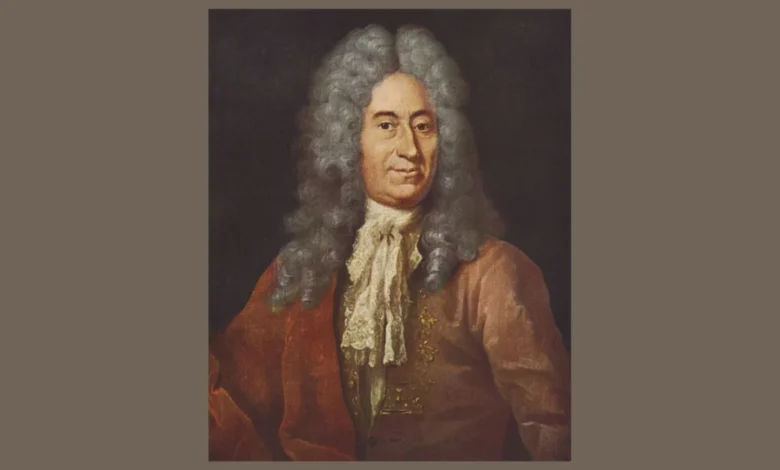
On November 21, 1676, the Danish astronomer Ole Rømer presented a revolutionary discovery to the Royal Academy of Sciences in Paris that fundamentally altered the course of human understanding: light does not travel instantaneously, but at a finite, measurable speed. This announcement dismantled a centuries-old belief held by philosophers and scientists alike, who had long assumed that the propagation of light was an infinite phenomenon. Rømer’s realization was not the product of a high-tech laboratory experiment, but rather the result of meticulous, years-long observations of the heavens, specifically the rhythmic eclipses of Jupiter’s volcanic moon, Io. By identifying a discrepancy in the timing of these celestial events, Rømer provided the first empirical evidence that light requires time to traverse the vast expanses of the solar system.
The Scientific Landscape Before 1676
For the majority of human history, the nature of light was a subject of philosophical debate rather than empirical calculation. Ancient Greek philosophers, including Empedocles, argued that light must take time to travel, yet this was frequently countered by the practical observations of daily life. When a candle is lit, its illumination appears to fill a room immediately. Consequently, influential figures such as Aristotle asserted that light was a "quality" or an "act" of a medium, rather than a physical particle or wave moving through space.
By the 17th century, this assumption remained the status quo. Even the great polymath René Descartes argued that light was transmitted instantaneously across any distance, maintaining that if it were not so, the celestial bodies would appear out of sync with their physical positions. While Galileo Galilei had attempted to measure the speed of light using lanterns on distant hilltops, his methods were limited by human reaction time and the sheer velocity of light, leading him to conclude that if light were not instantaneous, its speed was at least extraordinarily high. It was against this backdrop of intellectual consensus that Ole Rømer began his work at the Paris Observatory.
The Jovian Clockwork: A Study of Io
In the 1670s, the accurate determination of longitude was a primary objective for European maritime powers. Navigators required a reliable "universal clock" to synchronize their positions, and the moons of Jupiter, discovered by Galileo in 1610, appeared to be the perfect candidates. Because Io orbits Jupiter in a predictable, short cycle—approximately 42.5 hours—astronomers believed they could create a table of its eclipses that would serve as a celestial timekeeper for ships at sea.
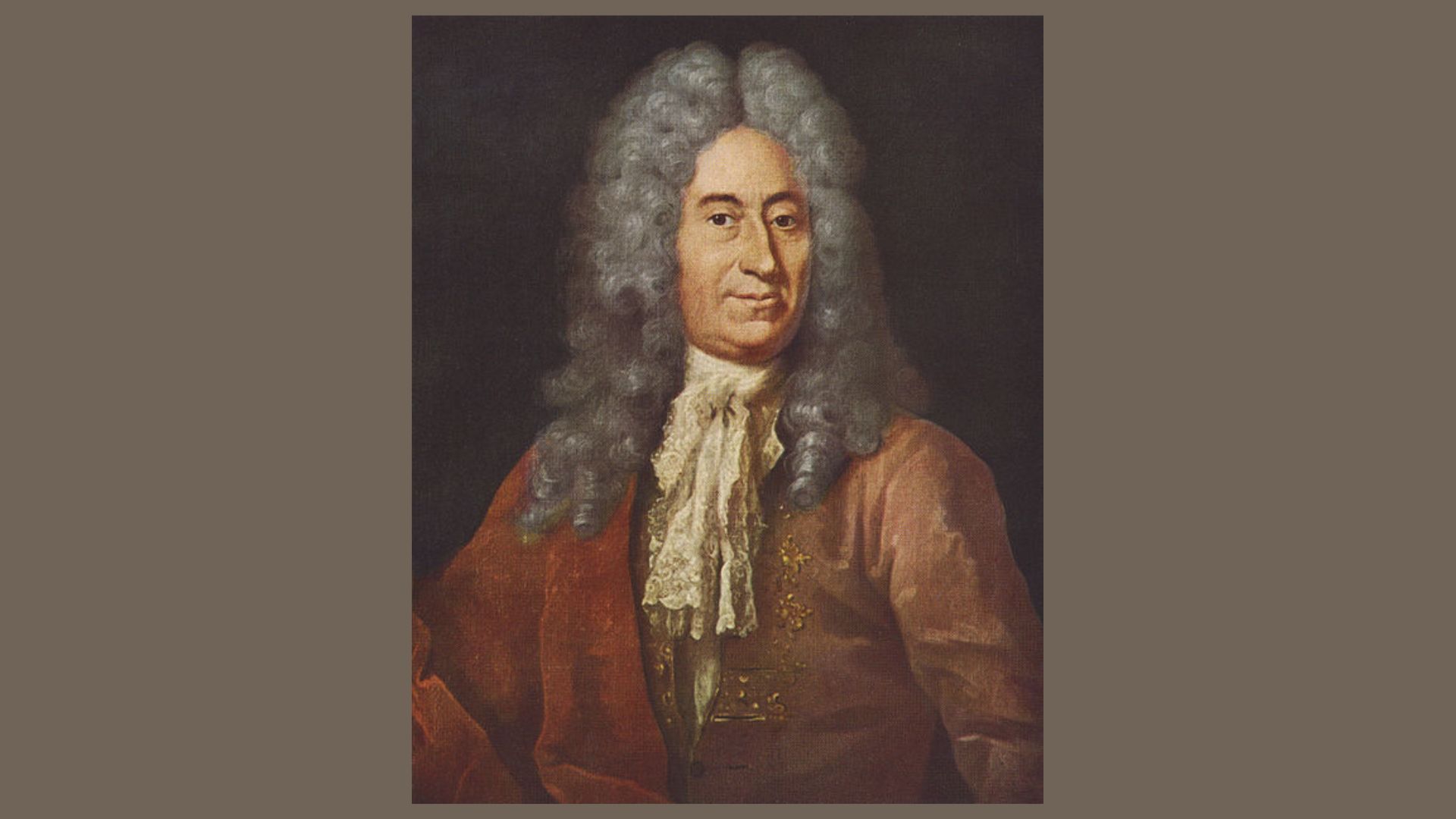
Ole Rømer, working under the direction of Giovanni Domenico Cassini, began tracking these eclipses with rigorous precision. The premise was straightforward: as Io passed behind the shadow of Jupiter, it would vanish from view. By documenting the exact moment of these disappearances over several years, Rømer sought to refine the orbital period of the moon. However, a persistent and confounding anomaly emerged in his data.
When Earth’s orbit brought our planet closer to Jupiter, the eclipses of Io occurred slightly earlier than the established mathematical models predicted. Conversely, when Earth moved further away in its orbit, the eclipses appeared to be delayed by roughly 11 minutes. While Cassini initially suspected flaws in the observations or environmental interference, Rømer hypothesized a more radical explanation: the discrepancy was not in the moon’s orbit, but in the time it took for the light of the eclipse to travel the varying distance between Jupiter and Earth.
The Chronology of the Discovery
The process leading to Rømer’s historic presentation was marked by careful validation and predictive testing:
- 1671–1675: Rømer conducts sustained observations of Io’s eclipses at the Paris Observatory, amassing a significant dataset of timings.
- Early 1676: Rømer identifies the pattern of the 11-minute variance relative to the orbital distance between Earth and Jupiter.
- November 9, 1676: Rømer successfully predicts the exact timing of an eclipse, demonstrating his mastery of the phenomenon and the validity of his hypothesis regarding light’s speed.
- November 21, 1676: Rømer presents his findings to the Royal Academy of Sciences. He posits that the 22-minute difference (the total variance between the closest and farthest points) represents the time light takes to cross the diameter of Earth’s orbit.
Quantifying the Finite
Though Rømer did not explicitly calculate the speed of light in kilometers per second during his initial presentation, his data provided the necessary components to do so. By observing that light takes roughly 22 minutes to cross the diameter of Earth’s orbit, and knowing the approximate distance of the solar system as understood at the time, later mathematicians were able to derive a figure remarkably close to the actual speed of light (approximately 299,792 kilometers per second).
It is important to note that Rømer’s peers were not immediately convinced. The sheer scale of the speed—roughly 300,000 km/s—was difficult for 17th-century scientists to reconcile with their existing worldview. It was not until the work of English astronomer James Bradley in 1728, who observed the aberration of starlight, that Rømer’s findings were fully accepted as an immutable physical fact.

The Broader Impact on Modern Physics
The transition from the concept of instantaneous light to a finite, measurable speed was the foundational shift required for the development of modern physics. If light has a finite speed, it follows that we are always viewing the universe as it existed in the past. This concept of the "look-back time" is the cornerstone of modern cosmology and astrophysics. When astronomers look at distant galaxies today, they are effectively looking back through time, observing light that has traveled for billions of years to reach our sensors.
Furthermore, Rømer’s discovery set the stage for the work of Albert Einstein two centuries later. In his theory of Special Relativity, Einstein elevated the speed of light to the status of a fundamental universal constant ($c$). This constant acts as a cosmic speed limit; because energy and mass are interchangeable, accelerating an object with mass toward the speed of light would require infinite energy. Thus, the speed of light is not merely an observation of how fast a photon travels; it is a structural pillar of the space-time fabric itself.
Implications and Legacy
The implications of Rømer’s discovery extend far beyond the laboratory. By establishing that information cannot travel faster than the speed of light, he implicitly defined the boundaries of causality. In the modern era, this remains critical to our understanding of communication, computing, and interstellar exploration.
The scientific community’s reaction to Rømer’s announcement remains a lesson in the importance of evidence-based skepticism. While Cassini and others were hesitant to abandon the "instantaneous" model, the predictive power of Rømer’s math eventually forced a paradigm shift. Today, the speed of light is so precisely measured that it is used to define the length of the meter itself.
Ole Rømer’s work serves as a reminder that the most significant scientific breakthroughs often hide in the "errors" of existing data. By treating the 11-minute discrepancy not as a nuisance, but as a window into a deeper physical truth, Rømer provided humanity with the keys to measure the heavens. His 1676 presentation remains one of the most consequential dates in the history of science, marking the moment when we began to truly perceive the vast, time-bound scale of the universe we inhabit.