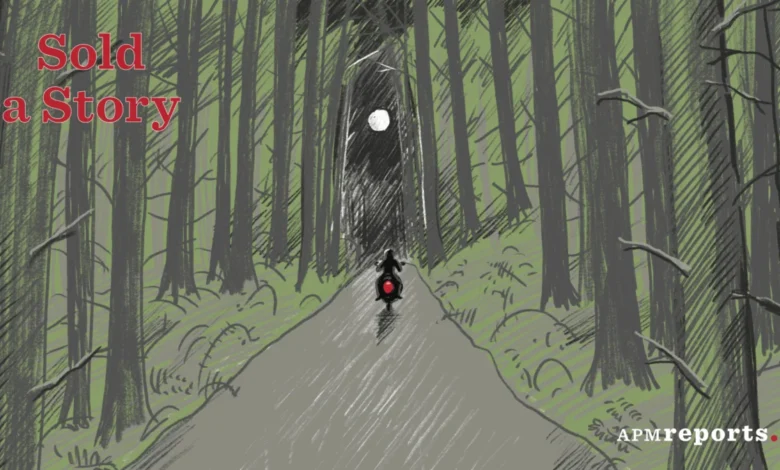
The American education landscape stands at a precarious intersection between pedagogical research and institutional tradition. For decades, the divide between evidence-based instructional methods and the prevailing classroom practices has resulted in significant disparities in student outcomes. The investigative podcast series "Sold a Story," produced by APM Reports, has spent two seasons scrutinizing these failures. In the season two finale, "It’s up to us," host Emily Hanford pivots from the specific crisis of literacy instruction to a broader examination of why the education system consistently rejects proven methodologies, with a particular focus on the historical resistance to Direct Instruction (DI).
The Paradox of Proven Efficacy
At the heart of the educational debate is a recurring paradox: why do school systems frequently ignore or actively reject instructional models that have demonstrated success through rigorous, longitudinal data? Direct Instruction, a pedagogical model developed by Siegfried "Zig" Engelmann in the 1960s, serves as the primary case study for this phenomenon.
DI is characterized by highly structured, scripted lessons that emphasize explicit teaching, rapid-fire student response, and immediate corrective feedback. Unlike student-centered discovery learning, which became the pedagogical gold standard in many colleges of education during the late 20th century, DI focuses on the transmission of knowledge through precise instructional design.
Decades of research, including the U.S. Department of Education’s massive Follow Through study—the largest and most expensive educational experiment in history, conducted from 1967 to 1995—indicated that students taught using DI methods significantly outperformed their peers in basic skills, cognitive development, and affective growth. Despite these findings, DI was marginalized within the mainstream educational establishment, often dismissed as "rote" or "robotic" by proponents of progressive education.
A Chronology of Resistance
The resistance to models like Direct Instruction is not a recent development but a systemic issue rooted in the mid-20th century’s shift in educational philosophy.
- 1964: Zig Engelmann begins his experiments in Champaign, Illinois, working with young children to demonstrate that they could learn complex logical concepts if the instruction was broken down into manageable, explicit steps.
- 1967: The federal government launches Project Follow Through, intended to evaluate the effectiveness of various compensatory education programs for children from low-income families.
- 1977: Preliminary results from the Follow Through project indicate that Direct Instruction was the only model that consistently improved performance across all three domains: basic skills, cognitive skills, and self-esteem.
- 1980s–1990s: Despite the data, school districts across the United States increasingly shift toward "Whole Language" and constructivist approaches, which prioritize student-led discovery over explicit teacher-led instruction.
- 2022: The debut of "Sold a Story" brings the disconnect between the "science of reading" and classroom reality to a national audience, forcing a reckoning within the publishing and school administration sectors.
- 2026: The conclusion of the second season of the podcast marks a transition from identifying the problem of literacy instruction to questioning the underlying culture of educational reform.
Data and Educational Outcomes
The consequences of rejecting research-based instructional practices are quantifiable. According to data from the National Assessment of Educational Progress (NAEP), often referred to as the Nation’s Report Card, student proficiency in reading and mathematics has remained stagnant for years, with significant portions of the student population failing to meet grade-level expectations.
In districts where explicit instruction has been systematically abandoned in favor of discovery-based learning, the "achievement gap" remains persistent. Educational psychologists have long argued that novices—specifically children learning foundational skills—require explicit guidance to move information from working memory to long-term memory. When that guidance is withheld in favor of "inquiry-based" models that are better suited for experts, the cognitive load on the student becomes unsustainable, leading to the struggles documented in the earlier episodes of the podcast.

The Legacy of Zig Engelmann
The final episode of "Sold a Story" provides an intimate look at the life and motivations of Zig Engelmann, who passed away in 2019. Throughout his career, Engelmann faced intense professional isolation for his insistence on the data-driven design of lessons. His supporters argue that his work was not merely about a specific technique, but about a moral obligation to provide every child with the tools necessary for academic success.
Engelmann viewed the rejection of his work as a failure of the system to prioritize student welfare over ideological comfort. For educators and policymakers, his legacy serves as a challenge: the research is clear, but the implementation requires an uncomfortable dismantling of long-held beliefs about how children learn.
Institutional Resistance and Professional Identity
Why does the educational establishment persist in resisting methods that work? The answer often lies in the sociology of the teaching profession. For many educators, the adoption of scripted, highly structured programs is viewed as a loss of professional autonomy. There is a deep-seated belief that "good teaching" involves the creative, individualized interpretation of curriculum, rather than the delivery of a standardized, validated lesson plan.
Furthermore, the influence of university-level teacher preparation programs cannot be understated. These institutions have historically favored constructivist theories of learning, which emphasize that students must "construct" their own knowledge. When teachers graduate from programs that emphasize these theories, they enter the workforce with a predisposition against explicit instruction, viewing it as a regressive or "factory-model" approach to schooling.
Implications for the Future
The implications of this ongoing conflict are profound. As "Sold a Story" concludes, the message is clear: the responsibility for change does not lie solely with policymakers or textbook publishers, but with the collective consciousness of those within the classroom and the institutions that train them.
- Curricular Reform: School districts are increasingly being pressured to adopt high-quality, evidence-based curricula. However, the adoption of materials is only the first step; the professional development required to shift teaching practices is a massive, multi-year undertaking.
- Teacher Preparation: There is a growing movement to audit teacher preparation programs to ensure they align with the cognitive science of learning. This includes a shift away from theories that have been debunked by neuroscientific research.
- Accountability and Transparency: Parents and community members are now better informed about the instructional methods used in their schools. This grassroots pressure is forcing districts to be more transparent about why certain methods are chosen and how they impact student outcomes.
The finale of the podcast serves as a final plea for an empirical approach to education. If the goal of the school system is to ensure that every child can read, think critically, and succeed, then the system must be willing to abandon practices that have failed and embrace those that have been proven to work—regardless of how uncomfortable that change may feel to the established order.
As Emily Hanford suggests in the closing segments of the series, the failure of our schools to teach children effectively is not just a technical failure; it is a moral one. The transition from the "science of reading" to the "science of teaching" requires a departure from ideological entrenchment. It requires an acceptance that some methods are objectively better than others, and that the duty to provide those methods to students supersedes any professional desire for creative latitude.
The story told by APM Reports is not one that ends with a neat resolution. Rather, it leaves the listener with the understanding that the future of American education remains in a state of flux. Whether the system will continue to prioritize tradition over evidence or finally commit to a truly scientific approach to pedagogy remains the central question for the coming decade. As the podcast concludes, the tools for success are available; the only remaining obstacle is the collective will to use them.
Related posts: