The Hidden Cost of Choice: Why Families of Students with Disabilities are Losing Federal Protections in Private Schools

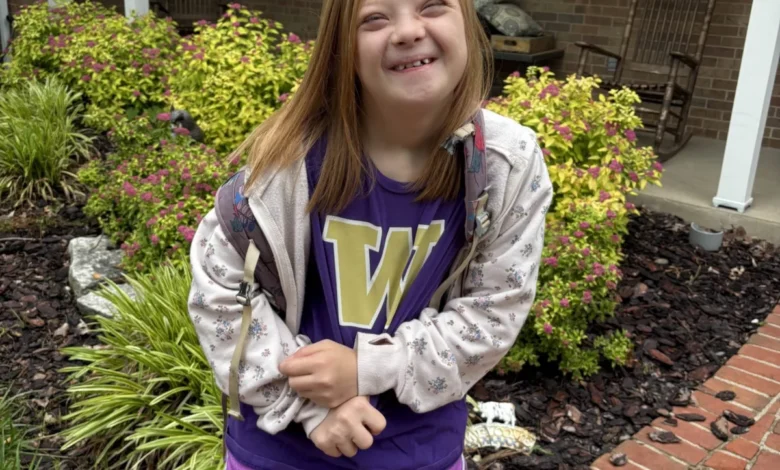
The meeting between Cincinnati Christian Schools (CCS) administrators and the grandparents of 15-year-old Annabelle Kelly began with a prayer, a gesture of community that quickly gave way to a stark ultimatum. For Mike Grimmer and Linda Kelly, the session was not a collaborative discussion about their granddaughter’s academic future, but a formal notification that the school could no longer accommodate her needs. Despite having enrolled Annabelle just three months prior in August 2025, the family was told that her Rett syndrome—a genetic condition characterized by significant cognitive and developmental delays—required a level of one-on-one support the school was unwilling to provide without an additional $25,000 annual fee.
This case highlights a growing friction point in the American education system: the collision between the expanding school voucher movement and the legal safeguards established by the Individuals with Disabilities Education Act (IDEA). As states across the country shift toward voucher-based models, thousands of families are discovering that public funding does not equate to the preservation of public protections.
The Erosion of Rights in the Voucher Era
Annabelle Kelly’s journey into the private sector was fueled by the promise of school choice. Like many parents of children with special needs, her grandparents sought an environment they believed would be more responsive and intimate than a large public school district. Annabelle qualified for the Jon Peterson Special Needs Scholarship, an Ohio-based voucher program that authorized payments of up to $29,750 to CCS, effectively covering the tuition for her specialized program.
However, the legal reality of this transfer is often misunderstood by parents. When a student leaves the public school system, they are classified as "parentally placed." This status strips them of the legal protections guaranteed by the IDEA, a landmark 1975 federal law that mandates a "free and appropriate public education" for students with disabilities, provided through an Individualized Education Program (IEP). In the private sector, these IEPs are not binding, and private schools are under no obligation to provide the services, accommodations, or non-discriminatory access that federal law mandates for public schools.
The lack of transparency regarding these lost rights is a systemic concern. Currently, neither federal voucher programs nor many state-level initiatives are legally required to inform parents that they are waiving these civil rights when they accept a voucher. Chris Roe, director of state policy at the Council of Parent Attorneys and Advocates (COPAA), notes that this creates a dangerous power imbalance. "If there are public funds being spent, public protections need to be afforded," Roe stated. "At the very least, states that provide voucher programs should be required to inform parents of the rights they are giving up."
A Chronology of Exclusion
The experience of the Kelly family reflects a recurring pattern in schools that accept voucher students. Before enrolling Annabelle, the family was entirely transparent about her medical and academic profile, sharing comprehensive evaluations and her existing learning plan from the public school system. Annabelle even completed three trial days at CCS, which were reported as successful by school staff.

In November 2025, the narrative shifted abruptly. Raymond Kochis, the superintendent of Cincinnati Christian Schools, declined a formal interview but addressed the issue in written correspondence, stating that the costs of educating Annabelle had evolved beyond initial determinations. "When a student’s needs evolve," Kochis noted, "the school works with the family to determine the most appropriate level of support."
Linda Kelly vehemently disputes the notion that Annabelle’s needs had changed. She argues that the school was aware of her condition from the outset and that administrators offered no genuine path to continue her education unless the family assumed a massive financial burden. For the Kellys, the transition from a hopeful start to a sudden dismissal was, in their words, a total "blindside."
Statistical Growth and Regulatory Gaps
The number of students with disabilities entering voucher programs is surging, rising from approximately 180,000 in the 2024-25 school year to over 200,000 in 2025-26. As states like Florida, Indiana, and Texas incentivize these programs—often by prioritizing vouchers for students with documented disabilities—the demand for specialized private settings has outpaced the development of regulatory oversight.
The variance in state-level requirements is dramatic. While Ohio’s Jon Peterson scholarship mandates that participating schools must provide a written reason for denying a child and are expected to employ trained special education staff, these rules are largely toothless. There are no clear, mandated consequences for private schools that fail to implement IEP goals or adhere to these standards. Other states, such as Oklahoma, impose even fewer requirements, failing to demand that participating schools even hire staff with special education credentials.
Data from the Ohio Department of Education and Workforce reveals a high turnover rate among scholarship recipients. In 2025, more than 8,600 students utilized the Jon Peterson scholarship, yet nearly half of these participants do not remain in the program for more than three years. While some of this movement is attributed to graduation or relocation, disability advocates suggest that the instability of private placements—where a school can decide a student is too difficult or expensive to educate—is a significant contributing factor.
The Case of St. Rita: A Broader Trend
The experience of Nicole White and her daughter, Kate, serves as a poignant example of the precarious nature of these placements. Kate, who has Down syndrome, initially found success at the St. Rita School for the Deaf, which accepted her with a welcoming attitude and provided support through the Jon Peterson scholarship.
However, as Kate grew, her developmental needs shifted toward a more traditional curriculum, and her IEP requirements for occupational and physical therapy were eventually dropped by the school, citing budget constraints. St. Rita’s president, Angela Frith, clarified that the scholarship funds do not cover the full cost of education, placing the burden of supplemental therapies on families to pay out-of-pocket or through private insurance. For White, the "phenomenal" early experience eventually soured into a realization that her daughter’s specialized needs could not be sustained in a private environment facing financial pressures.

Implications for Federal Policy
With a federal voucher program set to take effect next year, the debate over disability rights has intensified. Advocates lobbied unsuccessfully for Congress to include language within the federal legislation that would require participating private schools to comply with IDEA protections. Now, the strategy for organizations like COPAA has shifted toward pressuring individual states to adopt stricter standards.
The fundamental concern is one of inclusion. As Roe points out, private schools, by their nature, often lack the capacity or the institutional incentive to create inclusive environments for students with a wide spectrum of learning needs. "If parents are looking for an inclusive environment, private schools are problematic," Roe warned. "There are a lot of barriers."
Returning to the Public Sphere
For Annabelle Kelly, the conclusion of her private school experience did not result in a total loss. After several months of being out of school, her grandmother enrolled her in the ninth grade at Princeton High School, the local public school they had initially sought to avoid.
Linda Kelly admits that her initial reluctance to return to the public system was rooted in outdated perceptions of how special education was handled two decades ago. Her current assessment, however, is markedly different. Annabelle has not only acclimated to the new environment but is also making measurable progress on her IEP goals. She finds joy in her gym class—an environment that provides the social integration she was previously denied.
"I made assumptions about Princeton based on what I knew about the school 20 years ago," Kelly said. "Annabelle is now where she needs to be."
This outcome serves as a quiet rebuke to the narrative that private education is inherently superior for students with disabilities. It underscores the vital role of the public school system in providing a stable, legally mandated framework of support that is not subject to the fiscal whims or discretionary enrollment policies of private institutions. As the school choice movement continues to gain momentum, the Kelly family’s experience stands as a cautionary tale: the promise of a voucher is not always a promise of an education, and the loss of federal protection is a price that many families are not prepared to pay.