By removing the digital barrier between the performer and the audience, Bridgers has effectively curated an environment where memory is prioritized over data storage. This shift has prompted a surge in fan-led creative expression, as concert-goers document the visceral experience of the show through charcoal sketches, watercolors, and digital illustrations.
The Evolution of the No-Phone Policy
The implementation of a "no-phone" policy in large-scale arena venues is a significant departure from modern concert norms, where the glow of thousands of screens is typically synonymous with the live experience. Bridgers confirmed this policy over the summer, framing the "Lost Tour" as an exercise in presence. The logistics of such a policy often involve the use of specialized secure pouches—such as those provided by companies like Yondr—which lock away devices for the duration of the performance, ensuring that the audience remains focused on the stage.
For many attendees, the initial frustration of being disconnected from their devices has transitioned into a sense of liberation. The policy aims to reduce the "second-screen" phenomenon, where fans view a concert through their own device screens rather than engaging directly with the artist. By forcing this disconnect, Bridgers has created a unique psychological space for her audience, fostering an atmosphere where the memory of the music is forged through attention rather than digital capture.
Artistic Documentation as a Cultural Response
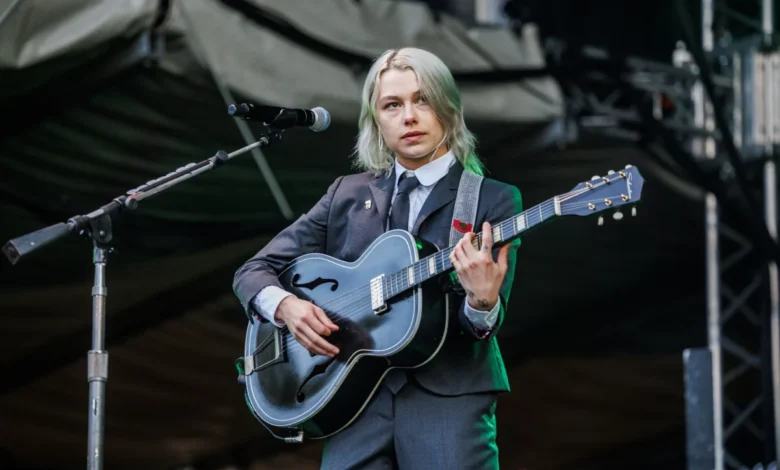
The phenomenon of fans drawing during concerts has gained significant traction, with Bridgers herself highlighting some of the most evocative pieces on her social media platforms. Olivia MacDonald, a fan who attended the Boston engagement last month, noted that the absence of a camera lens altered her internal processing of the show. MacDonald’s own artwork, which featured Bridgers’ signature electric blue makeup and her historic guitar—previously owned by the late Elliott Smith—sought to capture the emotional frequency of the night.
"I feel like with photos or videos, you capture a moment in time, and with drawings, you really capture a feeling and people can connect to that feeling," MacDonald told BBC Newsbeat. This sentiment highlights the core of the fan movement: a rejection of the "archival" nature of phone photography in favor of a "subjective" interpretation of the concert experience.
Anna Meyer, who attended the New York performance, utilized a time-lapse technique to illustrate a piano solo performed under a singular, stark spotlight. For Meyer, the act of drawing was a direct response to the lack of digital mediation. "It was so cathartic to feel so inspired," Meyer stated. "And I do wonder, if I did have my phone, would I have felt this need to sit down and immediately draw something from the show?"
This shift also addresses broader concerns regarding the saturation of artificial intelligence in creative fields. Meyer noted, "We’re now in an era of AI where they want us to believe if you want to create something visual, you have to use a computer and AI programme. And it’s just not true. We all have the ability to create… and sometimes [it is] even far better than anything that a camera can capture."
Chronology and Upcoming Tour Developments
The "Lost Tour" has been marked by several significant milestones and unfortunate disruptions, which have only served to deepen the narrative surrounding Bridgers’ resilience.
- August 2024: Bridgers announces a series of intimate UK album launch shows to celebrate her latest record, Lost Weekend.
- Late August 2024: The artist is forced to cancel these intimate performances due to an emergency hospitalization for appendicitis.
- September 2024: Following recovery, the artist recalibrates the tour schedule, ensuring that the intimate shows are integrated into the broader arena tour framework.
- October 2024: The US arena leg concludes, demonstrating the success of the phone-free initiative.
- November 2024: The tour is set to transition to the UK and Europe, featuring support from Isaac Wood, formerly of Black Country, New Road.
- August 2027: Bridgers is officially announced as the inaugural headliner for the All Points East festival in London, cementing her status as a premier arena-level act.
The upcoming European tour leg is particularly notable for its charitable component. Bridgers has partnered with the organization PLUS1, pledging that one unit of local currency (Euro or Pound Sterling) from every ticket sold will be donated to grassroots organizations dedicated to supporting survivors of sexual assault and violence. This initiative underscores the tour’s commitment to social responsibility, extending the "presence" of the artist beyond the venue walls.
Analytical Implications: The "Anti-Screen" Movement
The success of the "Lost Tour" raises critical questions regarding the future of live entertainment. For decades, the music industry has moved toward hyper-documentation, where the value of a concert is often measured by the quality of the footage shared on social media platforms. By stripping away this capability, Bridgers is challenging the industry-standard "proof of attendance" model.
From an analytical standpoint, the move is a risk that has yielded high dividends in fan loyalty. In a marketplace saturated with content, the "Lost Tour" offers scarcity. Because the concert cannot be relived through a digital archive, the attendee’s memory becomes the primary medium. This inherently increases the value of the experience for the individual, as they are tasked with the responsibility of "remembering" the show rather than "saving" it.
Furthermore, the emergence of fan art as the primary mode of documentation serves as a feedback loop. When the artist shares this fan-created content, it validates the fans’ perspective, turning the concert into a collaborative, community-led event. This is a stark contrast to the passive consumption of concert footage on platforms like TikTok or Instagram, where the focus is on the artist’s aesthetic rather than the participant’s reaction.
Critical Reception and Musical Context
The acclaim surrounding this tour is mirrored by the reception of Bridgers’ latest album, Lost Weekend. In a five-star review, NME characterized the album as a work that avoids emotional evasion, noting that it represents a "reckoning with herself and the romantic and familial love and loss that have shaped her story." This thematic depth translates effectively to the arena setting; the "no-phone" policy prevents the inevitable distraction of digital scrolling, forcing the audience to confront the raw, often uncomfortable lyrical content of the performance head-on.
The transition from intimate club settings to arena stages is often a difficult pivot for songwriters rooted in indie-folk and emo sensibilities. However, by maintaining an atmosphere of intimacy through the phone-free policy, Bridgers has effectively shrunk the arena. The absence of blue-light distraction allows for a more focused light design and a more intentional sonic experience, reinforcing the themes of the album.
Looking Ahead: The Future of the Concert Experience
As the tour moves into its UK and European phase, the precedent set by these US shows will likely be scrutinized by other artists and promoters. If the "Lost Tour" continues to generate high engagement and positive critical feedback, it may signal a broader industry trend toward "unplugged" live performances.
The intersection of technology, mental health, and the arts is increasingly relevant. By creating a temporary digital detox for her audience, Bridgers is participating in a larger cultural conversation about the necessity of disconnection in an age of constant connectivity. Whether or not this becomes the standard for major tours remains to be seen, but the "Lost Tour" has undoubtedly proven that fans are willing, and perhaps eager, to trade their cameras for sketchbooks.
As Bridgers prepares for her 2027 festival headlining slot, the foundation she has built—one based on artistic integrity, social advocacy, and a deep respect for the live performance medium—appears stronger than ever. The audience is no longer just a passive witness to a spectacle; they are active participants in the preservation of the art, marking a pivotal moment in the history of live music.