The Invisible Threat: How Microplastics Transform from Passive Pollutants into Chemically Reactive Hazards

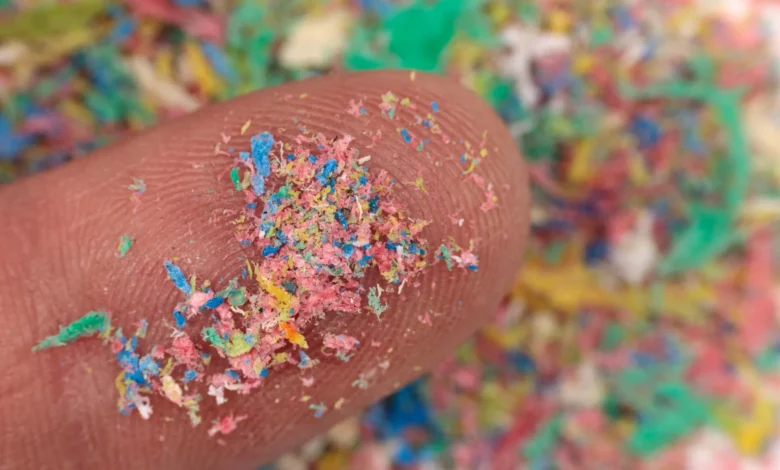
For decades, the global scientific community has operated under the fundamental assumption that plastic is a chemically inert material. This belief has underpinned the widespread integration of polymers into everything from life-saving medical devices and food preservation packaging to children’s toys and essential consumer infrastructure. Because plastic does not easily react with its environment, it was long considered a stable, albeit persistent, pollutant. However, groundbreaking new research published in the journal Nature has dismantled this long-standing paradigm, revealing that as plastics fragment into microscopic particles, they transition from passive debris into active chemical agents capable of damaging living cells.
The study, a collaborative effort between researchers at Columbia University and the University of California, Berkeley, provides a compelling explanation for how microplastics—and their even smaller counterparts, nanoplastics—interact with the human body. Far from being harmless, inert shards, these particles are now understood to act as catalysts that trigger the production of reactive oxygen species (ROS), which are known to cause significant biological damage to tissues and organs.
The Mechanism of Microscopic Reactivity
The central finding of this research lies in the physics of surface area. As a larger piece of plastic, such as a water bottle or a synthetic fabric fiber, breaks down into micro- and nanoplastics, the total surface area exposed to the surrounding environment increases exponentially. This massive increase in surface area creates a highly reactive interface when the particles come into contact with water.
"As plastic fragments into smaller and smaller particles, its surface area increases enormously," explains Wei Min, a professor of Chemistry and Biomedical Engineering at Columbia University. "Then microplastics change the water that surrounds them, generating high-energy, reactive radicals. These reactive oxygen species very likely contribute to the biological damage that we see in animals and potentially in humans as a result of microplastic exposure."
The chemical process involves the hydrophobic—or water-repelling—nature of most plastics. When water molecules encounter these hydrophobic surfaces, the boundary layer behaves in a way that deviates significantly from standard fluid dynamics. According to the research, this interface facilitates the transfer of electrons, which in turn encourages the formation of hydroxyl radicals. These radicals are highly unstable and seek to steal electrons from other molecules, including those that make up the structural foundations of human cells, such as proteins, lipids, and DNA.
A Chronology of Discovery and Escalating Concern
The journey to this discovery has been marked by a rapid escalation in both technological capability and public concern. For years, the inability to accurately measure nanoplastics—particles smaller than one micrometer—left a significant gap in scientific understanding.
The momentum for this breakthrough began in January 2024, when the same Columbia research team unveiled a revolutionary laser-based microscopy technique. This technology allowed scientists to count and identify individual plastic particles in bottled water with unprecedented precision. The results were startling: researchers found an average of 240,000 plastic fragments per liter of bottled water, a figure 10 to 100 times higher than previous estimates.
This revelation catalyzed a shift in the global conversation regarding plastic pollution. It moved the focus from the visible "Great Pacific Garbage Patch" to the invisible, pervasive contamination occurring within our food systems and bodies. By 2026, the severity of these findings prompted the United States federal government to launch a $144 million initiative specifically targeted at studying the health impacts of toxic microplastics. In a parallel regulatory move, the Environmental Protection Agency (EPA) officially added microplastics to the list of contaminants of concern in drinking water, a landmark decision that underscored the growing urgency of the crisis.
Supporting Data and Clinical Associations
The urgency of this research is backed by an increasing volume of literature appearing in the world’s most prestigious medical journals. Studies published in the New England Journal of Medicine, Nature Medicine, and Nature Health have begun to map out the potential human cost of chronic exposure to these particles. Researchers have identified statistical associations between high levels of microplastic exposure and severe medical conditions, including:
- Cardiovascular disease: Potential links to heart attacks and arterial inflammation.
- Neurological decline: Emerging evidence regarding the presence of nanoplastics in the brain and correlations with dementia.
- Oncological risks: Research suggesting that chronic oxidative stress caused by ROS generation could play a role in tumor development.
While these studies demonstrate correlation rather than definitive causation, the new chemical pathway identified by the Columbia-Berkeley team provides a biological mechanism that explains how these conditions could arise. If microplastics are indeed generating reactive oxygen species within the bloodstream and cellular tissues, the pathway from exposure to disease becomes significantly more plausible.
Theoretical Foundations: The Role of the Berkeley Team
To validate their findings, the Columbia researchers partnered with the laboratory of Professor Teresa Head-Gordon at UC Berkeley. Using advanced computer simulations and molecular dynamics modeling, the Berkeley team examined the atomic-level interactions between plastic surfaces and water.
Their simulations provided a clear picture of the chemistry at work: negatively charged hydroxide ions, naturally present in water, tend to congregate around the hydrophobic plastic surface. In this concentrated, confined environment, these ions are effectively "primed" to lose electrons, leading to the rapid formation of hydroxyl radicals. This theoretical work bridges the gap between physical observation and chemical reality, offering a rigorous scientific basis for the claims made by the Columbia team.
Broader Environmental and Engineering Implications
The implications of this study extend far beyond the human bloodstream. Microplastics are ubiquitous in our waterways, entering the environment through industrial effluent, the degradation of synthetic clothing in laundromats, and the breakdown of consumer waste under the influence of sunlight and heat.
Beizhan Yan, a researcher at Columbia’s Lamont-Doherty Earth Observatory, notes that daily human activities—such as microwaving food in plastic containers or leaving bottled water in a hot car—accelerate the degradation process, creating more nanoplastics and, by extension, more reactive surface area.
However, there is a silver lining. By identifying that the chemical reactivity is tied to the hydrophobic nature of the plastic, scientists may be able to pivot toward "green chemistry" solutions. Professor Head-Gordon suggests that this fundamental knowledge could guide the engineering of new, safer polymers. "Our fundamental work that the most hydrophobic microplastics interacting with water can drive chemical reactivity could ultimately lead to new engineering solutions by redesigning the chemistry of these commodity plastics to reduce the toxic outcomes on health and the environment," she stated.
Looking Toward Future Mitigation
The path forward for policymakers and the private sector is becoming increasingly complex. As the scientific community continues to refine its understanding of the toxicity of microplastics, the pressure for systemic change grows. The transition from viewing plastics as inert commodities to recognizing them as potentially reactive chemical hazards represents a fundamental shift in materials science.
As of late 2026, international regulatory bodies are beginning to weigh the findings of this research against existing safety standards. With the EPA’s formal recognition of the threat in water supplies and the influx of federal research funding, the focus is shifting toward large-scale mitigation strategies. These range from improved filtration systems in wastewater treatment plants to the development of bio-based, non-reactive packaging alternatives.
Ultimately, the Columbia and Berkeley study serves as a critical call to action. It confirms that the plastic pollution crisis is not merely a matter of aesthetic blight or environmental litter; it is a complex, active chemical challenge that intersects with the most fundamental biological processes of human health. As scientists continue to pull back the curtain on the invisible world of nanoplastics, the need for a comprehensive, science-driven approach to plastic consumption has never been more pressing. The research establishes that while plastic may have been designed to last, its breakdown products are far from dormant, posing a persistent, evolving challenge to global public health.
Related posts: