Groundbreaking Discovery at Garvan Institute Challenges Three Decades of Understanding Regarding Rare Genetic Inflammatory Disorder

For three decades, the scientific community has operated under a singular, prevailing theory regarding Mevalonate Kinase Deficiency (MKD), a rare and debilitating genetic disorder characterized by life-threatening inflammatory episodes. Researchers long posited that the disease’s pathology was primarily driven by the dysfunction of macrophages—the immune system’s “first responders” that coordinate inflammatory defenses. However, a transformative study recently published in the journal Immunity by the Garvan Institute of Medical Research has effectively overturned this long-standing dogma, revealing that the true catalyst for the disease lies within the malfunctioning of natural killer (NK) cells. This discovery not only reshapes the medical understanding of MKD but also introduces a promising therapeutic pathway involving existing medications, offering new hope to patients who have historically proven resistant to standard treatment protocols.
The Chronology of a Medical Misconception
The scientific journey toward this discovery began in the early 1990s, when the clinical presentation of MKD—often manifesting as periodic fevers, skin rashes, abdominal pain, and joint inflammation—was first being systematically mapped. Throughout the late 1990s and early 2000s, clinical research focused heavily on the mevalonate kinase enzyme, which is crucial for cholesterol and isoprenoid biosynthesis. Because patients with MKD exhibit significant deficiencies in this enzyme, researchers focused their efforts on how the resulting metabolic shifts affected macrophage activity.
For thirty years, clinical trials and therapeutic interventions were designed exclusively around this macrophage-centric hypothesis. Standard treatments were developed to inhibit the inflammatory cytokines, such as interleukin-1, released by macrophages. While these treatments provided relief for many, they left a significant clinical gap: approximately 50 percent of patients continued to suffer from persistent, uncontrolled inflammatory flares. This “treatment gap” became the primary driver for the Garvan Institute’s recent investigation, as researchers sought to determine why the prevailing medical consensus failed to account for such a high percentage of non-responders.
The Role of Natural Killer Cells: A New Paradigm
To investigate the root cause of these persistent symptoms, the research team, led by Professor Mike Rogers and Dr. Marcia Munoz, shifted their focus from macrophages to natural killer (NK) cells. NK cells are specialized lymphocytes tasked with the critical duty of patrolling the body to identify and eliminate virally infected or malignant cells. In a healthy immune system, these cells release toxic granules to neutralize threats.
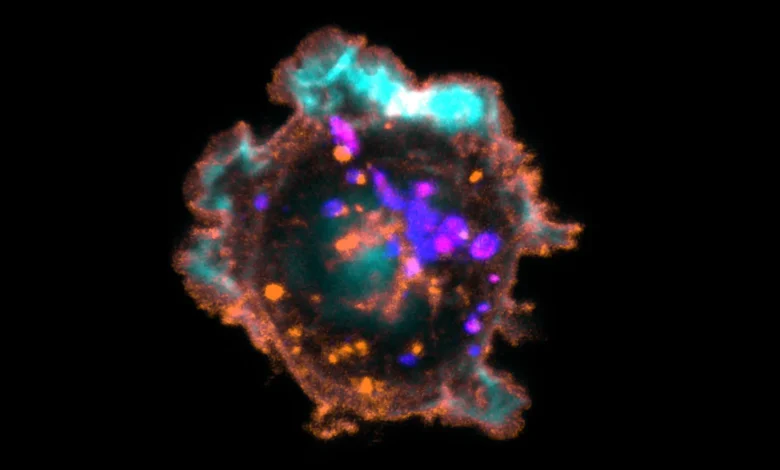
The Garvan team’s experiments, which included analyzing patient blood samples and utilizing preclinical models, revealed a profound biological defect. In patients with MKD, NK cells fail to mature properly. Because they cannot execute their primary function—the release of toxic granules to kill infected cells—these cells become hyper-reactive in a compensatory attempt to signal for help.
“We found that these immune cells are essentially misfiring,” explains Professor Rogers. “NK cells are loaded with toxic ammunition, stored in granules that are released to kill infected cells. However, in MKD, these toxic granules cannot be released and remain trapped inside. When an NK cell fails to kill its target, it compensates by shouting for help, pumping out large amounts of interferon gamma—a powerful inflammatory signal. This activates other immune cells and causes the dangerous fever and widespread inflammation seen in patients.”
This discovery effectively places the NK cell, rather than the macrophage, at the center of the MKD disease mechanism. It explains why blocking macrophage signals has often been insufficient; the true systemic inflammation is being fueled by an uncontrolled, over-exuberant interferon gamma response originating from dysfunctional NK cells.
Supporting Data and Clinical Evidence
The implications of this shift in understanding were tested in a real-world clinical scenario involving a pediatric patient at the Royal Children’s Hospital in Melbourne. The infant, suffering from severe, persistent symptoms of MKD that had proven resistant to traditional anti-inflammatory therapies, became the first candidate for an experimental approach targeting the newly identified interferon gamma pathway.
Doctors introduced baricitinib, a medication categorized as a JAK (Janus kinase) inhibitor. JAK inhibitors are small-molecule drugs that block the signaling pathways used by various cytokines, including those driven by interferon gamma. By modulating these pathways, the medication effectively dampens the “shouting” response of the dysfunctional NK cells. The results were striking: the patient showed a marked reduction in the frequency of inflammatory flare-ups, and pre-existing damage to the gastrointestinal tract began to show signs of healing.
While this clinical success is anecdotal, it provides the necessary evidence to advocate for larger, prospective clinical trials. The use of existing, FDA-approved medications like baricitinib offers a significant advantage, as the drug’s safety profile and side-effect mechanisms are already well-documented in the treatment of rheumatoid arthritis and atopic dermatitis.
Broader Implications: The Rise of Prenylopathies
The impact of the Garvan Institute’s findings extends far beyond the hundreds of documented cases of MKD. Researchers have proposed a new classification for a group of related genetic disorders known as “prenylopathies.” These conditions involve the same metabolic pathway affected in MKD, suggesting that the underlying mechanism—the failure of NK cells to properly mature and the subsequent release of excessive inflammatory signals—may be a shared trait across these diseases.
If this hypothesis holds true, the diagnostic and treatment landscape for a suite of rare, often misdiagnosed inflammatory diseases could be revolutionized. Currently, many patients endure a “diagnostic odyssey,” moving from specialist to specialist for years before receiving an accurate diagnosis or an effective management plan. Identifying a common cellular mechanism could allow clinicians to move away from trial-and-error treatments and toward targeted therapies that address the specific molecular defect at play.
Expert Analysis and Future Directions
The shift from a macrophage-centric view to an NK cell-centric view represents a quintessential example of how foundational research can re-evaluate long-held scientific truths. Dr. Marcia Munoz, the lead researcher on the study, emphasized the gravity of the shift: “This really turns on its head 30 years of dogma about what was thought to be the underlying mechanism of disease. In MKD, the primary problem is in NK cells and not in macrophages, as previously believed.”
The scientific community is now looking toward the next phase of research, which involves verifying these findings in larger, multi-center studies. Collaborations between institutions, such as the partnership between the Garvan Institute and Monash University, have been instrumental in establishing the link between cellular dysfunction and organ damage in preclinical models. This interdisciplinary approach is expected to continue as researchers explore whether blocking interferon gamma activity can be the gold standard for treating the broader family of prenylopathies.
For the patients and families affected by MKD, this research offers more than just a new therapeutic option; it offers validation. For those who have been told that their symptoms were not responding to treatment because of unknown factors or “atypical” disease presentation, the identification of the NK cell malfunction provides a clear, actionable explanation.
As the medical community prepares for future clinical trials, the emphasis will remain on safety and long-term efficacy. The successful repurposing of baricitinib serves as a template for future interventions. If the hypothesis surrounding prenylopathies is confirmed, the potential for precision medicine in the realm of rare genetic disorders will be significantly bolstered, marking a major turning point in how we understand the complex interplay between metabolism and immune system integrity.
In conclusion, the work conducted at the Garvan Institute serves as a potent reminder that in the field of immunology, even the most established theories must be subject to constant scrutiny. By daring to challenge the status quo, the research team has not only identified a new pathway for potential drug development but has also provided a roadmap for treating a range of rare, inflammatory conditions that have, for too long, remained poorly understood and inadequately managed. As clinical studies progress, the medical community remains hopeful that these findings will translate into improved quality of life for patients globally.