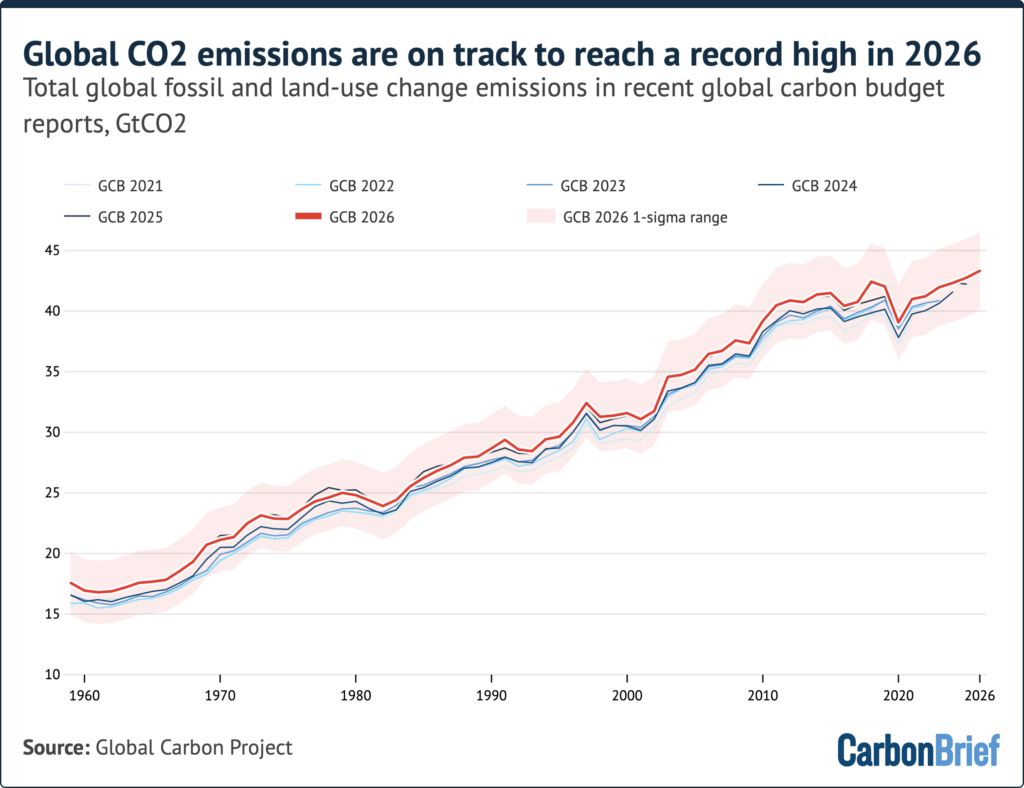
Global Carbon Budget 2026 reports a slight decline in fossil fuel emissions alongside a record high in total CO2 output due to land-use change.

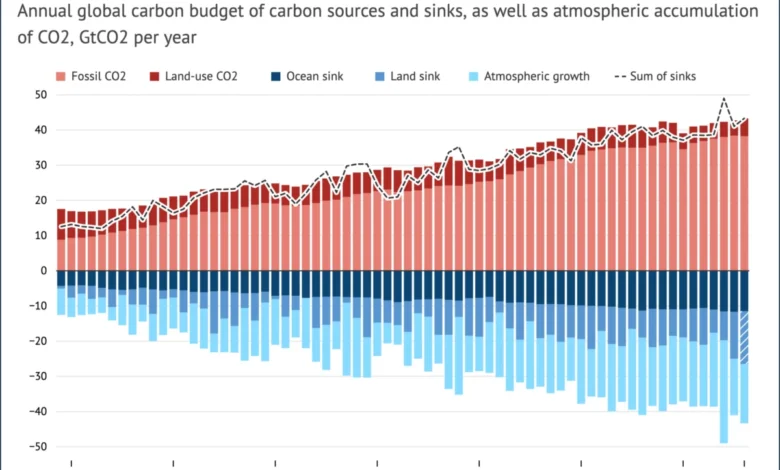
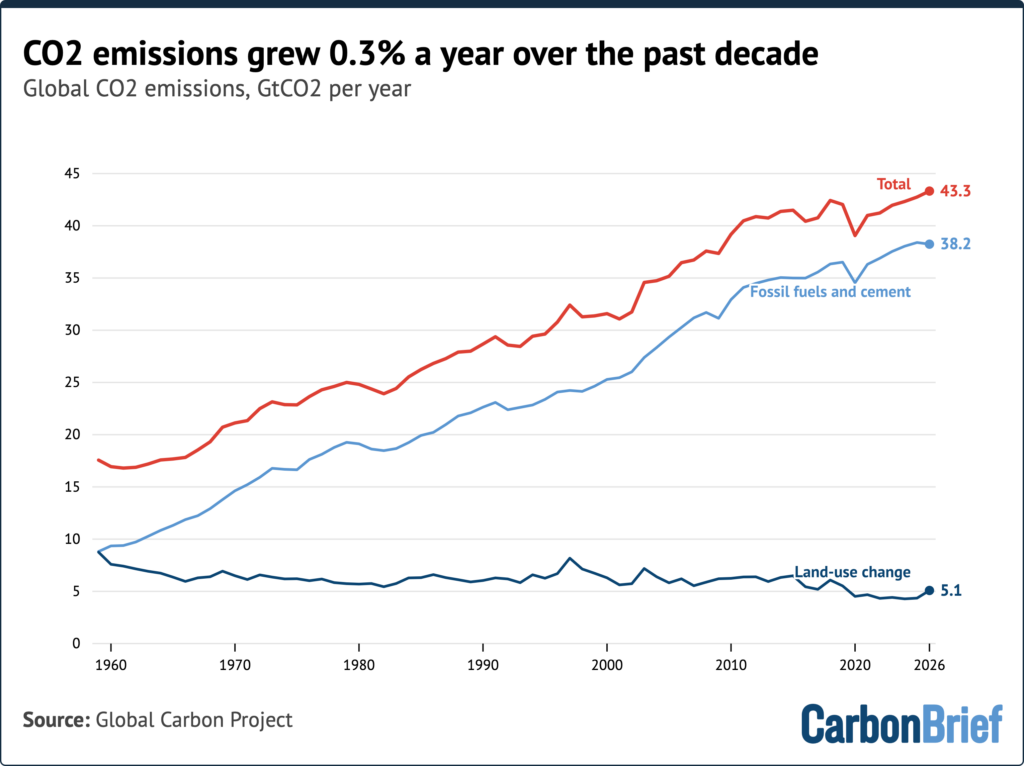
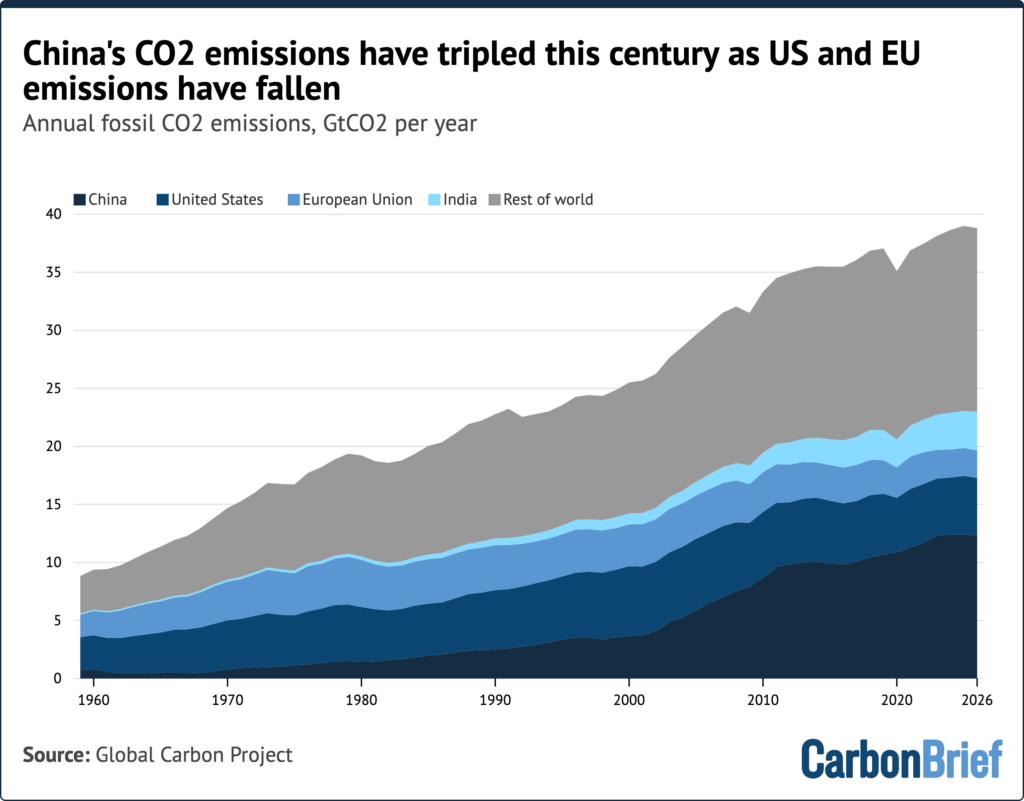
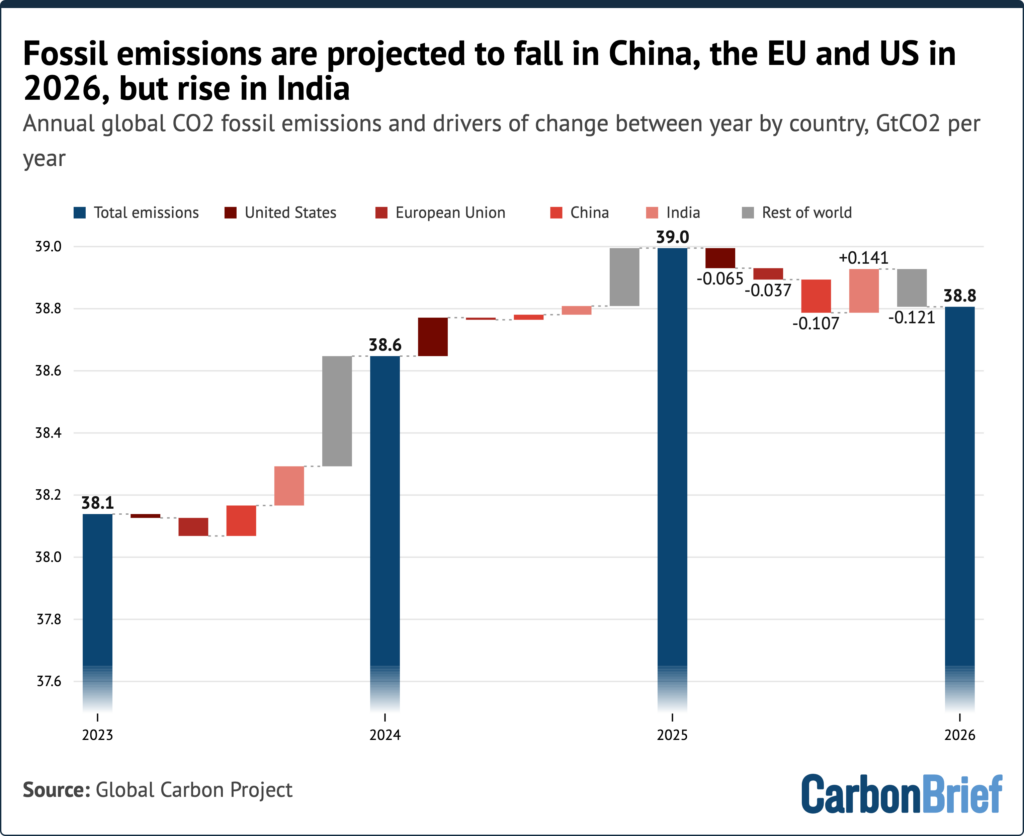
Carbon dioxide (CO2) emissions stemming from the combustion of fossil fuels and cement production are projected to decrease by approximately 0.4% in 2026, totaling 38.2 billion tonnes (GtCO2), according to the latest data from the Global Carbon Project. While this marginal reduction marks a deviation from the upward trajectory observed in recent years, it falls short of the systemic, rapid decline required to align with international climate targets. Despite this fossil fuel-related dip, total global CO2 emissions—when accounting for land-use changes such as deforestation—are expected to hit a record-breaking 43.3 GtCO2, an increase from 42.8 GtCO2 in 2025.

The Role of the Energy Shock
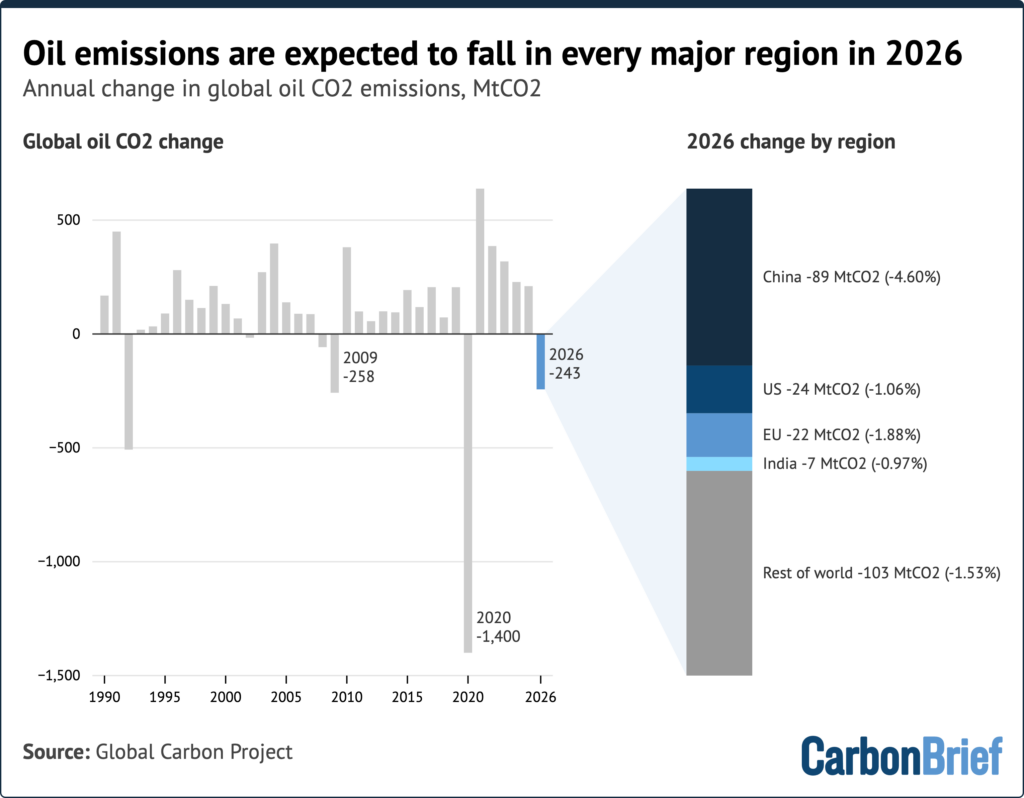
The projected 0.4% decline in fossil fuel emissions is largely attributed to a 1.9% drop in oil consumption. This shift is not primarily a result of a coordinated global energy transition, but rather a consequence of the energy shock triggered by the geopolitical crisis in the Middle East. The conflict involving Iran and the subsequent closure of the Strait of Hormuz created significant supply chain disruptions and pushed fuel prices to levels that constrained global demand.
Preliminary estimates for 2026 indicate a range for fossil fuel emissions between a 1.5% decrease and a 0.6% increase, suggesting that while a decline is the most likely outcome, the data remains subject to revision. Meanwhile, coal, the most carbon-intensive fossil fuel, continues to see a slight increase in consumption, particularly in emerging economies where energy demand remains high.
Land-Use Change and the El Niño Factor
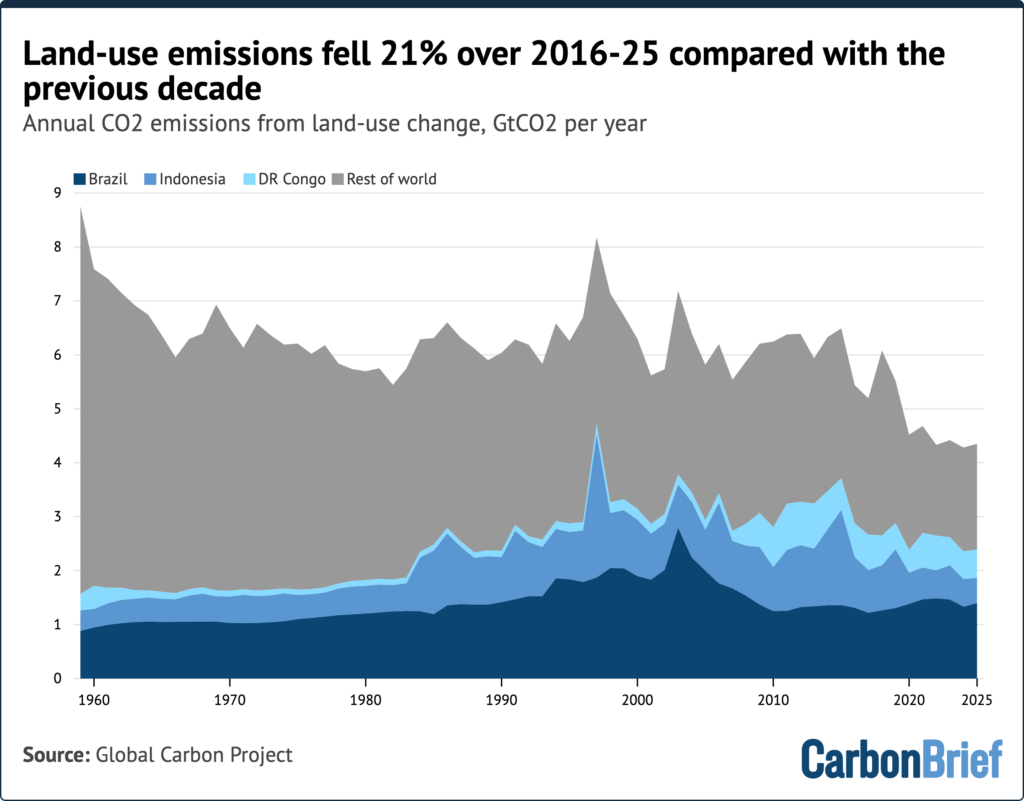
The record-high total of 43.3 GtCO2 is driven by a significant surge in emissions from land-use change, which rose from 4.4 GtCO2 in 2025 to a projected 5.1 GtCO2 in 2026. This uptick is primarily linked to the re-emergence of a strong El Niño event. The climatic phenomenon has induced severe drought conditions across Southeast Asia, fueling widespread peat fires and accelerated forest degradation.
Historically, land-use emissions have been more volatile and harder to track than fossil fuel emissions. However, the data confirms that Brazil, the Democratic Republic of the Congo, and Indonesia remain the most significant contributors, accounting for roughly 54% of global land-use emissions over the past decade. The 2026 surge serves as a stark reminder of the vulnerability of global carbon sinks to natural climate cycles, which can effectively negate the incremental progress made in decarbonizing industrial sectors.
Clean Energy: An Essential Buffer
Research published in Nature Climate Change alongside the Global Carbon Budget provides a nuanced look at the efficacy of current climate policies. The analysis suggests that the rapid expansion of solar power, wind energy, and electric vehicles (EVs) has been instrumental in buffering the impact of rising global energy demand.
In 2026, the growth of these clean technologies offset approximately 69% of the emissions that would have otherwise been generated by increased economic activity. Without the deployment of solar, wind, and EVs, global fossil fuel emissions would have grown at a rate of 1.9% per year between 2019 and 2025, rather than the recorded 0.8%.
Despite this, the study warns that current clean energy adoption is insufficient to push global emissions into a sustained decline. The transition is currently in a race against the baseline growth of energy consumption, much of which is still satisfied by conventional sources. The emergence of high-energy-demand sectors, such as data centers powered by the rapid proliferation of artificial intelligence, further complicates this balance, adding approximately 0.03 GtCO2 to global emissions in 2025.
Regional Variations and Economic Decoupling
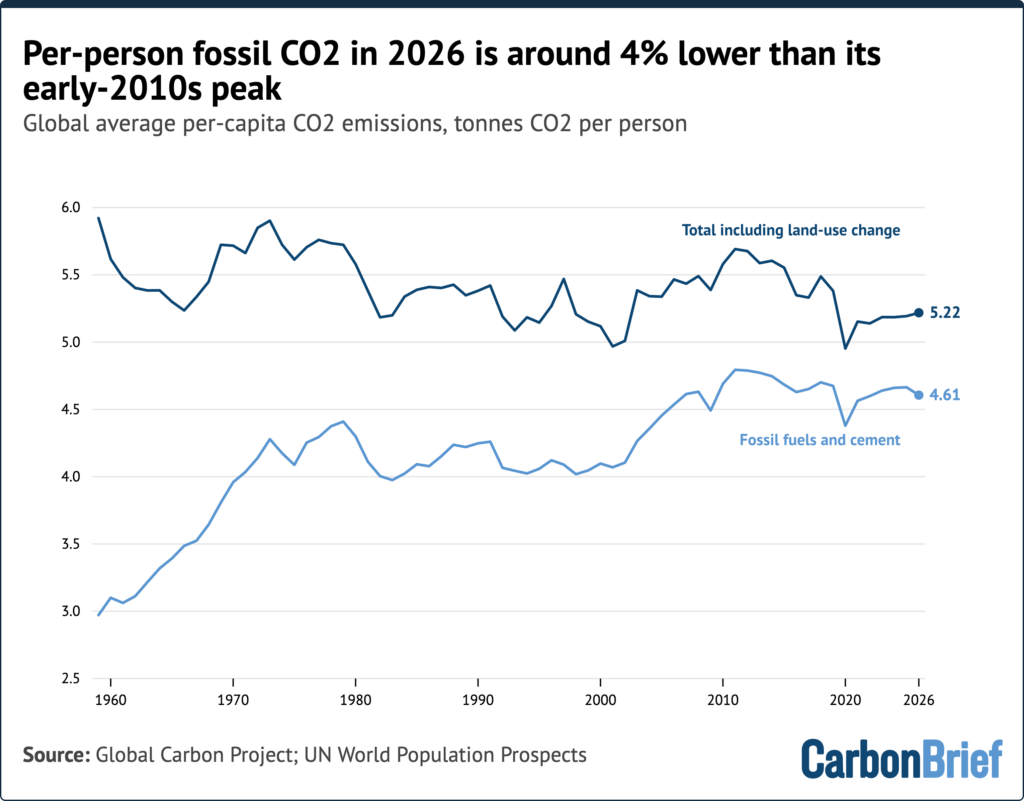
The global average of 4.6 tonnes of CO2 per capita masks significant disparities between nations. While developed economies continue to report declining emissions, emerging markets are seeing varying trends.
- China: As the world’s largest emitter, accounting for 32% of the global total, China is projected to see a 0.9% decrease in emissions for 2026. This follows a period of stagnation and is largely driven by a 4.6% reduction in oil usage and a robust expansion of renewable energy capacity.
- United States: Projected to see a 1.3% decline, the U.S. benefited from a 6.7% drop in coal consumption, reversing an anomalous spike in 2025 that was caused by volatile gas prices and unusually cold weather.
- India: Contrary to the global trend, India is expected to see a 4.4% increase in emissions, driven by a 5.9% rise in coal consumption as the nation expands its industrial base to meet development goals.
- European Union: A projected 1.5% decline continues a long-term downward trend, supported by the ongoing electrification of transport and a shift away from coal.
The Global Carbon Project notes a positive, if slow, trend: 40 countries, representing 26% of global fossil emissions, have successfully achieved "decoupling," where their economies grow while their CO2 emissions decline. This is an increase from the 22 countries identified in the previous decade, signaling that the technological pathways for low-carbon growth are becoming increasingly accessible.
Implications for the 1.5C Target
The climate reality presented by the 2026 report is sobering. With human-caused warming reaching 1.37°C above pre-industrial levels in 2025, the remaining carbon budget to limit warming to 1.5°C with a 50% probability is estimated at just 150 GtCO2 as of the start of 2027. At current emission levels, this budget will be exhausted in less than four years.
The budgets for higher temperature thresholds—1.7°C and 2°C—provide a slightly longer window of 12 and 24 years, respectively. These figures underscore the necessity for a shift beyond the mere "plateauing" of emissions. While the 2026 data shows that the world is moving away from the rapid emission growth of the early 2000s, the current trajectory is fundamentally incompatible with the Paris Agreement goals.
Natural Sinks and Future Uncertainties
The ocean and land continue to act as critical carbon sinks, absorbing roughly half of all human-caused emissions. Over the 2016-2025 period, the ocean accounted for 27% of uptake, while the land accounted for 22%. However, the report highlights a concerning trend: climate change itself is weakening these natural systems.
The report estimates that the land and ocean sinks were 19% and 8% smaller, respectively, over the last decade than they would have been in the absence of climate change. This creates a feedback loop: as the climate warms, the ability of the Earth to naturally sequester carbon diminishes, placing an even greater burden on human-led decarbonization efforts.
Looking toward 2027 and beyond, the influence of the current El Niño event is expected to become more pronounced. While the atmospheric CO2 growth rate in 2026 remained relatively stable at 2.2 parts per million (ppm)—a decrease from the 3.8 ppm spike during the 2024 El Niño—researchers anticipate that the full impact of the current cycle on the carbon cycle will manifest in the coming year.
Conclusion: A Critical Juncture
The findings from the 2026 Global Carbon Budget suggest that the global community is at a critical juncture. The decline in emissions observed this year is largely circumstantial, linked to price volatility and supply constraints rather than the deliberate, structural phase-out of fossil fuels.
The data confirms that while clean energy is successfully offsetting a substantial portion of new energy demand, it is not yet expanding at a pace capable of forcing a global peak and subsequent, sustained decline in emissions. To move from a plateau to the steep decline required for climate stability, the scale of renewable energy deployment and the efficiency of the global economy must accelerate significantly. Without such a shift, the window to prevent the most catastrophic outcomes of climate change will close within the next few years.
Related posts: