Internal Rivalry at Maranello Escalates as Lewis Hamilton and Charles Leclerc Clash in Las Vegas

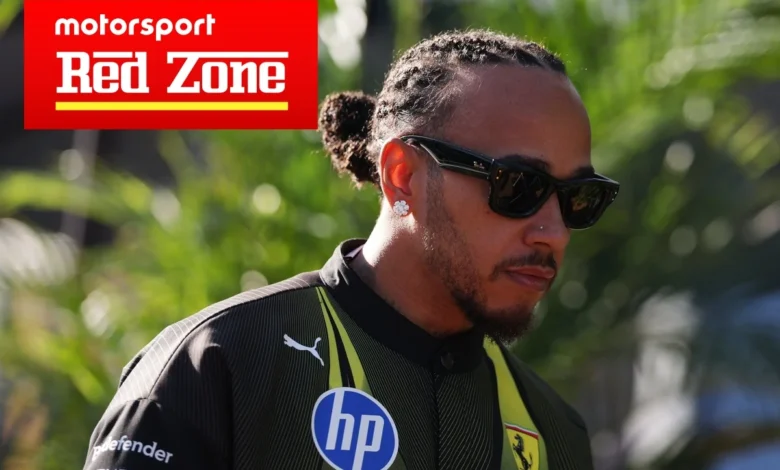
The latest collision between Ferrari teammates Charles Leclerc and Lewis Hamilton at the Las Vegas Grand Prix has sent shockwaves through the Formula 1 paddock, reigniting a fierce debate regarding internal team hierarchy and driver discipline. While the stewards and Ferrari team principal Fred Vasseur have officially attributed the blame for the Turn 7 incident to Leclerc, former F1 driver and seasoned analyst Ralf Schumacher has offered a more provocative perspective. According to Schumacher, the on-track friction is merely a symptom of a deeper, calculated power struggle initiated by the seven-time world champion to cement his status as the undisputed leader of the Scuderia.
The incident in Las Vegas, which saw Leclerc’s aggressive lunge result in a spin for his teammate, has served as a flashpoint for what many observers see as a deteriorating relationship within the Italian garage. For the neutral observer, the race appeared straightforward: Leclerc attempted an overtaking maneuver that was fundamentally flawed, resulting in a 10-second time penalty that relegated him to 10th place, while Hamilton managed a resilient recovery to 7th. However, the optics of the situation have invited intense scrutiny, particularly regarding the underlying psychological dynamics between the two high-profile drivers.
The Psychology of the Rivalry
Speaking on Sky Sports Germany’s Backstage Boxengasse podcast, Ralf Schumacher suggested that the collision was not a mere lapse in judgment by the Monegasque driver but rather the byproduct of a sustained campaign by Hamilton to assert dominance. "Lewis Hamilton is completely showing up Charles Leclerc," Schumacher stated. "He wants to seize number one power by any means necessary. He wants Leclerc to take a hit—he wants to mentally destroy him."
Schumacher’s analysis posits that Hamilton, now in his second year with the Maranello-based team, is applying the same psychological warfare tactics that defined his notoriously volatile partnership with Nico Rosberg at Mercedes. The "Star Wars" era, as it is often termed in the German media, saw Hamilton and Rosberg engage in multiple high-profile crashes, most notably at the 2014 Belgian Grand Prix and the 2016 Spanish and Austrian rounds. Schumacher contends that the current friction at Ferrari mirrors those historic tensions, suggesting that Hamilton is leveraging his vast experience to unsettle a younger, albeit exceptionally talented, teammate.
Beyond the mental game, Schumacher argued that Hamilton’s behavior during the Las Vegas incident was not entirely passive. "Upon closer inspection, you can see that Hamilton did not give way and pretended not to have noticed Leclerc," Schumacher noted. "I assume that was intentional, because the race was already over for him." This interpretation challenges the prevailing narrative that the contact was solely the result of Leclerc’s error, instead framing it as a tactical masterstroke by Hamilton to force a situation that would ultimately reflect poorly on his teammate in the eyes of team management.

Chronology of a Fractured Partnership
The tension at Ferrari has been a slow-burning fire throughout the 2026 season. After an impressive debut year for Hamilton in 2025, where he trailed Leclerc in the points standings (156 to 242), the tide has shifted significantly in 2026. Heading into the final two rounds of the championship, Hamilton has successfully flipped the script, holding a 17-point advantage over his teammate with a total of 267 points to Leclerc’s 250.
The season has been marked by a series of competitive peaks for both drivers:
- Barcelona-Catalunya: Hamilton secured a pivotal victory, which served as the catalyst for his resurgence and allowed him to maintain a 40-point lead over Leclerc mid-season.
- Silverstone: Leclerc responded with a masterful performance, securing his only grand prix win of the year to date.
- Mexico City: The first major warning sign of team instability, where the drivers engaged in close-quarters racing that nearly ended in disaster.
- Las Vegas: The most significant escalation to date, resulting in a post-race summons for Leclerc to meet with team principal Fred Vasseur.
This sequence of events has drawn public criticism from industry veterans, including 1996 World Champion Damon Hill. Hill, observing the trend of intra-team conflict, urged Ferrari to publicly back Hamilton as the lead driver to stabilize the team’s championship aspirations. Hamilton, however, has publicly distanced himself from such labels. "I’ve never asked to be number one. I genuinely haven’t ever asked," the Briton insisted in the aftermath of the Las Vegas race.
Performance Data and the Hierarchy Debate
The debate regarding team hierarchy is further complicated by the objective performance data of the two drivers. While Hamilton leads the points tally and currently holds a 7–6 advantage in podium finishes, Leclerc remains the faster driver over a single lap, maintaining a 13–8 qualifying edge across the 21 rounds contested so far in 2026. This disparity—Leclerc’s raw pace versus Hamilton’s race-day consistency and points accumulation—creates a precarious balance that Vasseur must navigate.
Ferrari’s 2026 turnaround, fueled by a competitive car that has allowed them to challenge for race wins, has amplified the pressure on both drivers. The necessity for the team to maximize its points haul against rivals such as McLaren and the emerging threat of Kimi Antonelli’s program has rendered internal collisions intolerable. Hamilton himself admitted that in earlier rounds, such as Zandvoort, a more cohesive team strategy could have provided a significant advantage, lamenting that "team-mates colliding should just never happen."
The Burden of Responsibility
Following the Las Vegas incident, the atmosphere at Ferrari was reportedly somber. Leclerc, known for his self-critical nature, was quick to accept full responsibility, admitting he felt "quite embarrassed for the team" following the collision. This admission provided a brief reprieve for the team’s management, who have been forced to balance the public image of their star duo with the practical realities of a championship fight.

Hamilton, for his part, has maintained a disciplined public stance, emphasizing that his primary focus throughout the Nevada weekend was on hunting down the leading McLaren entries rather than engaging in a personal duel with his teammate. By centering his narrative on the team’s broader objectives, Hamilton effectively positions himself as the "adult in the room," a move that observers believe strengthens his standing within the Ferrari hierarchy without him ever having to formally request "number one" status.
Implications for the Final Rounds
As the circus moves to the Qatar Grand Prix and subsequently to the season finale in Abu Dhabi, the spotlight will remain firmly on the Ferrari garage. The team has limited time to resolve these internal tensions before the 2026 season concludes. If the pattern of the last three rounds holds, the risk of further contact remains high, potentially jeopardizing the team’s final standing in the Constructors’ Championship.
For Ferrari, the challenge is twofold: they must manage the egos of two world-class drivers who are both operating at the peak of their abilities, and they must do so while maintaining the trust of their sponsors and the Tifosi. The "Star Wars" comparison by Schumacher serves as a stark reminder of how quickly a team’s championship challenge can be derailed by internal strife. Whether Vasseur chooses to implement stricter team orders or allows his drivers to continue their high-stakes competition remains to be seen.
Ultimately, the events of the 2026 season will likely be defined by how the team handles this specific friction. With Hamilton demonstrating an increasing ability to influence the narrative and the team dynamics, the pressure on Leclerc to find a middle ground between his natural, aggressive pace and the pragmatic requirements of a championship campaign has never been higher. As the cars take to the track in Doha, the eyes of the Formula 1 world will be on the two red Ferraris, waiting to see if the lessons of Las Vegas have truly been learned, or if the internal struggle at Maranello is destined to reach a more dramatic, and potentially more costly, conclusion.