Cameroonian Drama House of the Wind Triumphs at the Marrakech International Film Festival in a Record-Breaking Year for Global Cinema

The 23rd edition of the Marrakech International Film Festival concluded on a historic note, cementing its status as one of the preeminent cinematic showcases in the Global South. At the heart of this year’s triumph was Cameroonian filmmaker Auguste Bernard Kouemo Yanghu, whose feature debut, House of the Wind, clinched the festival’s highest accolade, the prestigious Étoile d’Or. Exploring themes of aging, solitude, and cross-generational solidarity, Yanghu’s film resonated deeply with a distinguished international jury and an enthusiastic local public.
The festival’s closing ceremony capped a week of intense cinematic celebration, characterized by record-breaking audience engagement and a diverse lineup of international features. With attendance figures nearing the 50,000 mark, the Moroccan event continued to shatter its own historical metrics, reflecting a burgeoning local appetite for independent, global cinema and reinforcing Marrakech’s strategic position as a cultural bridge between Africa, Europe, and the wider world.
A Triumphant Sweep for Emerging and Global Voices
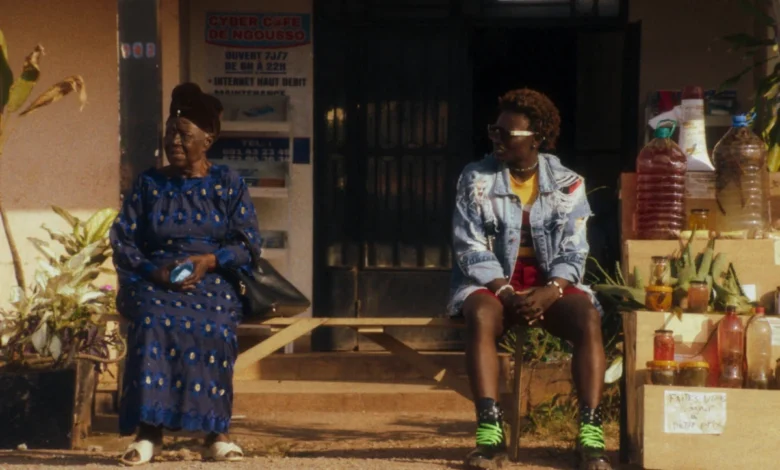
House of the Wind tells the poignant story of an elderly woman, vividly brought to life by lead actor Josette Kwanya, who constructs a home in Cameroon in a desperate bid to lure her migrant children back from Europe. However, an unexpected and transformative companionship with a young neighborhood woman upends her deeply entrenched beliefs regarding familial obligation and exile.
The unanimous decision by the festival’s nine-member jury to award the Étoile d’Or to Yanghu underscores the universal resonance of the narrative. Led by Oscar-winning French actress Marion Cotillard, the jury praised the film’s delicate touch and emotional depth.
"Some films move you deeply and stay with you long after the screening ends," Cotillard remarked during the award presentation. "It is a film that overwhelmed us with its gentleness, the beauty of its direction, and the audacity of its performance. It speaks of exile but chooses to look at those who stay rather than those who leave."
This top honor in Marrakech follows a stellar festival run for Yanghu. House of the Wind originally premiered in the Horizons section of the Venice Film Festival, where it earned critical acclaim, securing the prestigious Lion of the Future award for best debut across all competitive sections, alongside a Special Jury Prize.
Celebrating Excellence Across International Competitions
While Yanghu’s victory captured the evening’s primary headline, the Marrakech jury distributed honors across a broad spectrum of international talent, highlighting narratives of resilience, historical reconciliation, and social upheaval.
The festival’s Jury Prize was awarded to Mexican filmmaker Fernanda Tovar for Sad Girlz. Premiering initially within the Generation strand of the Berlin International Film Festival, Tovar’s film captures a sun-drenched summer in Mexico where two teenage best friends grapple with the psychological aftermath of a profound trauma.
In a nod to historical healing, a special mention was presented to Marie-Clémentine Dusabejambo for Ben’Imana. The Rwandan drama explores the arduous landscape of reconciliation and forgiveness in the wake of the nation’s genocide, building upon the momentum of its earlier success at the Cannes Film Festival, where it earned the Camera d’Or for best debut.
The Best Director prize went to Rafiki Fariala for Congo Boy, a stirring coming-of-age musical drama that mirrors the director’s personal history. Set against the backdrop of a war-torn nation, the film tracks a young Congolese refugee striving to achieve his dream of becoming a singer. The project, which bowed in Cannes’ Un Certain Regard section, previously garnered international attention when its young lead, Bradley Fiomona, won the best actor prize at the French festival.
In the acting categories, the competition was similarly fierce. The Best Actress award was jointly bestowed upon Maria Nakouzi and Rym Mroue for their gripping performances in Rami Kodeih’s heist thriller Furies. Representing Lebanon—and serving as the country’s official submission for the 2027 Academy Awards—the film follows two women who, locked out of their life savings amid a severe economic crisis, orchestrate an audacious overnight heist to reclaim their capital.
Meanwhile, the Best Actor accolade was awarded to Béonard Monteau for his compelling portrayal in Marie Madeleine. Directed by Haitian filmmaker Gessica Généus, the film offers a vibrant reimagining of the biblical narrative of Mary Magdalene, featuring Monteau as a young evangelist who forms an unconventional bond with a free-spirited sex worker played by Généus.
A Distinguished Jury of Global Auteurs
The heavy responsibility of evaluating the competition slate fell to a panel of cinematic luminaries assembled under the presidency of Marion Cotillard. The diverse nine-member jury blended commercial recognition with independent art-house credibility, ensuring a holistic evaluation of the competing films.
Joining Cotillard were actors Emma Mackey, known for Sex Education and Barbie; Vicky Krieps, celebrated for her standout performance in Phantom Thread; and Danish actor Claes Bang, a veteran of Ruben Östlund’s Palme d’Or winner The Square. The panel also featured French actor-turned-director Gilles Lellouche; acclaimed filmmaker Kaouther Ben Hania; Andrew Haigh, director of All of Us Strangers; Franco-Senegalese auteur Ramata-Toulaye Sy; and Moroccan director-producer Saïd Hamich Benlarbi.
This eclectic mix of cultural perspectives ensured that the awarded films resonated not only with technical proficiency but also with profound thematic resonance and emotional authenticity.
Record-Breaking Attendance and the Maturation of Marrakech
Beyond the glamour of the red carpet and the prestige of the awards, the 23rd Marrakech International Film Festival marked a critical operational and cultural milestone. Festival coordinator Ali Hajji, reflecting on the week’s events in an interview with international trade press, characterized the edition as a testament to the event’s "real sense of maturity."
"There is a growing coherence between our artistic choices, our work with the emerging filmmakers, and the relationship we have built with the Moroccan audiences," Hajji stated. "These are no longer separate dimensions of the festival. They increasingly fit into one another."
Following a previous benchmark of 45,000 attendees, this year’s edition drew nearly 50,000 moviegoers, breaking prior historical records. However, festival organizers were quick to emphasize that quantitative metrics tell only part of the story. The true indicator of success, according to Hajji, lies in the qualitative transformation of the audience profile.
Over more than two decades, the festival has cultivated a relationship of trust with local cinephiles, fostering an environment where audiences eagerly embrace unfamiliar international art-house films by nascent directors. The prominent presence of young Moroccan moviegoers at screenings was highlighted as tangible evidence of long-term cultural programming paying off.
Strategic Implications and Future Horizons
As the Marrakech International Film Festival looks toward its future, the organizing committee faces the challenge of managing success without sacrificing intimacy or curatorial rigor. Hajji noted that the institutional dialogue has shifted away from mere physical expansion toward deepening the festival’s local and international impact.
"At this stage of the festival’s history, the question is less about how much bigger we can become, but how much deeper our impact can be," Hajji explained. "Growth is important, but so are continuity, artistic consistency, and the ability to build lasting relationships with filmmakers and audiences."
The intersection of international prestige and domestic embrace remains the cornerstone of Marrakech’s enduring appeal. By positioning itself simultaneously as a premier destination for global cinema professionals and a beloved cultural fixture for the local population, the festival has carved out a unique space within the global festival circuit.
As the curtains close on the 23rd edition, the triumphs of films like House of the Wind and Congo Boy signal a vibrant future for African storytelling on the world stage, anchored by institutions capable of nurturing and elevating these vital cinematic voices.