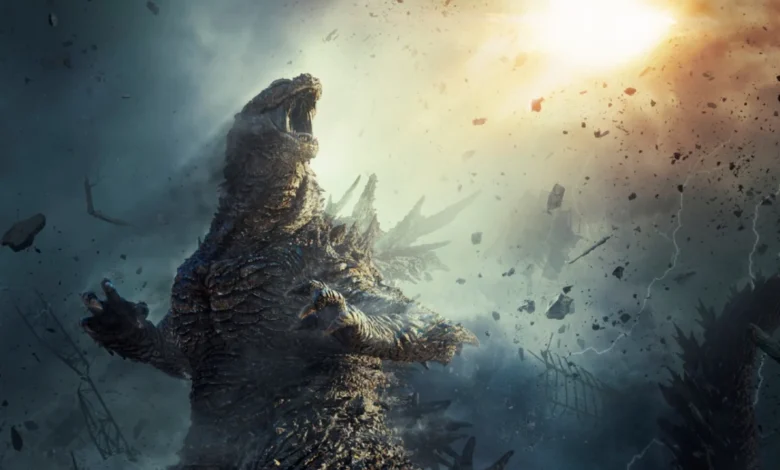
Following the unprecedented international success of 2023’s Godzilla Minus One, which solidified director Takashi Yamazaki’s place in cinematic history, Toho has officially unveiled the highly anticipated follow-up, Godzilla Minus Zero. The sequel, slated for a November 6, 2026 release, seeks to expand upon the formula that earned its predecessor the Academy Award for Best Visual Effects—a feat that made Yamazaki only the second director in history to win in that category for a film they also directed, following Stanley Kubrick’s achievement with 2001: A Space Odyssey.
The Evolution of the Minus Universe
The original film, Godzilla Minus One, served as a poignant post-war drama that bucked the trend of contemporary kaiju blockbusters by anchoring its massive scale in the trauma and emotional resilience of its human protagonists. It remains the only Godzilla production in the franchise’s 70-year history to secure an Oscar, a milestone that significantly raised the bar for Toho’s flagship intellectual property.
Godzilla Minus Zero picks up two years after the events of the first film. While the director initially expressed hesitation regarding a sequel—fearing that he might dilute the emotional resonance of the first entry—he has opted to pivot toward a larger, more ambitious scope. The film is specifically optimized for the IMAX format. According to production notes, the shift to IMAX was intended to complement the film’s established "Scope" visual palette rather than overwhelm it, maintaining the intimacy of the character-driven narrative while providing a canvas for high-fidelity disaster sequences.
Narrative Expansion: The Arrival of King Ghidorah
The narrative of the new film shifts the primary focus from Godzilla to one of the most iconic adversaries in the Toho catalog: King Ghidorah. With the presumed death of Godzilla at the conclusion of the 2023 film, the three-headed extraterrestrial entity has established dominance over the skies of Matsumoto. The film’s 135-minute runtime explores the power vacuum left by the primary monster, presenting Ghidorah not merely as a physical threat, but as an existential crisis for post-war Japan.
The human-centric core of the story revolves around the Large Scale Disaster Response Bureau, led by Kenju Noda (Hidetake Yoshioka). Noda’s strategy involves an unconventional attempt to neutralize Ghidorah through massive-scale electrocution, a plan supported by meteorologist Masami Nagasawa (Makoto Aoyama) and Professor Kanji Murakami (Min Tanaka). Murakami’s character serves as a vital bridge to the historical context of the series, representing the generation of survivors who experienced the atomic bombing of Hiroshima. The geopolitical tensions of the era are further complicated by the presence of the U.S. Army, which maintains its own clandestine interests in the containment of the kaiju.
The Return of the Shikishima Family
The emotional heartbeat of the sequel remains the Shikishima family. Koichi Shikishima (Ryunosuki Kamiki) continues to grapple with the psychological weight of his past as a kamikaze pilot, living in a state of survivor’s guilt that is exacerbated by his wife Noriko (Minami Hamabe). Noriko’s character, having survived the events of the first film, harbors secrets that become increasingly critical as the narrative progresses. Their five-year-old daughter, Akiko (Sae Nagatani), remains a central figure, serving as the motivation for the parents’ desperate actions.

The plot reaches a critical juncture when it becomes apparent that the only viable solution to the Ghidorah threat is to resurrect the monster the world hoped was gone forever: Godzilla. The orchestration of this "Kaiju vs. Kaiju" confrontation serves as the film’s centerpiece, demanding a high level of technical precision from the production team.
Technical Mastery on a Controlled Budget
One of the most remarkable aspects of Yamazaki’s production process is the efficiency of his visual effects department. For Godzilla Minus One, the VFX team consisted of only 35 artisans. For the sequel, that number has been increased only marginally, allowing the production to achieve a level of visual spectacle that rivals major Western studio outputs at a fraction of the cost.
This financial discipline is a hallmark of Yamazaki’s approach. By keeping the team small and highly integrated into the director’s creative vision, Toho has managed to maximize production value without succumbing to the ballooning budgets that have characterized recent big-budget monster films in Hollywood. Industry analysts suggest that this "boutique" approach to blockbuster filmmaking is a sustainable model for international cinema, potentially setting the stage for yet another Academy Award campaign for Best Visual Effects.
The Human Element: A Divergence from Genre Tropes
While the spectacle of the kaiju battles provides the necessary draw for the box office, the film’s thematic weight relies on the "Solomon-style" dilemmas faced by the cast. A central, gut-wrenching sequence involves the forced separation of the Shikishima family, as the parents determine that the safety of their daughter is better served by the state—represented by an orphanage—than by their own presence in the midst of a national catastrophe. This narrative choice reinforces the film’s commitment to exploring the "duty to country versus duty to family" dynamic, ensuring that the spectacle of the monsters remains secondary to the human struggle.
Production and Distribution Context
The film is produced by Kazuaki Kishida and features a screenplay written and directed by Yamazaki. It is slated for release in Japan and international markets via Toho and GKids. The film’s PG-13/R-equivalent rating in various territories underscores its serious tone, distinguishing it from more lighthearted iterations of the Godzilla franchise.
Looking Ahead: The Future of the Franchise
The conclusion of Godzilla Minus Zero is reportedly designed to leave the door open for a third installment. Given the artistic and commercial success of the previous entry, which grossed over $116 million worldwide on a modest budget, the strategy to expand the "Minus" series into a trilogy seems both calculated and commercially viable.
The success of the series has sparked broader discussions regarding the role of foreign-language cinema in global blockbuster culture. With Godzilla Minus Zero, Toho is not merely producing a sequel; they are building a cinematic brand that prioritizes auteur-driven storytelling within the framework of a global franchise. As of the current production schedule, the film is in its final stages of post-production, with anticipation building among critics and fans alike to see if the second chapter can maintain the emotional and technical standard set by its predecessor.
Key Production Data
- Release Date: November 6, 2026
- Runtime: 135 minutes
- Format: Standard and IMAX
- Language: Japanese (with English subtitles)
- Director/VFX Lead: Takashi Yamazaki
- Primary Cast: Ryunosuki Kamiki, Minami Hamabe, Mio Tanaka, Min Tanaka, Hidetake Yoshioka, Sae Nagatani, Makoto Aoyama
- Distributor: Toho / GKids