Titan, Saturn’s Largest Moon, Could Host 10-Foot Waves Driven by a Gentle Breeze, New PlanetWaves Model Reveals

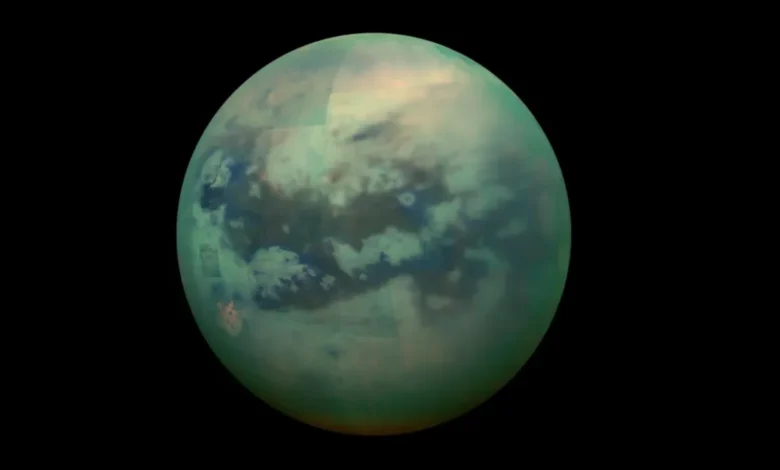
A groundbreaking new computational model, dubbed "PlanetWaves," has unveiled startling insights into the dynamics of liquid bodies across the solar system and beyond, suggesting that Saturn’s moon Titan could be a surprising hub for colossal waves. Researchers behind the model propose that a mere gentle breeze, one that would barely register as a ripple on Earth, could generate towering waves reaching up to 10 feet (3 meters) on the frigid, hydrocarbon-rich surface of Titan. This revelation has profound implications for understanding extraterrestrial fluid dynamics, planetary geology, and the design of future space missions.
The Genesis of PlanetWaves: A New Approach to Extraterrestrial Hydrodynamics
For decades, scientists have grappled with the complexities of modeling wave behavior on other celestial bodies. Previous attempts often simplified the challenge, primarily focusing on a planet’s gravitational pull. However, the lead researchers, including Andrew Ashton of MIT and the Woods Hole Oceanographic Institution, recognized that a more comprehensive approach was essential. The "PlanetWaves" model represents a significant leap forward by integrating a broader spectrum of physical parameters. It meticulously accounts for atmospheric pressure, a factor often underestimated in its influence on surface liquids, alongside the intrinsic properties of the liquid itself. These properties — density, viscosity, and surface tension — are critical determinants of a liquid’s resistance to rippling and its overall wave response.
The model’s development stems from a recognition that Earth-centric intuition about waves often falls short when applied to the vastly different environments of other planets and moons. "On Earth, we get accustomed to certain wave dynamics," explained Andrew Ashton. "But with this model, we can see how waves behave on planets with different liquids, atmospheres and gravity, which can kind of challenge our intuition." This new paradigm allows for a nuanced understanding of how these interacting forces shape the liquid landscapes of distant worlds, from the hydrocarbon lakes of Titan to hypothetical lava oceans on scorching exoplanets.
Calibrating the Model: Earth’s Great Lakes as an Analog
To ensure the accuracy and reliability of the PlanetWaves model, Schneck’s team undertook a rigorous calibration process using an extensive dataset from one of Earth’s most formidable freshwater bodies: Lake Superior. Situated on the border between Canada and the United States, Lake Superior is not only Earth’s largest freshwater lake by surface area but also a body of water known for its dynamic and often challenging wave conditions. The researchers fed the model 20 years’ worth of meticulous data collected by buoys strategically positioned across the lake. This long-term, high-resolution dataset provided an invaluable real-world testbed, allowing the team to fine-tune PlanetWaves to accurately replicate observed wave measurements under varying atmospheric and environmental conditions. The model’s ability to precisely mirror Lake Superior’s wave dynamics instilled a high degree of confidence in its predictive capabilities when applied to the radically different environments of other worlds. This methodical validation step underscores the scientific rigor underpinning the PlanetWaves model, transforming it from a theoretical construct into a robust tool for extraterrestrial oceanography.
Titan: The Solar System’s Unexpected Surf Spot
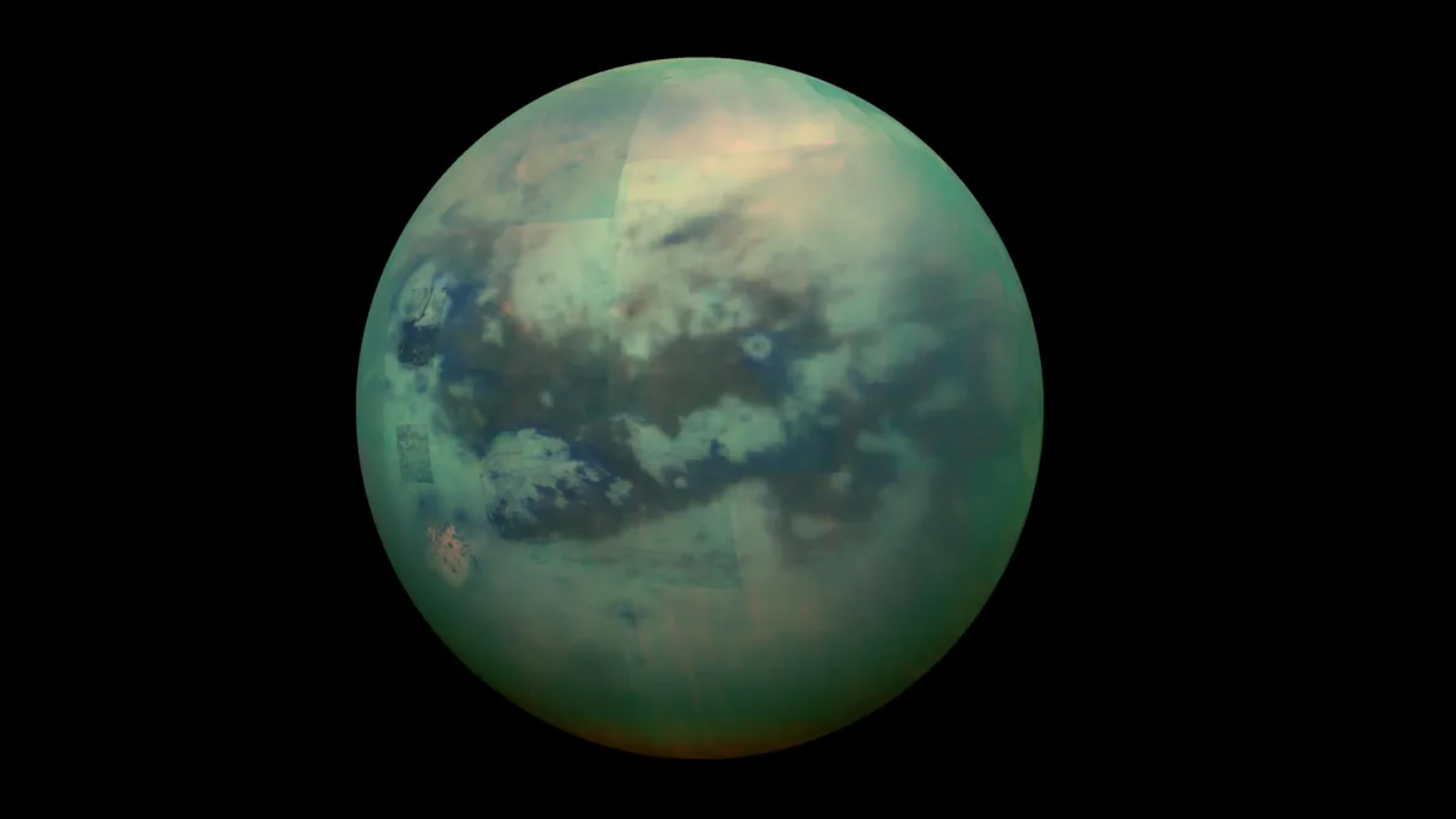
Titan, Saturn’s largest moon, has long captivated planetary scientists due to its remarkable similarities to early Earth, albeit under extremely alien conditions. Its dense, nitrogen-rich atmosphere, thicker than Earth’s, is shrouded in a perpetual orange haze, making direct observation of its surface challenging. However, the iconic Cassini-Huygens mission, a collaborative endeavor by NASA, ESA, and ASI, provided an unprecedented window into this enigmatic world. Launched in 1997 and reaching Saturn in 2004, the Cassini orbiter, coupled with the Huygens probe that successfully landed on Titan in 2005, revolutionized our understanding of this moon. Cassini’s radar mapping penetrated the atmospheric veil, revealing a dynamic surface carved by rivers, dotted with lakes, and dominated by vast seas – the only known stable bodies of liquid on the surface of any celestial body other than Earth.
The Unique Environment of Saturn’s Largest Moon
Unlike Earth’s aqueous environments, Titan’s liquid bodies are composed not of water, but of frigid hydrocarbons, primarily methane and ethane. These organic compounds exist in a liquid state only because of Titan’s extraordinarily low surface temperatures, plummeting to an average of -179 degrees Celsius (-290 degrees Fahrenheit). At these extreme temperatures, methane and ethane behave much like water does on Earth, forming clouds, rain, rivers, and lakes. The largest of these liquid reservoirs, like Kraken Mare, Ligeia Mare, and Punga Mare, are vast, covering hundreds of thousands of square kilometers and potentially reaching depths of hundreds of meters.
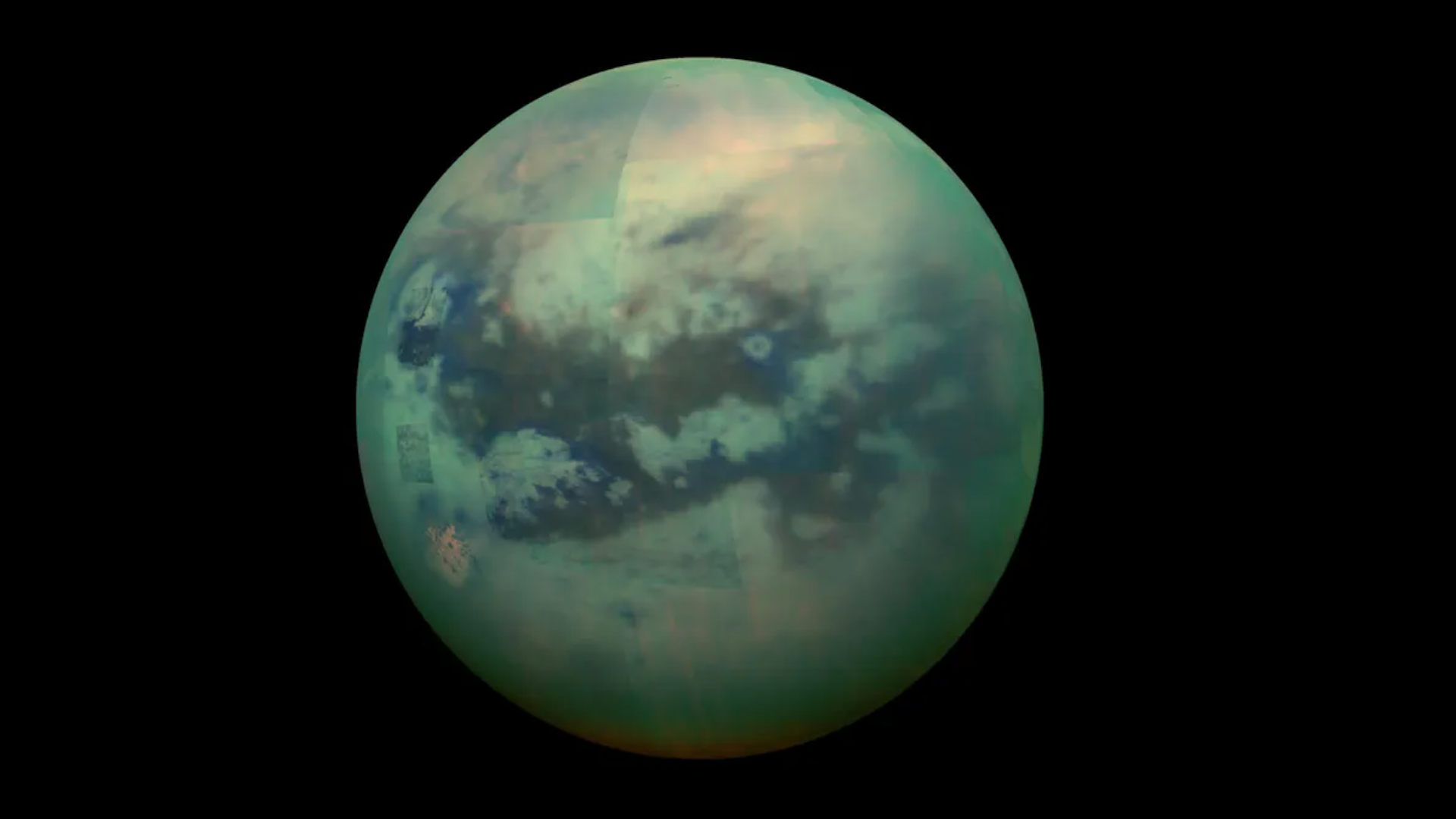
Despite the wealth of data from Cassini, direct observations of wave activity on Titan’s lakes have remained elusive. This observational gap has fueled considerable speculation among scientists about the nature of Titan’s liquid surfaces. "For Titan, the tantalizing thing is that we don’t have any direct observations of what these lakes look like," noted MIT’s Taylor Perron. "So we don’t know for sure what kind of waves might exist there. Now this model gives us an idea."
Deciphering Titan’s Wave Dynamics
The application of PlanetWaves to Titan yielded astonishing results. The model predicted that a surprisingly light wind, one that would barely cause a ripple on a terrestrial lake, could generate substantial waves on Titan. The primary factors contributing to these towering waves are Titan’s significantly lower gravity and the unique properties of its liquid hydrocarbons. Titan’s surface gravity is approximately 14% that of Earth’s, meaning objects weigh considerably less and are easier to move. Furthermore, liquid methane and ethane are less dense than water, making them more susceptible to atmospheric forces.
Combining these factors, the PlanetWaves model indicated that a gentle breeze could churn Titan’s hydrocarbon seas into waves reaching heights of 10 feet (3 meters). The visual effect, according to Schneck, would be surreal. "It kind of looks like tall waves moving in slow motion," Schneck described. "If you were standing on the shore of this lake, you might feel only a soft breeze but you would see these enormous waves flowing toward you, which is not what we would expect on Earth." This phenomenon highlights the stark differences in physical processes that govern planetary environments beyond our familiar blue marble.
Implications for Titan’s Geology and Future Exploration
The prospect of 10-foot waves on Titan carries significant implications for understanding its surface geology. On Earth, waves are a primary agent of coastal erosion, shaping shorelines and contributing to the formation of deltas where rivers meet larger bodies of water. However, a persistent puzzle on Titan has been the scarcity of delta-like formations, despite the presence of numerous rivers flowing into its lakes and seas. "Unlike on Earth where there is often a delta where a river meets the coast, on Titan there are very few things that look like deltas even though there are plenty of rivers and coasts," observed Taylor Perron. "Could waves be responsible for this?" The powerful erosive potential of sustained, large waves could explain the absence of these sedimentary features, continuously reshaping the coastlines and preventing the long-term accumulation of river-borne sediments that characterize deltas on Earth.
Beyond geology, understanding Titan’s wave dynamics is crucial for future exploratory missions. NASA’s Dragonfly mission, a rotorcraft lander scheduled for launch in 2027, aims to explore Titan’s diverse environments, including its dunes and impact craters, but will not directly interact with its liquids. However, future concepts envision probes designed to float on or even navigate Titan’s seas. For such missions, precise knowledge of wave conditions is paramount for engineering robust and resilient spacecraft. "You would want to build something that can withstand the energy of the waves, so it’s important to know what kind of waves these instruments would be up against," Schneck emphasized. The PlanetWaves model provides vital preliminary data for designing future probes capable of surviving and operating within Titan’s unique and potentially powerful liquid environments, ensuring their scientific objectives can be achieved without succumbing to unexpected forces.
Beyond Titan: Applying PlanetWaves Across the Cosmos
The utility of the PlanetWaves model extends far beyond Titan, offering a versatile tool for scientists to explore the hypothetical liquid dynamics of various celestial bodies, both within our solar system and among distant exoplanets. This broad applicability underscores the model’s potential to revolutionize our understanding of planetary surface processes across the cosmos.
Ancient Mars: Echoes of a Wetter Past
Billions of years ago, Mars was a dramatically different world, characterized by a thicker atmosphere and the presence of vast bodies of liquid water on its surface. Geological evidence, such as ancient river valleys, lakebeds, and mineral deposits formed in the presence of water, strongly supports the hypothesis of a warmer, wetter early Mars. Over immense stretches of cosmic time, however, Mars underwent a profound climatic transformation. It lost much of its protective atmosphere to space, leading to a drastic drop in atmospheric pressure and temperature. The PlanetWaves model offers insights into how this atmospheric thinning and cooling would have impacted Martian waves. In its early, water-rich phase, weaker winds would have been sufficient to generate significant waves on ancient Martian lakes and seas, similar to Earth. As the atmosphere thinned and temperatures plummeted, the model predicts that progressively stronger winds would have been required to stir the remaining liquid water, until eventually, the conditions became too extreme to sustain stable surface liquids at all. This application helps scientists reconstruct the environmental evolution of Mars, painting a clearer picture of its transition from a potentially habitable world to the arid planet we know today.
Exoplanets: Diverse Worlds, Diverse Waves
The discovery of thousands of exoplanets has opened up a new frontier in planetary science, with many exhibiting conditions wildly different from those in our solar system. PlanetWaves proves invaluable in speculating about the hydrodynamics on these distant worlds.
-
LHS 1140b: The Super-Earth’s Subtler Seas
LHS 1140b is a fascinating exoplanet located in its star’s habitable zone, the region where conditions might allow for liquid water to exist on the surface. Classified as a "super-Earth," it possesses a density that suggests up to 19% of its mass could be composed of water, potentially indicating vast oceans. However, LHS 1140b is considerably more massive than Earth, implying a stronger gravitational pull. The PlanetWaves model predicts that if LHS 1140b indeed hosts oceans, its stronger gravity would exert a greater downward force on the liquid, making it more resistant to being lifted into waves by wind. Consequently, for a given wind speed, any hypothetical waves on LHS 1140b would be significantly smaller than those observed on Earth, presenting a calmer, albeit potentially deep, aquatic environment. -
Kepler-1649b: Ripples in Acidic Atmospheres
Kepler-1649b is another intriguing exoplanet, a hot, Venus-like world with a gravitational pull similar to Earth’s. Analogous to Venus, which possesses copious amounts of sulfuric acid in its atmosphere, Kepler-1649b might also feature such corrosive conditions. If sulfuric acid could exist in a liquid state on its surface, the PlanetWaves model sheds light on its wave behavior. Sulfuric acid is approximately twice as dense as liquid water, meaning it has significantly more mass per unit volume. This increased density would make it considerably more difficult for winds to disturb the surface and generate ripples or waves. Therefore, even with Earth-like gravity, Kepler-1649b would necessitate exceptionally strong winds to create any discernible wave activity on its potentially acidic lakes, suggesting a surface far more resistant to atmospheric agitation than our own planet’s oceans. -
55 Cancri e: The Fiery Surf of a Lava World
Perhaps the most extreme application of the PlanetWaves model involved 55 Cancri e, a scorching hot exoplanet often referred to as a "super-Earth" that is believed to be covered in oceans of molten lava. The conditions on 55 Cancri e are unimaginably harsh, with surface temperatures high enough to melt rock. Lava, being inherently thick, viscous, and incredibly dense, presents a formidable challenge for wave generation. Coupled with 55 Cancri e’s stronger gravity compared to Earth, the model revealed that the forces required to create waves on such a world would be immense. The PlanetWaves calculations suggest that hurricane-force winds, approaching speeds of 80 miles per hour (approximately 129 kilometers per hour), would be the minimum necessary to even cause a slight ripple on these fiery lava oceans. This extreme scenario highlights the model’s capacity to extrapolate wave dynamics to the most exotic and inhospitable environments known to science, pushing the boundaries of our imagination and scientific understanding.
Broader Scientific Significance and Future Outlook
The development and application of the PlanetWaves model represent a pivotal advancement in the fields of planetary science and astrobiology. By offering a comprehensive framework for understanding fluid dynamics in diverse extraterrestrial environments, it provides critical insights into the geological processes shaping other worlds, the potential for past or present habitability, and the practical considerations for future space exploration.
Understanding wave mechanics on celestial bodies contributes significantly to our knowledge of planetary evolution. Waves are not merely surface phenomena; they are powerful agents of change, influencing sediment transport, coastal erosion, and the interaction between a planet’s atmosphere and its liquid surfaces. For instance, the model’s implications for Titan’s lack of deltas could fundamentally alter our understanding of its hydrological cycle and geological history.
Moreover, this research has direct bearing on the search for life beyond Earth. While Titan’s hydrocarbon lakes are too cold to support water-based life as we know it, understanding the physical dynamics of its liquids informs our broader search for potentially habitable worlds with liquid water. For exoplanets like LHS 1140b, knowing how waves might behave on its potential oceans could help constrain models of its atmosphere and surface conditions, narrowing down the possibilities for life-supporting environments.
Looking forward, the PlanetWaves model will undoubtedly serve as a crucial tool for mission planners. As space agencies contemplate sending probes to interact directly with extraterrestrial liquids – whether to sample Titan’s seas or explore hypothetical subsurface oceans on icy moons like Europa or Enceladus – accurate predictions of wave forces will be indispensable for ensuring mission success. The model’s findings, published on April 3rd in the prestigious Journal of Geophysical Research: Planets, lay a robust foundation for future theoretical and observational endeavors. Researchers will continue to refine PlanetWaves, integrating new data as it becomes available from missions like Dragonfly and next-generation telescopes, further enriching our understanding of the universe’s watery, icy, and even fiery frontiers. The prospect of surfing 10-foot waves on Titan, once a distant fantasy, is now a scientifically modeled reality, propelling us closer to unraveling the mysteries of liquid worlds across the cosmos.