Global Energy Markets Destabilize as Hormuz Blockade Triggers Oil Surge and Heightened Climate Vulnerability in Afghanistan

The global energy landscape faced a significant upheaval this week as crude oil prices surged back above the $100-per-barrel threshold, driven by a dramatic escalation in geopolitical tensions between the United States and Iran. Following the collapse of peace negotiations, the United States moved to implement a naval blockade of Iranian ports, a decision that has sent shockwaves through international markets and prompted a flurry of emergency economic measures across Europe. Simultaneously, new data reveals a complex shift in global power generation, where fossil fuel reliance has dipped in the wake of supply disruptions, while vulnerable nations like Afghanistan continue to endure the catastrophic convergence of political isolation and extreme weather events.
Geopolitical Escalation and the Rebound of Global Oil Prices
The volatility of the global oil market was on full display this week as Brent crude and West Texas Intermediate (WTI) benchmarks saw prices jump by more than 7%. This surge effectively erased the brief period of stability seen during a conditional two-week ceasefire that had previously allowed prices to retreat from recent highs. The primary catalyst for this renewed instability was the breakdown of diplomatic efforts between Washington and Tehran, culminating in President Donald Trump’s executive order to blockade key Iranian maritime hubs.
The Strait of Hormuz, a narrow waterway through which approximately 20% to 30% of the world’s total oil consumption passes daily, remains the most sensitive chokepoint in the global energy supply chain. The imposition of a blockade in this region historically leads to immediate speculative buying and logistical bottlenecks. Market analysts noted that the return to triple-digit oil prices reflects deep-seated fears of a prolonged supply deficit, as Iranian exports—already restricted by sanctions—face a near-total shutdown.
This price hike has immediate ramifications for global inflation, which had only recently begun to stabilize in several Western economies. The sudden increase in the cost of energy inputs is expected to filter through to transportation, manufacturing, and consumer goods, complicating the efforts of central banks to manage interest rates.
European Response: Subsidies and Structural Reforms
In response to the sudden spike in energy costs, European governments have mobilized multi-billion-euro support packages to shield households and industrial sectors from economic fallout. The urgency of these measures underscores the fragility of the European energy market, which remains sensitive to external shocks following the structural shifts necessitated by the loss of Russian gas supplies in recent years.
Germany, the Eurozone’s largest economy, announced a €1.6 billion intervention aimed at cushioning the blow of rising prices. These funds are expected to be directed toward energy-intensive industries to prevent a slowdown in manufacturing output. Similarly, Ireland unveiled a €505 million support package, focusing on direct consumer relief and small business grants.
Beyond immediate financial aid, the European Union is preparing a broader legislative response. A draft proposal expected to be formally introduced next week aims to fundamentally decouple electricity prices from the price of natural gas—a move that has been long debated within the bloc. By restructuring the market, the EU hopes to lower costs for consumers and accelerate the deployment of clean energy technologies. The proposal is expected to include streamlined permitting for renewable projects and mandates for increased fuel subsidies to mitigate the impact of the ongoing conflict in the Middle East.
The "Drill, Baby Drill" Rhetoric and the North Sea Debate
The energy crisis has also reignited political debates regarding domestic production in the United Kingdom. President Trump utilized social media to criticize the UK government’s current energy strategy, urging a return to aggressive fossil fuel extraction. Labeling the UK’s reluctance to expand North Sea drilling as "tragic," Trump argued that the region represents one of the world’s greatest untapped energy fields and could serve as a vital resource for a "desperate" Europe.

However, energy experts and fact-checkers have been quick to challenge these assertions. Analysis indicates that the North Sea is a maturing basin where production has been in steady decline for decades. Even with a significant increase in new licenses, the time required to bring new fields online means that increased drilling would offer no immediate relief to the current price spike. Furthermore, the majority of North Sea oil is traded on international markets, meaning increased UK production would have a negligible impact on the global price of crude or domestic fuel costs for British citizens.
Global Power Generation: A Forced Shift Toward Renewables
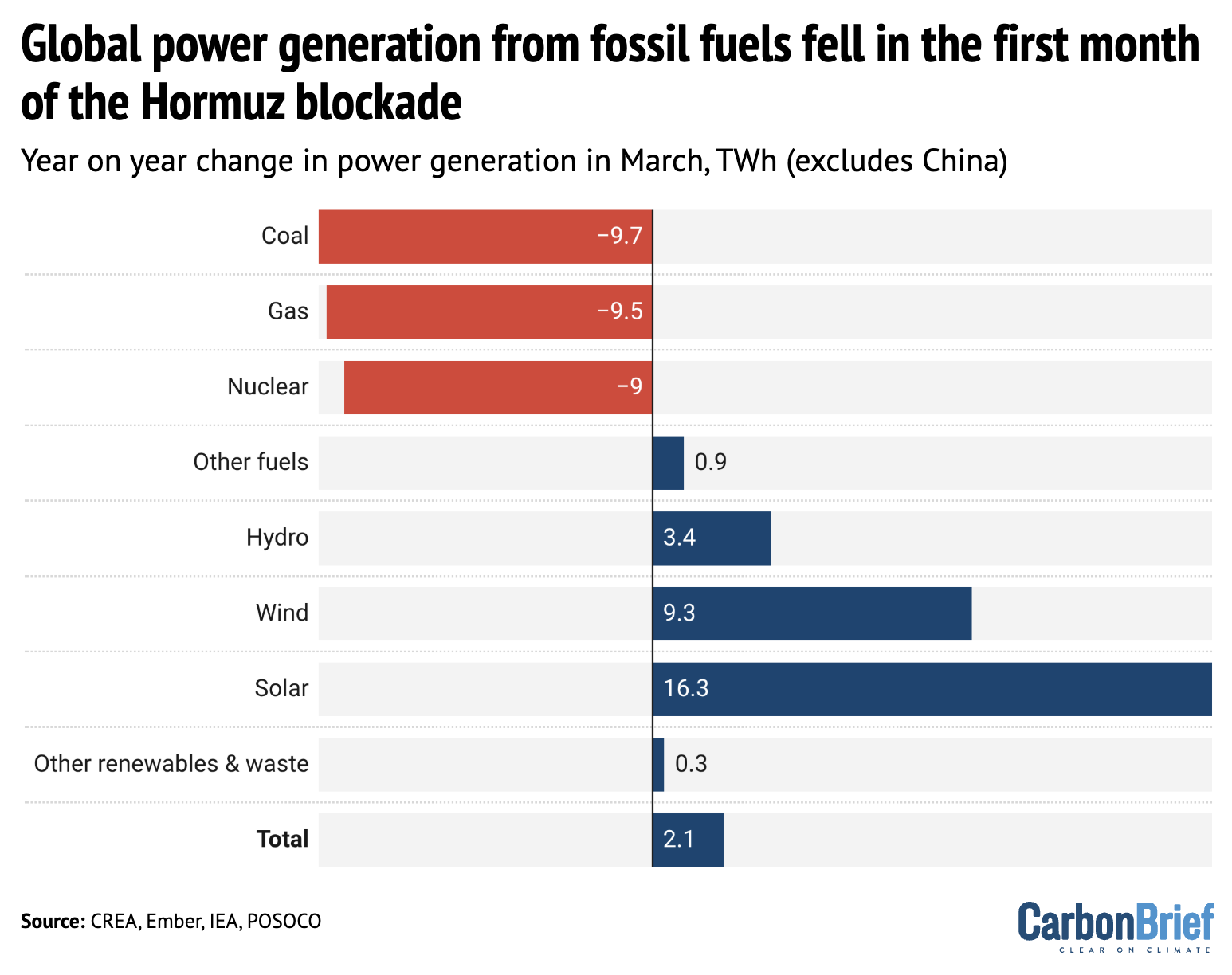
A surprising byproduct of the Strait of Hormuz blockade has been a measurable shift in the global electricity mix. According to a new report from the Centre for Research on Energy and Clean Air (CREA), global power generation from fossil fuels fell during the first month of the blockade. Across all nations with real-time data reporting (excluding China), coal-fired power generation dropped by 3.5%, while gas-fired generation fell by 4.0%.
This decline was not due to a lack of demand, but rather a combination of supply constraints and the increasing competitiveness of alternative energy sources. The shortfall in fossil fuel generation was largely offset by a significant increase in renewable energy output. Solar power generation rose by 14% globally, and wind generation saw an 8% increase.
While hydropower also saw modest gains, the overall transition was somewhat hampered by a decline in nuclear power generation, attributed to scheduled maintenance and aging infrastructure in several key markets. This data suggests that while geopolitical instability creates economic hardship, it also acts as an inadvertent catalyst for the "de-fossilization" of power grids as nations seek energy security through local, renewable resources.
France’s Long-Term Electrification Strategy
Amidst the immediate crisis, France has signaled a commitment to long-term structural change. Prime Minister Sébastien Lecornu recently pledged €10 billion per year through 2030 to fund a massive electrification program. This initiative represents a doubling of the country’s existing support for energy transition technologies.
The French plan focuses on reducing the nation’s dependence on imported fossil fuels by electrifying transport and heating systems. By leveraging its robust nuclear fleet alongside new renewable investments, France aims to insulate its economy from the type of price volatility currently seen in the global oil markets. Lecornu emphasized that electrification is no longer just a climate goal but a matter of national sovereignty and economic survival.
Spotlight: The Climate Catastrophe in Afghanistan
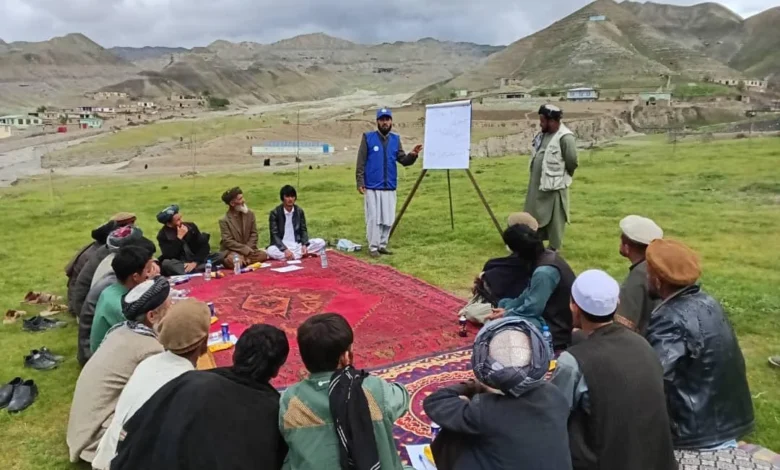
While global powers navigate energy markets and naval blockades, the nation of Afghanistan provides a sobering example of how climate change disproportionately affects the world’s most vulnerable and politically isolated populations. This week, Carbon Brief highlighted the devastating impact of recent flooding in the region, which has claimed nearly 100 lives and affected 74,000 people across 31 provinces.
The Human and Economic Toll
Afghanistan is currently ranked 176th out of 187 countries on the University of Notre Dame Global Adaptation Index, marking it as one of the nations least prepared for climate shocks. The recent flash floods have destroyed thousands of homes and obliterated vital agricultural land. In a country where subsistence farming is the primary source of livelihood, the destruction of wheat and rice crops in the eastern provinces has catastrophic implications for food security.
Hameed Hakimi, a senior fellow at the Atlantic Council, noted that these "flash floods physically eat up the land," creating a cycle of poverty and displacement. The World Bank reports that the average temperature in Afghanistan has risen by 2.0°C since 1960, leading to a volatile cycle of extreme drought followed by intense, erosive rainfall.
The Displacement Crisis
Environmental hazards have become the primary driver of internal displacement in Afghanistan. In 2024 alone, more than 710,000 people were forced to relocate within the country, with three-quarters of those movements attributed to drought and floods. This internal migration puts further strain on urban centers that are already struggling with limited infrastructure and economic sanctions.
The Finance and Recognition Gap
Perhaps the most significant challenge facing Afghanistan is its exclusion from the international climate finance community. Since the Taliban resumed power in 2021, the international community has largely withheld formal recognition of the government due to human rights concerns, particularly the repression of women and girls.
This political stalemate has resulted in a dramatic drop in climate aid. Funding from UN climate funds fell from an average of $5.9 million annually (2014-2020) to just $3.9 million annually (2021-2024). This is a fraction of the $20.6 billion that the country’s national climate plan estimates is needed through 2030 to build adequate resilience.
Abdulhadi Achakzai, head of the Environmental Protection Trainings and Development Organization (EPTDO), has been a vocal advocate for finding an "alternative solution" that allows climate aid to reach the Afghan people without necessarily validating the ruling regime. Achakzai argues that the Afghan people are being "punished twice"—once by the impacts of a climate crisis they did not create, and again by a global community that has cut off the resources needed to survive it.
Conclusion and Broader Implications
The events of this week underscore the inextricable link between global energy security, geopolitical stability, and climate resilience. The surge in oil prices to over $100 serves as a reminder that the global economy remains tethered to volatile fossil fuel supply chains, even as the transition to renewables gains momentum through necessity.
As Europe moves to subsidize its citizens and restructure its markets, and as France commits to a decade of electrification, the divide between the developed and developing world becomes more apparent. In nations like Afghanistan, the "energy transition" is not a matter of market subsidies but a desperate struggle against the physical elements of a warming planet.
The coming months will likely see continued volatility in energy markets as the blockade of the Strait of Hormuz persists. The international community faces a dual challenge: navigating a high-stakes geopolitical confrontation that threatens global economic stability, while simultaneously addressing the urgent need for a climate finance framework that can support the world’s most vulnerable populations, regardless of the political complexities of their governing regimes.