Hayabusa2 Achieves Daring Ultra-Close Flyby of Asteroid Torifune, Revealing Contact Binary Structure and Advancing Planetary Defense Capabilities

Japan’s Hayabusa2 spacecraft has successfully executed an unprecedentedly close flyby of the near-Earth asteroid Torifune on July 5, 2026, delivering spectacular imagery and confirming the asteroid’s unexpected "contact binary" configuration. This remarkable achievement, which pushed the aging probe to the very limits of its operational design, represents a significant triumph for the Japan Aerospace Exploration Agency (JAXA) and offers profound implications for both fundamental space science and critical planetary defense strategies. The mission’s success came only after intense internal debate among JAXA’s scientific and engineering teams, highlighting the high stakes and calculated risks involved in deep space exploration.
A Legacy of Exploration: Hayabusa2’s Extended Mission
The Hayabusa2 mission has already cemented its place in space exploration history. Launched in December 2014, the spacecraft embarked on a six-year journey that culminated in its rendezvous with the carbonaceous asteroid Ryugu. From 2018 to 2019, Hayabusa2 meticulously surveyed Ryugu, collected subsurface samples using an innovative impactor, and ultimately returned those precious samples to Earth in December 2020. This primary mission, a resounding success, provided scientists with pristine asteroid material, offering unprecedented insights into the early solar system, the origins of water, and the building blocks of life. The analysis of Ryugu’s samples has confirmed the presence of organic compounds and water, fueling theories about how these vital ingredients might have been delivered to early Earth.
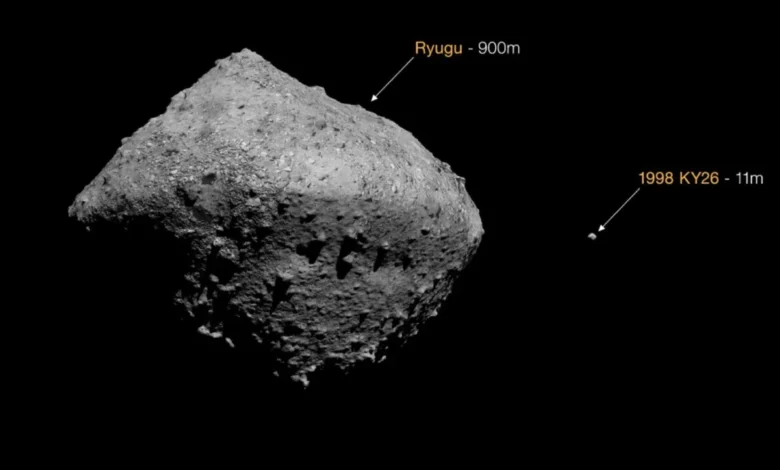
With its primary objectives accomplished, JAXA made the strategic decision to extend Hayabusa2’s operational life, transforming it into the Hayabusa2# extended mission. This phase aims to leverage the spacecraft’s remaining fuel and functional instruments for additional scientific observations and technological demonstrations. The extended mission includes two planned Earth flybys in 2027 and 2028, culminating in a historic rendezvous with the tiny, rapidly rotating asteroid 1998 KY26 in 2031. The flyby of Torifune was an intermediate, yet highly ambitious, target within this extended itinerary, intended to provide valuable data on a previously uncharacterized asteroid and to test the spacecraft’s capabilities in new operational modes.
The Torifune Encounter: A Battle of Nerves and Engineering Prowess
The decision to execute such a close flyby of Torifune was not without significant internal contention. Makoto Yoshikawa, former mission manager of Hayabusa2, revealed at the Asteroids, Comets and Meteors (ACM) conference in Poznan, Poland, on July 10, that the planning phase was marked by "heated discussion" between science and engineering teams. Standard asteroid flybys typically maintain a distance of around 100 kilometers (62 miles). However, for Hayabusa2, a spacecraft originally designed for low-speed rendezvous and proximity operations, not high-speed passes, this distance would have yielded images barely capable of resolving Torifune’s global shape, severely limiting scientific return.
The science team, eager for detailed imagery and data, persistently advocated for a closer approach. Engineers, tasked with ensuring the safety and integrity of the venerable spacecraft, responded with increasingly ambitious proposals. The initial conservative 100-kilometer estimate was progressively reduced to 10 kilometers (6.2 miles), then to 1 kilometer (0.6 miles). Each reduction represented a significant engineering challenge, as Hayabusa2’s cameras were not initially optimized for high-speed slewing, and its navigation system had to account for the rapid relative velocity of 5.3 kilometers per second (3.3 miles per second).
The ultimate test came just one month before the scheduled flyby. Yuya Mimasu, the extended mission team leader, proposed an even more daring maneuver: a closest approach of merely 800 meters (2,625 feet) from Torifune’s center. This proposal sparked the most intense phase of the debate. Concerns centered on the unknown precise size and shape of Torifune. Based on ground-based observations, the asteroid was estimated to be roughly 1,400 meters by 400 meters (4,600 by 1,300 feet). An 800-meter pass would position the spacecraft perilously close, just outside the assumed "exclusion zone" of the asteroid’s physical body. Furthermore, the spacecraft’s optics had accumulated some dust during the Ryugu sampling operations, potentially affecting image quality, and the final navigation analysis indicated a targeting error ellipse of approximately 200 meters (656 feet). This narrow margin meant that precise execution was paramount, and even a slight deviation could have catastrophic consequences for the spacecraft. Despite these profound risks, the mission team ultimately approved the 800-meter approach, a testament to their confidence in Hayabusa2’s capabilities and the meticulous planning involved.
Unveiling Torifune: A Cosmic "Peanut" in Detail
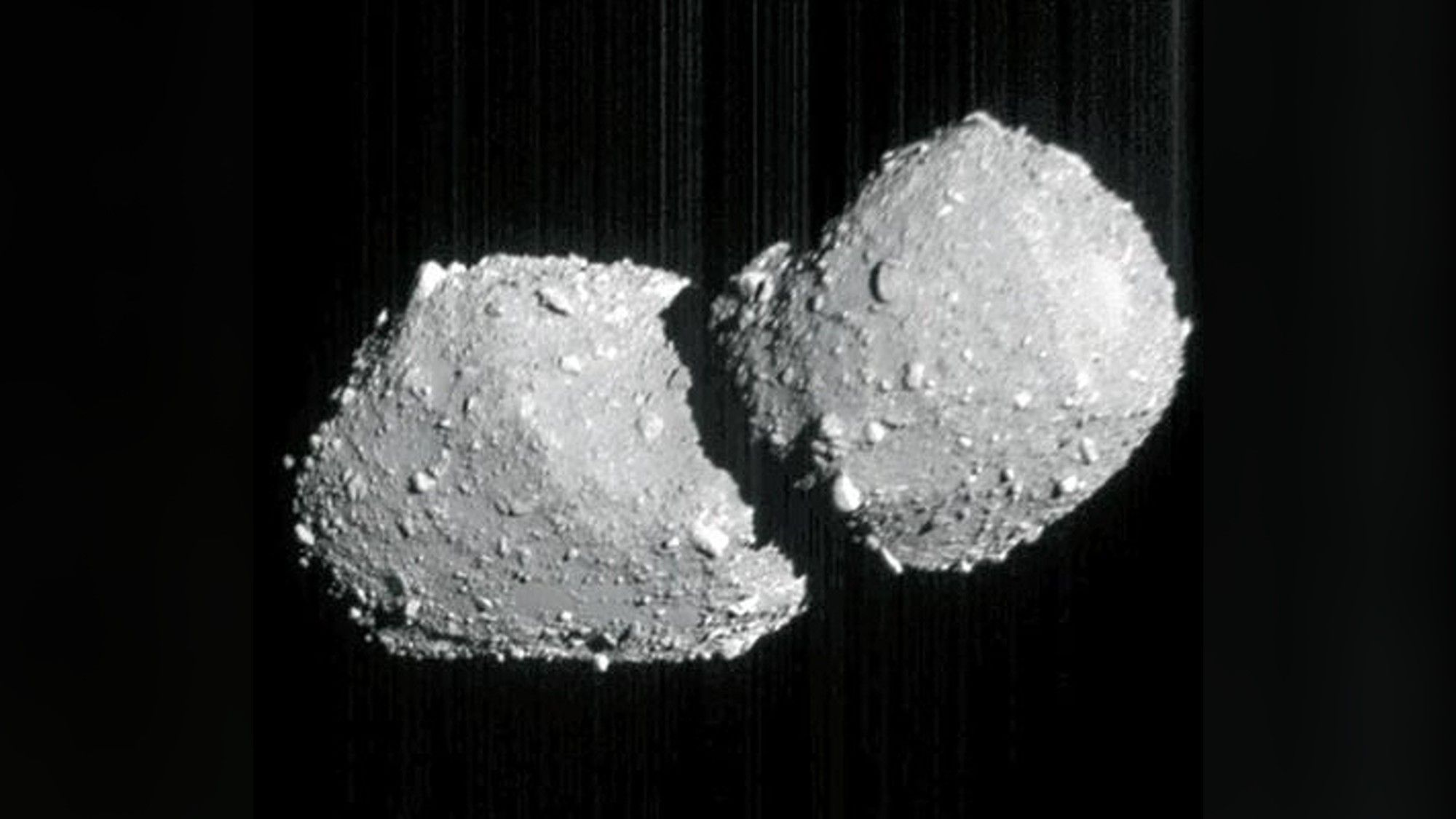
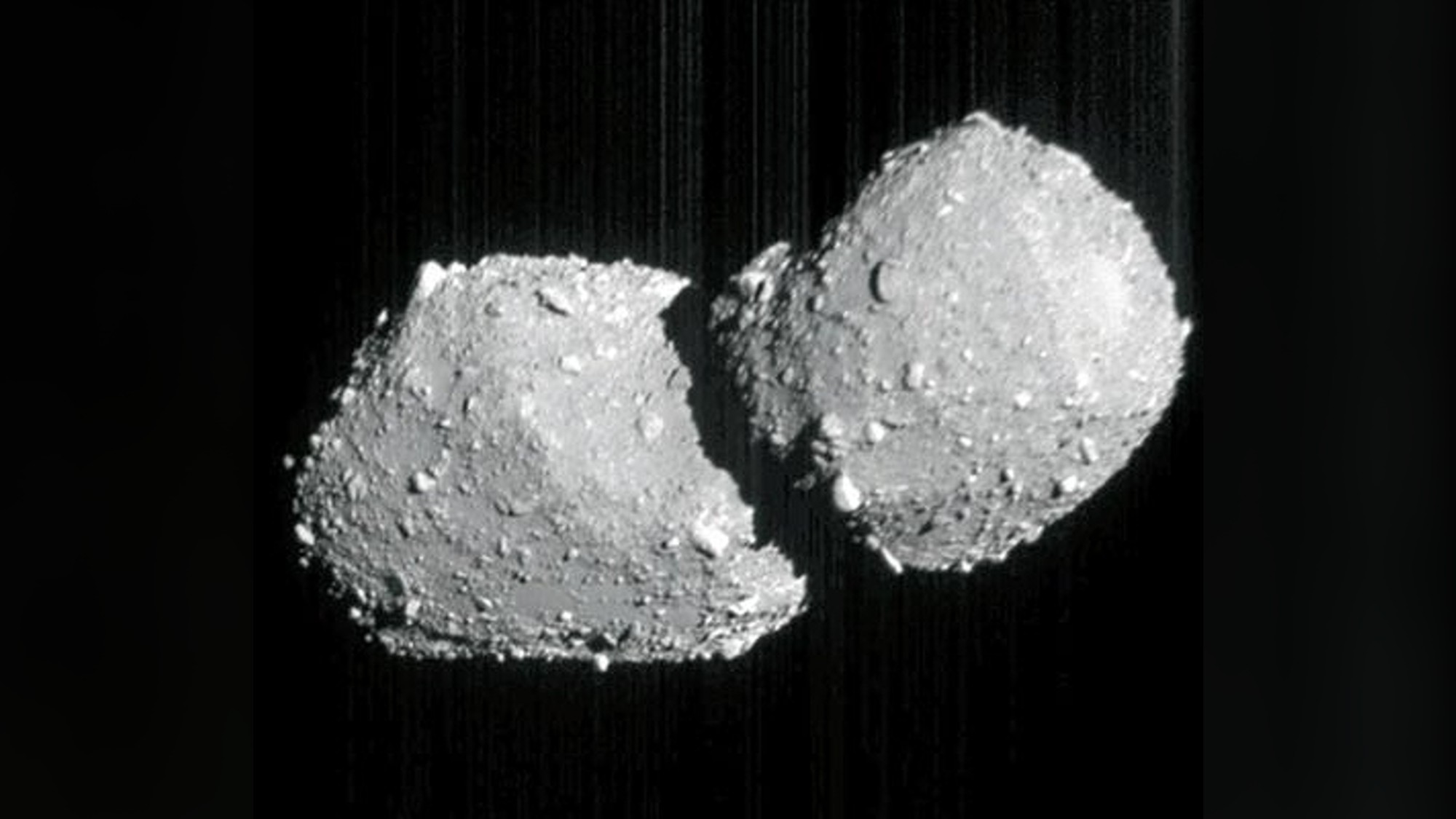
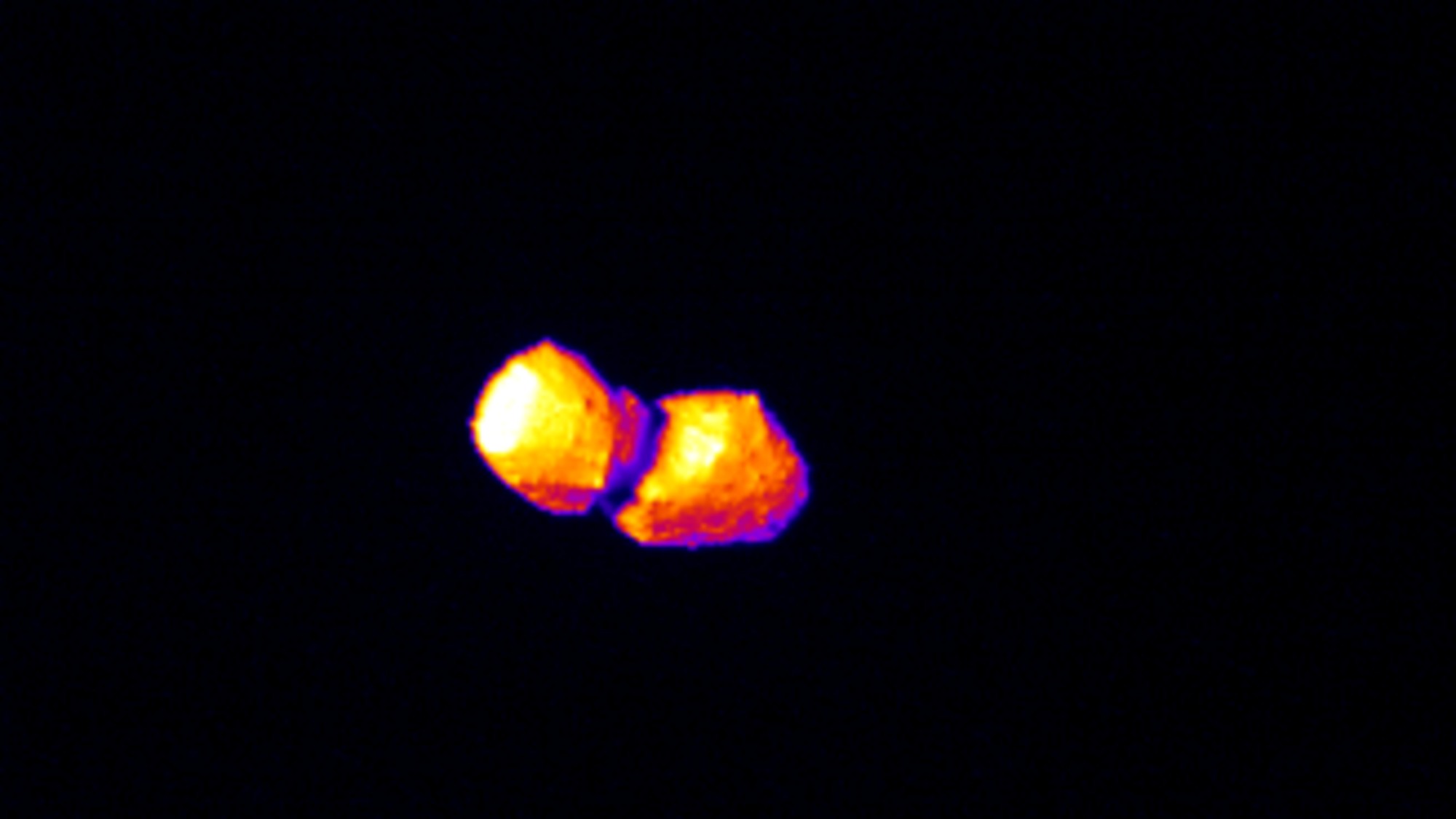
The daring gamble paid off spectacularly. On the morning of July 6, Japan time, as the images began to stream back to Earth, the JAXA team received two major surprises. First, the asteroid Torifune was revealed to be a "contact binary" – a celestial body composed of two distinct lobes that have gently merged under their mutual gravitational attraction, giving it a distinctive "peanut" or "snowman" shape. This was an unexpected discovery, as initial observations had not definitively indicated such a structure. The second surprise was the exceptional quality and size of the returned images, far exceeding expectations even for the 800-meter pass. "We did not imagine such a contact binary," Yoshikawa remarked, adding, "Originally, we didn’t think we could have such a very big image. Maybe we will take a very small one, but the image was much larger than we expected."
The encounter began with Hayabusa2 detecting Torifune on June 19, allowing for initial trajectory adjustments. As the spacecraft neared its target, it transitioned from ground-based guidance to a newly developed onboard guidance system approximately three hours before the closest approach. This innovative software, developed specifically for this challenging maneuver, allowed Hayabusa2 to autonomously refine its trajectory, ensuring the precision required for such an ultra-close flyby.
All four of Hayabusa2’s scientific instruments were active during the encounter, gathering a wealth of data:
- Optical Navigation Camera Telescope (ONC-T): This primary imaging instrument captured the stunning, high-resolution visual images that revealed Torifune’s contact binary structure and intricate surface features. The unexpected clarity and detail provided scientists with an unprecedented view of this type of asteroid.
- Thermal Infrared Imager (TIR): The TIR captured nine seconds of critical thermal imaging data between 09:29:50 and 09:29:59 GMT on July 5, just a second before the closest approach. This data independently confirmed the contact binary structure by mapping variations in heat emission across the asteroid’s surface. Differences in thermal properties can reveal variations in composition, density, and surface roughness, offering additional clues about the asteroid’s formation.
- Near Infrared Spectrometer (NIRS3): This instrument gathered spectral data in the near-infrared range, which is crucial for determining the mineralogical composition of the asteroid’s surface. NIRS3 data can identify the presence of hydrated minerals, silicates, and organic compounds, offering insights into Torifune’s geological history and its potential links to other asteroid types like Ryugu.
- Laser Altimeter (LIDAR): The LIDAR system provided precise ranging measurements, mapping the asteroid’s shape and topography. Yoshikawa noted that this might be the first successful LIDAR ranging measurement during an asteroid flyby, a significant technological feat given the high relative speed. LIDAR data is essential for creating detailed 3D models of celestial bodies, which are vital for understanding their formation, evolution, and gravitational properties.
While the most urgent 25 megabytes (MB) of data were immediately downlinked to Earth, the bulk of the 300 MB of total science data will require a longer wait. Hayabusa2’s ion engine system was restarted on July 9 to begin the long cruise phase towards its next Earth flybys. The ion engines will fire for approximately four months, and only after this critical propulsive phase can the remaining data be fully transmitted to Earth, ensuring the spacecraft’s trajectory remains optimized for its future targets.
Broader Implications: Planetary Defense and Future Exploration
The Torifune flyby is far more than a mere scientific bonus; it carries profound implications for future space exploration and, crucially, for planetary defense. Makoto Yoshikawa underscored this point in his closing remarks at the ACM conference, stating that "JAXA has acquired the technology to collide spacecraft with a small celestial body." This statement draws a direct parallel to NASA’s Double Asteroid Redirection Test (DART) mission, which successfully demonstrated a kinetic impactor technique for altering an asteroid’s trajectory. While Hayabusa2 did not impact Torifune, its ultra-close, high-speed pass proved JAXA’s capability to navigate with extreme precision around an unknown, rapidly approaching object.
This demonstrated capability serves as a vital proof-of-concept for the "fast reconnaissance" strategy in planetary defense. In a hypothetical scenario where a potentially hazardous asteroid is discovered on a collision course with Earth, time would be of the essence. A mission like Hayabusa2’s Torifune flyby demonstrates the ability to rapidly dispatch a probe, characterize the asteroid’s size, shape, rotation, and composition with high fidelity, and gather crucial data that would inform any subsequent deflection mission. Knowing whether an asteroid is a solid monolith, a loosely bound rubble pile, or a contact binary, for example, is critical for determining the most effective mitigation strategy. A kinetic impactor might be highly effective against a solid body, but less so against a loosely consolidated rubble pile that could simply absorb the impact or break into smaller, still dangerous fragments. The precision navigation and rapid data acquisition achieved by Hayabusa2 are therefore invaluable tools in humanity’s arsenal against potential cosmic threats.
Beyond planetary defense, the Torifune flyby pushes the boundaries of deep space navigation and engineering. Operating an aging spacecraft, originally designed for different mission parameters, at such high speeds and close distances, required significant innovation. The development and deployment of new onboard guidance software represent a major technological leap, enhancing the autonomy and adaptability of future missions. This mission showcases the versatility of JAXA’s engineering capabilities and their commitment to maximizing the scientific return from their space assets. The detailed study of contact binaries like Torifune also enriches our understanding of asteroid formation and evolution, providing crucial data points for theoretical models of how these primordial building blocks of the solar system interact and aggregate. The diversity observed among Near-Earth Asteroids (NEAs) continues to challenge and refine our knowledge of the solar system’s dynamic history.
The Ultimate Destination: 1998 KY26
The journey for Hayabusa2 is far from over. Following its upcoming Earth flybys in 2027 and 2028, the spacecraft will continue its cruise towards its ultimate extended mission target: the asteroid 1998 KY26. This tiny asteroid, measuring a mere 11 meters (approximately 36 feet) in diameter, will be the smallest celestial body ever targeted for a rendezvous mission. Adding to the challenge, 1998 KY26 is a "fast rotator," completing a full rotation in just 10.7 minutes. This rapid spin rate makes it an exceptionally difficult target for proximity operations and poses unique scientific questions about the structural integrity and formation mechanisms of such small, rapidly spinning bodies.
The successful Torifune flyby provides invaluable experience and confidence for the even more demanding rendezvous with 1998 KY26 in 2031. It underscores JAXA’s enduring commitment to pioneering deep space exploration, pushing the limits of technology, and unraveling the mysteries of our solar system. The data from Torifune, combined with the future insights from 1998 KY26, will undoubtedly contribute significantly to our understanding of asteroids, their role in planetary formation, and their potential impact on Earth. Hayabusa2 continues to be a beacon of innovation, demonstrating that even an "aging" spacecraft can deliver groundbreaking science and inspire new possibilities for the future of space exploration.