India’s Skyroot Aerospace Achieves Historic Orbital Success with Vikram-1 Rocket’s Debut Flight

In a landmark achievement for India’s burgeoning private space sector, Skyroot Aerospace successfully launched its Vikram-1 rocket, the nation’s first privately developed orbital-class satellite launcher, on Saturday. The mission, deemed a "grand success" by Indian space officials, propelled its payload into a precisely targeted 280-mile (450-kilometer) high orbit, marking a pivotal moment in India’s journey to become a global leader in commercial space. This maiden orbital flight from the Satish Dhawan Space Center on Sriharikota Island signifies not only a triumph for Skyroot but also a testament to India’s evolving space policy, which actively encourages private enterprise.
A Historic Ascent: The Vikram-1 Mission
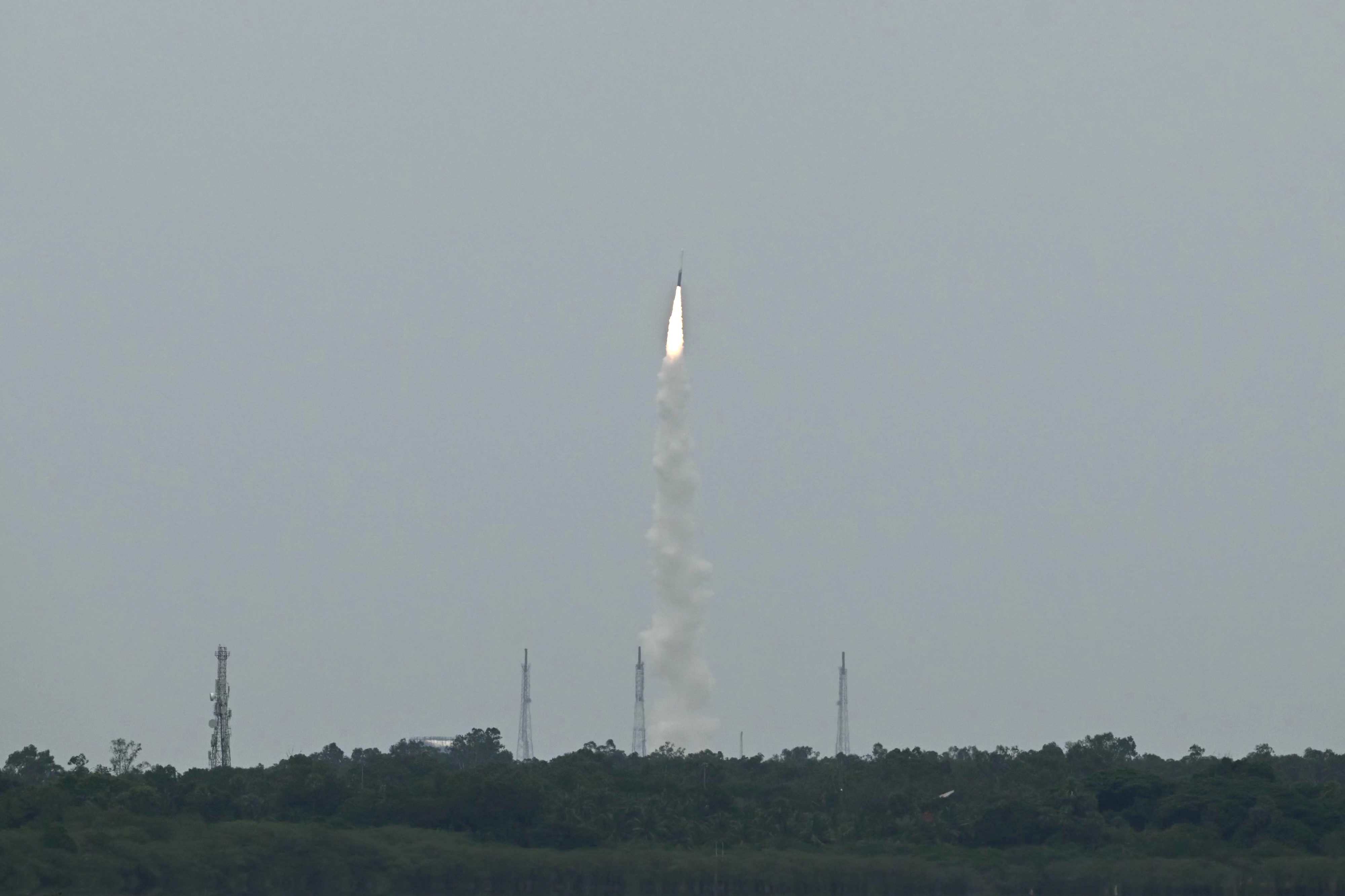
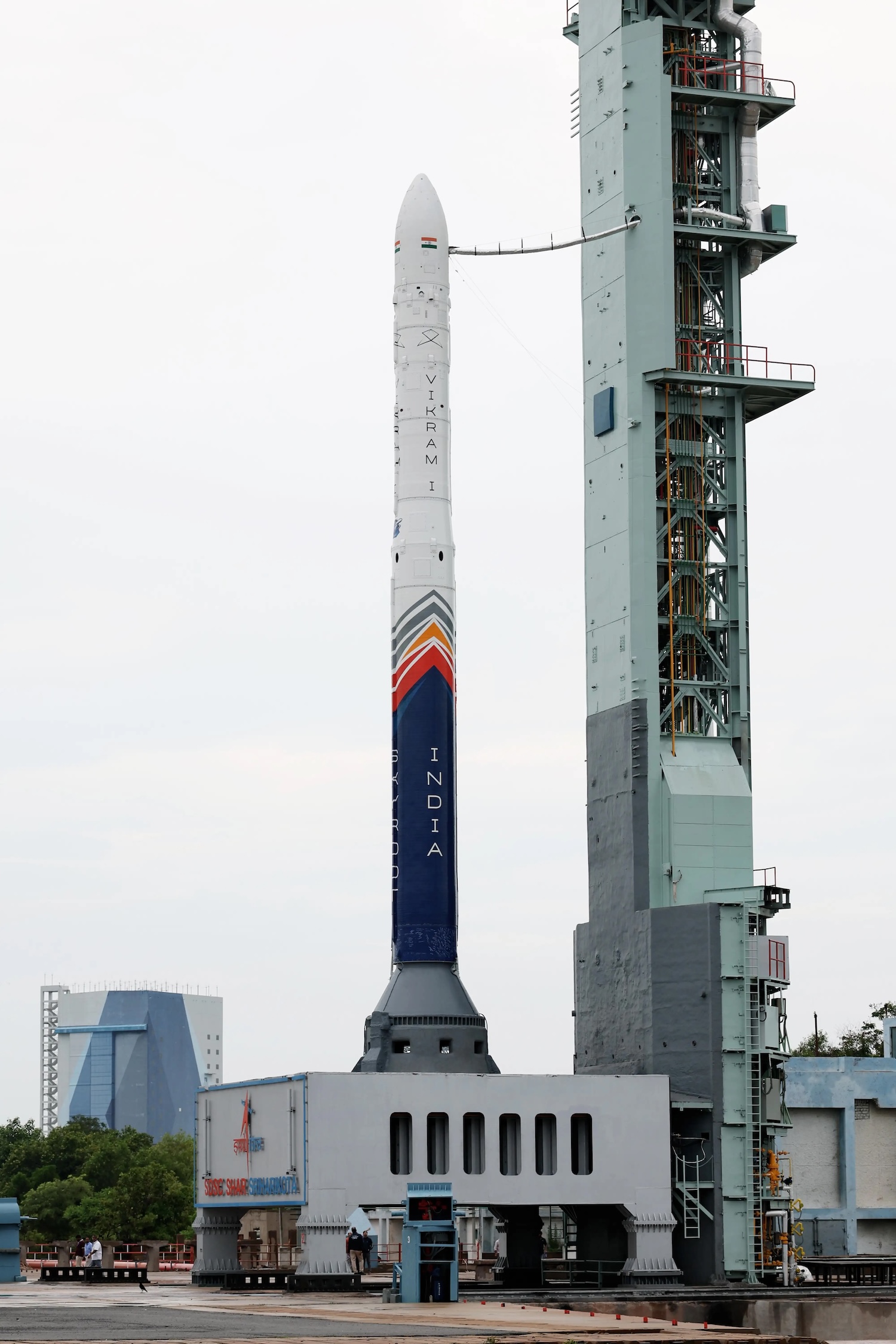
The Vikram-1 lifted off from India’s primary spaceport on Sriharikota Island, situated in the Bay of Bengal, at 1:35 am EDT (06:35 UTC) Saturday, corresponding to midday local time at the launch base. The launch sequence experienced a minor delay of over half an hour, attributed to a last-minute technical issue that was swiftly resolved by the Skyroot team. Following the successful troubleshooting, the countdown resumed, culminating in the ignition of Vikram-1’s solid-fueled first stage booster, sending the rocket skyward.
Standing approximately 72 feet (22 meters) tall, the Vikram-1 is a medium-sized launch vehicle designed to place payloads of up to 770 pounds (350 kilograms) into low-Earth orbit. This capacity positions it competitively within the rapidly expanding small satellite launch market, making it somewhat larger than Rocket Lab’s Electron, currently the world’s most successful dedicated small satellite launcher by number of missions. The rocket is notable for its lightweight carbon composite materials and its blue and white livery, a visual tribute to its advanced engineering.
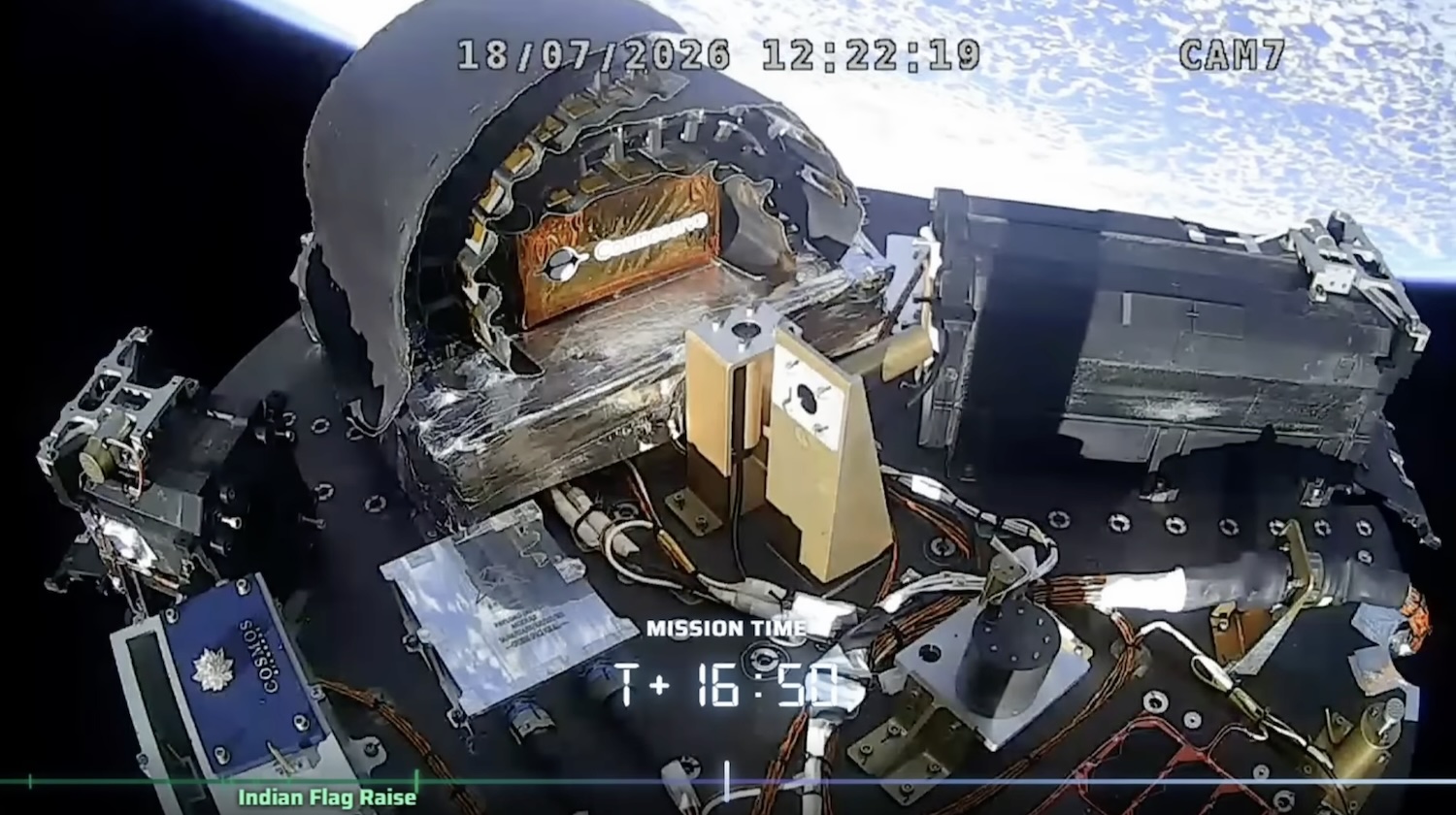
The flight itself proceeded with remarkable precision. Three solid-fueled rocket motors fired in succession, efficiently propelling the vehicle through the atmosphere and towards the vacuum of space. Following the burnout of the third stage, a small liquid-fueled fourth stage ignited, accelerating the payload to orbital velocity, an astonishing 17,000 mph (approximately 27,350 km/h). Onboard cameras provided live views, capturing each critical phase of the launch sequence, from the initial fiery ascent to the serene blackness of space.
A minor anomaly was observed during the separation of the rocket’s third stage from its fourth stage, where the spent motor appeared to remain in close proximity to the fourth stage for a brief period rather than moving away immediately. Despite this, the fourth stage executed its mission flawlessly, its 3D-printed engine firing to achieve an orbit approximately 280 miles (450 kilometers) high with an inclination of 60 degrees to the equator. This orbital insertion was remarkably close to pre-flight predictions made by Skyroot Aerospace, a detail later corroborated by independent US military tracking data, confirming the rocket’s successful arrival in orbit and deployment of its payloads.
India’s Evolving Space Landscape: A Catalyst for Private Innovation
The success of Vikram-1 is not an isolated event but rather a culmination of India’s long-standing space ambitions and recent policy shifts. The Indian Space Research Organization (ISRO), established in 1969, has been a cornerstone of the nation’s scientific and technological prowess. Over decades, ISRO has developed a robust space program, achieving significant milestones such as the Polar Satellite Launch Vehicle (PSLV), known globally for its reliability and cost-effectiveness in launching satellites for international clients, and the Geosynchronous Satellite Launch Vehicle (GSLV) and its heavier variant, LVM3, capable of launching heavier communication satellites and deep-space missions. India has also made its mark in planetary exploration, becoming the fourth country to successfully land a spacecraft on the Moon with Chandrayaan-3 in 2023 and successfully orbiting Mars with the Mangalyaan mission. The nation is also advancing its human-rated crew capsule, Gaganyaan, to fly astronauts to low-Earth orbit, an ambitious project that has seen some delays but remains a key national objective.
Recognizing the global trend towards commercialization and the potential of its domestic talent pool, the Indian government, under Prime Minister Narendra Modi, introduced significant space sector reforms in 2020. These reforms aimed to open up the space industry to private players, fostering innovation, creating jobs, and boosting economic growth. A key initiative was the establishment of the Indian National Space Promotion and Authorization Center (IN-SPACe), an autonomous nodal agency tasked with promoting, authorizing, and supervising private space activities in India. IN-SPACe acts as a single-window agency for private entities, providing access to ISRO facilities, expertise, and infrastructure.
V. Narayanan, chairman of ISRO, underscored the collaborative spirit, stating that ISRO offered "handholding and support" to Skyroot. This included providing access to critical facilities such as solid rocket motor casting and test facilities at ISRO’s spaceport on Sriharikota, as well as allowing Skyroot to launch from one of its two active launch pads. This strategic support has been crucial in enabling startups like Skyroot to accelerate their development cycles and achieve orbital capabilities.
Skyroot Aerospace: From Vision to Orbit
Skyroot Aerospace, co-founded in 2018 by former ISRO scientists Pawan Kumar Chandana and Naga Bharath Daka, emerged as a direct beneficiary and pioneer of these reforms. Their vision was to "deliver dedicated and responsive launch services for small satellites," addressing a growing demand in the global market for flexible and affordable access to space. The company chose to focus on developing a solid-fueled launcher initially, a strategic decision aimed at optimizing for the lowest development time and cost per launch. "We wanted to get to an orbital launch vehicle in a few years," Chandana had told Ars Technica in an interview prior to the launch, highlighting the rapid pace of their development.
The company had previously demonstrated its capabilities with the successful suborbital launch of the Vikram-S rocket in November 2022, which reached an altitude of nearly 300,000 feet (90 kilometers). The Vikram-1 builds directly on the lessons learned from Vikram-S, integrating advanced technologies and design philosophies. The rocket is named in honor of Dr. Vikram Sarabhai, widely regarded as the father of the Indian space program, a symbolic nod to the legacy that Skyroot aims to carry forward. A notable technological advancement in Vikram-1 is the use of a 3D-printed engine for its fourth stage, a cutting-edge manufacturing technique that reduces production time, cost, and complexity, while enhancing performance.
Defying the Odds: A First-Attempt Success
The successful orbital insertion on the maiden flight of Vikram-1 is particularly noteworthy given the historical challenges faced by private aerospace companies. As Pawan Kumar Chandana himself admitted, "On the first attempt, reaching orbit, I never thought it was possible." He further elaborated, "It’s still feels like a dream, and you all made this dream happen." The track record for first flights of new private orbital-class rockets is often fraught with setbacks. SpaceX, now a dominant force in space launch, required four attempts before its Falcon 1 rocket achieved orbit in 2008. Similarly, Rocket Lab’s Electron did not reach orbit on its inaugural launch in 2017. While Blue Origin successfully debuted its heavy-lift New Glenn rocket in 2025, its engineers had accumulated extensive experience from numerous launches of the smaller New Shepard suborbital rocket. Skyroot, with its relatively shorter history, has thus achieved a rare feat.
Initially, Skyroot officials set conservative goals for the Vikram-1’s debut. Their primary objective, as stated in a pre-flight press kit, was simply to achieve a successful liftoff, clear the launch tower, and gather maximum data during ascent. Pawan Goenka, chairman of IN-SPACe, reiterated this, stating, "The mission objective was only to lift off and clear the tower. That was only about 100 meters, but what we went to was 450 kilometers, and it also released all the satellites that were supposed to release. So the mission was absolutely perfect." This over-performance speaks volumes about the meticulous planning, engineering rigor, and execution by the Skyroot team, which Chandana described as "nothing short of a suspense movie."
Official Acclaim and National Pride
The triumph of Vikram-1 was met with widespread jubilation and official commendation across India. Prime Minister Narendra Modi personally congratulated Chandana and the entire Skyroot team, underscoring the national significance of the achievement. In a statement, Modi declared, "This is a defining moment in India’s space journey. The growing participation of our private sector is opening new frontiers and accelerating innovation. This achievement will encourage countless youngsters to dream bigger and innovate fearlessly." His words reflect a broader governmental vision to leverage India’s demographic dividend and scientific talent to propel the nation onto the global stage.
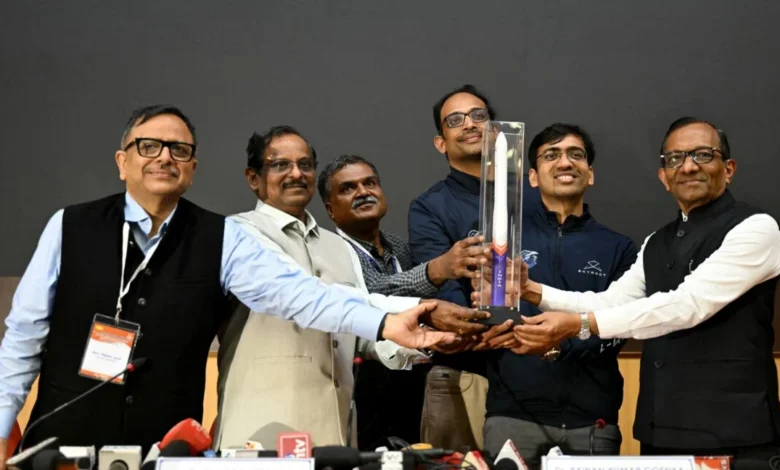
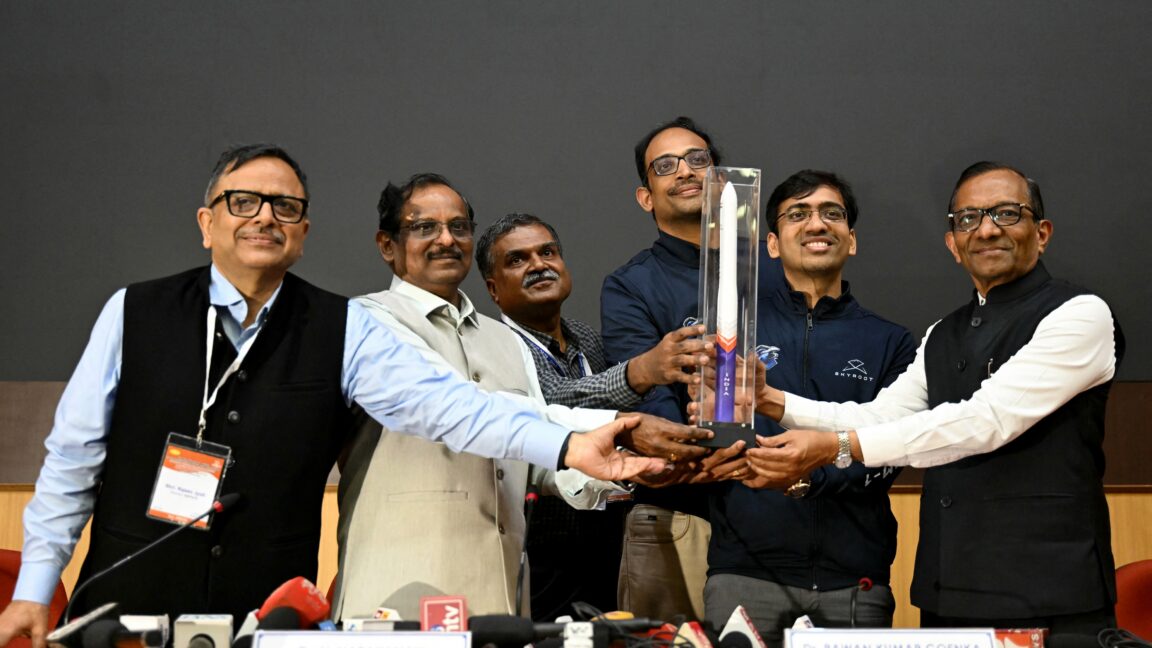
ISRO Chairman V. Narayanan and Pawan Kumar Chandana, along with other senior Indian space officials, posed proudly with a replica of the Vikram-1 rocket, symbolizing the collaborative spirit between public and private entities. This partnership model, where ISRO provides foundational support and infrastructure while private companies drive innovation and commercialization, is becoming a hallmark of India’s space strategy.
Chandana’s post-launch remarks further encapsulated the national pride: "This is a 100 percent designed in India rocket, a 100 percent made in India rocket, built by 100 percent Indian people, for India and for the world. This was a historic moment for India, but also a very proud moment for the global space sector because the world needs more access to space." His statement highlights both the indigenous nature of the project and its aspiration to contribute to global space accessibility.
The Commercial Space Frontier: Market Opportunities and Vikram-1’s Role
The successful launch of Vikram-1 positions Skyroot Aerospace squarely in the competitive small satellite launch market, an arena projected to grow significantly in the coming decade. The global small satellite market, driven by the proliferation of CubeSats and micro-satellites for applications such as Earth observation, telecommunications constellations, and Internet of Things (IoT) services, is expected to reach tens of billions of dollars annually. These smaller satellites require dedicated and flexible launch services that larger, traditional rockets often cannot provide efficiently or cost-effectively.
Skyroot’s Vikram family of rockets is specifically designed to meet this demand. The company’s future roadmap includes the Vikram-1U, which will incorporate additional strap-on solid rocket boosters to enhance its payload capacity for heavier missions. Beyond that, the Vikram-2 is planned to debut a cryogenic upper stage, significantly increasing its capability to a payload capacity of 2,000 pounds (900 kilograms) to low-Earth orbit. This modular approach allows Skyroot to cater to a diverse range of small satellite customers, offering tailored and responsive launch services.
Economically, this success is expected to attract further investment into India’s private space sector. Skyroot Aerospace has already raised approximately $160 million in capital, leading to a valuation of $1.1 billion, cementing its status as a significant player. The company now boasts over 1,000 employees, predominantly based at its Hyderabad headquarters, with an average workforce age of just 28, reflecting a vibrant and dynamic environment for innovation.
Economic and Geopolitical Implications
The success of Vikram-1 holds profound economic and geopolitical implications for India. Economically, it validates the government’s space reforms and is likely to spur further private investment, not just in launch services but across the entire space value chain, including satellite manufacturing, ground segment services, and space applications. This growth contributes to job creation, technological advancement, and a higher share of the global space economy. India aims to increase its annual launch total from about five launches per year to 50 before the end of the decade, a target that can only be met with significant private sector participation.

Geopolitically, India’s entry into the commercial small satellite launch market enhances its strategic autonomy and positions it as a reliable space partner. By demonstrating indigenous orbital launch capabilities through a private entity, India showcases its technological maturity and reduces its reliance on foreign launch providers. This also bolsters India’s ‘Make in India’ initiative and strengthens its credentials as a nation capable of delivering advanced technology solutions for global customers. The success places India in an elite club of nations, alongside the United States and China, that have successfully nurtured a private space industry capable of orbital launches.
Looking Ahead: Skyroot’s Ambitious Future
While the Vikram-1’s debut flight is a monumental achievement, Skyroot Aerospace harbors even loftier ambitions. Pawan Kumar Chandana has articulated a long-term vision for Skyroot that extends beyond small satellite launches to include larger, liquid-fueled, fully reusable rockets. His aspiration is for a "daily cadence" of launches from multiple countries, a goal that would necessitate substantial additional funding and technological breakthroughs. The company’s current success, however, provides a strong foundation and demonstrates the foundational ingredients required for such an ambitious endeavor.
With a second Vikram-1 launch potentially happening before the end of the year, Skyroot is poised to capitalize on its initial triumph. The company’s journey from a startup founded by two former ISRO scientists to achieving orbital success on its first attempt serves as an inspiration and a blueprint for other aspiring private space ventures in India and beyond. The Vikram-1 launch is not merely a technical accomplishment; it is a powerful statement about India’s growing prowess in space, its commitment to fostering private innovation, and its readiness to play a leading role in shaping the future of space exploration and commercialization for the world.