National Geographic’s Pompeii: Out of Time fuses historical fact and imagination to bring city’s last 24 hours to life.

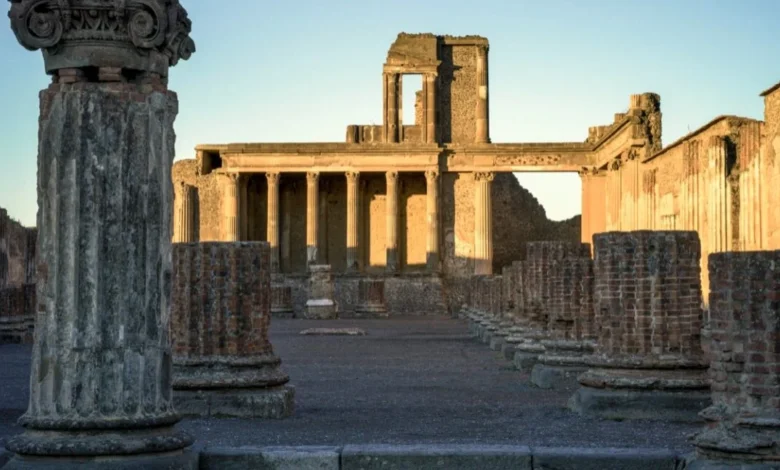
National Geographic is set to redefine historical documentary filmmaking with its ambitious new three-part docuseries, Pompeii: Out of Time. Premiering on July 21 on National Geographic and available for streaming on Disney+ and Hulu the following day, the series offers an unprecedented, deeply human exploration of the final 24 hours of Pompeii before its catastrophic destruction by Mount Vesuvius in 79 CE. Unlike conventional documentaries, Out of Time employs a unique "historia" approach, blending rigorous historical and scientific facts with dramatic, cinematic storytelling, guided by the renowned actor Tom Hiddleston.
The series distinguishes itself by moving beyond mere historical recounting, leveraging Hiddleston’s passion for classics and a novel storytelling methodology to immerse viewers in the lives of Pompeii’s inhabitants. Hiddleston, best known for his role as Loki in the Marvel Cinematic Universe, takes on the mantle of a "time detective," focusing on three distinct individuals – a teenage boy, a local businesswoman (believed to be Julia Felix), and a Praetorian guard – to reconstruct their potential experiences and fates during the unfolding disaster. This narrative choice, combined with high production values, aims to make the ancient tragedy resonate profoundly with a modern audience.
The "Historia" Approach: Merging Fact and Imagination
The genesis of Pompeii: Out of Time itself bears a fascinating connection to modern pop culture. Executive producer Kevin Wright, who also produced the Disney+ series Loki, found a natural synergy when a scene in Loki depicted Hiddleston’s character traveling through time to visit Pompeii. This cinematic serendipity, coupled with Hiddleston’s personal academic background in Classics from Cambridge University and his teenage visit to the Pompeii archaeological site, laid the groundwork for the docuseries. Hiddleston himself attributes this early exposure to Pompeii as an indirect influence on his career path into acting, highlighting a deep, personal connection to the subject matter.
"There is just a passion to the way Tom tells stories that’s infectious," Wright shared, explaining the decision to cast Hiddleston as the central figure. "We knew that if we could capture that and put it into [the series], it might interest people who wouldn’t normally want to watch a documentary about Pompeii." This infectious enthusiasm is crucial to the series’ innovative "historia" approach, a concept championed by Hiddleston himself. Drawing from the Latin root where "storytelling" and "history" are intrinsically linked, "historia" proposes a merging of imagination and verifiable historical fact to create a more emotionally resonant and relatable narrative.
This methodology represents a significant departure from traditional documentary formats, which often rely on dry narration and static re-enactments. Instead, Out of Time employs richly scripted dramatic scenes performed by professional actors, giving the historical figures emotional depth and interior lives that mere facts cannot convey. "We felt we could use the imagination to make a more human story. This isn’t just ancient history; these were real people, and their lives were not dramatically different than ours even though they lived 2,000 years ago," Wright emphasized. This blending of historical rigor with dramatic license has reportedly been met with enthusiasm from consulting historians and archaeologists, signaling a potential shift in how ancient history is presented to the public. It suggests a growing academic acknowledgment that while facts provide the skeleton, imagination, guided by expert knowledge, can provide the flesh and spirit necessary for truly engaging storytelling.
The Cataclysm of 79 CE: A Detailed Chronology
The eruption of Mount Vesuvius on August 24, 79 CE, remains one of history’s most iconic and devastating natural disasters. Unlike the popular misconception that people were killed by flowing lava, the true agents of destruction were far more insidious and rapid: pumice, ash, and pyroclastic flows. The eruption, estimated to be a VEI 5 (Volcanic Explosivity Index), unfolded in several terrifying phases over approximately 18-24 hours.
- Mid-day, August 24: The eruption began around 1:00 PM local time. After centuries of dormancy, Vesuvius awoke violently, ejecting a massive column of ash, pumice, and gas kilometers into the sky. This Plinian phase, named after Pliny the Younger who witnessed and documented the event, lasted for several hours. Initial ashfall blanketed Pompeii, located about 8 kilometers southeast of the volcano. Roofs began to collapse under the weight of accumulating pumice, prompting many inhabitants to flee. Others, perhaps hoping the worst would pass, sought shelter indoors. This phase was characterized by relative quiet compared to what would follow, as the ash column rose vertically. An estimated 4 cubic kilometers of material were ejected during this initial phase.
- Evening, August 24 – Early Morning, August 25: As the eruption continued, the volcanic column grew unstable. The initial pumice fall began to be interspersed with coarser ash and lithic fragments. The air became thick with sulfurous fumes, and visibility plummeted. Escape routes became increasingly difficult.
- Pre-dawn, August 25: The eruption entered its most deadly phase. The immense column of ash and rock, no longer able to sustain itself, began to collapse. This triggered the first of several pyroclastic flows (also known as surges) – superheated avalanches of gas, ash, and rock that roared down the volcano’s flanks at incredible speeds. Geologist Chris Jackson, featured in the docuseries, estimates these flows could travel between 100 and 200 kilometers per hour (60-120 mph). "Imagine the speed you can drive on the freeway in the US and double that," Jackson stated, underscoring the impossibility of outrunning them. The temperature of these flows could reach several hundred degrees Celsius, instantly carbonizing organic matter.
- Successive Pyroclastic Flows: Pompeii was initially buried by several meters of ash and pumice. The subsequent pyroclastic flows, though less dense than those that hit Herculaneum, were still lethal. They swept over Pompeii, instantly killing those who had sought shelter or were still attempting to escape. The extreme heat caused rapid muscle contraction, preserving the contorted postures of many victims, which were later immortalized in Giuseppe Fiorelli’s plaster casts.
- Herculaneum’s Fate: Herculaneum, located closer to the volcano on its western side, experienced a different, perhaps even more terrifying, fate. Initially spared the heaviest ashfall due to prevailing winds, it was struck by the hottest and fastest pyroclastic flows. Archaeological evidence suggests that the heat was so intense (up to 500-600°C) that victims’ brains boiled and skulls exploded, their bodies instantly vaporized or carbonized, leaving behind only skeletons preserved within the solidified rock.
- Aftermath and Geographic Alteration: The eruption dramatically altered the geography of the Bay of Naples. "These pyroclastic flows actually changed the shoreline shape," Jackson explained. "Some went through Vesuvius and Pompeii, which at the time had beaches. They were next to the sea. Now there’s some distance from it because [the flows] added new land beyond the settlement and reshaped the coastline." The cataclysm also triggered a small tsunami, further impacting coastal areas. By the time the eruption subsided, Pompeii and Herculaneum, along with smaller settlements, were buried under layers of volcanic debris, lost to history for nearly 1,700 years.
Unveiling the Science: Geologist’s Perspective
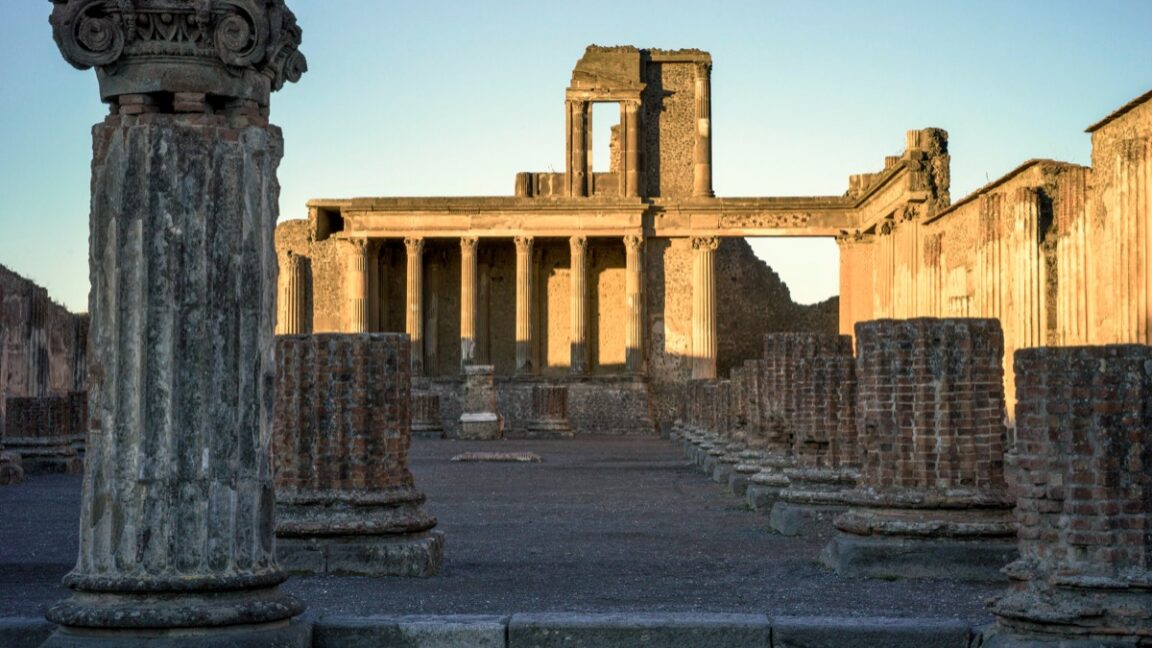
Central to the factual backbone of Pompeii: Out of Time is the expertise of figures like geologist and science communicator Chris Jackson. His contributions are vital in correcting widespread misconceptions about the Vesuvius eruption. "The most common misconception people have about Pompeii was the belief that people were killed by lava," Jackson told Ars. "That’s understandable. In Pompeii and Herculaneum, around all of Naples, a lot of the buildings are made from these black hard igneous rocks, cooled lava. When you tell people that what led to the devastation in 79 AD was nothing to do with lava, their faces sort of drop. It’s a bit sad to hear that it was this more devastating thing called a pyroclastic flow."
Jackson’s clear explanation of pyroclastic flows—dense, fast-moving currents of hot gas and volcanic debris—is crucial. He emphasizes their extreme speeds and temperatures, which were the true killers, causing instantaneous death by suffocation and incineration, not slow-moving lava. His insights extend beyond the immediate devastation to the long-term geological impact. The eruption not only buried cities but also significantly reshaped the Bay of Naples coastline, extending it further into the sea due to the massive deposits of volcanic material.
Furthermore, Jackson brings attention to another, often overlooked, geological titan in the region: Campi Flegrei. "A lot of what’s causing some of the strange shape of the Bay of Naples is actually related to another volcano to the northwest of Vesuvius that nobody talks about, Campi Flegrei," he noted. "Nobody makes TV shows about Campi Flegrei, but that’s a supervolcano. The eruption of that in the geological past is actually what’s believed to have caused that big bite in the bay." This serves as a vital reminder that the geological forces shaping this region are complex and ongoing, with both Vesuvius and Campi Flegrei remaining active and closely monitored by vulcanologists today due to the high population density of the surrounding area. Understanding these forces is not merely historical curiosity but critical for contemporary disaster preparedness.
Pompeii and Herculaneum: A Glimpse into Roman Life
Before their tragic end, Pompeii and Herculaneum were vibrant, prosperous Roman towns, offering invaluable insights into daily life in the Roman Empire. Pompeii, a bustling commercial hub with an estimated population of 10,000-20,000, was strategically located on a plateau near the Sarno River, providing access to both the sea and fertile agricultural lands. Its economy thrived on trade, agriculture (wine, olive oil), and local crafts. The city boasted a forum, temples, baths, a large amphitheater, and numerous private villas adorned with elaborate frescoes and mosaics. Its streets were paved, and evidence suggests a complex water system. Daily life would have been a vibrant tapestry of merchants, artisans, slaves, freedmen, and wealthy citizens, all interacting in public spaces and private homes. The docuseries’ focus on a "local businesswoman" and a "teenage boy" seeks to humanize this bustling ancient world, allowing viewers to connect with individuals representative of the diverse social fabric.
Herculaneum, though smaller with a population of perhaps 5,000, was a wealthier resort town, favored by the Roman elite for its picturesque location and cooler breezes. Its buildings, particularly its large villas, are often better preserved than those in Pompeii, having been buried by finer, denser pyroclastic material that solidified into a harder rock, sealing off oxygen and moisture. This preservation has allowed for the recovery of organic materials like wooden furniture, food, and even papyrus scrolls, offering an even more intimate look into Roman domestic life and intellectual pursuits. The Praetorian guard, another character explored in the series, represents the military and administrative presence that would have been part of these Roman communities. The unparalleled preservation of both sites, albeit through tragedy, has made them archaeological goldmines, revealing details about Roman art, architecture, social customs, diet, and even graffiti.
Production Challenges and Innovative Techniques
Bringing the last 24 hours of Pompeii to life with cinematic grandeur, especially on a documentary budget, presented unique challenges that required innovative solutions. Executive producer Kevin Wright acknowledged not having a "Marvel budget" for Out of Time, but he leaned on the expertise of showrunner Tom Barbor-Might and his own experience from high-stakes productions. "As you’re writing [the script], you have to put out of your mind how to actually shoot this," Wright explained. "It really is, how do you tell the best story? But Tom could keep that whole vision in his head."
The key was to achieve "Marvel production value, but with a small footprint." This meant meticulous planning, precise budgeting, and smart integration of visual effects (VFX) and practical effects. "Maybe we don’t need a hundred people on set. Maybe we can do this with 10 people and our actors," Wright reflected. CGI was deployed for sweeping shots of the ancient city and the erupting volcano, creating the necessary scale and spectacle. However, the team also masterfully blended these with cost-effective practical effects. Wright highlighted the example of the softly falling ash, a visually striking and emotionally evocative element in the series. "That was all practical," he revealed. "We worked with a really amazing Italian special effects team that figured out how to safely blow a bunch of stuff into the air that was safe for our actors and looked great on camera. A lot of it was just newspaper and things like that. It was a nice merging of old and new techniques."
A critical component of the "historia" approach was the casting of high-caliber professional actors for the scripted dramatic scenes. Wright noted the "stigma" often associated with docudramas but emphasized that National Geographic aimed to "refresh" the form. "A big part of that is the drama’s got to be real," he said. Instead of experts simply describing an event followed by a literal re-enactment, Out of Time aimed to portray the "emotional interiors" of the characters. This required actors capable of conveying genuine human emotion. The series, filmed out of London, benefited from a strong pool of talent, including acclaimed actress Lubna Azabal (known for Denis Villeneuve’s Incendies), who plays Julia Felix. "The casting was just as important as hiring our cinematographer or our production designer," Wright stated, underscoring the commitment to authentic emotional portrayal as a cornerstone of the series’ impact.

The Human Element: Reclaiming Narratives
Perhaps one of the most poignant and deliberate choices in Pompeii: Out of Time is the handling of the famous plaster casts of the victims. These casts, created by archaeologists pouring plaster into voids left by decomposed bodies in the hardened ash, have become iconic, almost dehumanized, symbols of the tragedy. The docuseries consciously delays their appearance until the very end, a powerful narrative decision. "We felt that the plaster casts had been, just through sheer passage of time, decontextualized a bit," Wright explained. "You can go to Pompeii. It is an active archeological site. It is also a tourist site so [the plaster casts] become props for photos."
The series endeavors to reclaim the humanity behind these haunting figures. By focusing on the potential lives and experiences of three specific individuals—a teenage boy, a businesswoman like Julia Felix, and a Praetorian guard—the docuseries builds an emotional bridge for the audience. Viewers are invited to follow these characters through their final 24 hours, experiencing their hopes, fears, and daily routines, before finally confronting the grim reality of their demise. "We wanted to help reframe them in the pop culture: This is a grave site. The person in any of those casts had a story," Wright articulated. "We chose three of those stories. There are hundreds of stories, maybe thousands. That was something from the very beginning: How can we add some power back to these people and some respect? If you really sit with it, it’s incredibly moving." This approach transforms the casts from static relics into powerful, individualized reminders of human vulnerability and resilience in the face of overwhelming natural forces.
Broader Implications for Historical Storytelling
Pompeii: Out of Time sets a compelling precedent for the future of historical documentaries and public engagement with the past. The "historia" concept, by intentionally blurring the lines between pure fact and informed dramatic speculation, offers a powerful model for making ancient history feel immediate and relevant. As Kevin Wright wisely put it, "If somebody were to follow you and I around and write down everything we did today, you would have all the facts, but it would be missing your emotional context, your interior life context that you can only get through psychology, through imagination, through the cultural storytelling. The history will only get you so far. The only way you can fill in those gaps is through those techniques."
This approach addresses a fundamental challenge in historical education: how to convey the human experience of the past without resorting to overly academic or detached presentations. By leveraging celebrity appeal (Tom Hiddleston), cinematic techniques, and compelling character-driven narratives, the series demonstrates how popular culture can serve as a potent gateway to deeper historical and scientific understanding. It suggests that future documentaries might increasingly embrace this blend, using rigorous research to establish a factual framework and then employing creative storytelling to populate that framework with believable human experiences. This method fosters empathy and emotional connection, which can lead to a more profound and lasting appreciation for historical events and the people who lived through them. The enthusiastic reception from historians and archaeologists for the "historia" concept indicates a readiness within the academic community to explore these new frontiers of public outreach, recognizing that effective communication often requires more than just a recitation of facts.
Conclusion
National Geographic’s Pompeii: Out of Time is poised to be more than just another documentary about one of history’s most famous disasters. It is an innovative experiment in storytelling, marrying the gravitas of historical fact with the evocative power of imagination. Through the dedicated efforts of executive producer Kevin Wright, showrunner Tom Barbor-Might, and the compelling narration of Tom Hiddleston, the series aims to humanize the inhabitants of Pompeii, transforming them from archaeological specimens into relatable individuals facing an unimaginable catastrophe. By focusing on the final 24 hours of a teenage boy, a businesswoman, and a Praetorian guard, and by consciously re-contextualizing the haunting plaster casts, the series offers a fresh, emotionally resonant perspective on a timeless tragedy. As it premieres on National Geographic on July 21 and streams on Disney+ and Hulu the following day, Pompeii: Out of Time promises to immerse viewers in a powerful journey through history, challenging conventional notions of what a documentary can achieve.