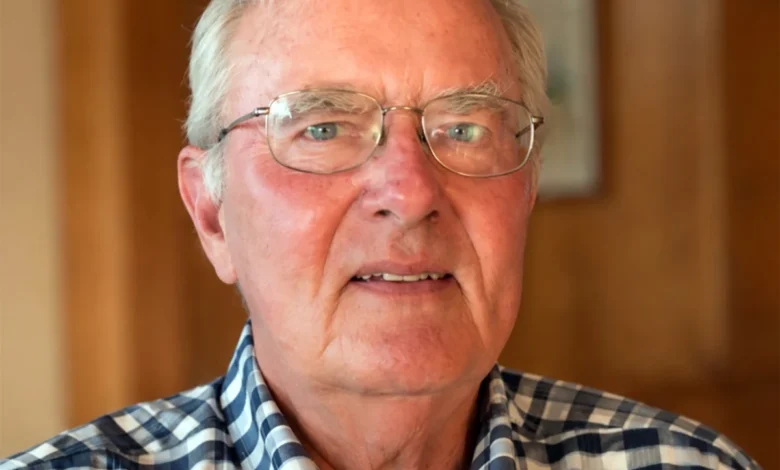
Walter M. Cabot, the visionary investment strategist who transformed the Harvard University endowment into a global financial powerhouse and established the template for modern institutional investing, died on June 2 at the age of 93. Widely recognized as the primary architect of the Harvard Management Company (HMC), Cabot’s tenure saw the university’s assets transition from a conservative, traditional portfolio into a diversified engine of growth that redefined how educational institutions manage their wealth.
Beyond his professional accolades as a pioneer of asset allocation, Cabot is being remembered by colleagues, family, and the broader financial community as a man of profound integrity and uncommon humility. In an industry often defined by high-stakes competition and outsized egos, Cabot was celebrated for fostering a culture of collaboration and grace, treating his colleagues more like family members than subordinates.
A Legacy of Institutional Transformation
When Walter Cabot assumed leadership of the Harvard Management Company in 1974, the landscape of institutional investing was radically different from the multi-billion-dollar enterprise it is today. At the time, most university endowments followed a rigid "60/40" model—allocating 60 percent of assets to domestic stocks and 40 percent to bonds. This traditional approach was increasingly vulnerable to the stagflation and market volatility that characterized the 1970s.
Under Cabot’s direction, HMC broke away from this consensus. He recognized that for an institution with the permanence of Harvard, a longer-term, more aggressive diversification strategy was not only prudent but necessary. He steered the endowment into then-uncharted territories for academic institutions, including venture capital, private equity, real estate, and international markets.
"He radically changed the asset allocation of Harvard’s endowment in favor of equities," said Hunter Lewis, co-founder of Cambridge Associates and a long-time collaborator of Cabot. "Without Walter, there wouldn’t be a Harvard Management Company."
The results of this strategic pivot were transformative. During Cabot’s leadership, which spanned nearly two decades until 1991, the Harvard endowment grew from approximately $1 billion to $5.5 billion. This growth laid the groundwork for the modern "endowment model," a strategy later popularized by other institutions but pioneered under Cabot’s watch. By the end of the 2023 fiscal year, the Harvard endowment was valued at $56.9 billion, maintaining its status as the largest academic endowment in the world.
Early Life and the Formative Impact of Polio
Born into the prominent Massachusetts Cabot family, Walter M. Cabot’s path to leadership was marked by early personal challenges that shaped his character. At the age of 10 or 11, Cabot contracted polio, a disease that at the time often resulted in lifelong disability or social isolation.
His son, David R. Cabot, believes this early battle with illness was the source of his father’s characteristic perseverance and empathy. "I think that made him persevere, and it also made him a little humble and aware of other people’s conditions," David Cabot said. "He was a very sensitive man."
This sensitivity translated into a management style that was rare in the financial sector. Colleagues recall him as a "mild-mannered" leader who was short on words but possessed an extraordinary ability to listen. He was known for being open-minded and genuinely interested in the perspectives of others, qualities that allowed him to identify talent and foster innovation within HMC.
Cabot’s educational journey was rooted in the institution he would later serve. He graduated from Harvard College in 1955. Following his undergraduate years, he served in the U.S. Army and the Central Intelligence Agency (CIA), experiences that friends suggest honed his analytical skills and his ability to distinguish fact from posturing. He returned to academia to earn his M.B.A. from Harvard Business School in 1959, further solidifying his ties to the university.
Cultivating a Unique Corporate Culture
At HMC, Cabot was credited with creating an atmosphere that stood in stark contrast to the "harsh competitiveness" typically found in Wall Street investment firms. Michael Eisenson, managing director and co-chairman of Charlesbank Capital Partners, who met Cabot in the mid-1980s, described him as an exemplary manager who balanced sharp financial judgment with a supportive demeanor.
"He struck me as a leader with a rare combination of judgment and grace," Eisenson noted. "He created a culture inside Harvard Management Company that was collaborative and supportive."
Robert Matson, a partner at HMC from 1986 to 1992, echoed these sentiments, highlighting Cabot’s lack of ego. Matson noted that while the investment business is often populated by "huge egos," Cabot remained a "straight shooter" who maintained a family-like atmosphere at the firm.
"He was always open to new ideas. He was a man of tremendous integrity, which is not always common in the investment business," Matson said. "He was also a real gentleman… He could smell a phony from a mile away."
Success Beyond Harvard: Wellesley College and Civic Duty
While his work at Harvard remains his most visible contribution, Cabot’s impact extended to other institutions and his local community. From 1978 to 2000, he served as the treasurer of Wellesley College. His tenure there was equally successful; under his guidance, the Wellesley endowment surged from nearly $100 million to $1.2 billion, a twelve-fold increase that secured the college’s financial future for generations.
In his personal life, Cabot was deeply committed to his hometown of Dover, Massachusetts. He served as the chairman of the Warrant Committee, applying his financial acumen to local governance and ensuring the town’s fiscal health. This commitment to civic duty reflected his belief that financial expertise should be used for the benefit of the community and the public good.
Analysis: The Architect of the Modern Endowment Model
Financial historians often point to the "Yale Model" of the 1990s as the turning point for institutional investing, but Cabot’s work at Harvard in the 1970s and 80s provided the essential blueprint. By diversifying into illiquid assets like real estate and venture capital, Cabot proved that large institutions could harvest a "liquidity premium"—earning higher returns by tying up capital in long-term projects that smaller, more reactive investors could not afford to touch.
Cabot’s philosophy was one of "moderate risk" balanced by deep thoughtfulness. He did not chase trends for the sake of novelty; rather, he understood that the greatest risk to a multi-century institution was not market volatility, but the failure to grow assets faster than inflation and spending requirements.
"He thought that with risk came, in the investment world, perhaps return, but he was thoughtful about it," David Cabot explained. "He was not a high-risk-taker, but he did appreciate the idea that if you didn’t challenge yourself or didn’t take a risk, you might not get much of a reward."
A Life Defined by Principles
Walter Cabot’s 70-year marriage to Dorothy S. Cabot served as the cornerstone of a large and devoted family. He is survived by his wife, four children, 10 grandchildren, and six great-grandchildren. His family recalls him as a man of unwavering principles who never lost his temper and never used foul language—a "good man" who wanted to be remembered as honest, fair, and reliable.
In a 2005 interview with the Harvard Crimson, Cabot looked back on his years at HMC with fondness, calling it "the best job you could possibly have." His passion for the work was matched by his dedication to the institution, ensuring that Harvard’s mission of education and research would be supported by a robust and permanent financial foundation.
The broader investment community views his passing as the end of an era. Cabot represented a generation of investment managers who viewed their roles as one of stewardship rather than self-enrichment. His ability to merge sophisticated financial engineering with a kind and ethical management style remains a benchmark for leaders in the field.
A memorial service for Walter M. Cabot is scheduled for September 19, where colleagues from the worlds of finance and academia, along with friends and family, will gather to honor a man whose vision transformed the financial landscape of higher education.
Timeline of a Distinguished Career
- 1930: Born in Massachusetts.
- Early 1940s: Contracted and recovered from polio, a formative experience for his character.
- 1955: Graduated from Harvard College.
- 1955–1957: Served in the U.S. Army and the CIA.
- 1959: Earned an M.B.A. from Harvard Business School.
- 1974: Appointed to lead the Harvard Management Company (HMC) during a period of economic uncertainty.
- 1974–1991: Served as President and CEO of HMC, overseeing the growth of the endowment from $1 billion to $5.5 billion.
- 1978–2000: Served as Treasurer of Wellesley College, growing its endowment from $100 million to $1.2 billion.
- 1991: Retired from HMC, leaving behind a modernized investment framework.
- 2005: Reflected on his career in a landmark interview with the Harvard Crimson.
- June 2, 2024: Passed away at the age of 93, leaving a legacy as the architect of the world’s largest university endowment.