Trump Administration Halts Over $1 Billion in Medicaid Payments to Minnesota and California Amidst Fraud Allegations

The Trump administration announced on Tuesday a significant deferral of over $1 billion in Medicaid payments to the states of Minnesota and California, citing "suspected fraud and noncompliance." This action represents the latest in a series of punitive measures taken by the administration, which have been increasingly linked to allegations of fraudulent activity within Medicaid programs, primarily in states led by Democratic governors. The move underscores a strategic shift in the federal government’s approach to combating healthcare fraud, aiming to proactively halt payments rather than solely pursuing recovery after the fact.
Health Secretary Robert F. Kennedy Jr. articulated the administration’s rationale, stating that these latest actions, which follow previously announced deferrals in the same states, are part of a broader strategy to "stop the fraud before it happens." This contrasts with the methods of previous administrations, which often focused on prosecuting bad actors and clawing back misspent funds after instances of fraud were identified and proven. "We have a duty to stop the payments, demand answers and then follow the evidence wherever it leads," Kennedy stated during a press conference, emphasizing the proactive stance.
This aggressive posture is a cornerstone of the administration’s wider campaign to demonstrate a strong commitment to combating fraud and safeguarding taxpayer dollars. The timing of these actions is particularly noteworthy, occurring in the lead-up to the November midterm elections. With rising healthcare costs and other economic pressures impacting household budgets, affordability has emerged as a paramount concern for voters. By highlighting its efforts to curb waste and fraud in federal programs, the administration seeks to appeal to voters’ desire for fiscal responsibility and efficient government spending.
The administration’s intensified focus on Medicaid fraud was further institutionalized in March with the launch of a new anti-fraud task force. Established at the request of President Donald Trump and spearheaded by Vice President JD Vance, this interagency initiative brings together officials from various departments. The task force is designed to leverage advanced data analytics and technology to identify and investigate suspected instances of wrongful utilization of federal funds, signaling a commitment to a more data-driven and technologically sophisticated approach to oversight.
However, the states targeted by these deferrals have raised significant concerns regarding the transparency and justification of the federal government’s actions. John Connolly, the temporary commissioner and state Medicaid director for Minnesota’s Department of Human Services, stated that the federal government had not provided the state with "data or explanation on how the deferral amount was calculated or what it was based on." Connolly characterized the federal government’s actions as "unprecedented and punitive" and part of a "war on Medicaid and its recipients." He stressed the need for "partnership—not politics—to stop criminals and protect services for the people who need them," advocating for a collaborative approach rather than one perceived as politically motivated.
Political leaders in the affected states have also voiced strong opposition and accused the administration of using Medicaid funding as a political weapon. Minnesota’s Democratic Governor Tim Walz suggested that the Republican administration might be withholding funds to offset the costs of tax cuts previously enacted for wealthy Americans. Similarly, California’s Democratic Governor Gavin Newsom accused the administration of targeting his state for political retribution. The Trump administration has a history of heightened scrutiny and criticism towards states with Democratic leadership, with specific actions, such as intensified anti-immigration efforts in Minnesota earlier in the year, drawing significant public attention and protest. President Trump has also been vocal in his criticisms of California, often denouncing it as a poorly governed state.
State Challenges and Federal Oversight Gaps
The administration’s new strategy has not been without its challenges and has reportedly created significant obstacles for state Medicaid programs. Instances of missteps and lack of clear communication have emerged, casting doubt on the administration’s preparedness and execution of its anti-fraud campaign.
In April, the Centers for Medicare & Medicaid Services (CMS) acknowledged a "significant error" in the data it had used to justify a fraud probe in New York, as reported by The Associated Press. This admission highlighted potential flaws in the evidence-gathering and validation processes employed by the federal agency. More recently, California’s Medicaid director informed a congressional committee that CMS had not yet provided the state with "any instances of fraud, waste or abuse" to substantiate a $1.3 billion Medicaid funding deferral announced in May. This lack of specific evidence has fueled skepticism about the basis for the federal actions.
Meanwhile, Minnesota officials have been actively engaged in implementing a comprehensive corrective action plan to address concerns raised by CMS, which have already led to the deferral of approximately $260 million in federal funds and threats of future cuts. Connolly reiterated Minnesota’s commitment to cooperation, stating, "We have cooperated in good faith and proactively engaged the Centers for Medicare and Medicaid Services to first raise the alarm on fraud in Minnesota’s Medicaid program, to effectively investigate fraud and to institute further safeguards against future misuse of funds." This suggests a proactive approach by Minnesota to identify and rectify any potential vulnerabilities within its Medicaid system.
During the Tuesday announcement, Health Secretary Kennedy did not specify whether the newly deferred amounts—$867.5 million for California and $199 million for Minnesota—were entirely new deferrals or if they overlapped with earlier funding holds announced this year. This ambiguity further contributes to the confusion and concern among state officials regarding the cumulative financial impact of these federal actions.
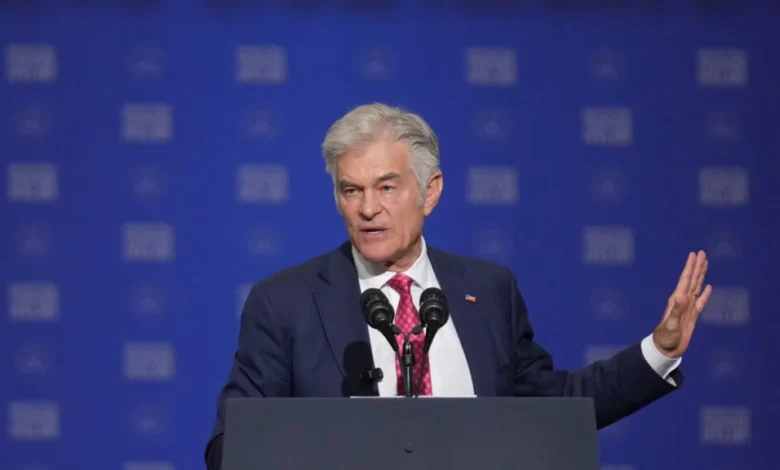
CMS Administrator Dr. Mehmet Oz, while justifying the deferrals, offered general examples of questionable billing patterns rather than concrete instances of fraud specific to California and Minnesota. He cited providers billing for multiple patients simultaneously or billing for services rendered after a beneficiary’s death as patterns that raised red flags for the agency. Dr. Oz also pointed to the rapid growth of California’s home care program as a source of concern. However, California officials have contested this assessment, explaining that the expansion of their home care services is a deliberate strategy aimed at keeping individuals out of more costly nursing home facilities, thereby potentially optimizing care delivery and managing costs more effectively.
A Pathway to Restored Funding: Documentation and Due Process
Health Secretary Kennedy and CMS Administrator Oz both emphasized that the flow of federal funding could be reinstated if the states provide sufficient documentation to prove the legitimacy of the payments in question. This suggests that the deferrals are not permanent penalties but rather a mechanism to ensure accountability and due diligence.
A representative for California’s Medicaid program had not immediately responded to a request for comment regarding the latest deferral. However, state officials have previously acknowledged their engagement with federal authorities to furnish the requested information. This ongoing dialogue indicates a willingness on California’s part to address federal concerns, provided they are presented with clear and actionable evidence.
Dr. Oz noted that Minnesota had already submitted documents to the federal government, which were undergoing a "reevaluation very carefully." This suggests that the federal government is indeed reviewing the submitted evidence and is open to reconsidering its actions based on new information. The process for Minnesota, which has been actively cooperating and implementing corrective measures, may serve as a precedent for how other states can navigate similar situations.
Further underscoring the administration’s commitment to robust oversight, Secretary Kennedy indicated an intention to expand the authority to exclude providers from participating in Medicaid, Medicare, and other federal health programs. Traditionally, this power has been vested solely with the Office of the Inspector General within the Department of Health and Human Services (HHS). Granting this authority to CMS could streamline the process of removing problematic providers and enhance the government’s ability to prevent fraudulent activities at the point of service.
HHS Inspector General Thomas March Bell commented on this potential expansion, stating, "This is going to be a full force multiplier. It’s going to create additional momentum, and it’s going to exclude additional bad actors." This proposed change reflects a broader strategy to empower agencies and create a more unified front against healthcare fraud.
The deferral of over $1 billion in Medicaid payments to California and Minnesota marks a significant escalation in the Trump administration’s efforts to combat healthcare fraud. While the administration frames these actions as a necessary step to protect taxpayer dollars and ensure program integrity, state officials in California and Minnesota have voiced strong objections, citing a lack of transparency, potential political motivations, and the detrimental impact on vulnerable populations. The effectiveness and fairness of this proactive approach will likely be judged by the administration’s ability to provide clear evidence of fraud, engage in transparent communication with states, and ensure that legitimate care for Medicaid beneficiaries is not unduly disrupted. The coming months will be crucial in determining whether this strategy leads to a more efficient and secure Medicaid program or exacerbates existing tensions between federal and state governments in managing this vital public health service.