New EU sanctions ‘hitting Putin where it hurts most’ in ‘largest round’ of listings, foreign policy chief Kallas says


The European Union has enacted its 21st package of sanctions against Russia, hailed by EU foreign policy chief Kaja Kallas as the "largest round in four years" and designed to inflict maximum economic pain by "hitting Putin where it hurts most." This significant intensification of economic pressure unfolds as Brussels simultaneously delivers a landmark antitrust fine against Google, while Ukraine grapples with internal political turmoil centered on President Volodymyr Zelenskyy’s recently dismissed defence minister. Concurrently, a rare high-level diplomatic engagement between the United States and Russia in Manila underscored the persistent chasm in achieving peace in Ukraine, even as Washington signals a broader redirection of its strategic focus.

EU Unleashes Sweeping New Sanctions on Russia’s War Economy
The latest punitive measures, formally agreed upon by EU ambassadors after protracted and often "heated discussions," represent a concerted effort to cripple Russia’s capacity to finance and sustain its full-scale invasion of Ukraine. Kaja Kallas, articulating the package’s strategic intent, stated unequivocally that the sanctions aim to sever the "financial lifelines" upon which Russia’s war machine depends. This 21st package is particularly expansive, encompassing a staggering 218 new listings that target various critical elements of Russia’s economic and military infrastructure.

The comprehensive sweep of these sanctions extends to Moscow’s financial system, with over a hundred banks and crypto operators now facing intensified restrictions. This move aims to further isolate Russia from the global financial network and thwart its attempts to utilize digital currencies for illicit transactions or sanctions evasion. Beyond finance, the energy sector, a cornerstone of Russia’s revenue, is also severely impacted. The package targets several oil refineries located in both Russia and its steadfast ally Belarus, directly undermining their operational capabilities and reducing their contribution to the war effort.
A significant new focus is the targeting of Russia’s "shadow fleet," a clandestine network of aging vessels often operating under opaque ownership to circumvent international oil sanctions. Over 40 such vessels have been identified and listed, a strategic move to disrupt Russia’s illicit oil trade and enforce the existing oil price cap more effectively. Furthermore, the sanctions explicitly address Russia’s continued and "relentless attacks on civilians, infrastructure and cultural heritage" in Ukraine. To counter this, more than 50 military-industrial entities have been listed, including key actors involved in the production of Russia’s long-range drones, which have been instrumental in devastating strikes across Ukrainian cities.

European Commission President Ursula von der Leyen lauded the adoption of the package, emphasizing its role in "continuing to weaken the economic foundations of Russia’s war effort." She elaborated on additional key components, including the addition of 32 more Russian banks to the EU’s transaction ban list and, crucially, the freezing of the oil price cap adjustment for an additional year. This proactive measure aims to prevent Russia from benefiting from any potential surge in global oil prices, especially in the wake of recent geopolitical events, such as the blockade of the Strait of Hormuz, which could otherwise create market volatility. Von der Leyen also highlighted an "important step" towards formally banning Russian combatants from entering the EU, a measure that received specific commendation for Ireland’s facilitative role in its agreement. These measures build upon previous sanctions, including those imposed just last week against individuals responsible for the abuse and killing of Ukrainian prisoners of war and civilian detainees, alongside tech companies enabling the Kremlin’s pervasive internet repression. The cumulative impact of these 21 packages reflects a determined and evolving EU strategy to systematically degrade Russia’s economic and military capabilities.
The Greek Concession: A Test of EU Cohesion

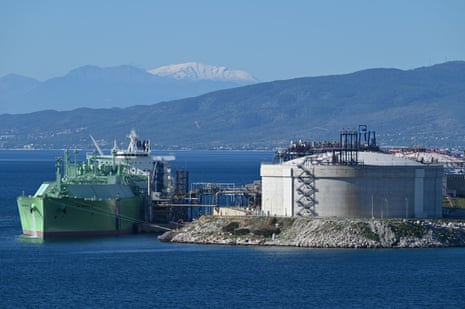
Despite the outward display of unity, the passage of the 21st sanctions package was preceded by intense internal negotiations and a notable concession to Greece. The agreement was finalized only after Athens successfully secured a one-year exemption from an earlier EU sanctions measure. This carve-out permits Greek shipping companies to transport liquefied natural gas (LNG) to non-EU countries, provided the contracts for such transport were signed prior to Russia’s full-scale invasion of Ukraine. The exemption specifically benefits Dynagas, a prominent Greek shipping firm specializing in the transportation of LNG from Russia’s Yamal fields.
This concession underscores the inherent challenges in forging a common foreign policy among 27 diverse member states, where national economic interests can occasionally diverge from broader geopolitical objectives. Greece had initially agreed to a phase-out of transporting Russian gas, a measure slated to take effect on January 1, 2027. However, Athens utilized its veto power, effectively stalling the entire 21st round of sanctions until its demands for this particular exemption were met. This tactic led to what insiders described as "heated discussions" among EU ambassadors throughout the preceding days, raising concerns among some about setting a "tricky precedent" that could potentially embolden other member states to seek similar carve-outs in future sanctions packages. When questioned about the Greek exemption during a midday briefing, European Commission deputy chief spokesperson Olof Gill refrained from direct comment, instead reiterating the established EU decision-making protocol: "the Commission proposes, the member states discuss, the member states adopt." This response, while procedurally correct, highlighted the delicate balance required to achieve consensus even when it entails compromises that might be viewed critically. The incident serves as a reminder of the intricate political dynamics within the EU, where unity, while paramount, is often achieved through complex negotiations and strategic concessions.

Google Hit with Landmark €890 Million EU Fine for Competition Breaches
In a parallel development reverberating across the global tech landscape, Brussels has levied a substantial fine of €890 million (£760 million) against tech giant Google for widespread breaches of online competition laws. This monumental penalty underscores the European Union’s assertive stance on regulating powerful digital platforms and enforcing fair market practices under its Digital Markets Act (DMA).
The European Commission, acting as the EU’s executive and antitrust enforcer, identified two primary areas where Google had violated the DMA. Firstly, the Commission determined that Google had abused its dominant position by systematically prioritizing its own proprietary services, such as shopping comparison and hotel booking platforms, within its search results. This practice, known as self-preferencing, was deemed to unfairly disadvantage rival services and stifle competition in critical digital markets. Secondly, Google was found to have infringed the DMA by implementing restrictive policies that prevented app developers from directing consumers towards more advantageous or cheaper offers available on external websites or alternative app stores. This "anti-steering" clause effectively locked users into Google’s ecosystem, limiting consumer choice and creating an uneven playing field for developers.
EU tech spokesperson Thomas Regnier emphasized the Commission’s unwavering commitment to fostering a vibrant and equitable digital economy. He stated, "In the EU, businesses have the right to compete fairly. Gatekeepers have the obligation to ensure a level playing field, and consumers the right to choose for cheaper alternatives offers." This fine is not an isolated incident but rather a continuation of the EU’s pioneering efforts to regulate the power of tech behemoths, building on previous multi-billion euro penalties against Google for similar antitrust violations related to Android, Shopping, and AdSense. The DMA, enacted to proactively prevent anti-competitive behavior by "gatekeepers," represents a significant legislative tool in this