Australia Grapples with Political Controversies, AI Regulation, and Defence as Pauline Hanson’s Comments Spark Debate

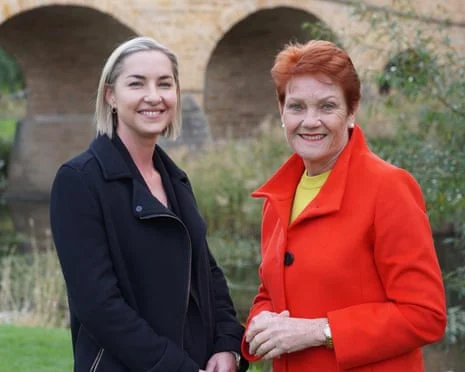
Australia is currently navigating a complex political landscape marked by contentious statements from a prominent figure, a national debate over school funding, the burgeoning challenge of AI regulation, and significant defence exercises, all while farewelling a media stalwart. One Nation leader Pauline Hanson’s recent remarks on the White Australia policy have ignited a fresh wave of controversy, prompting her daughter to claim they were "misinterpreted," even as Prime Minister Anthony Albanese criticized Hanson for "talking Australia down" on her European tour. Simultaneously, a powerful lobby group for independent schools is launching an aggressive campaign for increased government funding, and the federal government is poised to unveil stringent new rules for artificial intelligence in public sector decision-making.
Pauline Hanson’s White Australia Policy Comments and Subsequent Clarification
The political spotlight recently turned to One Nation leader Pauline Hanson following an interview on a podcast hosted by controversial far-right British activist Tommy Robinson. During the discussion, Hanson reportedly attributed contemporary migration issues in Australia to the cessation of the White Australia policy, a racially discriminatory immigration policy that was progressively dismantled from the mid-1960s to the early 1970s. Her comments quickly drew sharp criticism from across the political spectrum, reigniting a long-standing debate about Australia’s past immigration policies and their modern-day relevance.
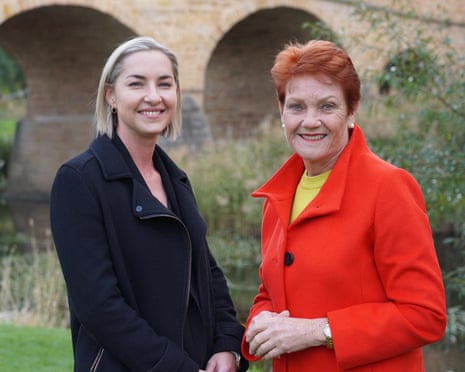
In response to the ensuing backlash, Lee Hanson, Pauline Hanson’s daughter, appeared on Sky News on Sunday night to defend her mother. Lee Hanson asserted that her mother’s comments were "misinterpreted" and taken "out of context" by the media and political opponents. She emphasized that Pauline Hanson "does not support it and she does not want it back," referring to the White Australia policy. Lee Hanson framed the media’s coverage as "snippets" and "clickbait," suggesting that both Labor and Liberal parties were exploiting the controversy for political gain. She also highlighted her mother’s perceived authenticity, noting that while Pauline Hanson "may not be the most eloquent person in the world," this quality also serves as a positive, distinguishing her from "polished politician[s]" who merely "speak the talking points."
This incident is not an isolated one in Pauline Hanson’s career, which has frequently been characterized by controversial statements on immigration, multiculturalism, and national identity. Her initial entry into politics in the 1990s was marked by strong anti-Asian immigration rhetoric, which laid the foundation for the One Nation party’s populist, nationalist platform. The White Australia policy, officially known as the Immigration Restriction Act 1901, was a cornerstone of Australian federal policy for decades, designed to restrict non-European immigration. Its abolition represented a pivotal shift towards a non-discriminatory, multicultural Australia. For many, any perceived lament for its end is deeply offensive and contradicts the nation’s contemporary values.
The controversy was further amplified by a Channel Seven ‘Spotlight’ special that followed Hanson during her European engagements. The program, which documented her meetings with figures such as former ‘Neighbours’ star Holly Valance, far-right activist Tommy Robinson, and UK Reform MP Robert Jenrick, inadvertently highlighted some awkward moments. These included notably slim crowds at her CPAC conference speech in London, a street tour in Luton with Robinson that nearly escalated into a physical confrontation, and Robinson’s questionable denial of previous attempts to enter Australia despite a documented criminal record leading to visa refusals. During the program, Hanson also expressed enthusiasm for a "mass deportation" policy for illegal residents in Australia, similar to proposals by Reform UK, stating, "I love it," and promising to plan its implementation if One Nation were to gain government power.
Despite the controversy and the Prime Minister’s criticisms, a Monday Newspoll indicated a surprising surge in support for One Nation, with its primary vote reportedly hitting 30%, matching Labor and surpassing the Coalition at 19%. This polling data suggests that while Hanson’s remarks may alienate some voters, they resonate strongly with a significant segment of the electorate, underscoring the persistent appeal of her populist message.

Prime Minister Albanese Criticises Hanson’s International Posture
Prime Minister Anthony Albanese weighed in on Pauline Hanson’s European tour, criticizing her for "talking the country down" while overseas. Speaking from Tiwi Island on Sunday, Albanese contrasted his approach to international representation with Hanson’s, emphasizing his pride in promoting Australia’s strengths on the global stage. "When I have the opportunity to represent Australia overseas, I talk Australia up," Albanese stated. "I don’t talk Australia down. I go as someone who’s proud to represent our nation and proud to talk about what we are as a nation."
The Prime Minister underscored the responsibility of all Australian representatives to project a positive image of the country abroad. "There’s nowhere you’d rather be than Australia and I think that it is up to our representatives, no matter where they stand in the parliament, when they’re overseas, to talk Australia up, not talk Australia down," he asserted. He lauded Australia as an "extraordinary nation" that the world envies, attributing this to the collective achievements of its people. Albanese’s comments reflect a common sentiment among mainstream political leaders that international engagement should be characterized by national pride and a focus on positive attributes, particularly when addressing foreign audiences or platforms that may host critical viewpoints. Hanson’s tour, which included attending the CPAC conference in London and holidaying with billionaire benefactor Gina Rinehart, was seen by many as platforming divisive rhetoric that could undermine Australia’s international standing.
Independent Schools Push for More Government Funding

The long-running debate over school funding has resurfaced with Independent Schools Australia (ISA), the peak body representing private schools, launching a significant campaign to increase government funding. The campaign, strategically timed ahead of Labor’s national conference this week, targets key federal electorates held by both Labor and the emerging ‘teal’ independents. Digital advertising, billboards, and bus posters emblazoned with the slogan "Parents are choosing, families are contributing, and policy needs to reflect that reality" are being rolled out in inner-city seats such as Brisbane and Griffith in Queensland, Melbourne, Mackellar and Wentworth in Sydney, and Curtin in Perth. The campaign also targets Goldstein, a seat previously lost by Liberal Tim Wilson to a teal independent, indicating a bipartisan pressure strategy.
ISA’s argument is straightforward: as more parents opt for independent schools, often making considerable financial sacrifices, government funding should commensurately increase to acknowledge their choices and contributions. This push comes despite existing data from the Australian Curriculum, Assessment and Reporting Authority (Acara) revealing a significant disparity in funding. In 2023, approximately 98% of private schools were funded above the Schooling Resource Standard (SRS)—the minimum funding level recommended by the Gonski review—while over 98% of public schools received funding below this standard. The Gonski Review of Funding for Schooling, commissioned in 2010, aimed to create a needs-based funding model to ensure all students had access to quality education. The persistent gap in SRS funding between public and private sectors remains a contentious issue in Australian education policy.
Graham Catt, ISA chief executive, articulated the campaign’s core message, stating, "Independent school families have been stereotyped for too long. They are parents and taxpayers making careful decisions about their children’s education, often under real financial pressure." He asserted that these families "deserve to be seen, they deserve to be heard and they deserve policy settings that recognise the choices they are already making." The campaign highlights the socio-economic diversity within independent school communities, seeking to counter perceptions that private school attendees are exclusively from affluent backgrounds and to garner broader public and political sympathy for increased funding. This initiative is likely to intensify the political debate over equitable education funding and will be a key discussion point at Labor’s upcoming national conference, where education policy is a perennial agenda item.
New National Plan to Regulate AI in Government Decision-Making
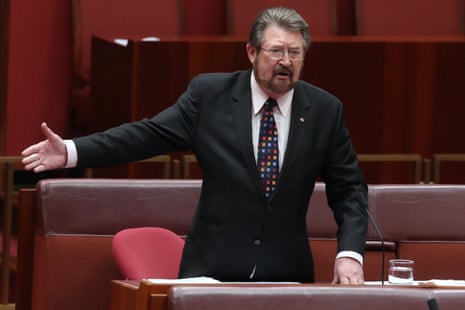
In a critical move reflecting growing concerns about technological governance, the Albanese government is set to introduce robust new national rules governing the use of artificial intelligence in automated decision-making by government departments and agencies. This comprehensive plan is expected to extend its reach to encompass broader consumer protections, workplace safety, and privacy safeguards, signifying a proactive approach to the rapid advancements in AI technology.
The impetus for these new regulations is partly rooted in past failures, most notably the illegal robodebt scheme. This ill-fated automated welfare recovery program, which operated between 2015 and 2019, unlawfully demanded billions of dollars from welfare recipients based on flawed income averaging data. The scheme was ultimately deemed illegal and caused immense financial and psychological distress to hundreds of thousands of Australians, serving as a stark cautionary tale about the unreliability and ethical pitfalls of poorly implemented automated processes in government. The robodebt saga underscored the critical need for human oversight, accountability, and transparency when technology is deployed in sensitive public service delivery functions.
As AI systems become increasingly sophisticated, capable of processing vast amounts of data and making complex decisions, fears have mounted that they could displace more human-led processes, potentially exacerbating issues of fairness, accuracy, and transparency. The new rules aim to pre-emptively address these concerns by ensuring that safety, ethical considerations, and human rights are embedded into AI processes from the outset. Attorney General Michelle Rowland will lead the development of these regulations, signaling the government’s commitment to a legally sound and ethically robust framework. This initiative comes at a time when major global AI developers, including Anthropic, OpenAI, Microsoft, and Google, are significantly expanding their presence and investment in Australia, making timely and effective regulation even more crucial. The government’s plan positions Australia as a forward-thinking nation in the global effort to govern AI responsibly, balancing innovation with public trust and protection.
Western Australia Police Launch Real-Time Facial Recognition Trial Amid Privacy Concerns

In a dramatic demonstration, Western Australia Police recently launched a real-time facial recognition trial that led to an immediate arrest, simultaneously sparking a fresh wave of debate over privacy. The incident unfolded live during a press conference held by WA Police Commissioner Col Blanch at Perth’s bustling Mirrabooka bus station. A camera mounted on a nearby marked police van, equipped with advanced facial recognition technology, was quietly scanning hundreds of faces per minute, cross-referencing them against a database of approximately 4,000 individuals wanted on outstanding warrants, registered child sexual abuse offenders, and missing persons.
Midway through the commissioner’s address to reporters on Thursday, July 2, the algorithm "pinged," signaling a match. Officers swiftly moved into the crowd and apprehended a woman wanted for failing to appear in court. When a reporter queried the commissioner about the real-time arrest unfolding behind him, Blanch calmly responded, "Been happening all week. I’d love to say I planned that but I think that’s exactly what the technology is… People are being arrested because they are wanted." The commissioner’s candid remarks underscored the operational effectiveness of the new technology, highlighting its potential to enhance public safety and law enforcement efficiency.
However, the trial has not been without its critics. Civil liberties advocates and privacy groups have voiced significant concerns about the potential for widespread surveillance and the erosion of individual privacy rights. The deployment of real-time facial recognition in public spaces raises fundamental questions about data retention, potential for misuse, algorithmic bias, and the scope of government surveillance without explicit consent. Critics argue that while the technology may assist in apprehending wanted individuals, its broader implications for a free and open society warrant rigorous public debate and robust legislative oversight to prevent dystopian outcomes. The trial exemplifies the ongoing tension between security imperatives and civil liberties in the digital age, a dilemma many jurisdictions worldwide are grappling with as surveillance technologies become increasingly sophisticated and pervasive.
Derryn Hinch, ‘The Human Headline,’ Remembered at State Funeral
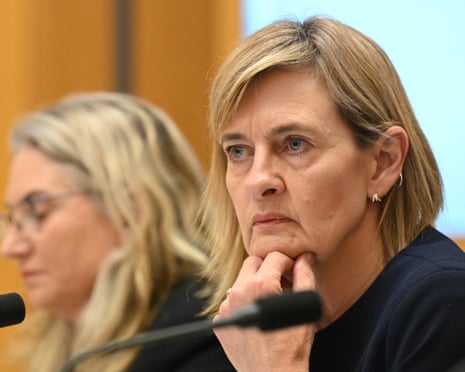
Australia is bidding farewell to one of its most colourful and controversial public figures, veteran broadcaster and former senator Derryn Hinch, who passed away on July 10 at the age of 82 after a prolonged battle with health issues. A state funeral, hosted by the Victorian government, is scheduled to be held this afternoon in Melbourne. The service will take place at the Timber Yard events space in Port Melbourne, with a notable attendance expected from the realms of politics, media, and public life. For those unable to attend, the ceremony will be livestreamed on the Victorian government website, allowing a wider audience to pay their respects.
The funeral program is set to feature tributes from Hinch’s close friends and former colleagues, including esteemed journalist Ray Martin, with 3AW’s Darren James serving as the master of ceremonies. Hinch, famously dubbed "the human headline" for his knack for generating news and courting controversy, led a life that was anything but ordinary. His career spanned decades in journalism and broadcasting, during which he became renowned as a fearless interrogator and a staunch advocate for victims’ rights, particularly in cases involving child sex offenders. His activism often led to legal clashes, including multiple instances of imprisonment for contempt of court, which only amplified his public profile and reinforced his image as a crusader.
Beyond media, Hinch ventured into politics, serving as a Senator for Victoria from 2016 to 2019, where he continued his advocacy for justice reform and transparency. His personal life was equally public, marked by multiple marriages and several serious health challenges, including liver transplants, which he openly discussed, demonstrating his characteristic candour. The Guardian’s obituary described his life as featuring "imprisonment, politics, a rags-to-riches twist, multiple marriages and several serious health challenges, all played out in the public sphere." Tributes poured in from across the political divide following his death, including from Prime Minister Anthony Albanese and Opposition Leader Angus Taylor, underscoring the bipartisan recognition of his unique and impactful career. A statement from the Victorian government praised Hinch for living a life "defined by his principles and an unwavering commitment to stand up for what he believed was right," a sentiment echoed by many who knew him or followed his career.
ASIC Achieves Record $830 Million in Civil Penalties
Australia’s corporate watchdog, the Australian Securities and Investments Commission (ASIC), has reported a landmark year, securing an unprecedented $830 million in civil penalties from courts over the past financial year. This figure represents a significant increase, exceeding the total amount of penalties won by ASIC in the preceding six years combined, which averaged approximately $137 million annually from 2019-20 to 2024-25. The record sum underscores a heightened period of enforcement activity by the regulator, signaling a more aggressive stance against corporate misconduct.
A substantial portion of this record total includes the largest penalty ever awarded in an ASIC case: a staggering $300 million fine against the collapsed foreign exchange broker Union Standard in June. This particular case highlights ASIC’s focus on complex financial misconduct and its capacity to pursue significant penalties to deter illicit activities in the financial sector. Beyond direct penalties, ASIC’s enforcement actions are projected to result in $643.5 million worth of remediation, refunds, and other payments to tens of thousands of affected customers and investors. This commitment to restitution demonstrates ASIC’s dual focus on punishment and ensuring that victims of corporate malfeasance are compensated.
In addition to court-imposed civil penalties, the regulator also issued $12 million worth of infringement notices, a doubling of the amount from the previous financial year (2024-25). These notices provide a swifter enforcement mechanism for less severe breaches. Sarah Court, Chair of ASIC, articulated the commission’s strategic objectives: "Our enforcement work is focused on misconduct that causes real harm and we are delivering results, forcing change, strengthening accountability and returning money to consumers and investors." The record penalties not only serve to hold corporations accountable but also contribute to the federal budget, indirectly benefiting the public. This robust enforcement period is expected to have a ripple effect, encouraging stricter adherence to corporate governance and consumer protection laws across Australian industries.
Australia Hosts Major International Air Combat Exercise: Pitch Black 2026

In a display of regional defence cooperation and strategic readiness, Prime Minister Anthony Albanese officially launched Exercise Pitch Black 2026 in Darwin. This biennial event stands as Australia’s premier international air combat exercise, drawing together military forces from across the Indo-Pacific and beyond for three weeks of intensive training. Over 100 aircraft and approximately 2,500 personnel from the Royal Australian Air Force (RAAF) and 20 other nations are participating in training activities and complex air combat scenarios across the skies of Australia’s northern territories.
The exercise is strategically designed to strengthen international partnerships and enhance interoperability among participating air forces. Training operations are conducted from key RAAF Bases, including Darwin and Tindal in the Northern Territory, and Amberley in Queensland, leveraging Australia’s vast airspace for realistic combat simulations. The wide array of nations involved in Pitch Black 2026 underscores its significance as a platform for multilateral defence engagement. Aircraft contributions hail from the United States, Japan, Papua New Guinea, Indonesia, the Philippines, Thailand, South Korea, India, Singapore, Germany, France, and Spain. Additionally, embedded personnel from the United Kingdom, New Zealand, Fiji, Canada, Brunei, Malaysia, Finland, and Sweden are participating, further broadening the scope of collaboration.
Prime Minister Albanese emphasized the critical role of such exercises in reinforcing regional security. "Australia is strongest when we work closely with our partners," he stated at the launch. "Exercise Pitch Black strengthens those partnerships and demonstrates Australia’s commitment to working closely across our region to support peace, stability and security." The exercise provides an invaluable opportunity for air forces to share tactics, techniques, and procedures, refine command and control processes, and build mutual understanding and trust. In an increasingly complex geopolitical environment, particularly in the Indo-Pacific, these high-end training exercises are crucial for maintaining regional stability and ensuring collective defence capabilities against emerging threats. The participation of a diverse group of nations highlights Australia’s central role in fostering a secure and cooperative regional defence architecture.