Andy Burnham Unveils First Major Policy as Prime Minister: £850 Million Electricity Bill Tax Cut Amidst Funding Scrutiny and Cabinet Reshuffle

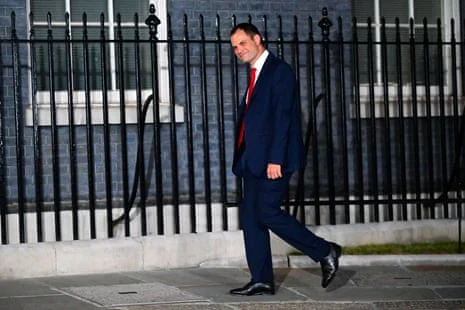
Newly appointed Prime Minister Andy Burnham has initiated his premiership with a significant economic intervention, announcing an £850 million tax cut on household electricity bills, effective from October. This measure, aimed at alleviating persistent cost-of-living pressures, is projected to reduce average annual electricity bills by £45. The announcement, made on Burnham’s second day in office, signals a clear prioritization of immediate financial relief for families across the United Kingdom. However, the policy has immediately drawn criticism regarding its funding mechanism and perceived inadequacy, setting an early contentious tone for the new administration.
The £850 Million Energy Relief Package

The cornerstone of Prime Minister Burnham’s inaugural policy is the removal of Value Added Tax (VAT) from electricity bills, a move anticipated to inject £850 million back into household budgets. This cut, scheduled to take effect in October, aims to provide tangible "breathing space" for millions grappling with elevated living expenses. Speaking from Downing Street, Burnham declared, "I said I wanted to give people breathing space, and that’s what I’m announcing on my second day as prime minister. We’re taking immediate action to cut taxes on energy bills, put more money in people’s pockets and bring back hope."
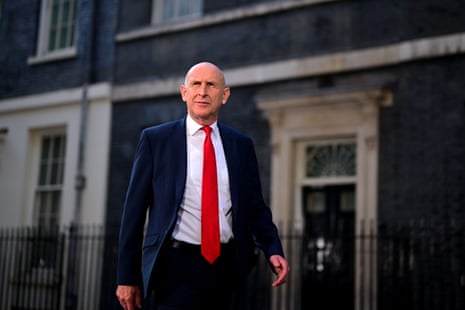
The newly appointed Chancellor of the Exchequer, John Healey, echoed this sentiment, asserting that the tax cut would "bring down inflation while supporting households in every postcode." This statement underscores the cabinet’s intention to address economic stability while delivering targeted support.
A specific consideration arises for Northern Ireland due to its post-Brexit status. As EU VAT rates still apply to electricity bills in the region, the direct tax cut will not extend there. Instead, the Stormont executive will receive dedicated funding from Westminster to implement an equivalent level of support, ensuring parity for Northern Irish households.
Funding Controversy and Opposition Scrutiny
Despite the positive reception from some quarters, the policy’s funding has quickly become a focal point of opposition scrutiny. Downing Street stated the £850 million cost would be partially offset by scrapping Keir Starmer’s digital ID scheme, estimated to cost £1.8 billion over three years. However, this claim was swiftly challenged by former officials from the previous administration.
Darren Jones, Starmer’s erstwhile chief secretary, who was among the many loyalists purged from the cabinet, publicly questioned the funding rationale. In an X post, Jones, formerly the Chancellor of the Duchy of Lancaster, highlighted, "Good news that VAT will be cut on electricity bills. It’s a simple way for families to save a few quid, and to mechanically help to keep inflation that little bit lower. But the DigitalID program was unfunded. The government will have to set out how it will pay for its new policies at the budget." This sentiment was reinforced by the shadow defence secretary, James Cartlidge, who, speaking on Times Radio, cited the Office for Budget Responsibility’s previous assessment that the digital ID scheme itself was unfunded, thus questioning the viability of using its "savings" to finance the VAT cut.
Further criticism came from across the political spectrum. Liberal Democrat leader Ed Davey dismissed the policy as "coming apart at the seams" and insufficient to address the scale of the cost-of-living crisis. Davey advocated for an "essential energy guarantee," proposing a discounted rate for 50% of typical household energy consumption, and called for an immediate budget to scrutinize the government’s financial plans properly. Green party leader Zack Polanski also welcomed the move as a "start" but stressed it "won’t nearly" be enough for struggling families, particularly facing "another tough winter" amidst energy price volatility linked to global conflicts.
Conservative leader Kemi Badenoch also weighed in, questioning how Burnham’s new policies would be funded without increasing taxes or borrowing, aligning with the "unfunded programme" critique. Badenoch proposed her party’s "cheap power plan," funded by "scrapping net zero policies" and increasing North Sea drilling, which she claimed would cut bills by £200 annually.
Jonathan Reynolds, the new business secretary, defended the government’s approach on BBC Radio 4’s Today programme, calling the VAT cut "a statement of priorities" and a "straightforward switch spend" from the digital ID program. He emphasized it was a "legitimate decision" that would be welcomed by the British public.

A Reshaped Cabinet for a New Era
Burnham’s policy announcement comes amidst a dramatic reshuffling of the cabinet, undertaken swiftly after his ascent to Prime Minister. The appointments, which continued late into Monday night, saw a significant number of Keir Starmer loyalists removed, including high-profile figures such as Rachel Reeves, David Lammy, Steve Reed, and Hilary Benn. Rachel Reeves, notably, was reported to have declined an alternative role, opting to return to the backbenches. This decisive purge consolidates Burnham’s authority and signals a distinct shift in the Labour Party’s direction.
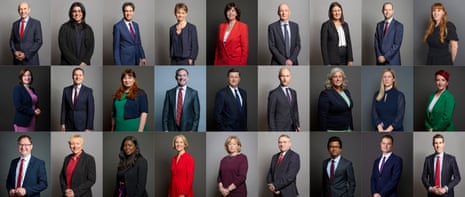
The new cabinet, which will hold its first official meeting at 12:30 pm today, is notable for its record number of women. Of the 23 full cabinet members, including the Prime Minister, 12 are women and 11 are men, surpassing Starmer’s previous record of 11 women in his first cabinet in July 2024. Key appointments include:
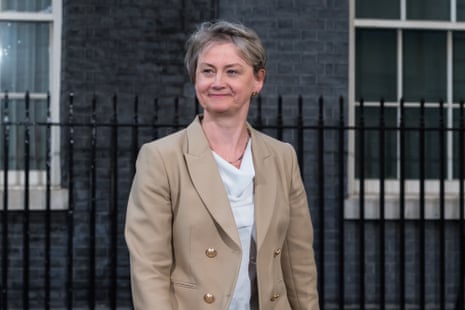
- Chancellor: John Healey
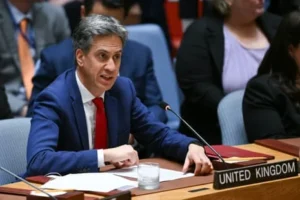
- Foreign Secretary: Ed Miliband
- Home Secretary: Shabana Mahmood
- Health Secretary: Yvette Cooper
- Work and Pensions Secretary: Pat McFadden
- Housing Secretary: Angela Rayner
- Business Secretary: Jonathan Reynolds
- Education Secretary: Lucy Powell
- Equalities Minister: Bridget Phillipson
- Culture Secretary: Lisa Nandy
- Defence Secretary: Wes Streeting
- Justice Secretary: Alex Norris
- Environment Secretary: Angela Eagle
- Energy Secretary: Miatta Fahnbulleh
- Scottish Secretary: Douglas Alexander
- Welsh Secretary: Stephen Kinnock
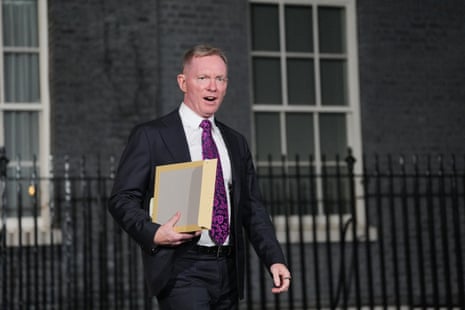
- Northern Ireland Secretary: Chris Bryant
- Transport Secretary: Heidi Alexander
- Chancellor of the Duchy of Lancaster: Louise Haigh
Regional Focus and Devolved Nations
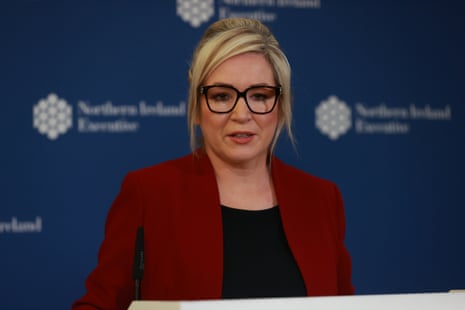
A defining characteristic of Burnham’s early actions has been his emphasis on a "new politics" rooted in collaboration and deeper devolution across the UK. In calls with the leaders of Scotland, Wales, and Northern Ireland – First Ministers John Swinney, Rhun ap Iorwerth, and Michelle O’Neill (and Deputy First Minister Emma Little Pengelly), respectively – Burnham stressed his focus on "practical measures, not constitutional changes like further referendums." He committed to working in partnership to "drive deeper devolution to all parts of the United Kingdom to get growth going."
The appointment of Chris Bryant, a former trade minister and Anglican priest, as the new Northern Ireland Secretary, replacing Hilary Benn, highlights immediate challenges. Bryant will be tasked with navigating the complex "Troubles bill," which seeks to replace the contentious Legacy Act introduced by the previous Conservative government. Unionist concerns about a potential Nigel Farage-led UK government in the future and its implications for Sinn Fein’s calls for a border poll on a united Ireland also loom large. Political figures in Northern Ireland, Scotland, and Wales have voiced apprehension that an "English nationalist rump" could inadvertently hasten the break-up of the UK. Burnham has pledged to visit all three devolved nations "shortly."

Economic Strategy and Broader Policy Signals
Beyond the headline VAT cut, reports indicate Burnham’s government is preparing further economic interventions. Huffpost UK suggests plans to announce a 20% reduction in business rates for the hospitality sector "within days," along with a £2 cap on bus fares, potentially as early as tomorrow. These moves reflect Burnham’s stated mission to support small towns and cities, target underinvestment, and devolve power, a strategy he championed as Mayor of Greater Manchester. During his Makerfield by-election campaign, he acknowledged criticisms of government policies toward small businesses, promising to address business rates. The plan for hospitality, leisure, and retail would also raise the threshold for business rates for the first time since 2017, potentially exempting many smaller independent businesses.
In another significant policy pledge, Burnham committed to ending rough sleeping in England, allocating an additional £340 million over three years. This initiative aims to replicate his earlier homelessness schemes in Greater Manchester. While welcomed by homelessness campaigners, critics point to a four-year rise in street homelessness under his mayoral tenure in Greater Manchester, raising questions about the effectiveness of replicating past strategies without addressing underlying systemic issues.
The financial markets have also reacted to the new cabinet. Shares in defence companies experienced a sharp rise following John Healey’s appointment as Chancellor, indicating investor expectations of increased defence spending under his leadership, given his previous role as defence secretary.
International Receptions and Geopolitical Landscape
The change in leadership in the UK has drawn international attention. European Council President António Costa confirmed a "good" phone call with Prime Minister Burnham, where they agreed to "further strengthen" EU-UK relations and continue cooperation in supporting Ukraine. Discussions also touched upon "common geopolitical challenges facing Europe," which could encompass a range of issues, including soaring energy prices exacerbated by the US-Israel war on Iran, Europe’s relationship with Washington, the future of NATO, and the rising tide of hybrid warfare and national populism.
Burnham, in a recent opinion piece for The Times, had affirmed his support for Ukraine, NATO, and the UK’s nuclear deterrent, emphasizing the "critical" nature of the UK’s relationship with the US for defence and security. While these stances align with his predecessor, the appointment of Ed Miliband as Foreign Secretary could signal shifts in other foreign policy areas, such as a potentially stronger stance against Israel’s actions in Gaza and the West Bank, and a pathway towards restoring foreign aid.
International media has largely focused on Burnham’s "regional persona" and the "huge task" awaiting him. France’s Public Sénat described him as coming from "the working class of the north of England" and cultivating an "everyman" image. Italy’s Corriere della Sera, while acknowledging the UK’s "profound unease, instability and social resentment," expressed skepticism about Burnham’s economic vision, suggesting his plans for nationalization and reindustrialization might be "backward-looking" and rooted in a past marked by "energy rationing, rubbish in the streets and IMF bailouts." The Irish Times noted that while Burnham might be "a breath of fresh air," the fundamental challenges that led to Starmer’s downfall – including unmet demand in defence, housing, welfare, and social care – remain.
The Road Ahead: Challenges and Priorities

Andy Burnham’s first days as Prime Minister have been marked by a flurry of activity, from a significant policy announcement to a sweeping cabinet overhaul. While the electricity bill tax cut offers immediate relief, its long-term funding remains a contentious issue. The new administration faces the immediate challenge of justifying its fiscal plans and demonstrating how its ambitious pledges – on energy, business support, and homelessness – will be sustainably financed without compromising other critical public services or the nation’s financial stability.
The reshaped cabinet, with its record female representation and strong northern contingent, reflects Burnham’s vision for a more regionally focused, collaborative government. However, this regional emphasis will need to carefully navigate potential perceptions of a north-south divide and the complex demands of the devolved administrations, particularly concerning constitutional questions. Internationally, Burnham must quickly establish his diplomatic credentials and articulate a clear foreign policy vision, balancing continuity with potential shifts on critical global issues. The coming months will test the new Prime Minister’s ability to translate his stated intentions into concrete, effective policies that address the multifaceted challenges facing the United Kingdom.