UN Chief Sounds Alarm as Middle East Teeters on "Edge of Unimaginable" Amid Escalating US-Iran Conflict and Regional Crises

The United Nations Secretary-General, António Guterres, issued a stark warning to the Security Council on Thursday, declaring that the Middle East is being pushed to "the edge of the unimaginable" as the region grapples with a spiraling conflict. His grave assessment comes amidst intensifying fears over the trajectory of the ongoing confrontation between the United States and Iran, which has drawn in multiple regional actors and triggered significant economic and humanitarian fallout. "The situation is getting out of control. It is teetering on the edge of the unimaginable. The region is being pulled into an ever-widening circle of confrontation. One crisis feeds another. One escalation triggers the next," Guterres stated, emphasizing how "political objectives are becoming increasingly obscured by the confrontation itself."
A Cascade of Escalation and US Threats
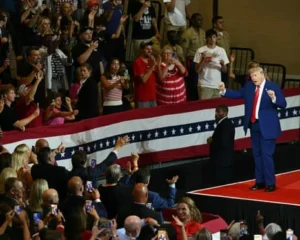
Guterres’s alarming pronouncement followed a series of aggressive statements and military actions that underscored the deepening crisis. US President Donald Trump announced he was nearing a decision on whether to unleash "a massive attack" against Iran, promising an offensive "bigger than ever before." Speaking to Axios, Trump asserted that Iran "hasn’t received enough pain yet" and implied that such an operation would not require allies, stating Israel "would join in two minutes if I ask them to," but adding, "we don’t need anybody." This threat came after Trump had previously warned on Truth Social that any Iranian attack on a ship in the Strait of Hormuz would be met with retaliatory strikes on "ONE BRIDGE OR POWER PLANT, including those located next to, or in, the Capital City of Tehran." Such rhetoric signals a potential broadening of targets beyond military infrastructure, raising concerns about civilian casualties and the legality of such actions under international law.

The US military has already been conducting its 12th consecutive night of strikes against Iranian targets, with Central Command (Centcom) confirming attacks on "maritime capabilities, missile and drone storage facilities, coastal surveillance sites, and air defense assets." These strikes, Centcom stated, aim to "further degrade Iran’s ability to attack civilian mariners and commercial vessels." The sheer scale and persistence of these operations highlight the aggressive posture adopted by the Trump administration in its bid to curb Tehran’s regional influence and maritime activities.
Iran’s Defiant Stance and Regional Retaliation
Iran has met the escalating US pressure with defiance and counter-threats. Iranian Foreign Minister Abbas Araghchi warned of an "eye for an eye" response, stating on social media, "Any aggression against Iran, including our infrastructure, will compel a powerful and decisive response. Those who contribute to such aggression, whatever the kind of support, will also be considered as legitimate targets." This warning underscores Iran’s determination to retaliate and potentially broaden the scope of the conflict.
The human cost of these strikes became tragically apparent with reports from Iran’s Students News Network, citing a security official, that two people were killed and eleven wounded in a US missile attack on the Shalamcheh border crossing with Iraq in southwestern Iran. This crossing is a vital route for Iranian pilgrims traveling to holy sites in Iraq, particularly for the annual Arbaeen gatherings, which can involve over 20 million pilgrims. Gregory Brew, a senior analyst at the Eurasia Group, questioned the strategic relevance of striking such a crowded civilian area, noting it was "hard to see what, if any, relevance this has to degrading Iranian capabilities in the strait."

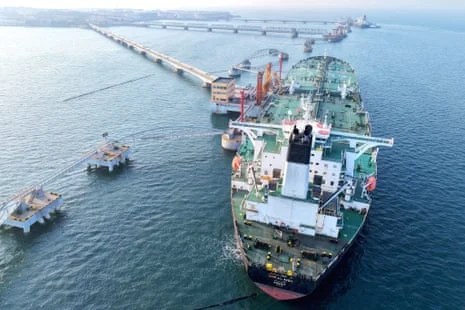
Further complicating the maritime situation, Iran’s Islamic Revolutionary Guard Corps (IRGC) claimed it had stopped three oil tankers from passing through the Strait of Hormuz. The IRGC stated that these vessels, allegedly "provoked" by the US military, were attempting to navigate a "mine-laden route" south of the strait, resulting in one exploding and catching fire, forcing the others to turn back. The IRGC asserted that "the Strait of Hormuz is under our control" and warned that any ship attempting passage without coordination with Iran "will suffer the same fate." This directly contradicts the US military’s assertion that "Iran does not control the Strait of Hormuz" and that the waterway "remains open for transit regardless of IRGC threats and attacks."
Concurrently, Kuwait’s state news agency reported that the Kuwaiti army’s air defenses were intercepting "hostile missile and drone attacks from Iran," indicating a direct expansion of hostilities to other Gulf states.
The Red Sea Front and Houthi Actions
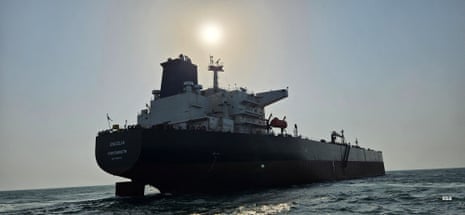
A significant development in the escalating crisis is the opening of a new front in the Red Sea. Yemen’s Iran-backed Houthi militia claimed responsibility for missile and drone strikes on two Saudi oil tankers, the Encelia and the Layla, in the Red Sea. Saudi state news agency SPA confirmed that the Encelia, a Saudi-owned vessel, was targeted while sailing, causing a fire at its bow, though all crew members were reported safe. The Houthis had previously declared a maritime blockade of Saudi Arabia, a move that US officials warn could significantly widen the US-Iran conflict and strain American military resources.
US Secretary of State Marco Rubio criticized the Houthis, suggesting they were "snookered into this thing by the Iranians." Speaking in Manila, Rubio stated, "The Houthis largely were smart and stayed out of all this throughout the conflict, but they now apparently have gotten themselves suckered into this, going after Saudi Arabia and their ships." He urged de-escalation, but his comments also highlighted the perceived proxy nature of the Houthi involvement.
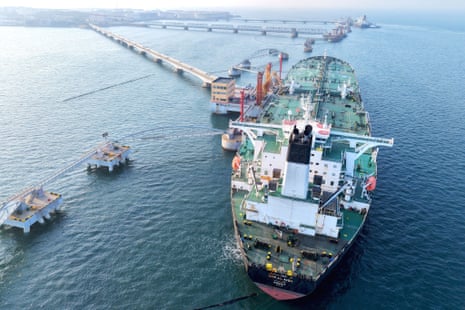
Adding a nuanced perspective to the blockade, two very large Chinese crude carriers, the Singaporean-flagged VLCC Xin Long Yang and the Chinese-flagged VLCC Cosnew Lake, successfully exited the Red Sea via the Bab el-Mandeb strait on Thursday, carrying a combined 4 million barrels of Saudi Arabian oil. This transit, despite the Houthi blockade and attacks on other Saudi vessels, suggests that the Houthis might be exercising selectivity in their targets, potentially based on flag or destination, rather than enforcing a blanket embargo. This could indicate a strategic calculation to avoid antagonizing major global powers like China.
The Gulf Cooperation Council (GCC), led by Secretary-General Jasem Mohamed Albudaiwi, swiftly condemned the Houthi targeting of the Encelia, characterizing it as "an extension of the hostile behavior pursued by the militia and a flagrant violation of international law." Albudaiwi warned that the Houthis’ "continued threats to target commercial vessels and jeopardize international navigation lanes constitute a dangerous escalation" in the region, underscoring the international concern over maritime security.
Diplomatic Fallout and Economic Repercussions

The escalating tensions have triggered significant diplomatic and economic repercussions across the globe. The United Kingdom announced a temporary withdrawal of diplomatic staff from Iran on Wednesday, citing "regional tensions" and an "unpredictable security situation." Germany followed suit, with its military announcing the withdrawal of two vessels from the Red Sea. The US State Department issued warnings to Americans living in the region, cautioning about potential flight cancellations. These actions reflect a growing apprehension among international powers regarding the safety of their personnel and assets in the volatile Middle East.
The economic impact has been immediate and severe, particularly in global energy markets. Brent crude oil prices surged past the symbolic $100 per barrel mark for the first time since May, rising by more than 7% on Thursday alone. This spike, directly attributed to the Houthi attacks on Saudi tankers and the broader disruption to oil supplies through critical choke points like the Strait of Hormuz, threatens to intensify global inflation. Christine Lagarde, President of the European Central Bank, warned that "the energy shock could intensify further," fueling speculation of an imminent eurozone interest rate hike. German Defence Minister Boris Pistorius also expressed concern over "dire consequences" for oil-importing economies and saw no signs of a ceasefire or peace.
While many nations face economic strain, major oil and gas companies have seen their profits soar. French energy giant TotalEnergies reported a doubling of net profit to $5.4 billion in the second quarter, while Norway’s state oil company Equinor saw its profits nearly double to $11.5 billion in the same period. These companies benefited from increased production and soaring prices as global oil flows were disrupted, prompting criticism from environmental groups like Uplift, which highlighted the disparity between corporate profits and public struggles with energy bills.
Even regional economies are feeling the pinch. Dubai, a major tourism hub, has initiated a "Dubai Invite" scheme, offering residents benefits worth over 3,000 UAE dirhams (approximately £610) for attracting friends and family to visit. This initiative aims to revive tourist numbers, which have plummeted since the city was drawn into the "US-Israel war on Iran," illustrating the broad economic ripple effects of the conflict.

Geopolitical Chessboard: Nuclear Deals and Regional Alliances
Amidst the escalating military confrontation, significant geopolitical maneuvering continues to unfold. The United States and Saudi Arabia announced a landmark nuclear agreement that could allow the kingdom to establish a civilian nuclear program using American technology and expertise. While the full details remain undisclosed, concerns have been raised across the Middle East and in Washington regarding Saudi Arabia’s potential capability to enrich uranium domestically, fearing it could trigger a regional nuclear arms race.
President Trump clarified that this deal is "totally subject to Saudi Arabia joining the very respected and successful Abraham Accords," which normalize diplomatic ties with Israel. White House press secretary Karoline Leavitt reiterated this condition, stating, "He has said, if they don’t join the Abraham accords, the deal is off." Israeli Prime Minister Benjamin Netanyahu hailed this prospect as "an historic leap forward for peace in the Middle East." However, it later emerged that Trump had not discussed this new condition directly with Saudi Arabia, adding a layer of uncertainty to the complex negotiations. Saudi Arabia has historically resisted normalization with Israel without demonstrable progress on Palestinian rights and statehood, making this condition a significant hurdle.
Internal Israeli Tensions and US Domestic Dissent
Further complicating the regional landscape, Israel’s far-right National Security Minister Itamar Ben Gvir led hundreds of Israelis, including settlers, into the al-Aqsa compound in Jerusalem. This action, accompanied by his assertion that "Jews are praying and feel that they are the rightful owners here," represents a breach of the decades-old status quo governing the holy site, where Jewish prayer is restricted to Muslim worshippers. The Palestinian Ministry of Religious Endowments and Affairs vehemently condemned Ben Gvir’s actions, stating, "These provocative practices, emanating from the highest political levels of the occupying government, seek to ignite a religious war throughout the entire region." This incident highlights the volatile internal dynamics within Israel and Palestine, which can easily be inflamed by broader regional conflicts.
Domestically, President Trump faces growing dissent over his Iran policy. For the second time, the US House of Representatives passed a war powers resolution directing him to withdraw US military forces from the conflict with Iran. The resolution, proposed by Democrat Pramila Jayapal, passed with a 214-208 vote, including support from four Republicans. While the Trump administration argues such measures are unconstitutional and the resolutions are largely symbolic, their passage represents a significant bipartisan rebuke of the president’s decision to engage militarily with Iran without explicit congressional authorization. Greg Meeks, the top Democrat on the House foreign affairs committee, explicitly accused the president of "violating the law" in the debate preceding the vote.
A Region on the Brink
The collective weight of these developments paints a grim picture of a Middle East increasingly consumed by a widening and unpredictable conflict. The UN Secretary-General’s warning resonates deeply, as the region’s interconnected crises continue to feed one another, pushing millions to the brink of humanitarian catastrophe. The blurring of political objectives amidst constant escalation, the economic fallout impacting global markets and local livelihoods, and the growing anxieties among ordinary citizens underscore the urgent need for de-escalation and a return to diplomatic solutions. However, with each new strike, threat, and retaliatory action, the path to peace appears increasingly distant, leaving the Middle East on a perilous "edge of the unimaginable."