Utah Inaugurates Green River Energy Center: A Landmark in the State’s Renewable Energy Transition

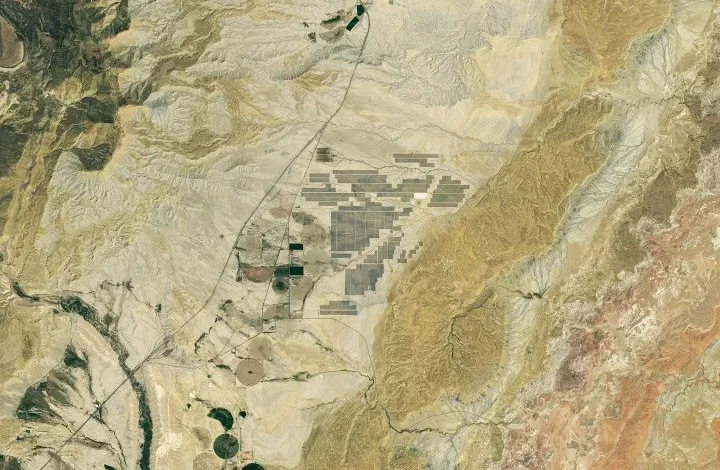
The vast, sun-drenched expanse of central Utah’s Castle Valley, historically synonymous with the deep veins of coal beneath its rugged terrain, marked a pivotal shift in its energy narrative in June 2026 with the commissioning of the Green River Energy Center. This monumental solar power and integrated battery storage facility, captured prominently in a Landsat 8 image featured as the "Image of the Day" on July 24, 2026, stands as a testament to Utah’s accelerating pivot towards sustainable energy sources. Located approximately 130 miles (210 kilometers) southeast of Salt Lake City, the facility redefines the energy landscape of a region long defined by its fossil fuel legacy.
A New Era for Castle Valley’s Energy Legacy
For well over a century, the Wasatch Plateau slopes bordering Castle Valley have been active sites for coal mining operations, dating back to the late 1800s. The region’s economic and cultural identity has been inextricably linked to coal, which Utah even designated as its state rock. This deep historical reliance established a robust energy infrastructure, including critical transmission lines, designed to transport power from coal-fired plants to urban centers. The Green River Energy Center ingeniously leverages this existing infrastructure, connecting its modern renewable output to the grid via lines originally built for coal, thereby bridging the past and future of Utah’s energy production.
Developed by RPlus Energies, the Green River Energy Center is a colossal undertaking. It features nearly one million solar panels meticulously arranged across several square miles of what was previously undeveloped land, complemented by approximately 500 advanced battery storage units. The facility boasts a substantial 400 megawatts (MW) of solar-generating capacity, paired with an equally impressive 400 MW of battery storage. This dual capacity places it among the largest integrated solar and storage projects in the western United States and aligns with national trends, as the U.S. Energy Information Administration (EIA) projected numerous utility-scale solar and battery storage projects to come online across the country in 2026.
The facility is slated to become a critical supplier of electricity for Salt Lake City and various other communities throughout Utah. Project estimates suggest that the Green River Energy Center possesses the capability to produce sufficient electricity to power more than 100,000 homes annually. The integration of battery storage is a transformative feature, enabling the plant to dispatch power consistently, even during periods when the sun is not shining, such as after dusk or on cloudy days. This ensures a more reliable and stable supply of renewable energy, mitigating the intermittency often associated with solar power generation.
Utah’s Evolving Energy Mix: A Decade of Transformation
The commissioning of the Green River Energy Center is not an isolated event but rather a significant milestone within Utah’s broader energy transition, a strategic shift that has gained considerable momentum over the past decade. Historically, Utah has been heavily dependent on coal for its electricity generation. In 2015, coal accounted for approximately 75 percent of the state’s total electricity output. However, by 2025, this figure had dramatically reduced to about half of the state’s generation, indicating a profound and rapid diversification of its energy portfolio.
Concurrently, solar power has emerged as a dominant force in this transition. From a near-zero contribution to Utah’s electricity mix a decade prior, solar energy surged to approximately 14 percent of total generation in 2025. This meteoric rise underscores aggressive investment in renewable technologies, favorable policy frameworks, and the abundant solar resources available across the state. The Green River Energy Center, with its substantial capacity, is poised to significantly accelerate this trend, propelling solar power to an even more prominent position in Utah’s energy landscape.
Other renewable sources, such as geothermal, are also becoming increasingly integral to Utah’s energy strategy. This diversification enhances energy security, reduces reliance on volatile fossil fuel markets, and aligns with national and global efforts to combat climate change.
Technological Prowess and Environmental Stewardship
The sheer scale and technological sophistication of the Green River Energy Center are noteworthy. The deployment of nearly one million solar photovoltaic panels across several square miles represents a massive engineering and logistical undertaking. These panels are designed to efficiently capture solar irradiance, converting it into electricity. The accompanying 500 battery units, likely advanced lithium-ion systems, are crucial for energy management. They store excess electricity generated during peak solar production hours and release it during periods of high demand or when solar generation is low, thus ensuring grid stability and continuous power supply.
The role of satellite data in tracking and assessing such developments is becoming increasingly vital. Missions like Landsat 8, operated by NASA and the U.S. Geological Survey, provide invaluable high-resolution imagery that allows planners, policymakers, and researchers to monitor land use changes, evaluate the footprint of large-scale energy projects, and assess the environmental impact and performance of renewable energy systems over time. This data supports informed decision-making and helps optimize future renewable energy deployments.
Environmentally, the Green River Energy Center represents a significant stride towards reducing Utah’s carbon footprint. By replacing electricity generated from fossil fuels, the facility is expected to offset substantial amounts of greenhouse gas emissions annually. This contributes directly to improved air quality in the region and supports broader climate mitigation goals. The shift from coal to solar in Castle Valley also brings localized environmental benefits, reducing the impacts associated with mining, transportation, and combustion of coal.
Economic Impact and Stakeholder Perspectives
The development and operation of a project of this magnitude carry substantial economic implications. The construction phase of the Green River Energy Center undoubtedly generated thousands of direct and indirect jobs, ranging from engineers and construction workers to logistics and administrative staff. Once operational, the facility provides ongoing employment opportunities for maintenance, technical support, and administrative personnel, contributing to the local economy of Emery County and surrounding areas. Furthermore, the project likely generates significant tax revenues for the county and state, which can be reinvested in public services and infrastructure.
While specific official statements regarding the Green River Energy Center were not provided in the original context, logical inferences can be drawn about stakeholder reactions:
- State Government Officials: Would likely emphasize Utah’s commitment to energy diversification, economic development through clean energy investment, and leadership in renewable technologies. They might highlight the project as a model for sustainable growth and a testament to the state’s forward-thinking energy policies.
- Utility Providers (e.g., Rocky Mountain Power/PacifiCorp, which serves Salt Lake City): Would focus on the enhanced grid reliability, the ability to meet growing electricity demand with clean energy, and the long-term cost-effectiveness of renewable power purchase agreements. They would underscore the importance of integrated storage for grid stability and efficient energy management.
- Environmental Organizations: Would commend the project as a critical step in transitioning away from fossil fuels, reducing greenhouse gas emissions, and protecting air quality. They would likely view it as a positive example of large-scale renewable deployment.
- Local Communities (Emery County): While acknowledging the economic benefits of jobs and tax revenue, local communities might also engage in discussions regarding land use, visual impact, and the integration of such a large industrial facility into a rural landscape. The utilization of existing transmission lines, however, would likely be seen as a positive aspect, minimizing new infrastructure development.
Broader Implications for the Western United States and Beyond
The Green River Energy Center serves as a powerful illustration of the accelerating energy transition not just in Utah, but across the Western United States. The region, rich in solar resources, is becoming a hotspot for utility-scale renewable energy development. Projects like this are crucial for achieving ambitious clean energy targets set by various states and the federal government.
The integrated solar-plus-storage model showcased by the Green River Energy Center is increasingly becoming the gold standard for new utility-scale renewable projects. This hybrid approach addresses the inherent variability of solar and wind power, making renewable energy a more reliable and dispatchable resource. As battery technology continues to advance and decrease in cost, more such hybrid facilities are expected to proliferate, further revolutionizing grid management and accelerating the displacement of traditional fossil fuel power plants.
Furthermore, Utah’s success in rapidly increasing its solar generation, even while still relying on coal for a significant portion of its power, offers valuable lessons for other states and nations navigating similar energy transitions. It demonstrates that a strategic, phased approach, coupled with robust investment and supportive policies, can lead to substantial progress in decarbonizing the energy sector.
The transformation witnessed in Castle Valley, from a coal heartland to a solar powerhouse, encapsulates a broader narrative of innovation, adaptation, and a collective commitment to a sustainable energy future. As the Green River Energy Center hums to life, harnessing the abundant power of the Utah sun, it stands not merely as an engineering marvel but as a beacon of progress in the global pursuit of clean, reliable energy.