Scientists Chart a New Roadmap for Climate Assessment in the Wake of Federal Information Gaps

In the wake of recent administrative decisions to suppress, alter, or discontinue official federal climate reports, a coalition of researchers has released a comprehensive roadmap designed to fill the emerging void in climate intelligence. Published in the Bulletin of the American Meteorological Society and Earth’s Future, this new initiative—the US Climate Collection—seeks to decentralize the synthesis of climate data, ensuring that policymakers, regional planners, and the public retain access to critical, high-quality scientific assessments. This move represents a significant shift from the traditional, top-down model of federal reporting toward a distributed, network-based approach to climate science.
The Erosion of Federal Climate Reporting
The US National Climate Assessment (NCA) has historically served as the gold standard for climate risk evaluation in the United States. Mandated by the Global Change Research Act of 1990, these reports are intended to synthesize current climate science to provide a clear picture of how warming affects the nation’s economy, infrastructure, and public health. However, recent political shifts have seen a marked decline in the support, publication, and dissemination of these findings.
The phenomenon of "report-quashing" has left state and local agencies struggling to find reliable, peer-reviewed data to guide long-term infrastructure projects. When the federal government retreats from its role as the primary aggregator of environmental risk data, the burden shifts to academic institutions and independent research consortia. This new roadmap acts as a scholarly blueprint, providing a structure for how those entities can maintain continuity in reporting, even in the absence of executive branch prioritization.
A Chronology of Scientific Disruption
The current situation is the culmination of several years of friction between administrative priorities and climate research. Since 2024, multiple departments within the executive branch have seen budget cuts specifically targeting long-term modeling projects. By early 2025, several key climate data portals were deprioritized, leading to a freeze in the update cycle for regional vulnerability assessments.
The publication of the current roadmap is the latest development in a timeline that began with the quiet removal of public-facing climate summaries from government websites in late 2025. By mid-2026, the scientific community recognized that waiting for a federal "return to form" was no longer a viable strategy for regional resilience planning. The authors of the new paper, led by Dr. Melissa Kenney of the University of Minnesota, argue that the scientific community must pivot to a proactive, "open-source" style of synthesis to prevent a multi-year gap in critical national knowledge.
Expanding the Scope of Climate Analysis
The roadmap is not merely a replacement for old methods; it is an evolution of them. By moving away from the rigid, multi-year cycles of federal reports, the US Climate Collection aims to incorporate modern advancements that have matured significantly in the last three years.
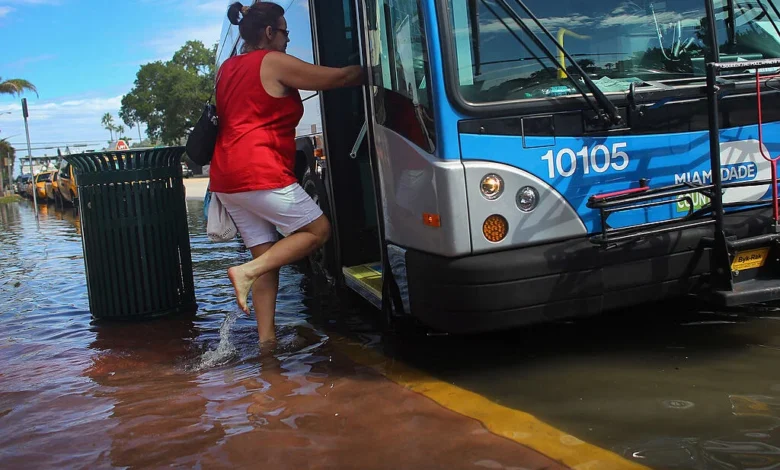
One primary focus is the integration of machine learning into climate simulations. While traditional General Circulation Models (GCMs) have long been the backbone of climate science, they are computationally expensive and often lack the spatial resolution required for local decision-making. Recent breakthroughs in AI-based simulation techniques have allowed researchers to bridge this gap, providing high-resolution projections that capture localized phenomena, such as flash flooding or urban heat island effects, with unprecedented speed and accuracy.
Furthermore, the roadmap emphasizes the need to transcend national borders. Previous federal reports were, by design, geographically constrained to the United States. However, climate systems are global, and the impact of climate change on the US economy is inextricably linked to international supply chains and transboundary resource management. The new collection proposes expanding assessments to include Canadian and Mexican environmental data, as well as trade-linked climate vulnerabilities, providing a more holistic view of how global shifts affect the domestic market.
Integrating Human Dynamics and Infrastructure
A critical component of the new roadmap is the recognition of rapid, shifting human dynamics. The paper notes that US climate policy has become a "chaotic moving target," and that assessments must now account for significant changes in the landscape of American energy consumption.
The rapid rise of AI data centers has fundamentally altered projections for US electricity demand. Earlier climate assessments failed to predict the sheer volume of power required to sustain the massive infrastructure needed for generative AI, which has created a tension between ambitious carbon-neutrality goals and the immediate, energy-intensive reality of the tech sector. The roadmap calls for assessments to move beyond static data and begin modeling the intersection of technological advancement and grid reliability.
Case Study: Connecting Regional Dots
To illustrate the efficacy of this new model, the authors point to the regional focus of previous NCAs as a template for future work. By "zooming in" on specific ecosystems, researchers can create more relatable and actionable data.
For instance, the paper highlights research regarding the Alaskan permafrost. By connecting the dots between rising temperatures, permafrost degradation, and the subsequent release of sequestered heavy metals like mercury into surface waters, scientists can provide tangible, localized warnings to indigenous communities and regional policymakers. This bottom-up approach allows for more nuanced public policy, as it provides data that is immediately applicable to the specific geography and economic drivers of a region.
Official Perspectives and Academic Response
"I see this roadmap as seeding and accelerating a distributed synthesis effort rather than launching a centrally managed research program," Dr. Melissa Kenney stated in an interview following the publication. Her perspective is shared by many in the climate science community who believe that a decentralized network is actually more resilient to political interference.
Other experts in the field have noted that while a distributed model is necessary, it poses significant challenges regarding funding and coordination. "Without the imprimatur of the federal government, these assessments will face the challenge of being viewed as ‘advocacy’ rather than ‘objective science’ by certain political factions," noted one climatologist familiar with the report. To mitigate this, the roadmap emphasizes the use of rigorous, peer-reviewed processes and open-data standards, aiming to maintain a reputation for neutrality that can withstand political scrutiny.
Implications for the Future of Climate Intelligence
The implications of this roadmap are far-reaching. If successful, the US Climate Collection could transform how the United States understands its environmental risks. By creating a networked infrastructure of scientists, the project ensures that climate data remains a public good, shielded from the volatility of shifting presidential administrations.
However, the success of this model relies on sustained investment from academic institutions and private research foundations. While the roadmap provides the "how-to," the "what-now" involves securing the resources to sustain high-resolution, long-term monitoring systems.
As the world continues to experience the tangible effects of a changing climate—from increased wildfire intensity in the West to the shifting agricultural belts of the Midwest—the need for reliable, synthesized data is higher than ever. The researchers behind this roadmap have essentially declared that if the federal government will not provide the roadmap for the future, the scientific community will draft it themselves. This move represents not just a scientific strategy, but a fundamental assertion of the role of evidence-based research in a functioning society.
Ultimately, the goal is to bridge the gap between abstract climate projections and the reality of local, sectoral, and state-level adaptation. Whether this model can scale to meet the massive, systemic requirements of the entire United States remains to be seen, but the intent is clear: the science will not be silenced, and the data will be gathered, synthesized, and shared, regardless of the political climate in Washington.